Mathematical reasoning Adding up to 1000 Misc Worksheets for Ages 8-9
5 filtered results
-
From - To
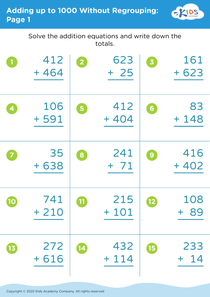
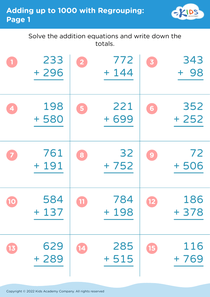
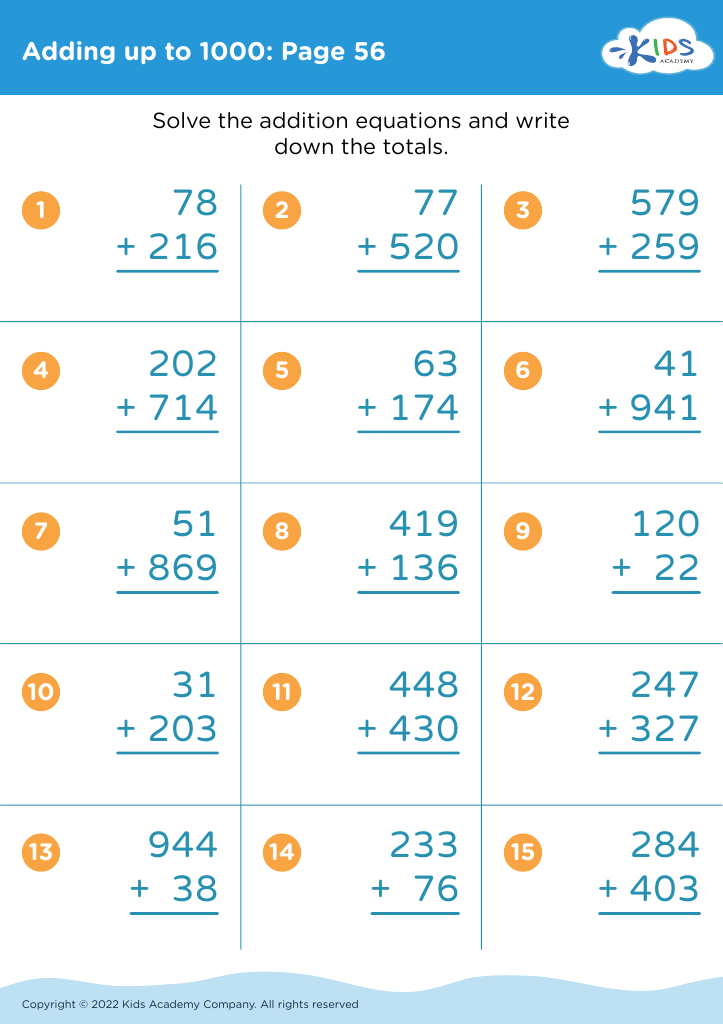
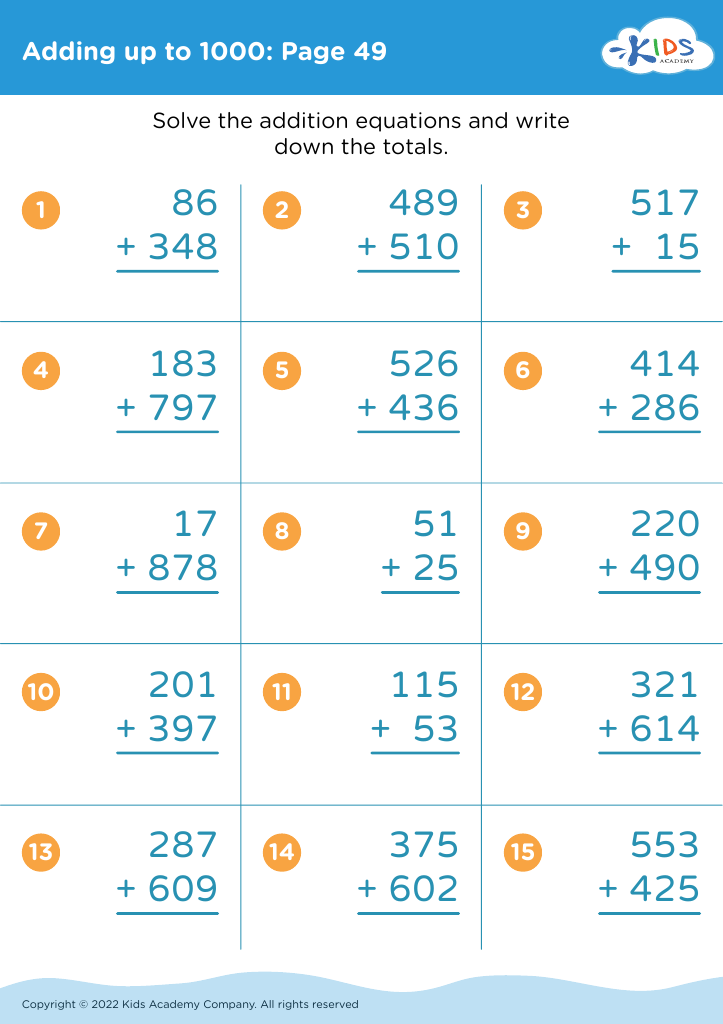
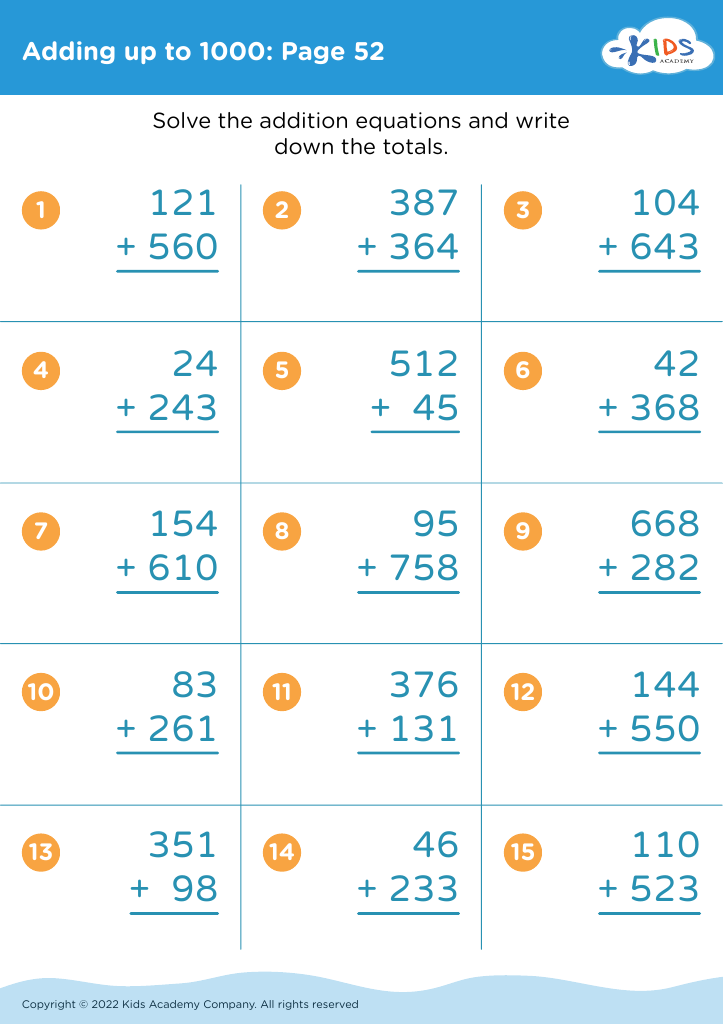
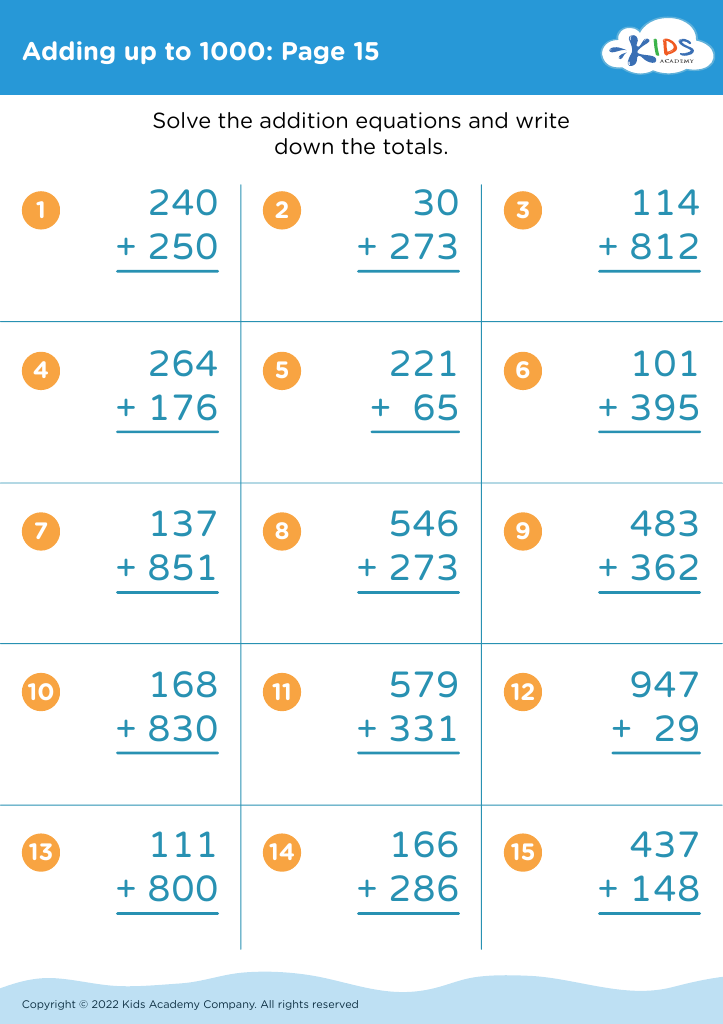
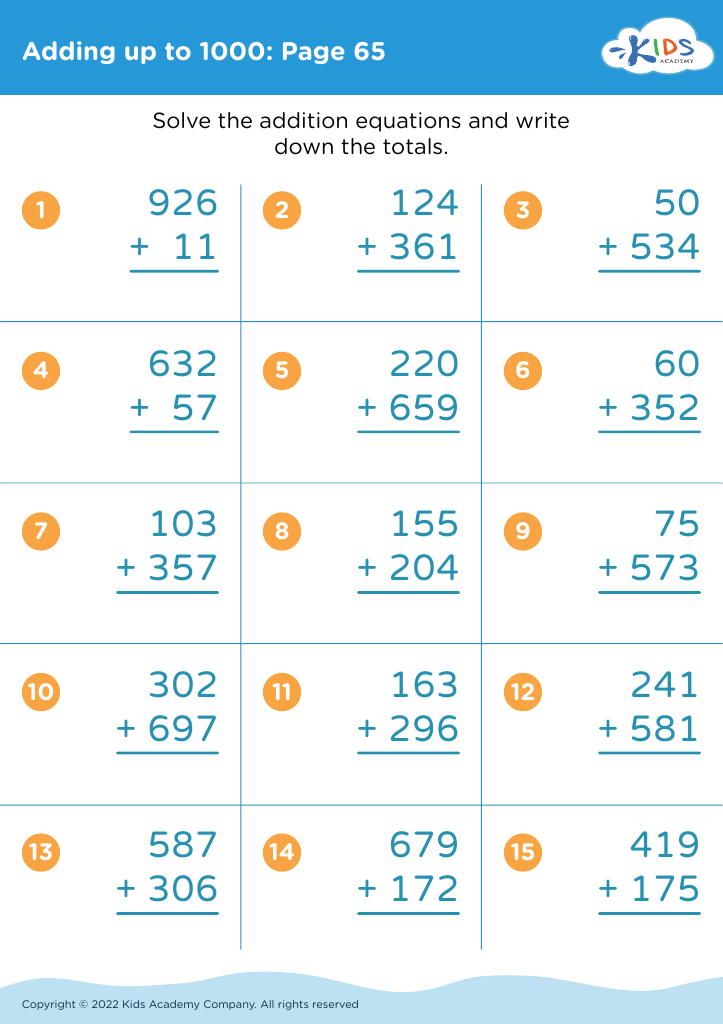
Enhance your child’s mathematical reasoning skills with our "Adding Up to 1000 Misc Worksheets" designed for ages 8-9! Our engaging worksheets promote a deeper understanding of addition, encouraging young learners to explore various approaches to problem-solving. Through fun exercises, kids will practice adding numbers up to 1000, strengthening their arithmetic skills and boosting their confidence. Each worksheet offers a range of challenging problems tailored to motivate and stimulate critical thinking. Perfect for classroom use or at-home practice, these resources provide an excellent way for your child to develop essential math skills while enjoying the learning process. Start their journey to math mastery today!


Mathematical reasoning, particularly concepts like "adding up to 1000," is critical for children aged 8-9, as it forms a foundational skill that extends beyond basic arithmetic. Parents and teachers should prioritize this area for several reasons.
Firstly, developing strong reasoning skills helps children understand the “why” behind the mathematical processes, fostering deeper comprehension. This approach encourages critical thinking, enabling students to tackle more complex problems both in math and real-life situations.
Secondly, mastering addition skills helps enhance a child’s confidence in their abilities. When students can easily calculate sums that approach 1000, they become proficient in number sense and improve their overall mathematical fluency. This proficiency is essential as they transition to higher-level concepts, such as multiplication, division, and later, algebra.
Additionally, mathematical reasoning promotes logical thinking. By examining how numbers combine, students also develop analytic skills that can be applied across subjects, including science and technology.
Moreover, proficiency in these foundational mathematical skills contributes to lifelong competencies needed in the workforce. Ultimately, fostering these reasoning skills now not only helps children excel academically but also equips them for future challenges in a data-driven world.