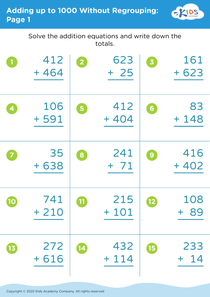
Color Identification Adding up to 1000 with Regrouping Worksheets for Ages 8-9
5 filtered results
-
From - To
Enhance your child's math skills with our "Color Identification Adding Up to 1000 with Regrouping Worksheets" designed specifically for ages 8-9. These engaging worksheets seamlessly combine color recognition with addition, making math both fun and educational. Students will practice regrouping techniques while identifying various colors, reinforcing their learning through interactive tasks. Each worksheet encourages critical thinking and problem-solving, lending support to your child's mathematical development. Perfect for at-home learning or classroom use, these resources provide a comprehensive approach to mastering addition up to 1000. Boost your child's confidence in math while fostering creativity and color awareness in their learning journey!
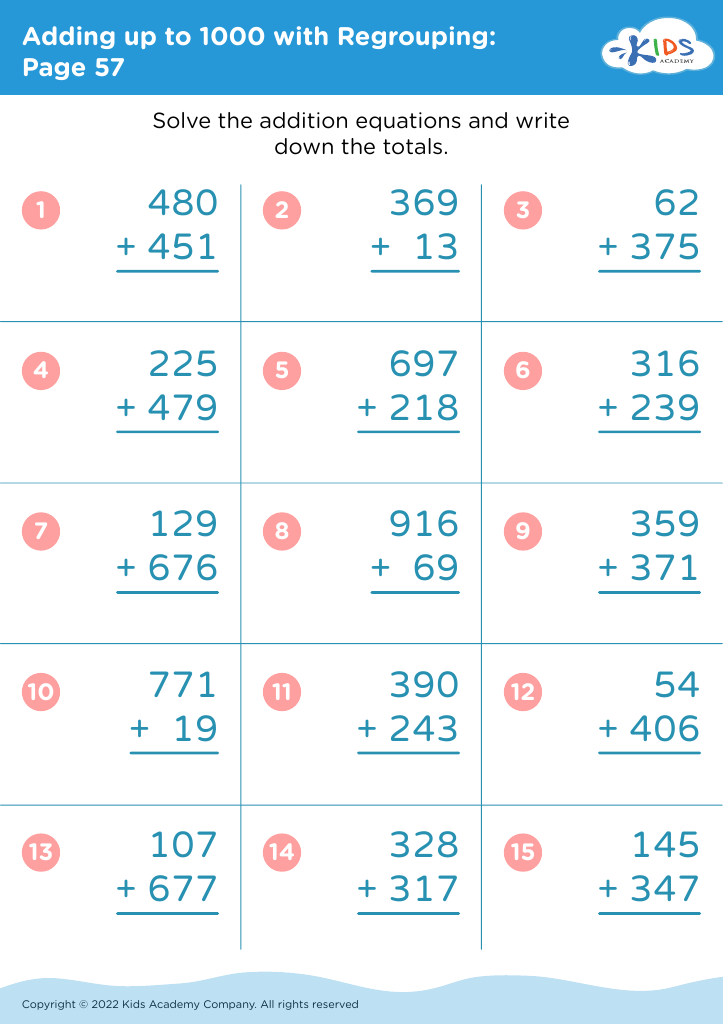
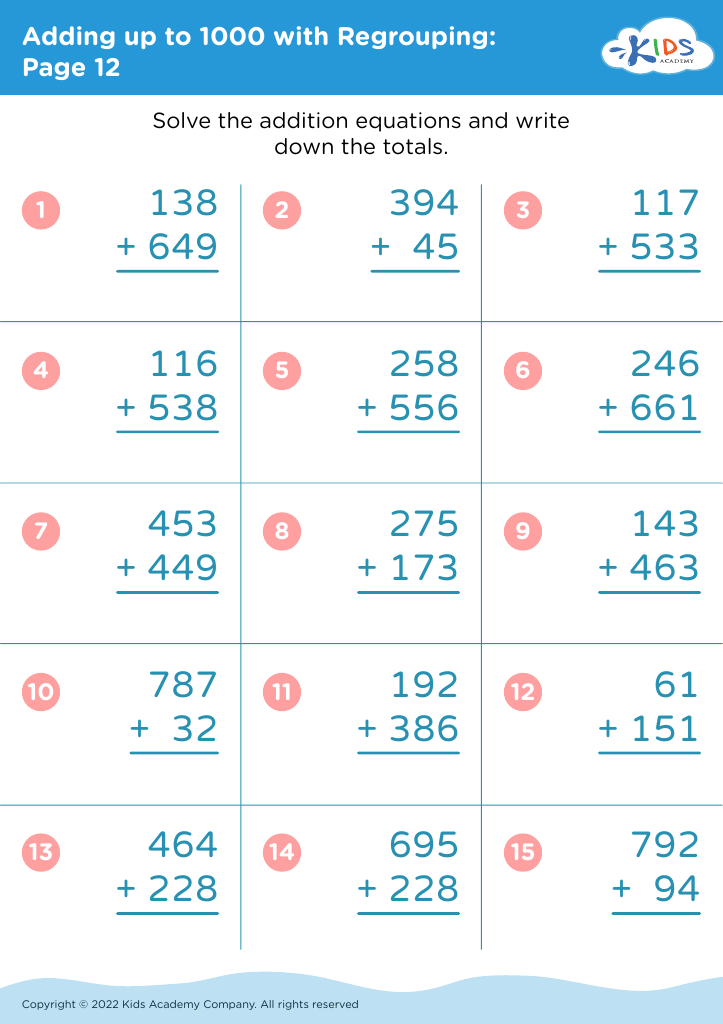
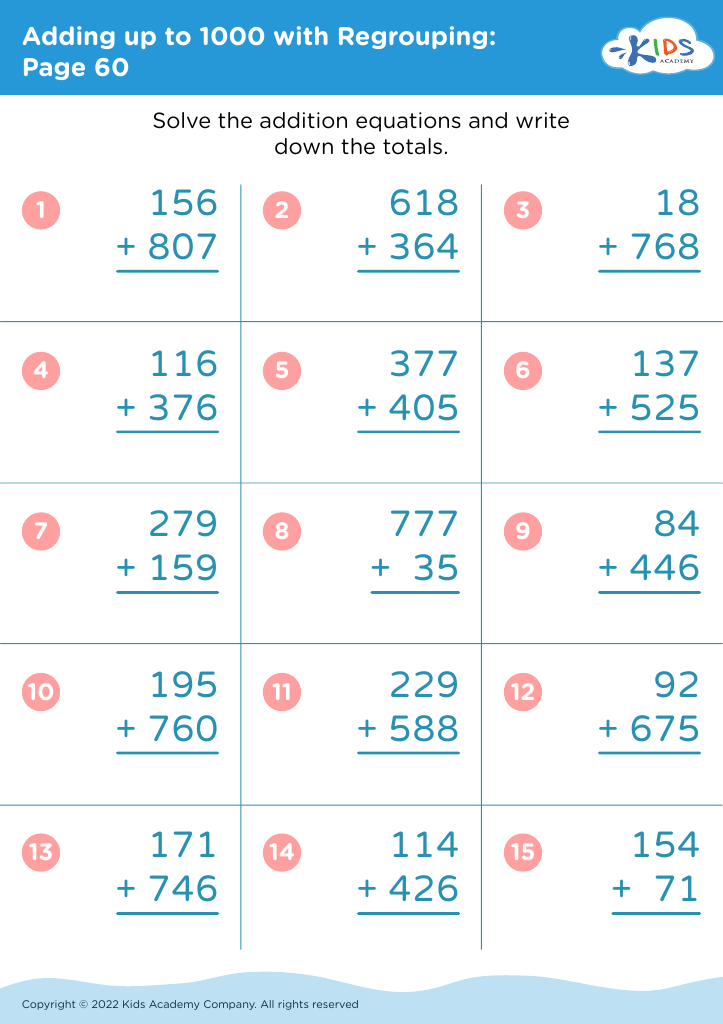
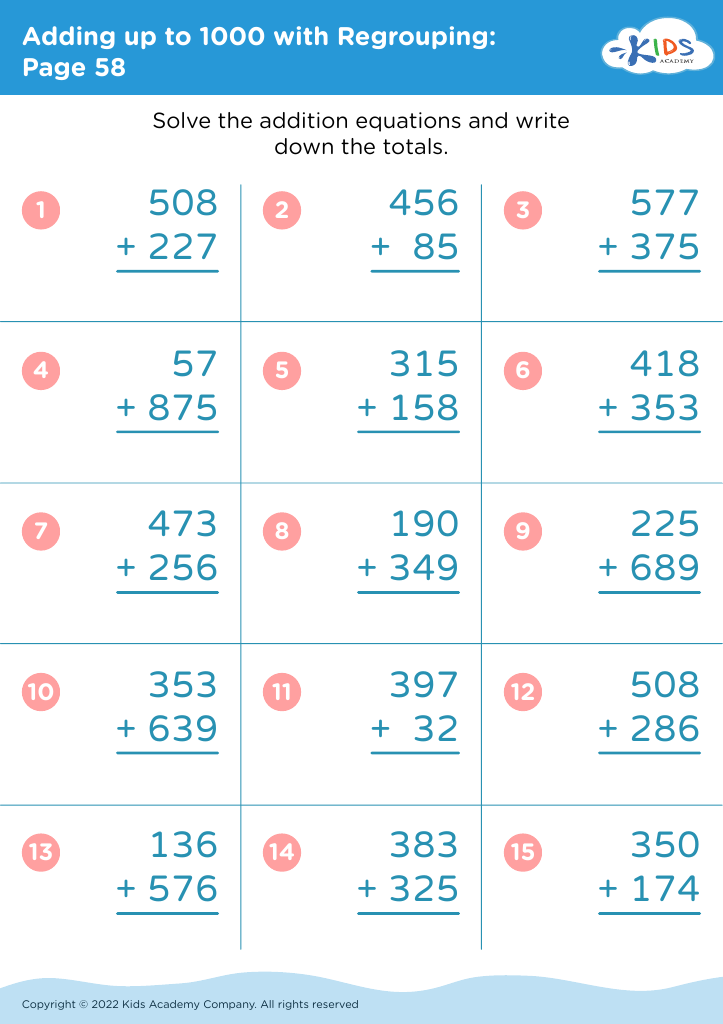
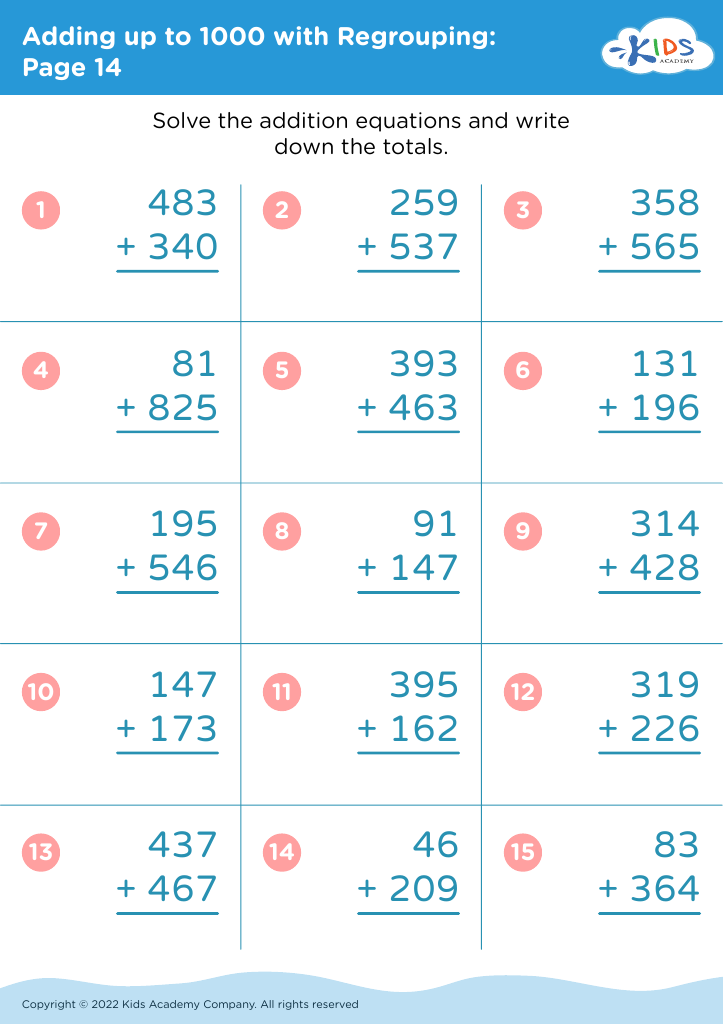


Color identification, when combined with arithmetic learning such as adding up to 1000 with regrouping, plays a critical role in enhancing educational experiences for children aged 8-9. For parents and teachers, this skill is essential for several reasons.
Firstly, color identification nurtures visual learning. It helps children to categorize numbers visually, making complex tasks like regrouping in addition more relatable. By associating different colors with various numeric values or techniques, students can develop an intuitive understanding of how regrouping works.
Secondly, this method can spark engagement and motivation. Integrating colors into arithmetic activities transforms conventional learning into a more enjoyable and interactive experience, which can captivate young minds. This active engagement can improve retention rates as children can associate colors with the learning process, making math less intimidating and more exciting.
Moreover, grasping addition with regrouping is foundational for future math concepts. Mastery in this area prepares children for more complex operations, which supports their overall academic growth.
Thus, emphasizing color identification in conjunction with mathematics not only makes learning engaging but also builds crucial foundational skills that support future learning, making it a consistent focus for parents and teachers alike.