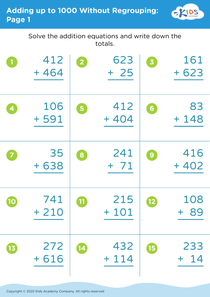
Fraction comparison Adding up to 1000 with Regrouping Worksheets for Ages 8-9
3 filtered results
-
From - To
Enhance your child's math skills with our "Fraction Comparison Adding up to 1000 with Regrouping Worksheets" designed specifically for ages 8-9. These engaging worksheets help students understand the concept of fractions while mastering addition that requires regrouping. Through a variety of exercises, children will learn to compare fractions effectively, reinforcing their comprehension in an interactive way. With clear guidance and diverse problems, these worksheets will boost confidence and foster a love for mathematics. Perfect for both classroom and home learning, these resources make fraction comparison enjoyable and accessible. Get started today and watch your child's math skills flourish!
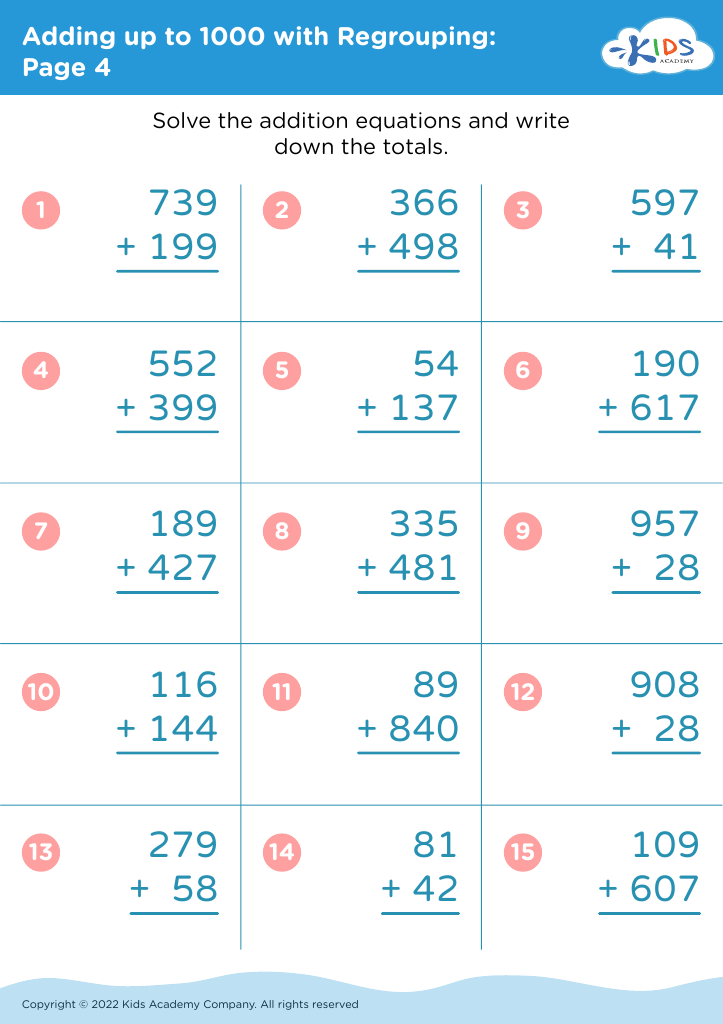
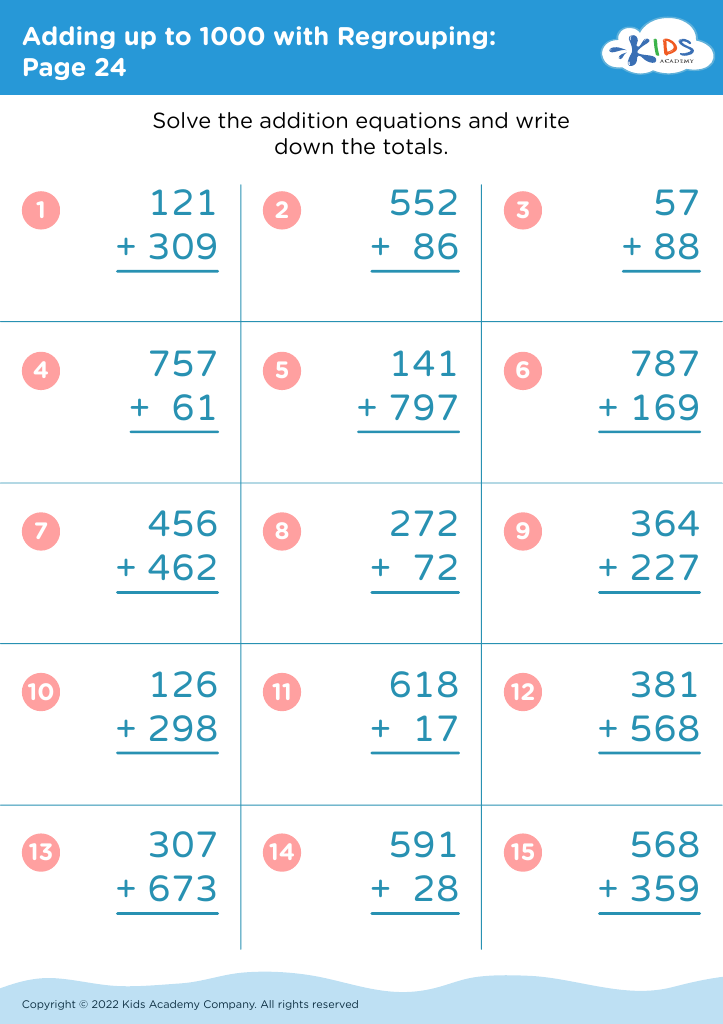
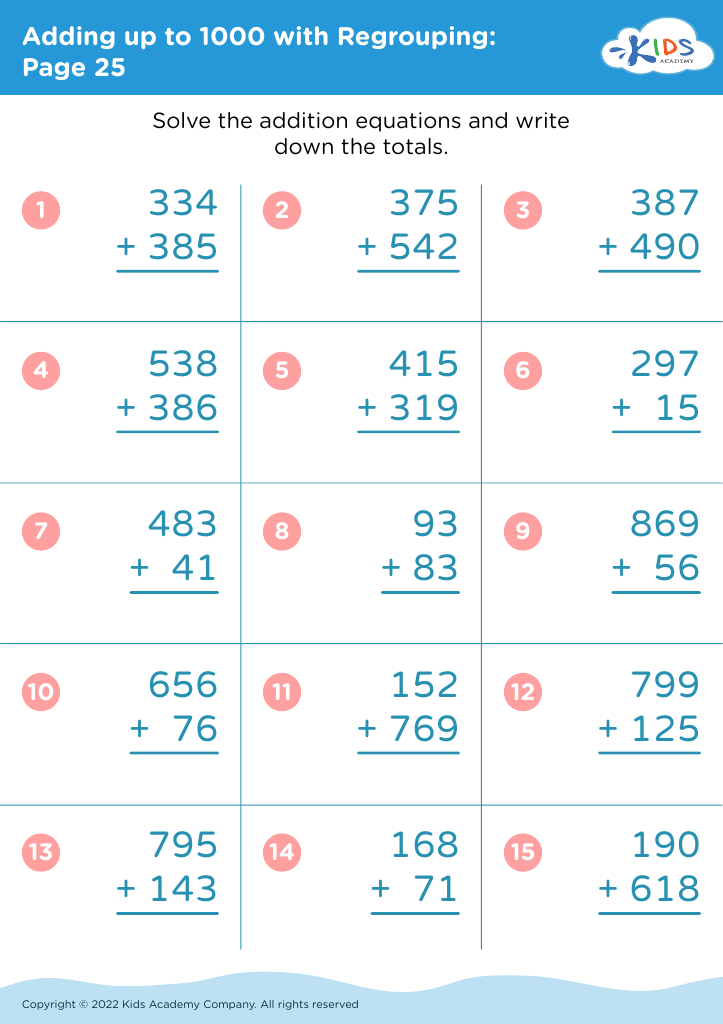


Parents and teachers should prioritize understanding fraction comparison and regrouping, especially for children ages 8-9, as these concepts are fundamental to mathematical literacy and problem-solving. At this age, children are transitioning from concrete to abstract mathematical thinking, making it crucial for them to grasp these concepts to build confidence and competence in handling numbers.
Fraction comparison helps students learn how to evaluate the size of different fractions, a skill essential not only in advanced mathematics but also in real-life situations such as measuring ingredients in cooking or understanding portions. Mastering this concept can enhance their ability to make informed decisions, interpret data, and solve everyday problems.
In addition, regrouping in addition helps students manage larger numbers and understand the value of place in addition, reinforcing their knowledge of number sense. This skill is vital as they encounter more complex math in higher grades. By fostering these skills early, parents and teachers set a solid foundation for future math concepts, where students will need to integrate their understanding of fractions, decimals, and percentages.
Ultimately, developing proficiency in these areas empowers children to think critically, enhances their logical reasoning, and increases their enthusiasm for learning mathematics.