Problem-Solving Skills Adding up to 1000 with Regrouping Worksheets for Ages 8-9
5 filtered results
-
From - To
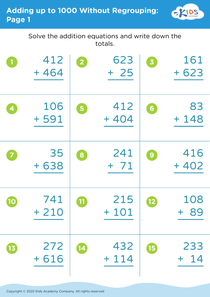
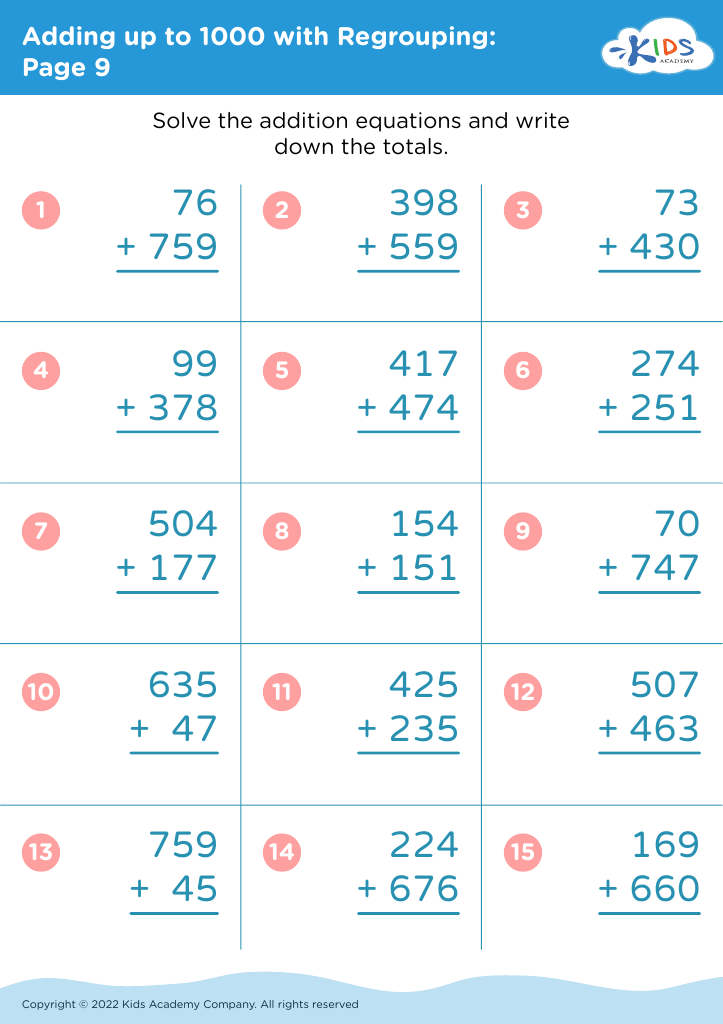
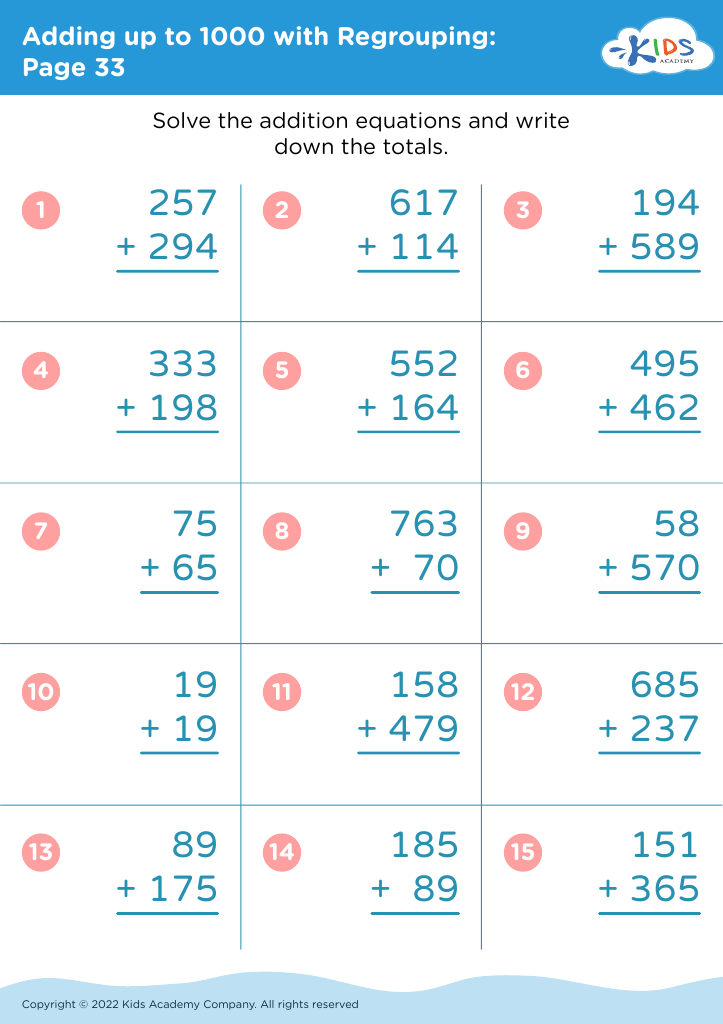
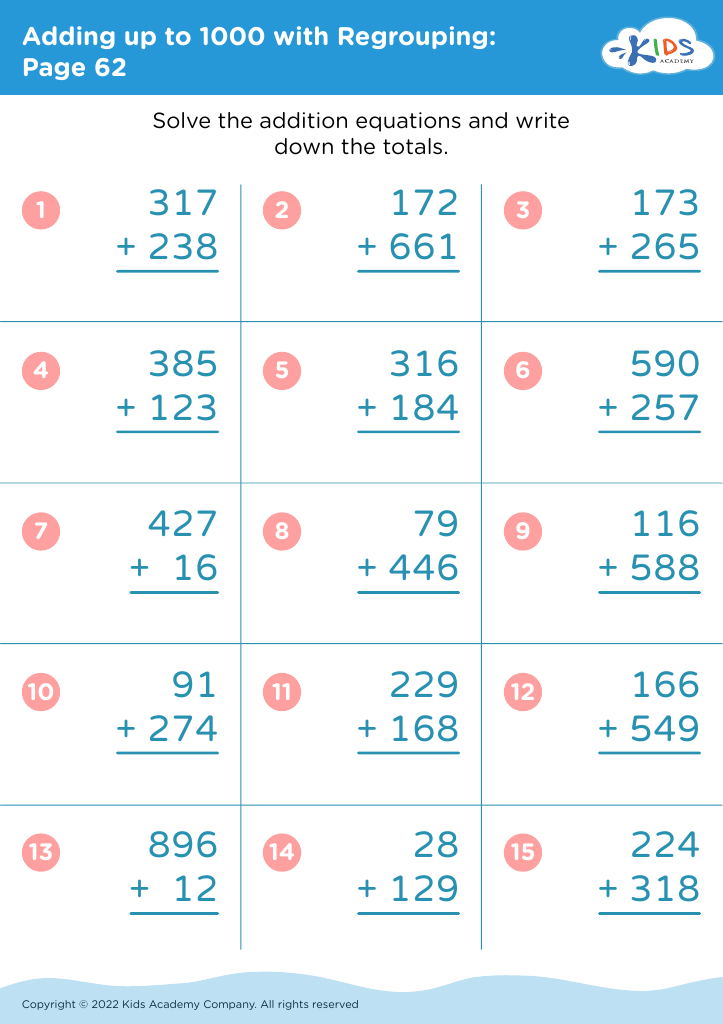
Our "Problem-Solving Skills Adding up to 1000 with Regrouping Worksheets" are perfect for 8-9-year-olds ready to master advanced addition. These engaging worksheets are designed to build confidence and enhance math skills through fun, interactive exercises that focus on adding numbers up to 1000 with regrouping. Students will develop crucial problem-solving abilities as they tackle increasingly complex problems, ensuring a strong foundation for future math success. Our worksheets support learning objectives aligned with core curriculum standards, making them ideal for both classroom use and home practice. Give your child the tools they need to excel in math today!
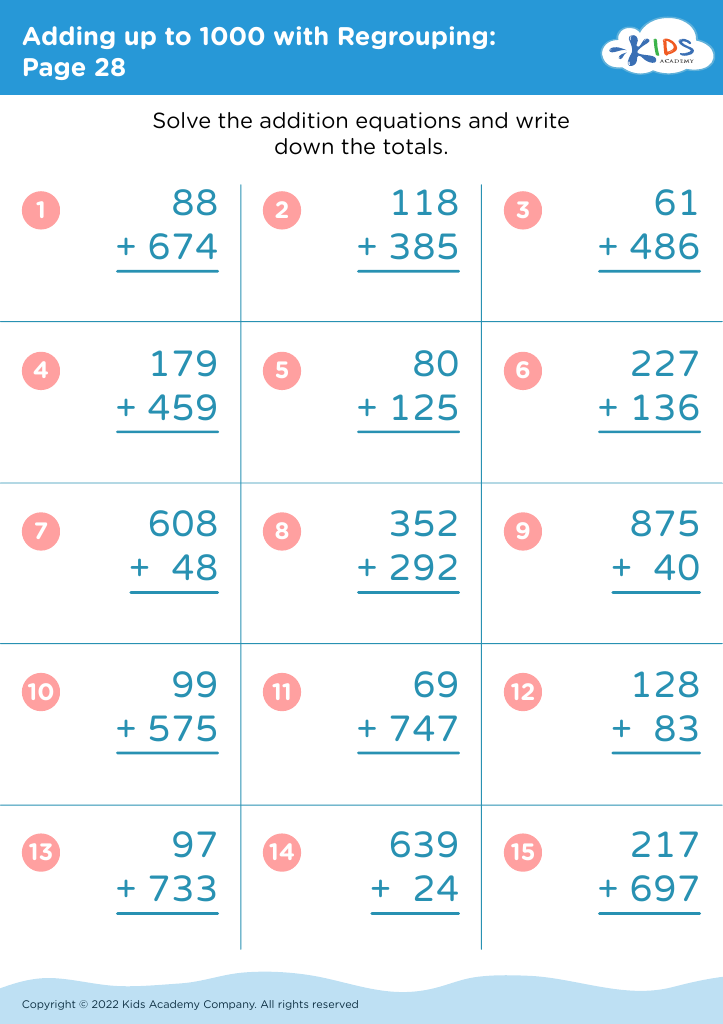
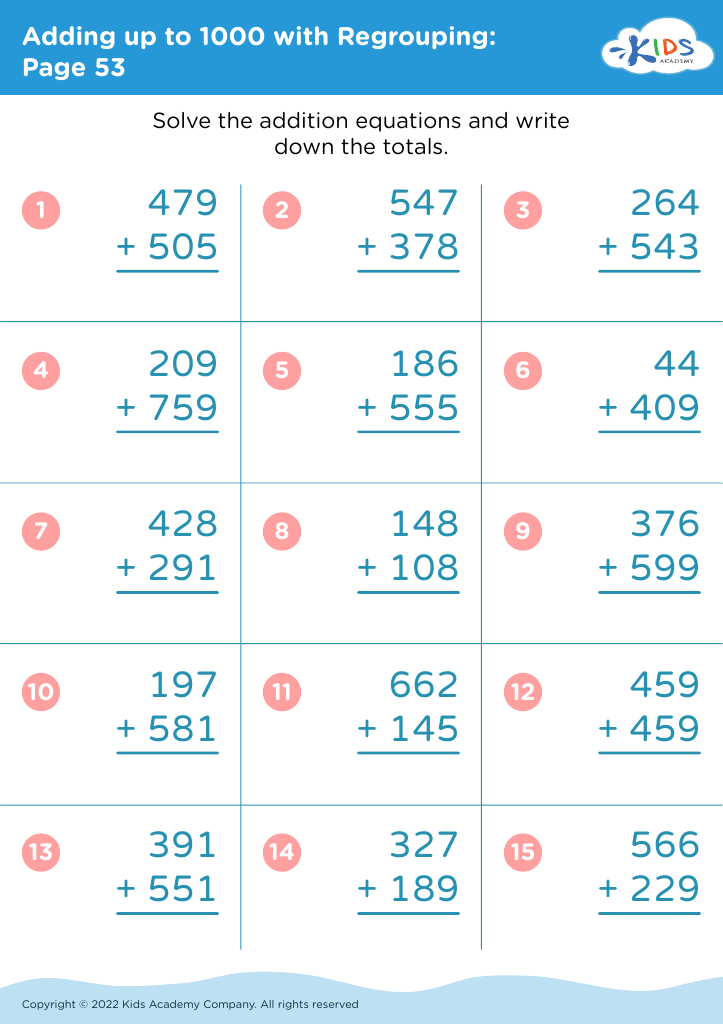


Building strong problem-solving skills with addition up to 1000 involving regrouping for children aged 8-9 is crucial for several reasons. First, these skills are foundational for future math learning. Concepts like place value, arithmetic processes, and number manipulation learned at this stage pave the way for understanding more complex math topics like multiplication, division, and fractions. Their grasp of regrouping enhances their critical thinking and accuracy.
Moreover, problem-solving in math promotes cognitive development and logical reasoning. It encourages students to understand the 'why' behind math operations, not just the 'how,' fostering a deeper comprehension. Such skills extend beyond math and are essential for daily decision-making and analytical thinking.
For teachers and parents, caring about these skills translates to providing scaffolds and practice opportunities that align with the child's learning capabilities. By engaging kids in activities that embed these skills, like interactive games or practical problems, adults can stimulate a joyful and stress-free learning experience.
Additionally, regular practice and validation from adults boost a child's confidence and perseverance. This positive reinforcement is key to cultivating a growth mindset, whereby children understand that effort improves ability.
Ultimately, nurturing problem-solving skills with regrouping builds a strong arithmetic foundation, encourages methodical thinking, and provides vital life skills, setting a meaningful trajectory for a child's educational journey.