Understanding fractions Adding up to 1000 with Regrouping Worksheets for Ages 8-9
18 filtered results
-
From - To
Discover our "Understanding Fractions: Adding up to 1000 with Regrouping Worksheets" specially crafted for children aged 8-9. These engaging printable worksheets enrich students' mathematical skills by combining fraction comprehension with addition exercises. Young learners will master the concepts of fractions and understand regrouping techniques through enjoyable and supportive activities. With our resources, children gain confidence in dealing with complex math problems, ensuring a solid foundation for future learning. Tailored to align with academic standards, these worksheets are an ideal blend of education and fun, perfectly designed for both classroom use and home practice.
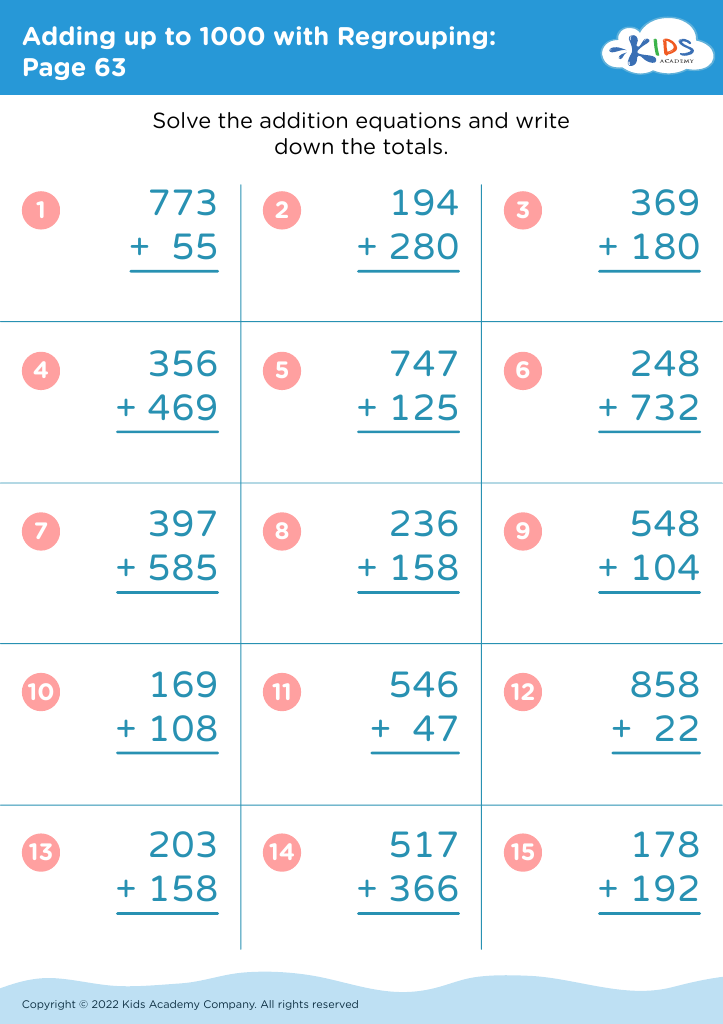
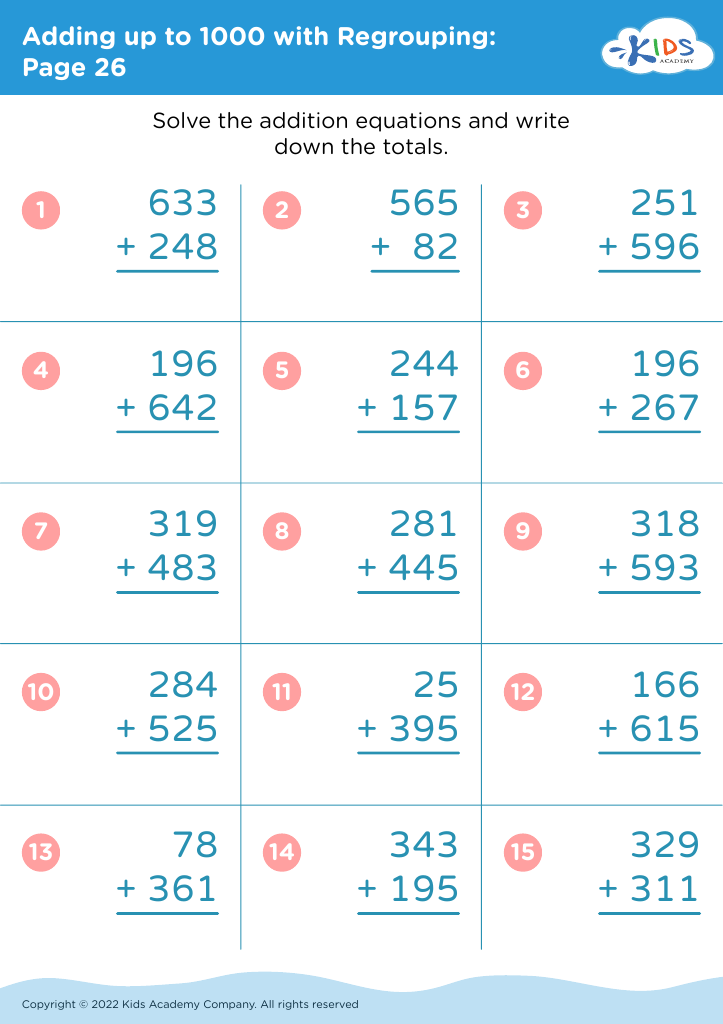
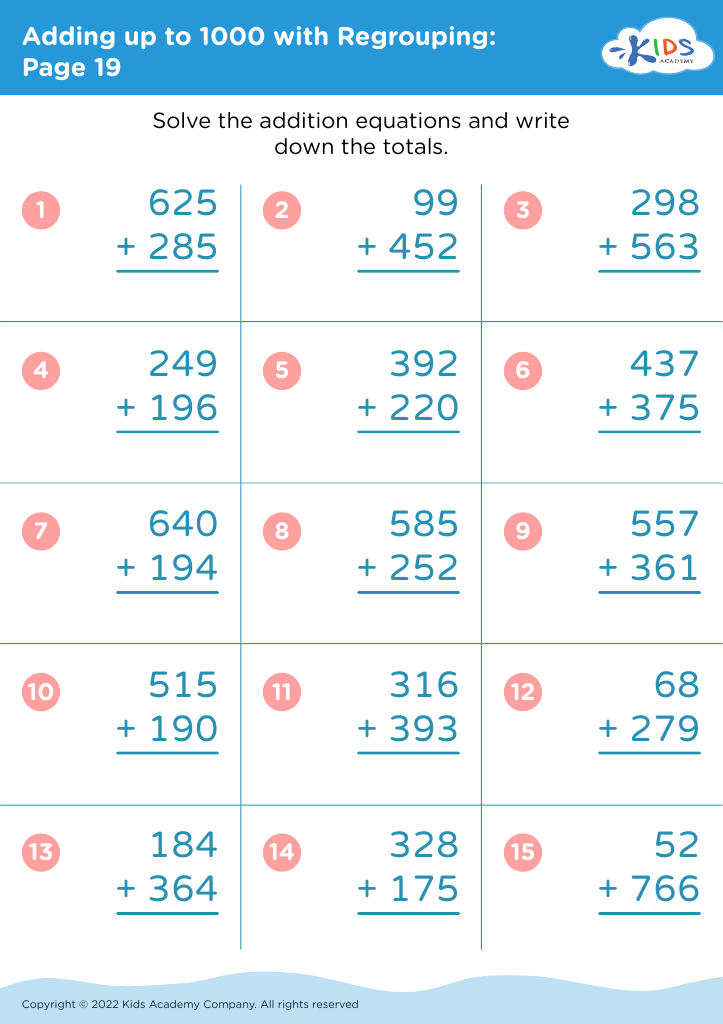
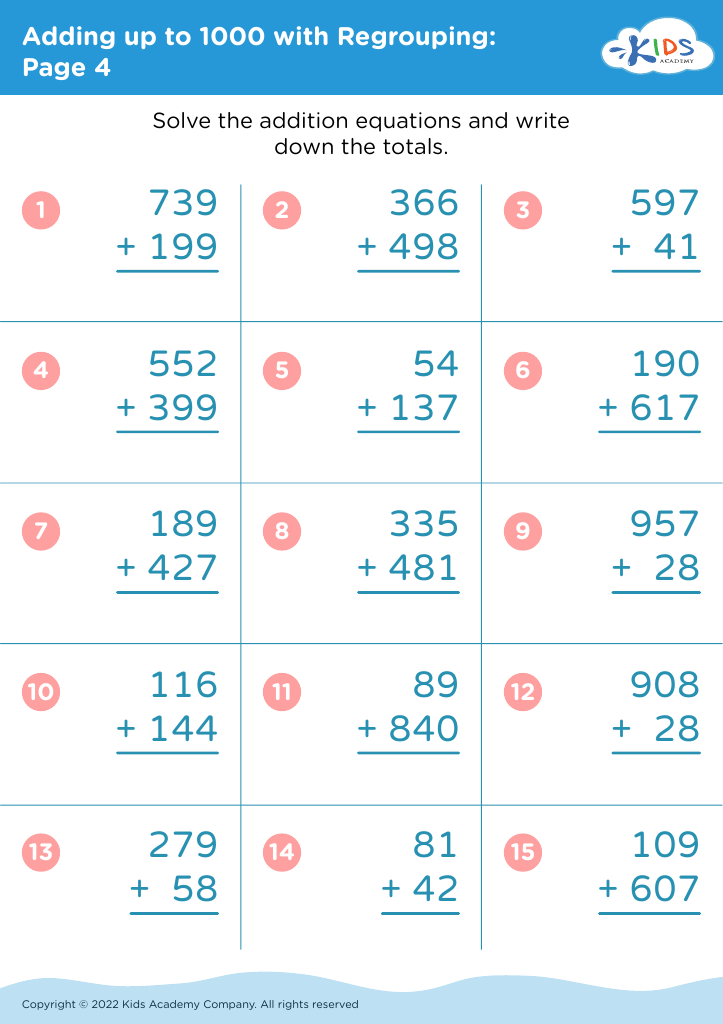
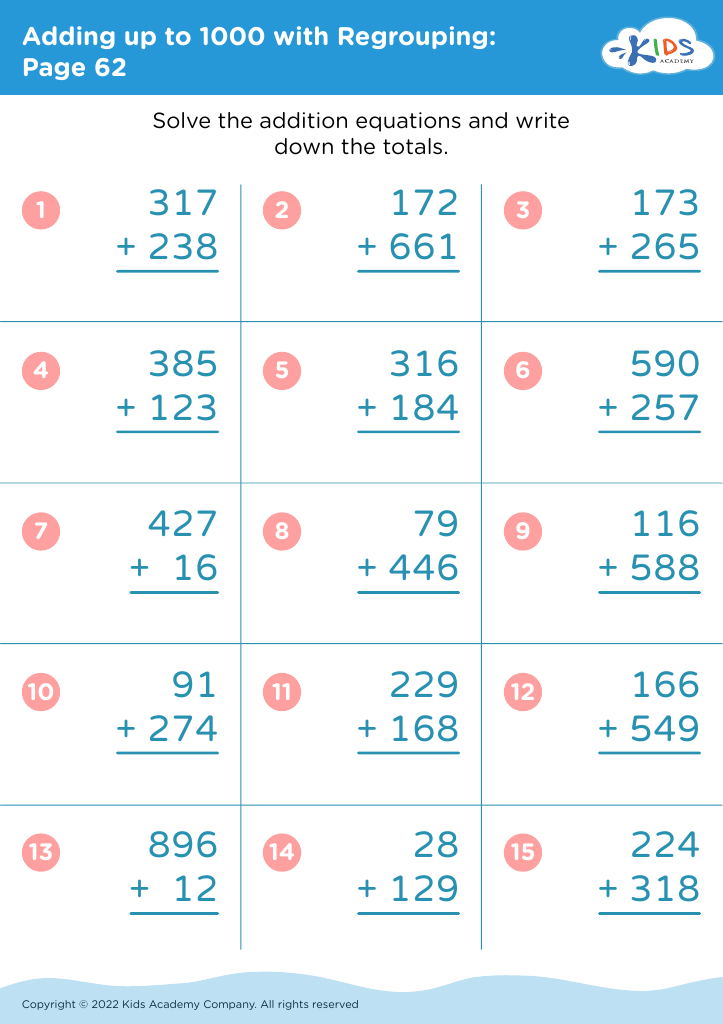
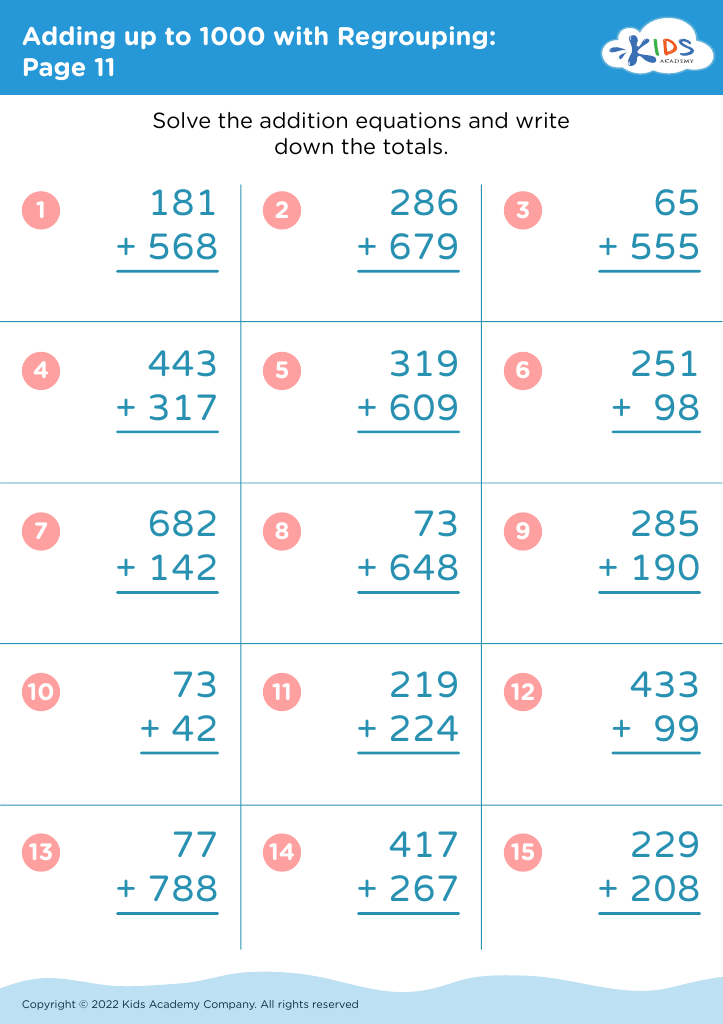
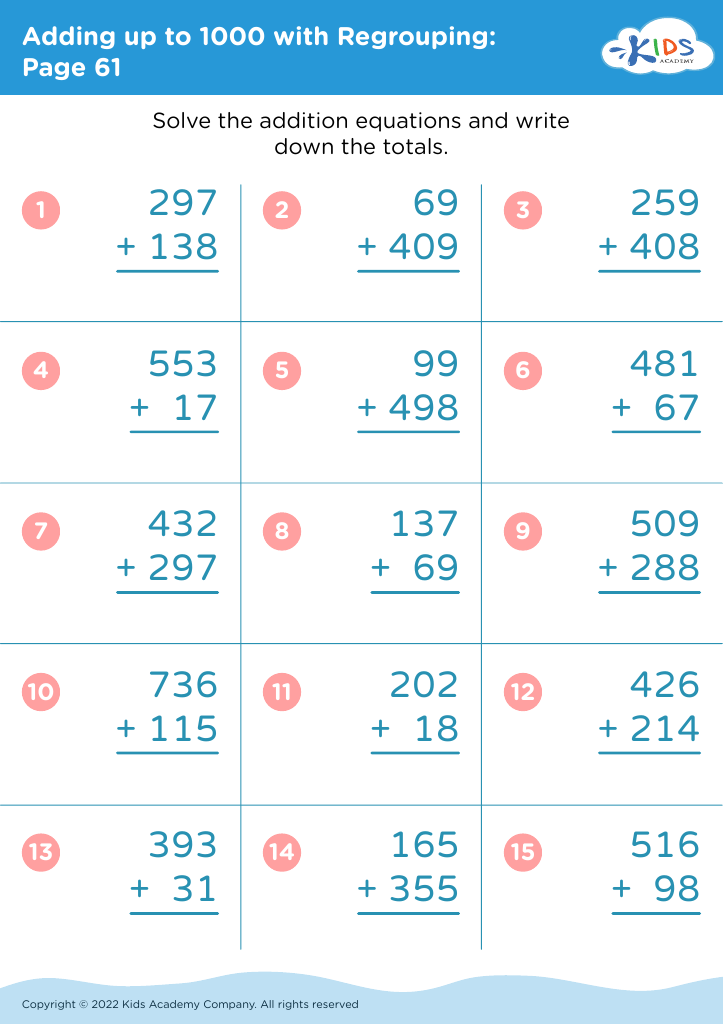
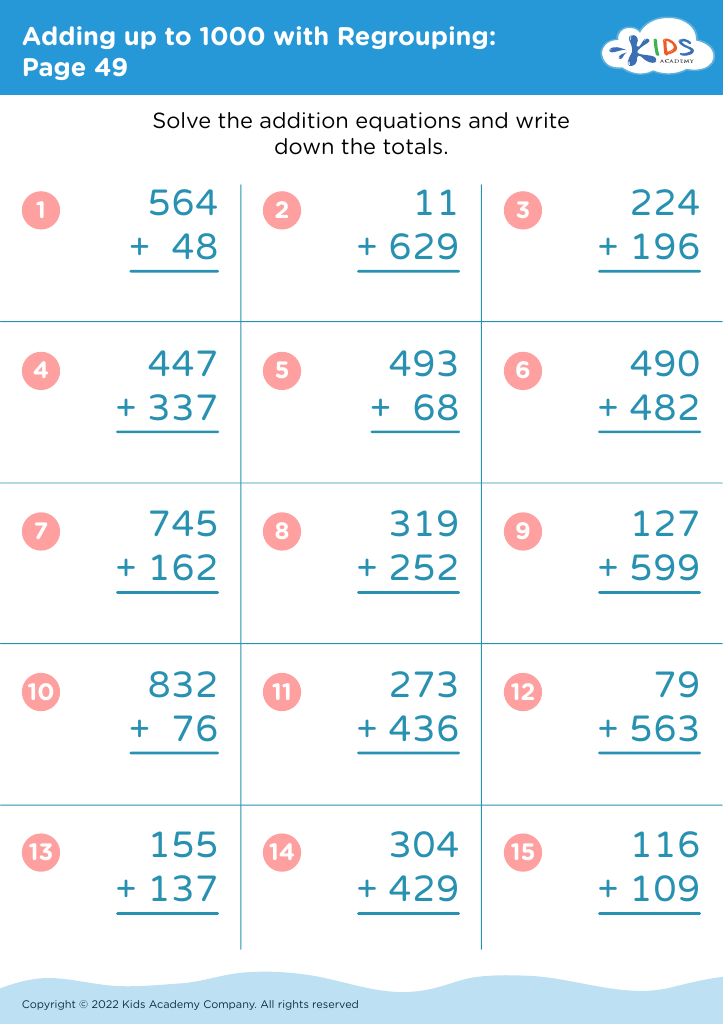
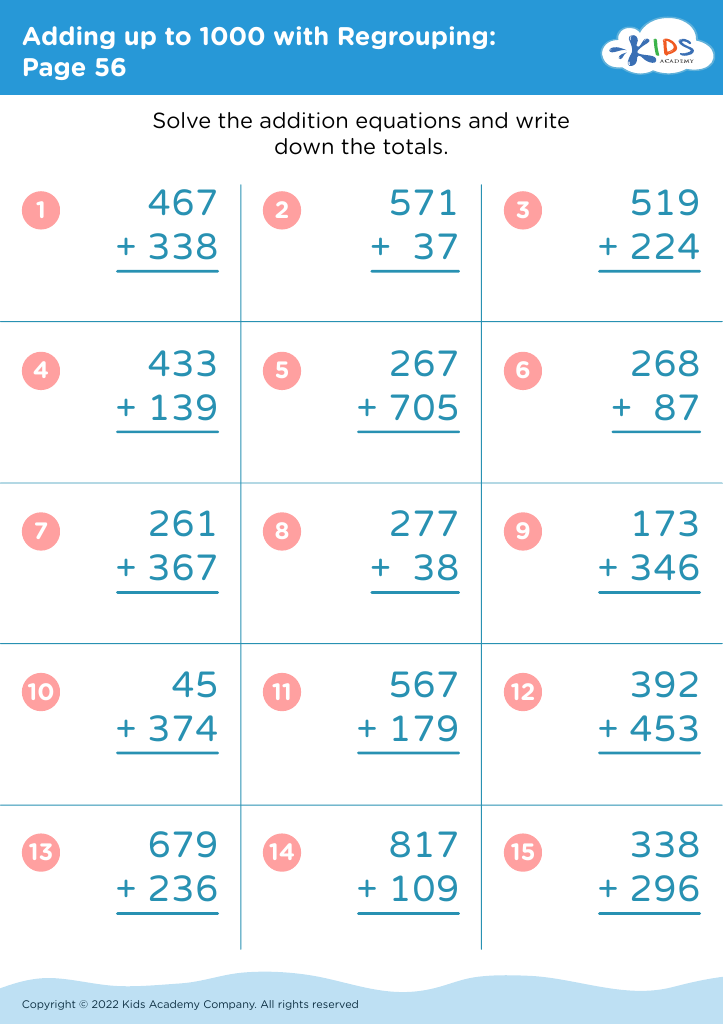
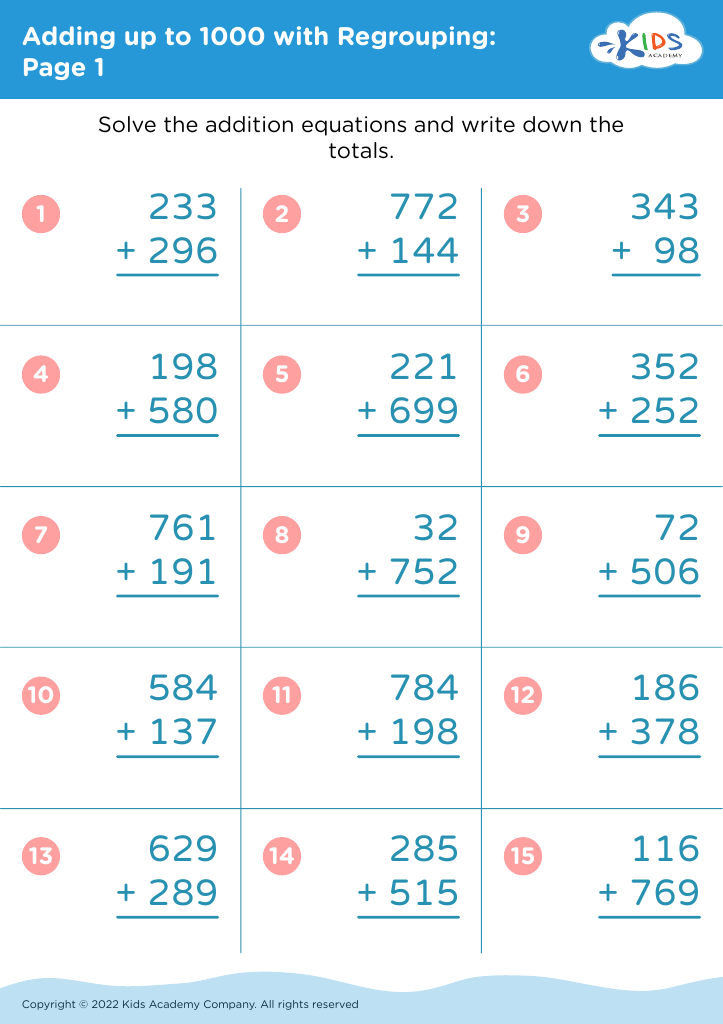
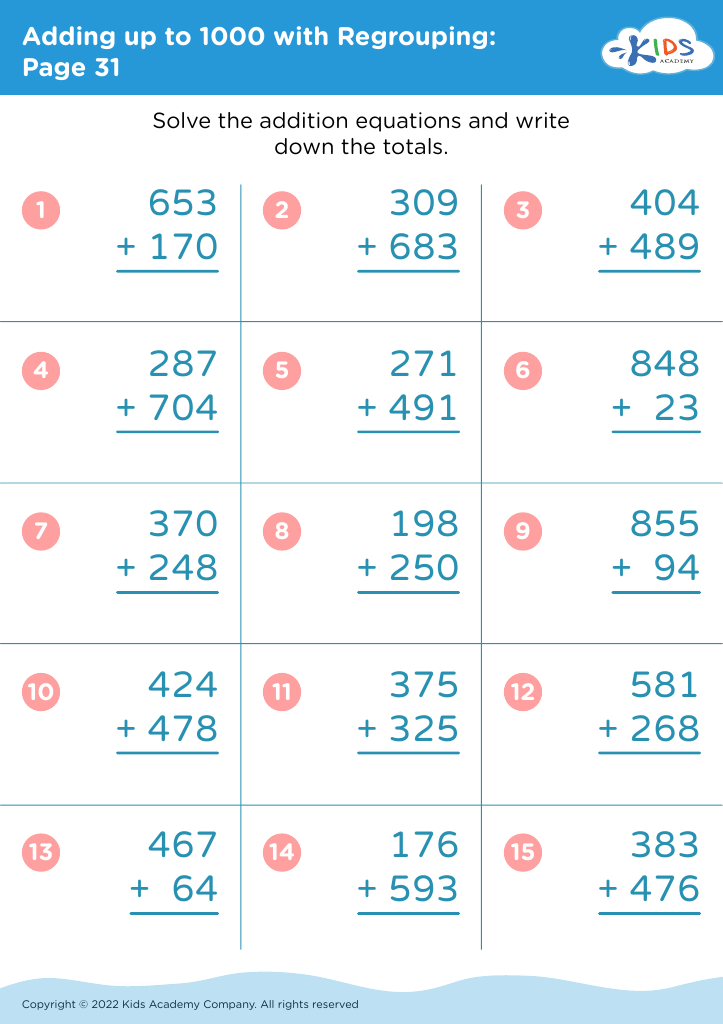
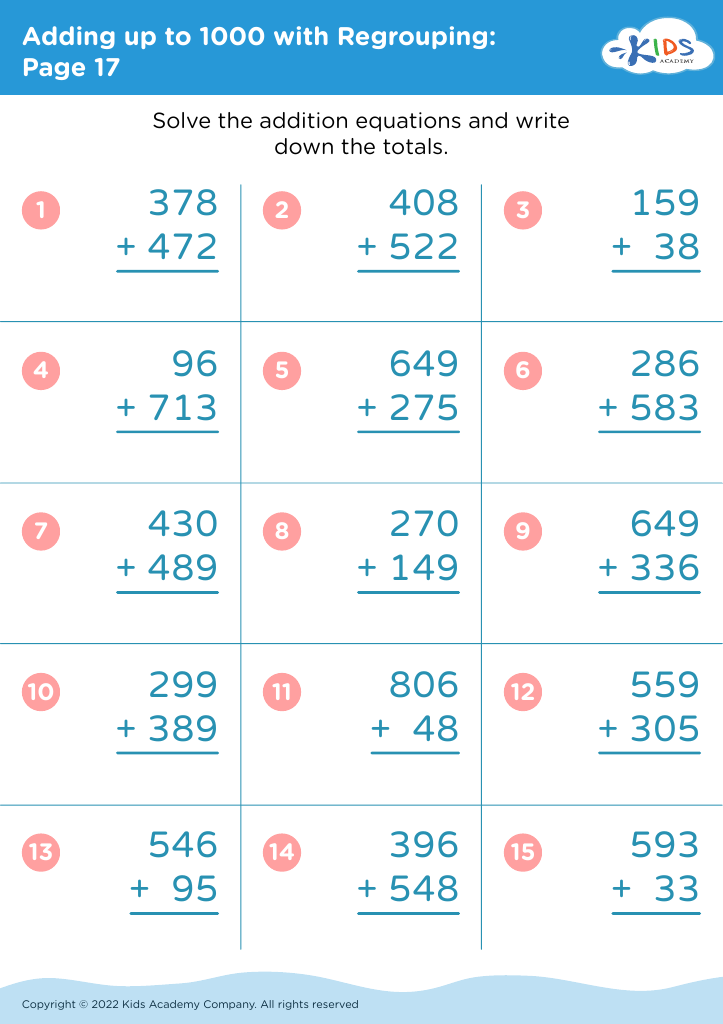
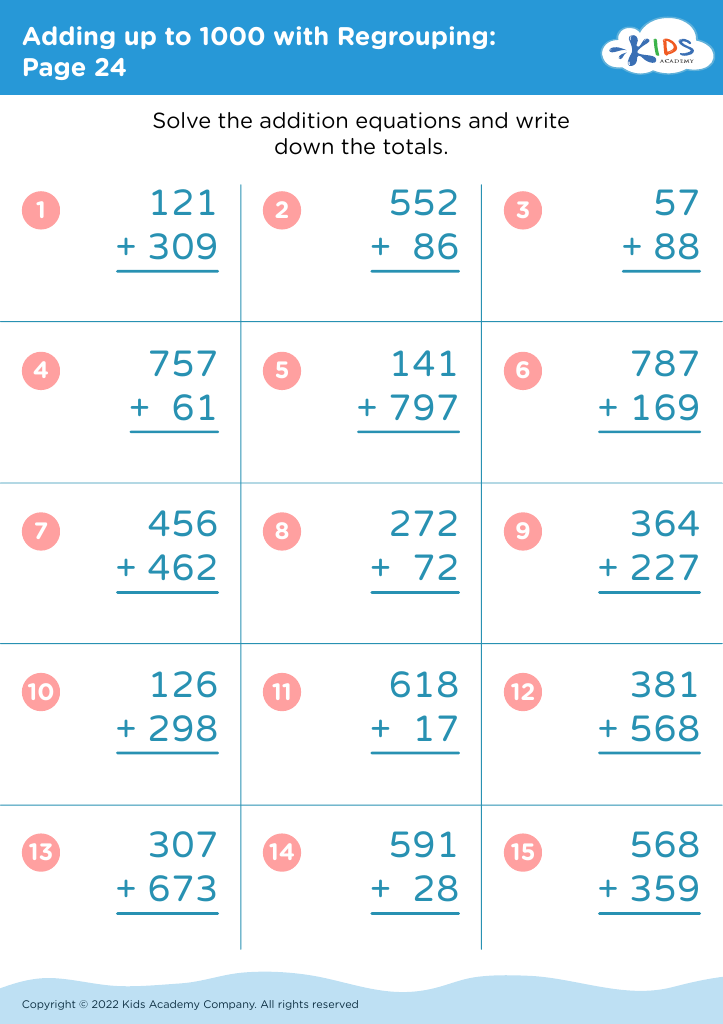
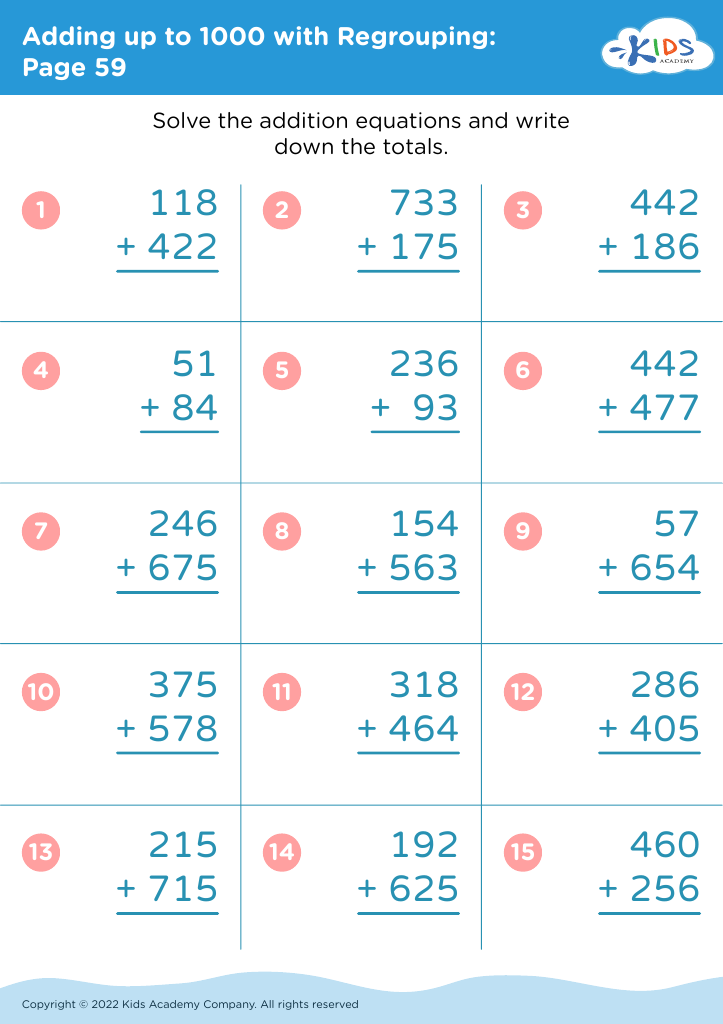
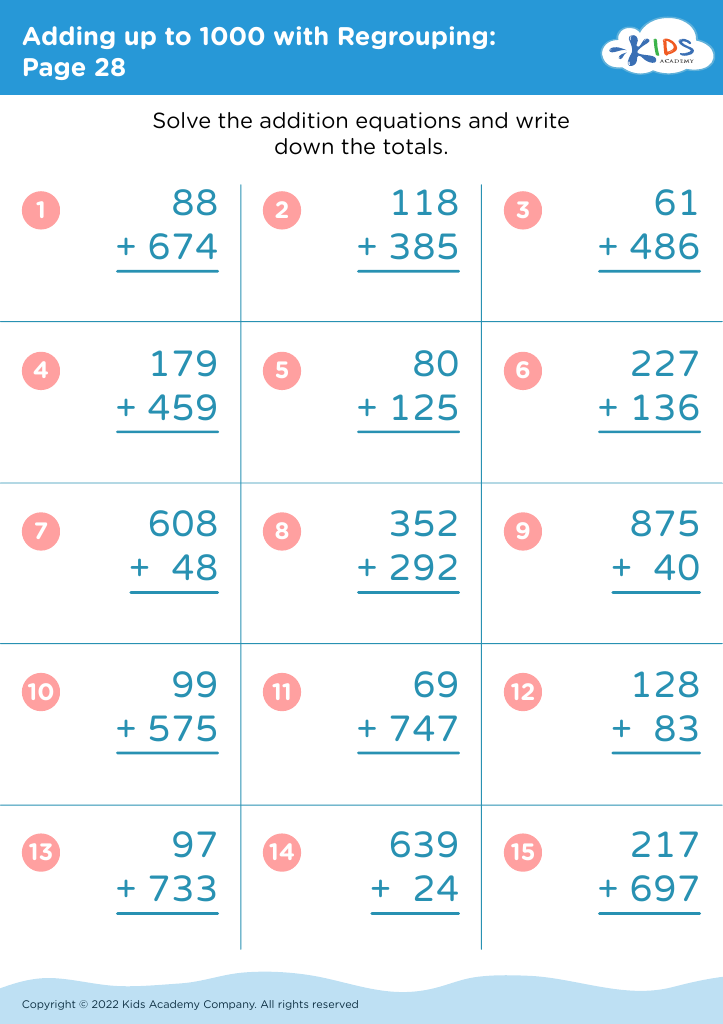
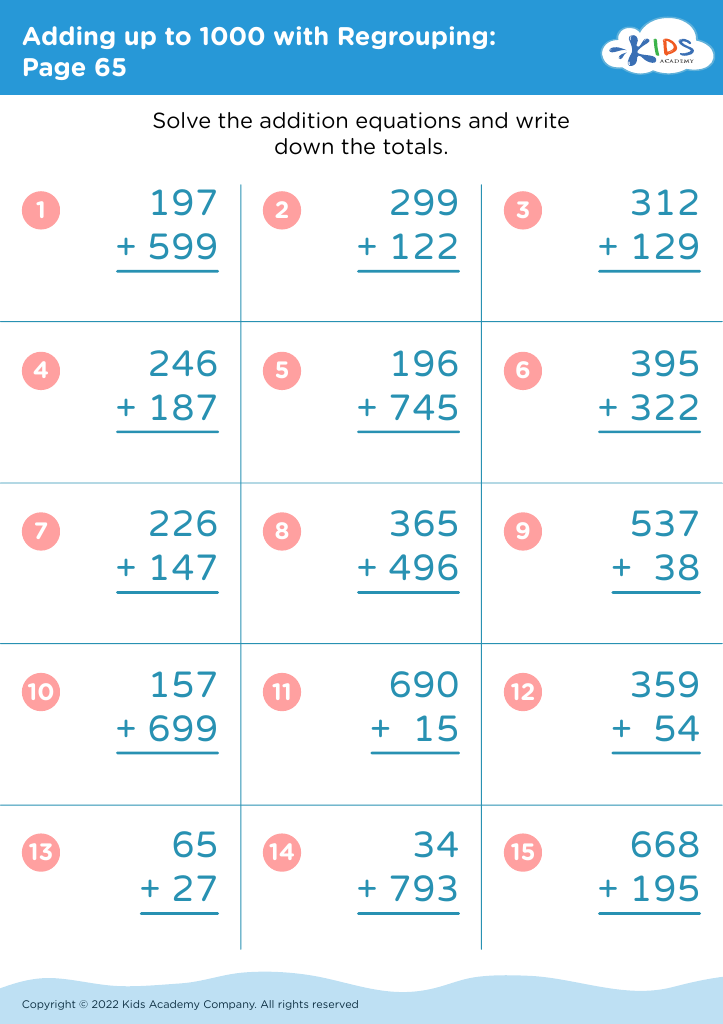
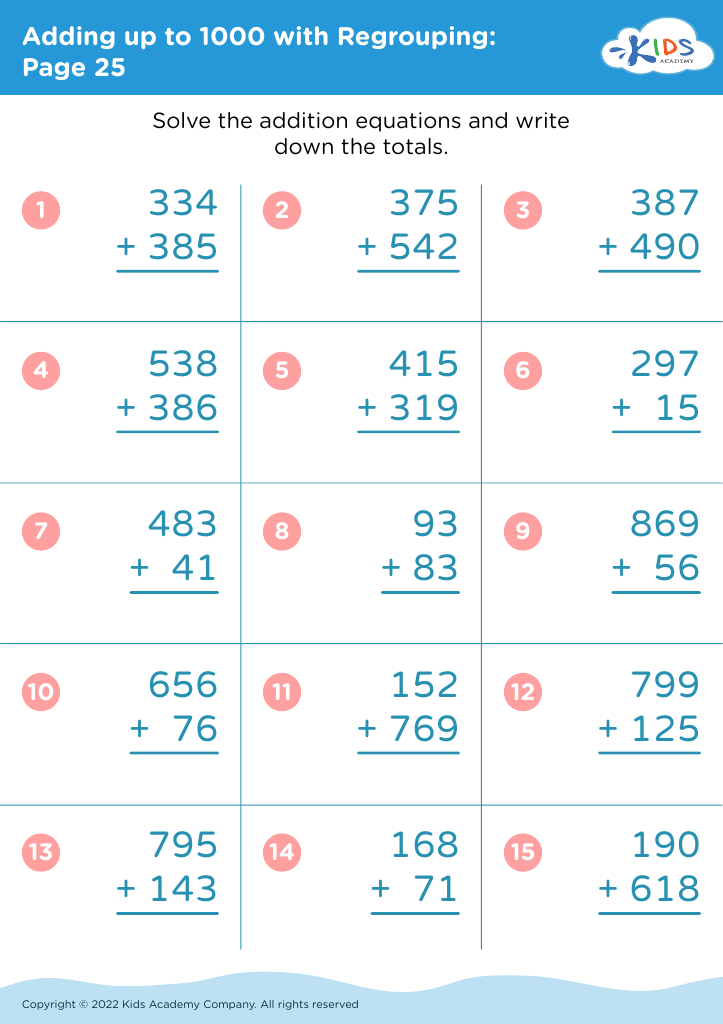
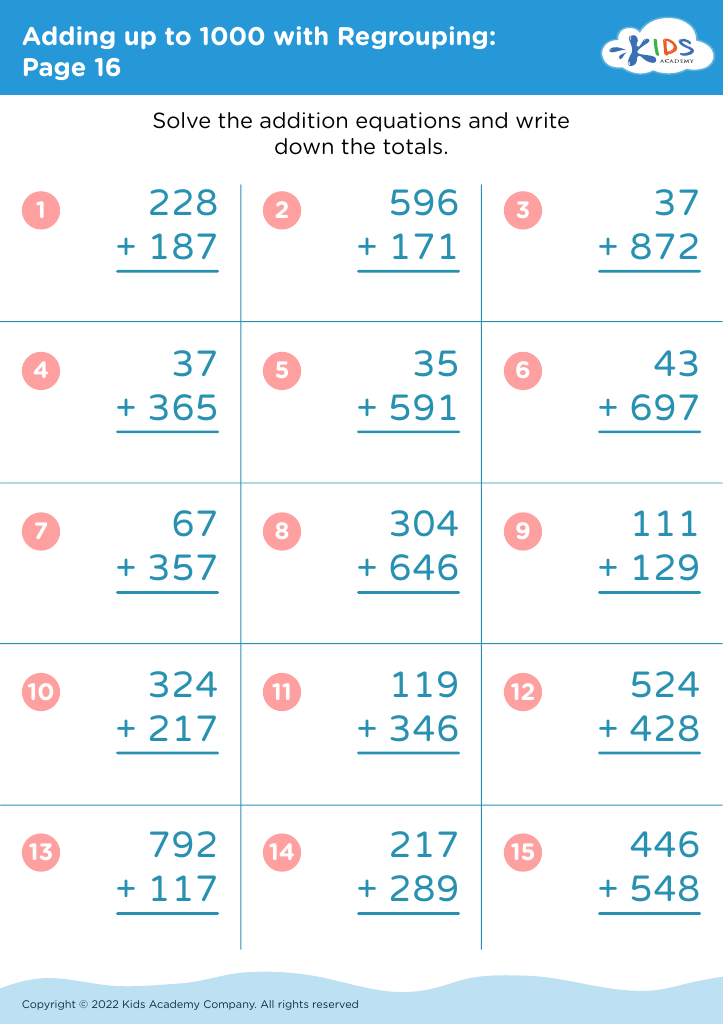


Understanding fractions and adding numbers up to 1000 with regrouping are critical math skills for children aged 8-9, often in third or fourth grade. These foundational skills provide the building blocks for more advanced concepts in mathematics, enhancing a child's logical thinking and problem-solving abilities.
Fractions introduce the idea of parts of a whole and are essential for everyday tasks, such as dividing food, understanding proportions, and interpreting data. Mastery of fractions can boost a child's confidence in math, setting a positive trajectory for future learning in both academic and real-world scenarios.
Adding numbers up to 1000 with regrouping challenges children to strengthen their understanding of place value and expand their addition skills. As they regroup (carrying over numbers greater than ten), they practice breaking numbers into smaller parts and reassembling them in a meaningful way. This skill is important not just for arithmetic, but also for a wide range of mathematical operations they'll encounter later, such as multi-digit multiplication and division.
For parents and teachers, fostering these abilities at this stage offers a dual benefit: it helps children think more analytically and prepares them for continued success in mathematics. Encouraging practice in these areas through engaging activities can promote mathematical confidence and competence that will benefit students throughout their entire academic journey and beyond.