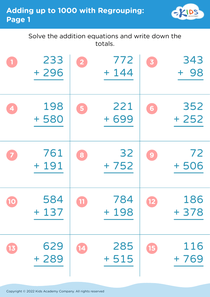
Alphabet Recognition Adding up to 1000 Without Regrouping Worksheets for Ages 8-9
3 filtered results
-
From - To
Unlock your child's potential with our "Alphabet Recognition Adding up to 1000 Without Regrouping Worksheets" designed for ages 8-9. These engaging and educational worksheets blend math with alphabet practice to make learning fun and effective. Ideal for reinforcing math skills, these printables help students add up to 1000 without needing to regroup. Accompanied by vibrant illustrations and alphabet recognition activities, these resources ensure comprehensive learning. Kids will enjoy mastering both their math principles and alphabet through interactive exercises. Visit Kids Academy and give your child the tools to excel both in and out of the classroom!
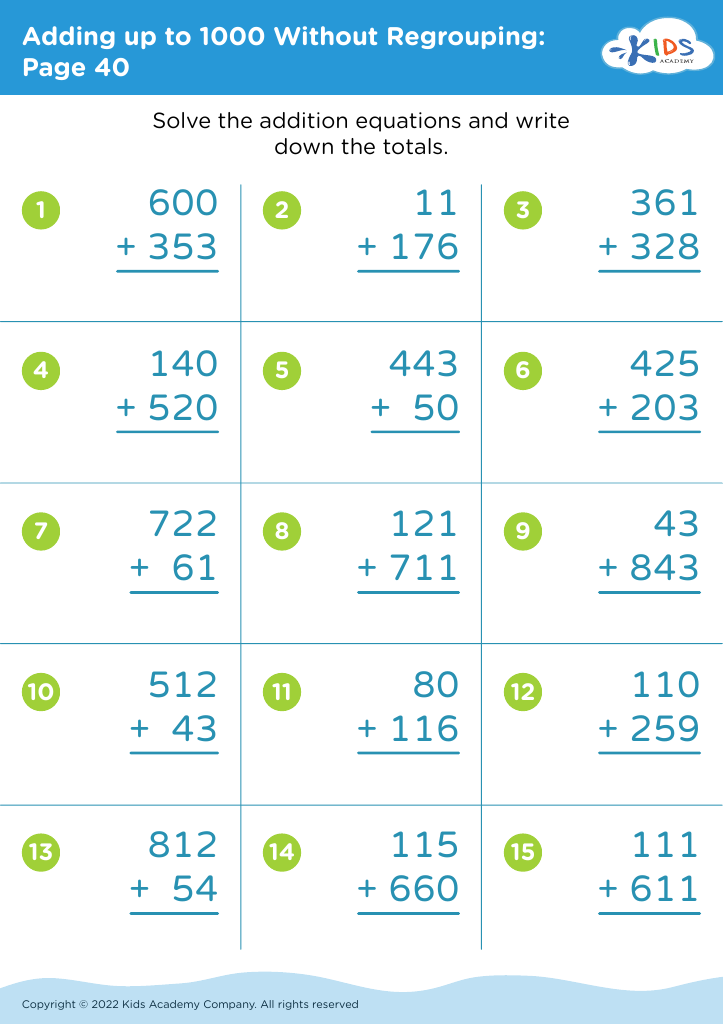
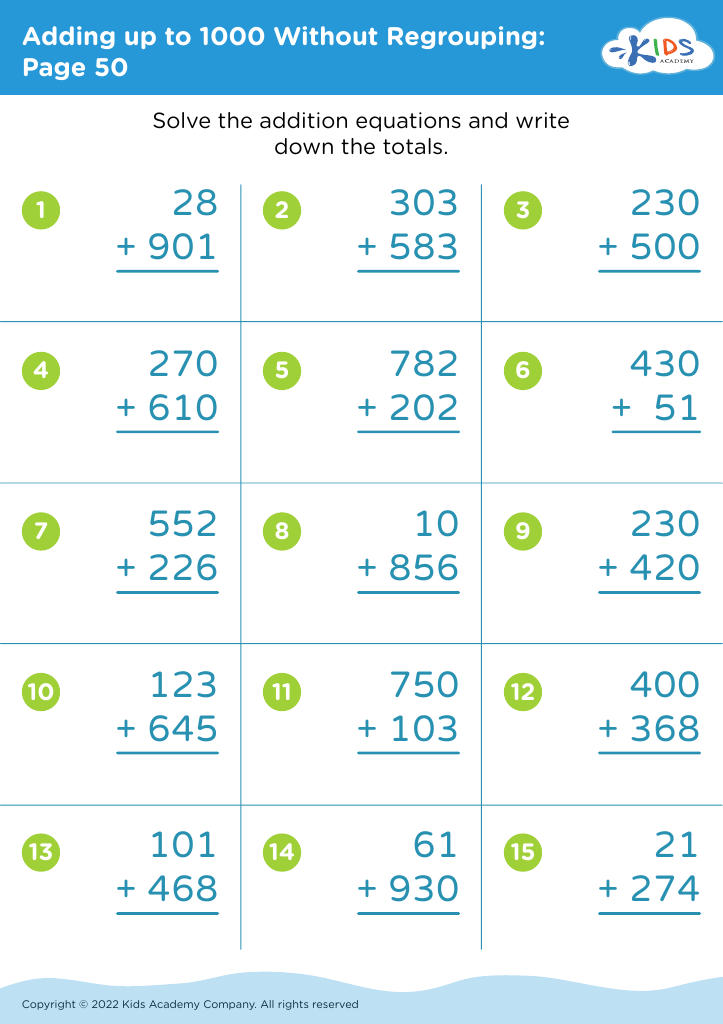
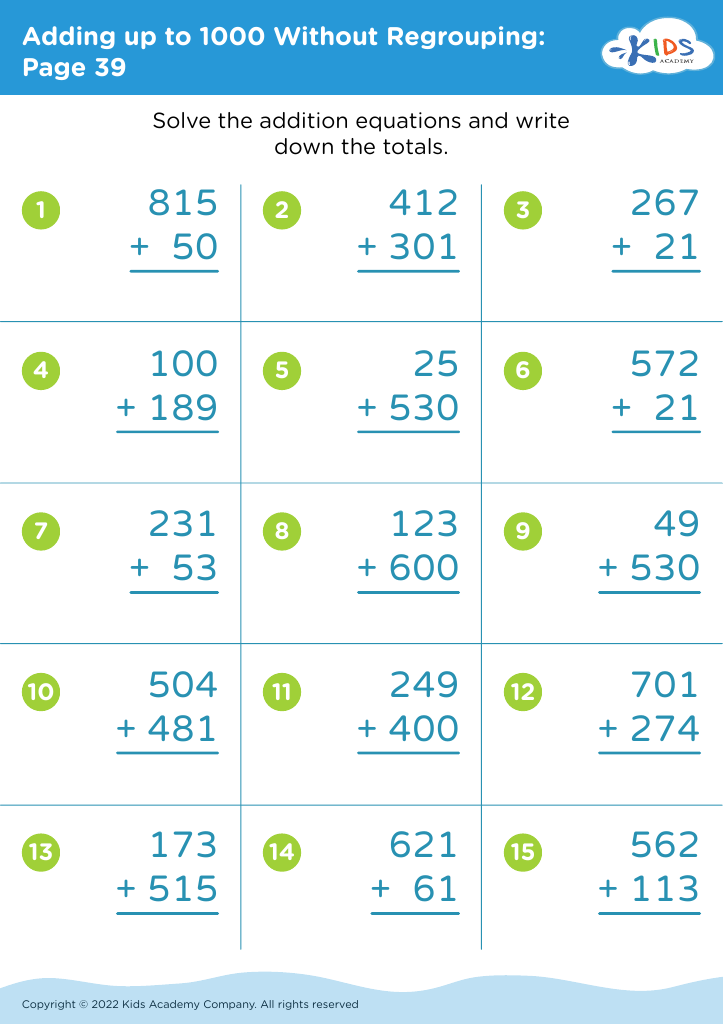


Parents and teachers play a pivotal role in a child's early academic development, and fostering skills like alphabet recognition and basic arithmetic is crucial. At ages 8-9, children undergo significant cognitive growth, making this a prime time to solidify foundational skills. Alphabet recognition aids in reading and writing proficiency, facilitating better communication and comprehension. Additionally, by encouraging exercises like adding up to 1000 without regrouping, children are introduced to more complex mathematical concepts, enhancing problem-solving skills and numerical literacy.
This dual focus on literacy and arithmetic not only improves academic performance but also boosts overall confidence. Mastering alphabet recognition ensures children can engage fully with written material, laying the groundwork for advanced literacy skills. Meanwhile, proficiency in arithmetic, specifically adding without regrouping, reinforces mental math abilities and prepares children for more advanced mathematical operations.
Parents and teachers supporting these foundational skills enable children to approach future learning with enthusiasm and self-assurance. Their active involvement can transform potentially daunting tasks into enjoyable learning opportunities, creating positive educational experiences. Investing time and efforts in these areas helps cultivate lifelong learners who are well-equipped to tackle more complex tasks in their later academic years.