Comparing Fractions Adding up to 1000 Without Regrouping Worksheets for Ages 8-9
3 filtered results
-
From - To
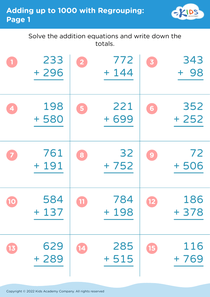
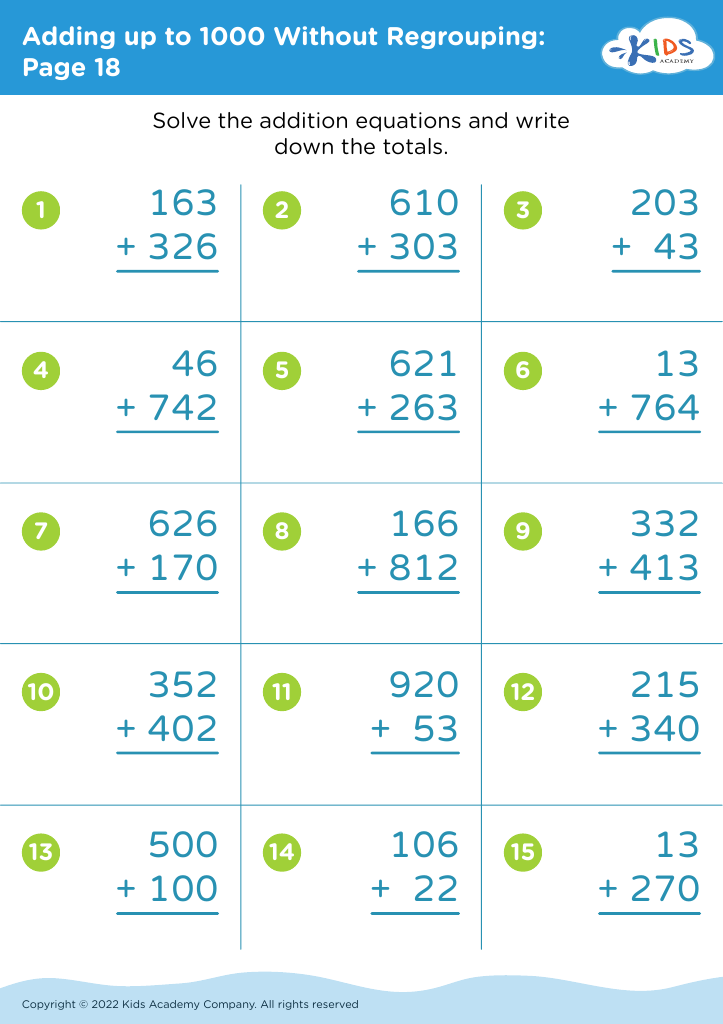
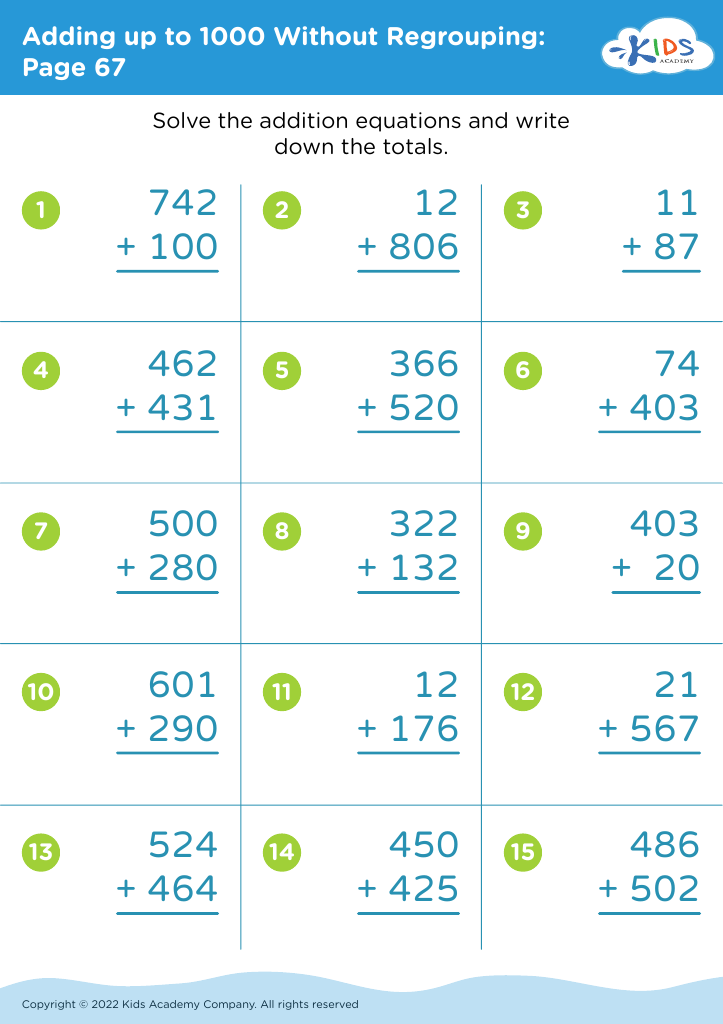
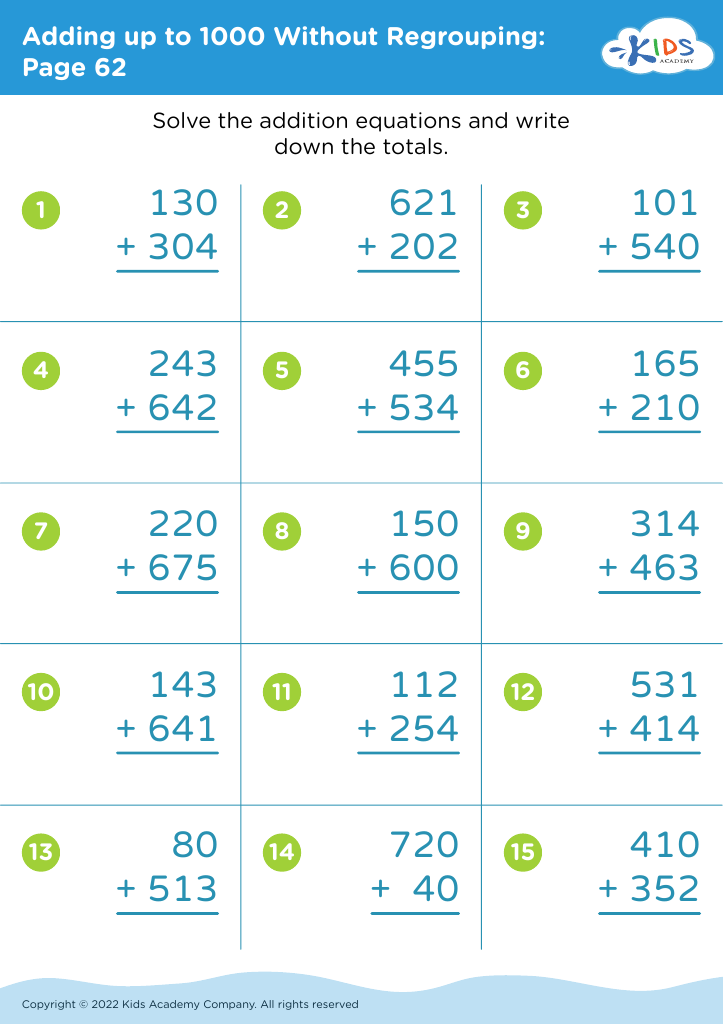
Explore our engaging "Comparing Fractions Adding up to 1000 Without Regrouping Worksheets," designed for children ages 8-9. These worksheets provide a practical approach to understanding fractions by encouraging learners to compare and analyze numerical values effectively. Seamlessly integrating addition concepts up to 1000 without regrouping, our resources are perfect for reinforcing foundational math skills. Each worksheet features colorful illustrations and interactive problems that captivate young minds, making learning both fun and educational. Ideal for both classroom activities and home practice, these worksheets empower children to build confidence and proficiency in comparing fractions while enhancing their overall arithmetic skills. Download and start learning today!


Understanding how to compare fractions is a crucial skill for children ages 8-9, as it forms the foundation for more advanced mathematical concepts. For parents and teachers, fostering proficiency in this area is essential for several reasons.
Firstly, comparing fractions enhances critical thinking skills. It encourages children to analyze different parts of a whole, fostering an understanding of quantities and relationships. Mastery in comparing fractions also reinforces their understanding of basic operations, which are vital for future math success.
Moreover, solving problems involving adding fractions that total up to 1000 without regrouping makes math less daunting. It cultivates a sense of achievement and boosts confidence. When students grasp these concepts, they find success in applying logical reasoning and strategies in problem-solving scenarios.
Furthermore, early competency in fractions contributes to improved performance in higher math, such as ratios, percentages, and algebra, as students progress through school. Parents and teachers can support this learning through engaging activities and proactive discussions, bridging connections to real-world applications. Ultimately, nurturing skills in comparing fractions enriches students’ overall mathematical literacy, setting them on a pathway towards academic accomplishment and a love for learning.