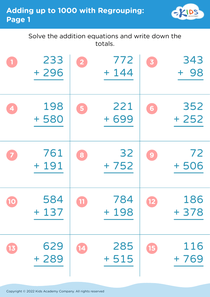
Reading comprehension Adding up to 1000 Without Regrouping Worksheets for Ages 8-9
4 filtered results
-
From - To
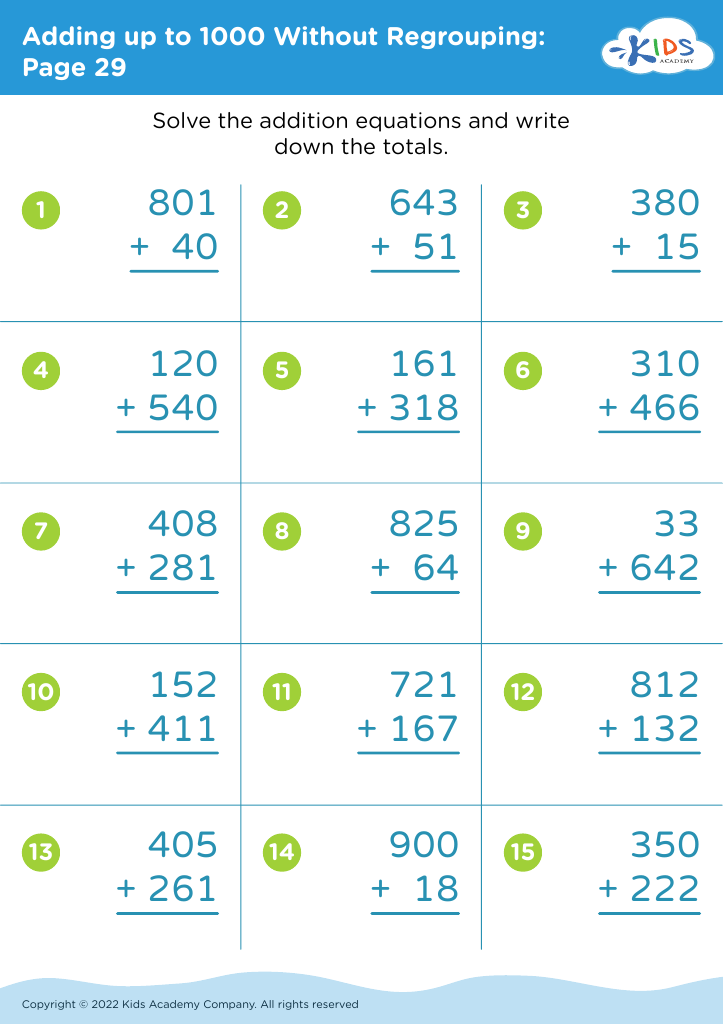
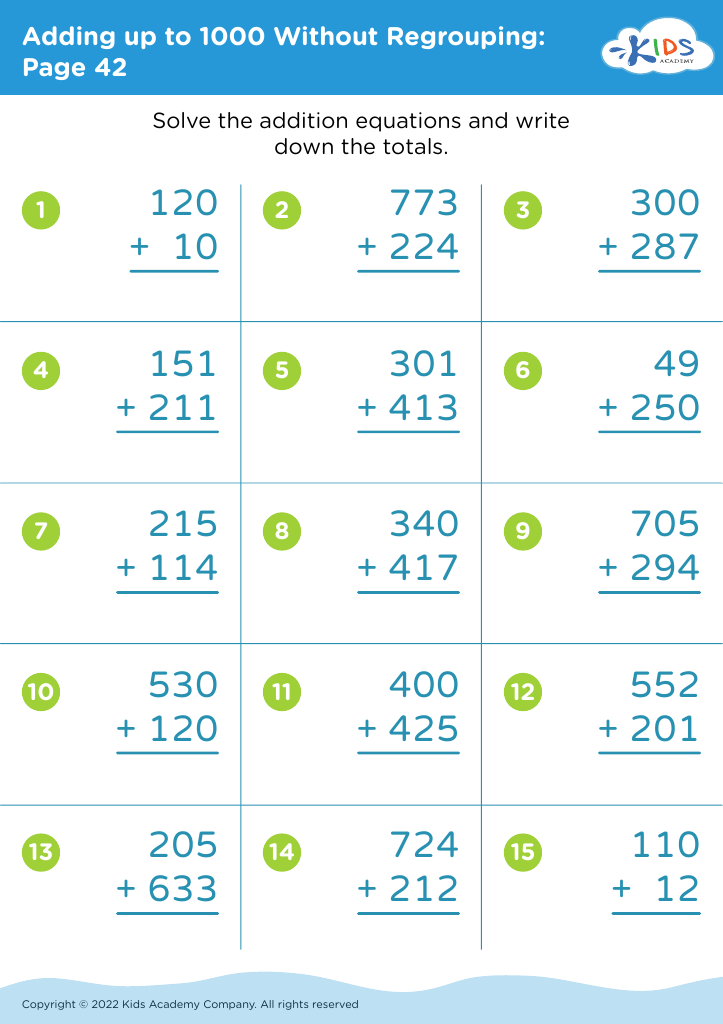
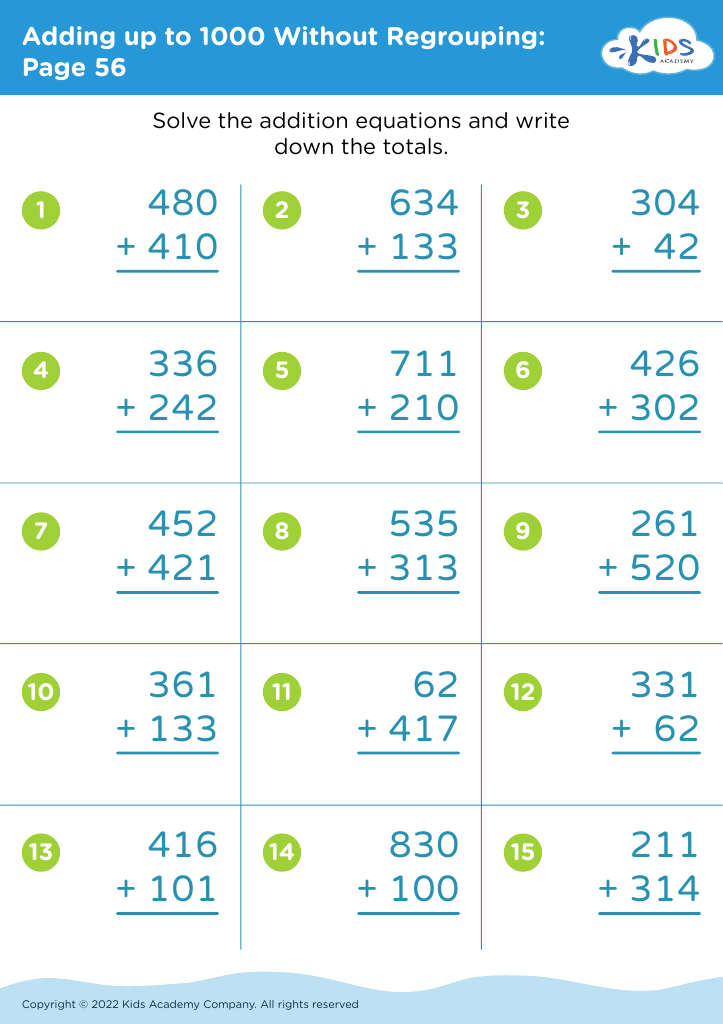
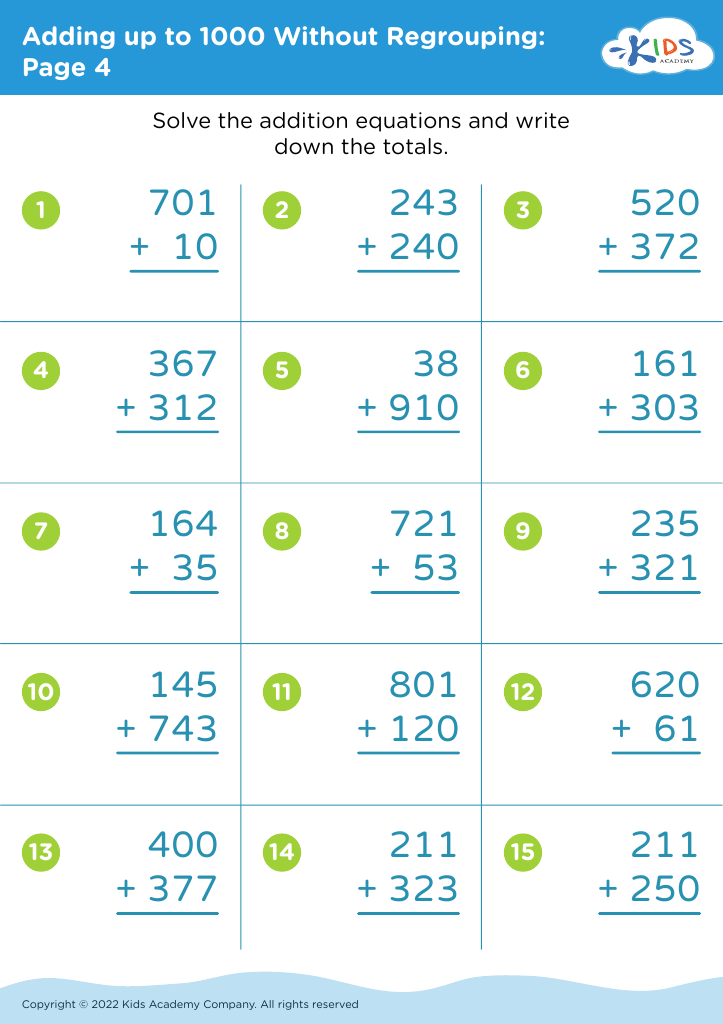
Explore our engaging "Reading Comprehension: Adding Up to 1000 Without Regrouping" worksheets designed for ages 8-9. These printable resources aim to build both math and literacy skills by integrating reading comprehension exercises with addition practices. Children will enhance their understanding of key concepts while developing critical thinking by solving word problems that require adding numbers up to 1000 without regrouping. Each worksheet encourages students to read carefully, analyze information, and apply their math knowledge effectively. Perfect for classroom use or at-home learning, these worksheets help foster a love for learning through fun and interactive challenges. Enhance your child's skills today!


Reading comprehension is a critical skill that empowers children to understand and engage with text, forming the foundation for successful learning across all subjects. For children aged 8-9, this skill is pivotal as they encounter more complex narratives and informational texts. When children excel in comprehension, they develop enhanced critical thinking skills, enabling them to analyze characters, themes, and information more deeply.
Teaching reading comprehension, particularly in the context of math concepts like “adding up to 1000 without regrouping,” demonstrates how interconnected skills are. Parents and teachers should focus on this area because it reinforces problem-solving strategies and encourages logical reasoning. When children learn to apply reading comprehension to math, they are better equipped to understand word problems, which often require extracting meaning and applying it mathematically.
Moreover, proficient comprehension enhances motivation, making learning more enjoyable. When students recognize the significance of what they read, they are more likely to engage in classroom discussions and ask questions, fostering a love of learning. Hence, parents and teachers should care about developing reading comprehension skills in tandem with mathematical concepts to ensure well-rounded academic development and prepare children for future challenges in both literacy and numeracy.