Addition skills Adding up to 1000 Worksheets for Ages 8-9
5 filtered results
-
From - To
Enhance your child's math skills with our "Addition Skills: Adding Up to 1000" worksheets, designed specifically for ages 8-9. These engaging and interactive resources provide targeted practice in addition, helping young learners confidently tackle numbers up to 1000. Our meticulously crafted worksheets feature diverse problem types, including word problems and visual aids, making learning fun and effective. Each activity is designed to reinforce essential skills and improve overall math fluency, setting the foundation for future success. Perfect for both classroom and home use, these worksheets ensure children are well-equipped to master addition in an enjoyable, stress-free way. Start boosting math confidence today!
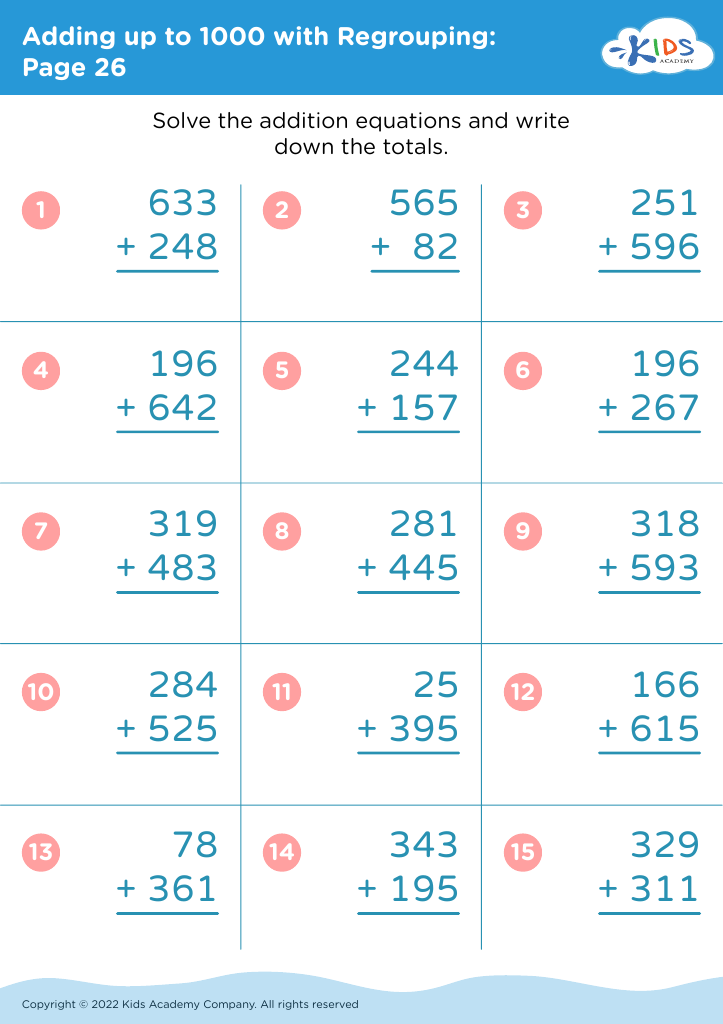
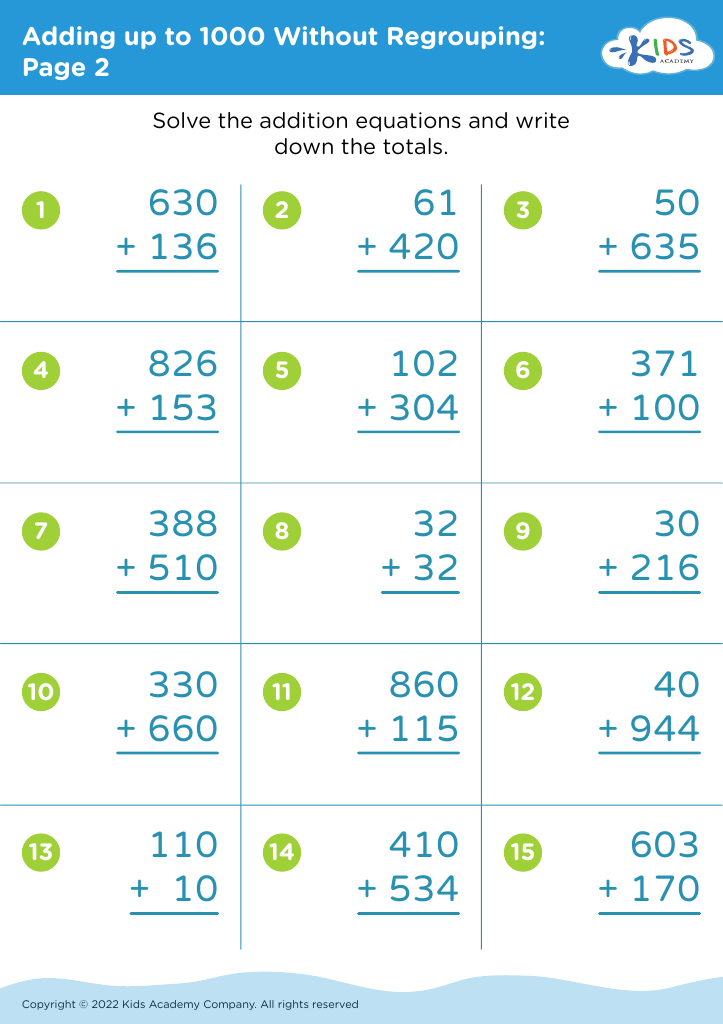
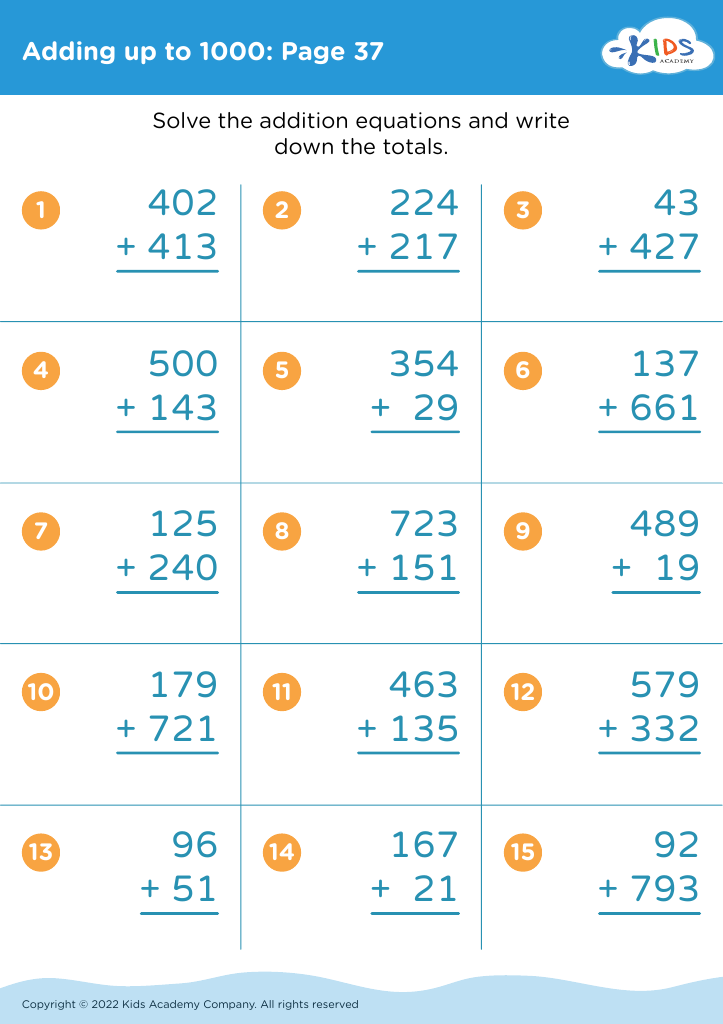
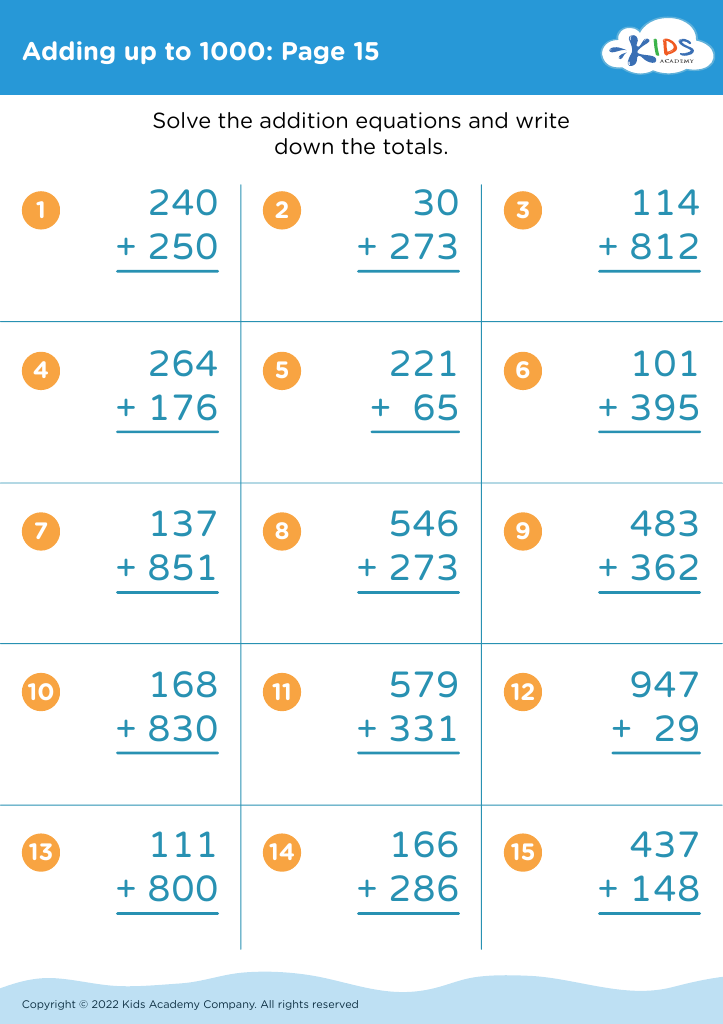
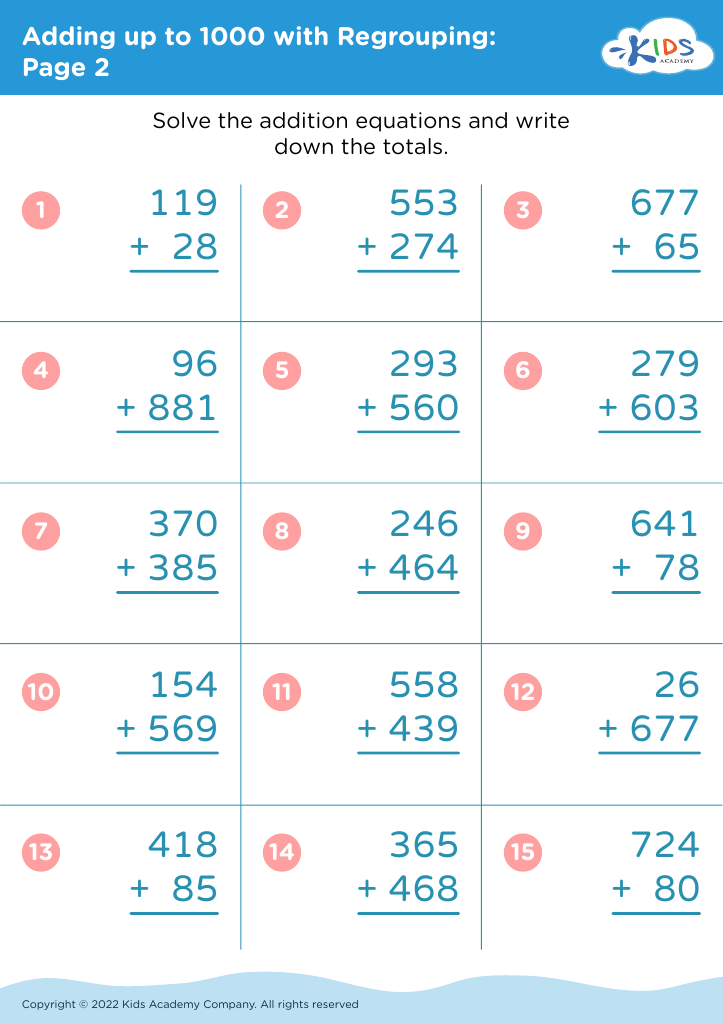



Addition skills, particularly for sums within 1000, are foundational for children aged 8-9 and greatly influence their overall mathematical development. At this age, students transition from basic arithmetic to more complex concepts, and mastering addition of larger numbers enhances their confidence in mathematics. Proficient addition skills are vital for real-life applications, such as budgeting, shopping, and even cooking, as these tasks often require quick and accurate calculations.
Moreover, strong addition skills support future academic success in subjects like geometry, measurement, and even statistical analysis. As students progress, they will encounter word problems and mathematical reasoning tasks that can be challenging without a solid grasp of basic addition. Additionally, fostering these skills can encourage a growth mindset, instilling resilience and a positive attitude toward problem-solving.
For teachers and parents, recognizing the importance of addition not only aids child development but also facilitates effective communication about progress in math. They can provide targeted support and resources, making learning engaging and relevant. Emphasizing the significance of these skills at this formative stage lays the groundwork for lifelong mathematical competence, ensuring children feel prepared to tackle increasingly challenging concepts as they advance in their education.








