Alphabet Recognition Adding up to 1000 Worksheets for Ages 8-9
4 filtered results
-
From - To
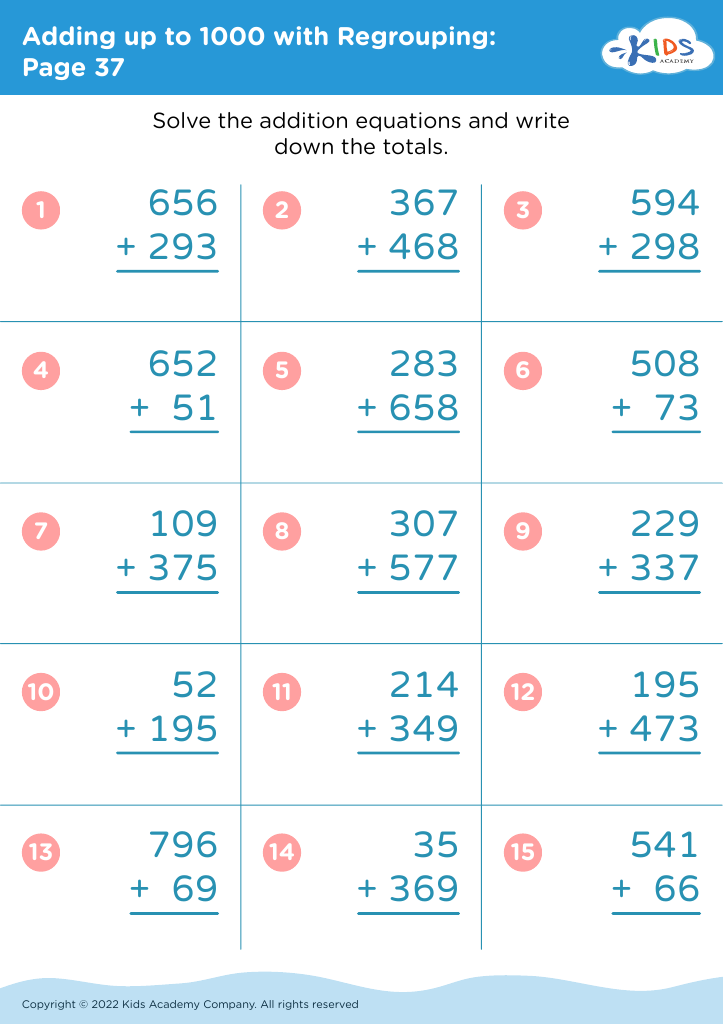
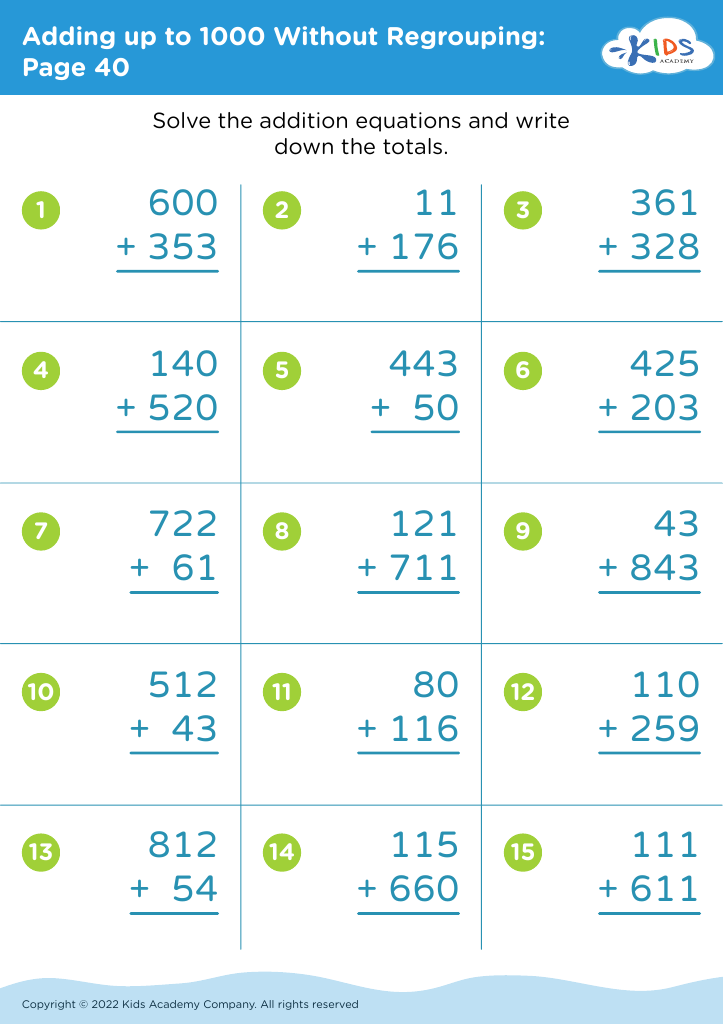
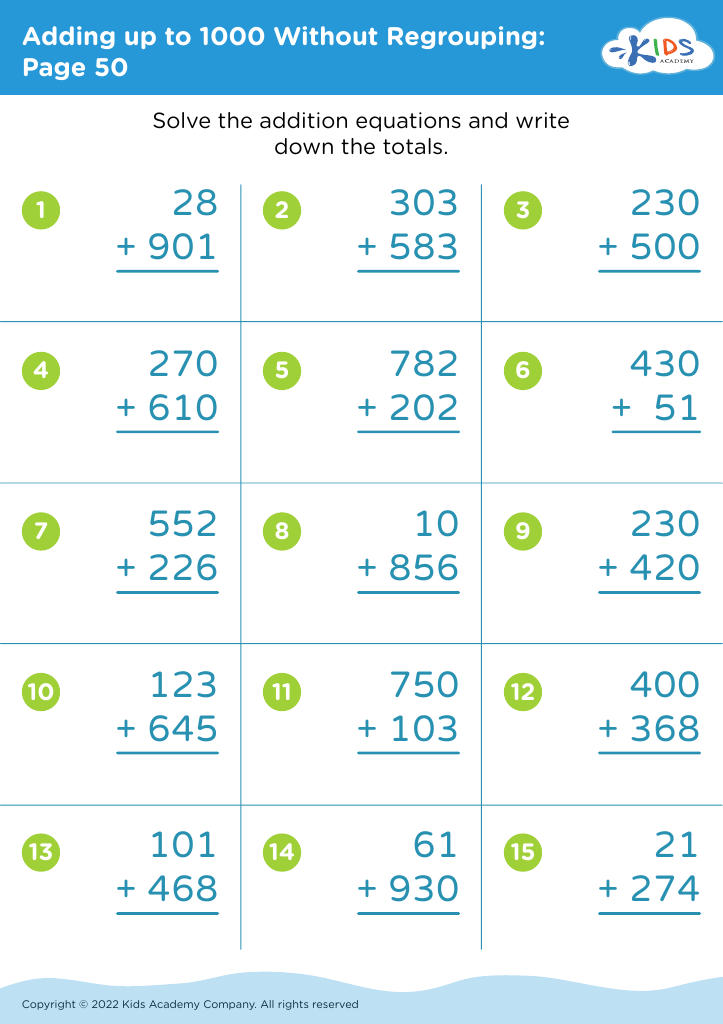
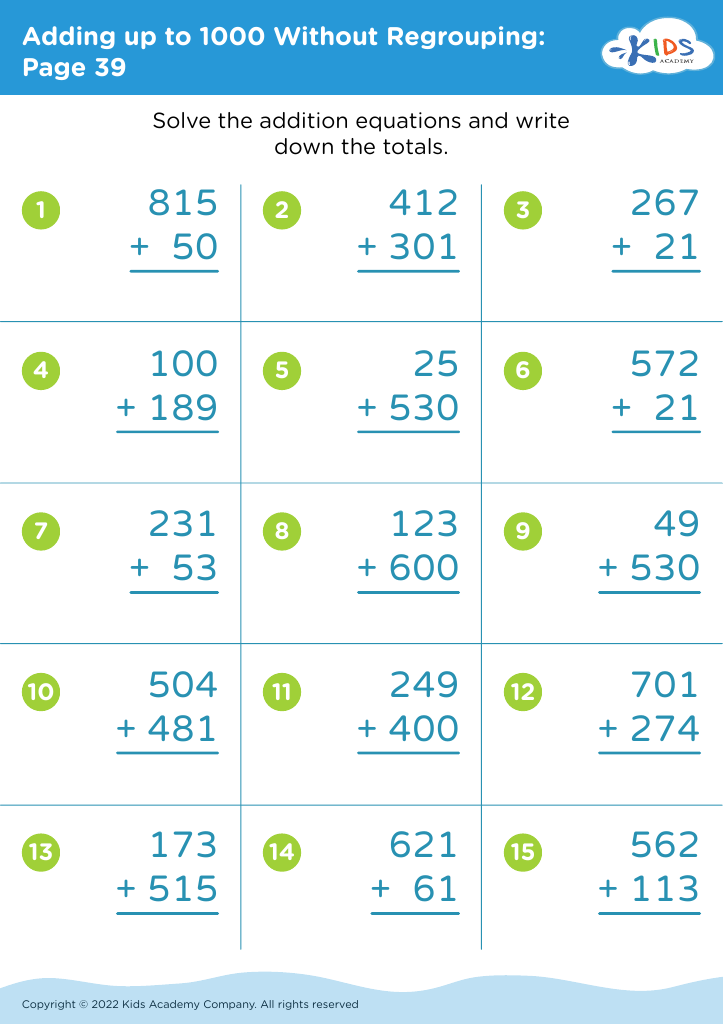
Enhance your child's learning with our "Alphabet Recognition Adding up to 1000 Worksheets" designed specifically for ages 8-9. These engaging worksheets seamlessly blend language arts and math skills, encouraging children to recognize letters while they practice addition. Each activity is crafted to boost their confidence and fluency in both identifying the alphabet and solving math problems up to 1000. With a variety of fun and interactive exercises, these worksheets not only make learning enjoyable but also reinforce essential skills crucial for academic success. Download now and give your child the tools to thrive in their educational journey, all while having fun!



Alphabet recognition is a foundational skill that plays a crucial role in a child's overall literacy development, particularly for children aged 8 to 9 who are advancing in their reading and writing abilities. When children can easily identify letters and their sounds, they gain the confidence needed to tackle more complex literacy tasks, such as decoding words and comprehending text.
This age group is at a critical stage in developing reading fluency, and strong alphabet recognition provides the groundwork for this growth. Teachers and parents should care because seamless letter identification enhances spelling skills, vocabulary growth, and the ability to engage with written content effectively. Additionally, recognizing that letters often come together to form new sounds and words enables children to become more versatile writers.
Furthermore, mastering the alphabet supports success in other academic areas like math and science, where understanding instructions and reading problems is essential. Children who struggle with alphabet recognition may face challenges in school, potentially leading to frustration and decreased motivation. By prioritizing alphabet recognition during this formative period, parents and educators can foster greater academic achievement, instilling a lifelong love of reading and learning. Thus, investing attention in these skills at ages 8-9 is crucial for fostering enduring academic success.








