Color Identification Adding up to 1000 Worksheets for Ages 8-9
6 filtered results
-
From - To
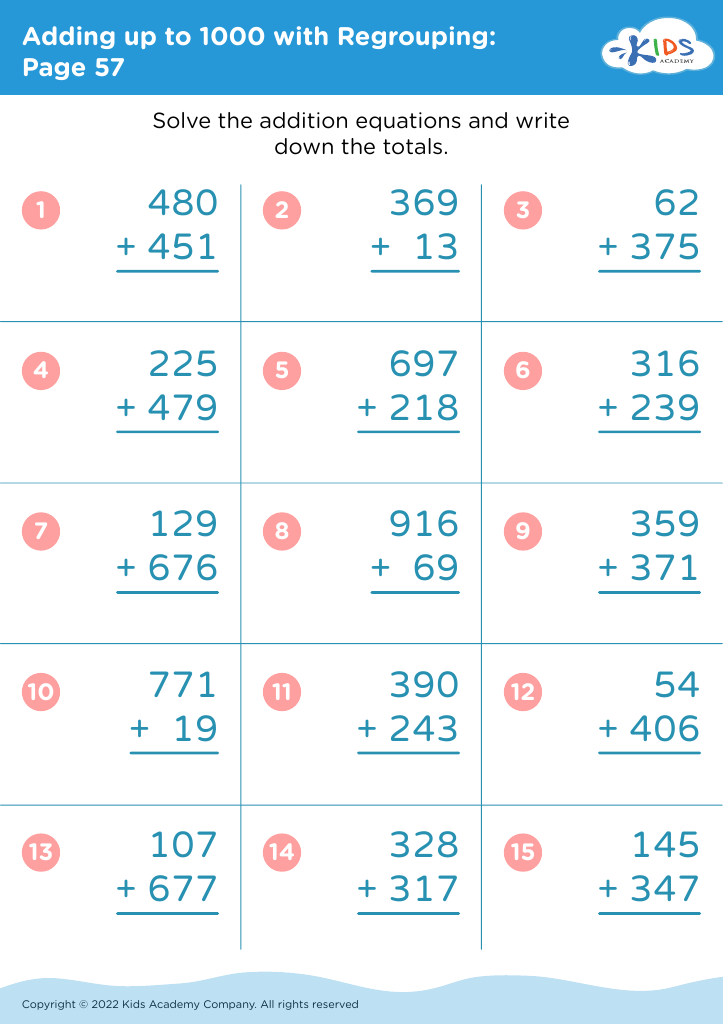
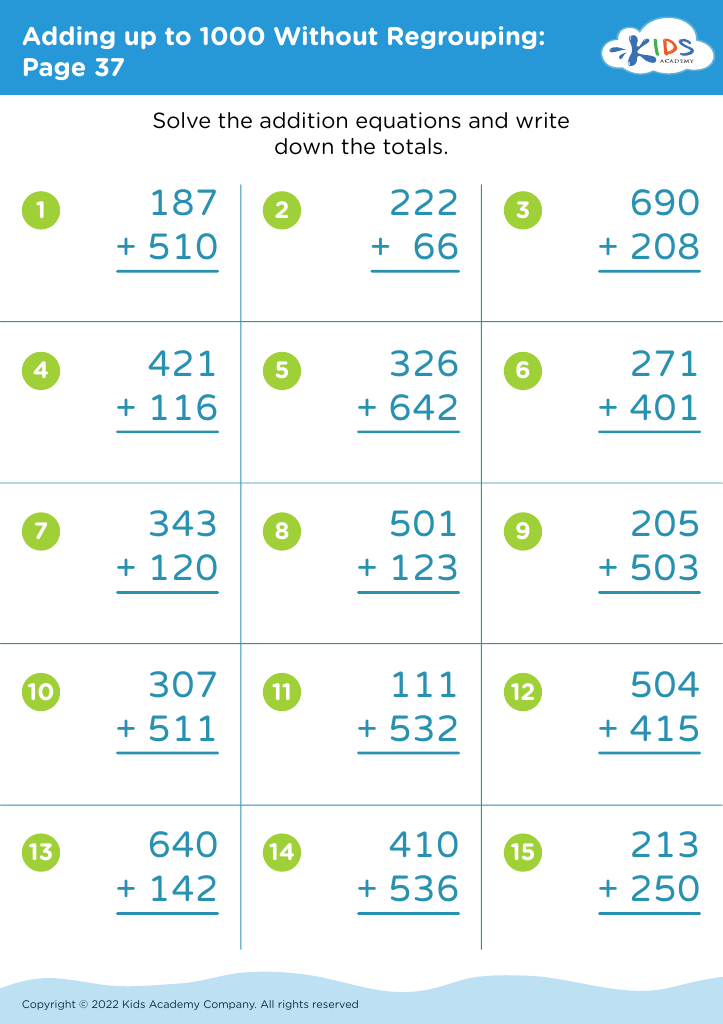
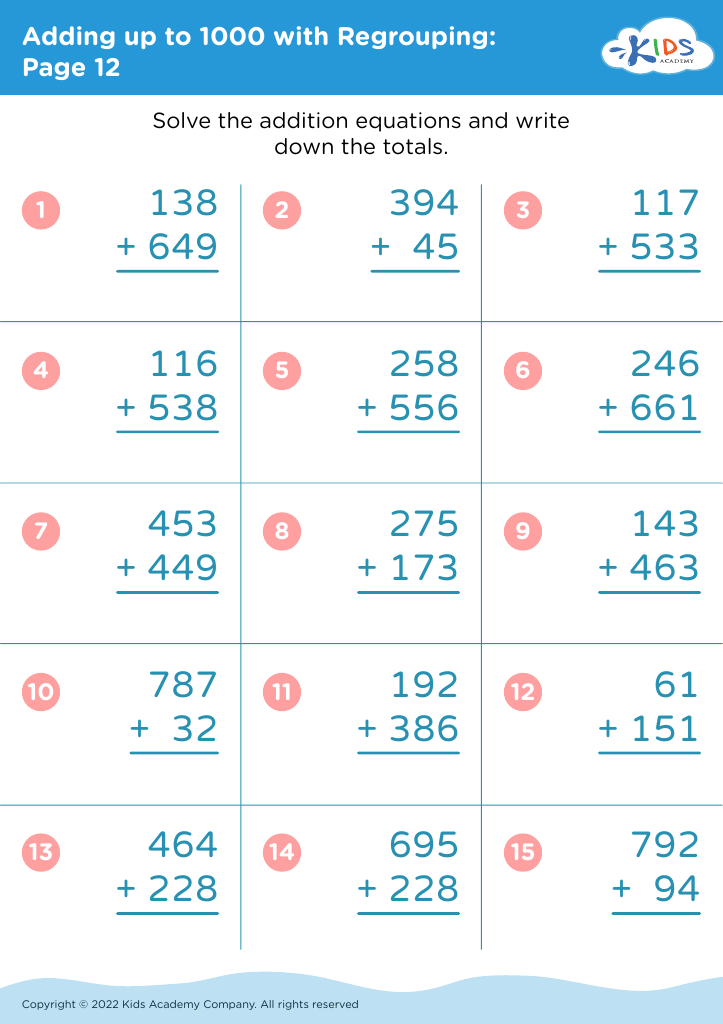
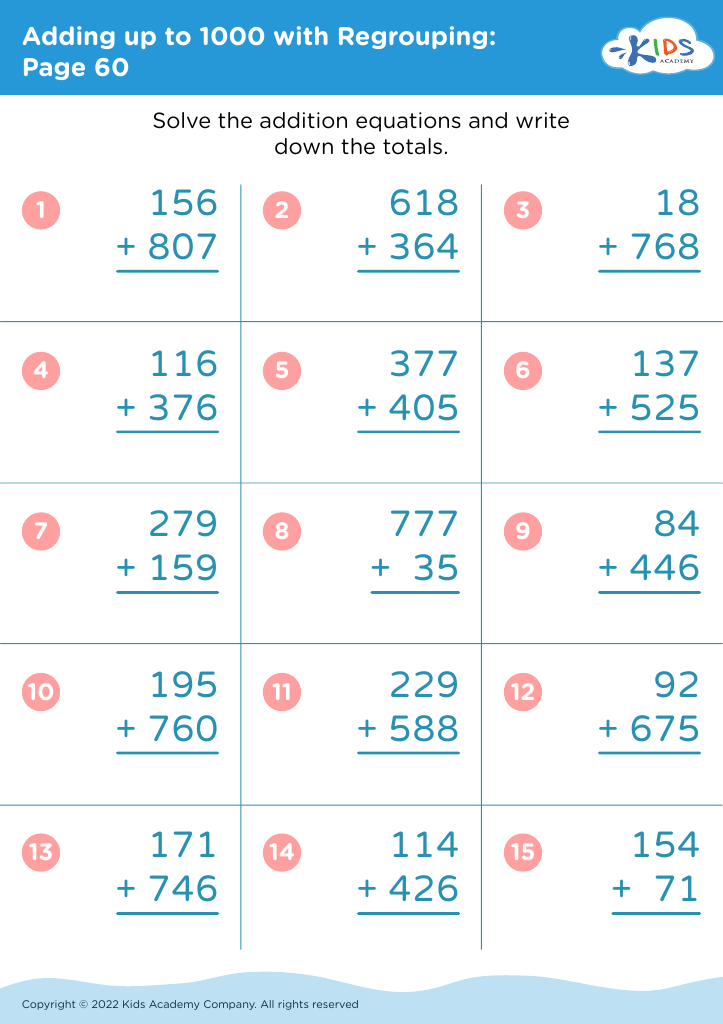
Discover our engaging "Color Identification Adding up to 1000 Worksheets" tailored for children aged 8-9! These worksheets combine essential math practice with vibrant color identification activities, making learning fun and interactive. As students work on addition skills up to 1000, they will also enhance their ability to recognize and name colors, fostering cognitive development. Each worksheet is designed to captivate young learners, ensuring they stay motivated while improving their math and color knowledge. Perfect for classrooms or home practice, these resources support skill mastery while promoting creativity. Enrich your child’s educational journey with our beautifully designed worksheets today!



Color identification is a fundamental skill that extends beyond simply recognizing shades; it plays a crucial role in cognitive development, creativity, and emotional expression for children aged 8-9. For parents and teachers, fostering this skill is essential as it enhances children’s ability to categorize and make sense of the world around them. It helps in developing language and communication skills, as children learn to describe and articulate their observations.
Additionally, color recognition can significantly impact children's artistic and imaginative capacities, encouraging them to express themselves creatively through art and design. Moreover, understanding colors can aid in developing fine motor skills through activities that involve coloring, painting, or crafting.
When it comes to math, integrating color identification into activities involving numbers, like creating visual patterns or color-coded projects that sum up to 1000, can help children engage more deeply. This multifaceted approach aids in reinforcing both math and visual literacy skills, promoting critical thinking, and problem-solving.
Overall, when parents and teachers prioritize color identification, they are nurturing a well-rounded education that supports children in becoming creative, analytical thinkers, preparing them for future academic and personal success.








