Color recognition Adding up to 1000 Worksheets for Ages 8-9
3 filtered results
-
From - To
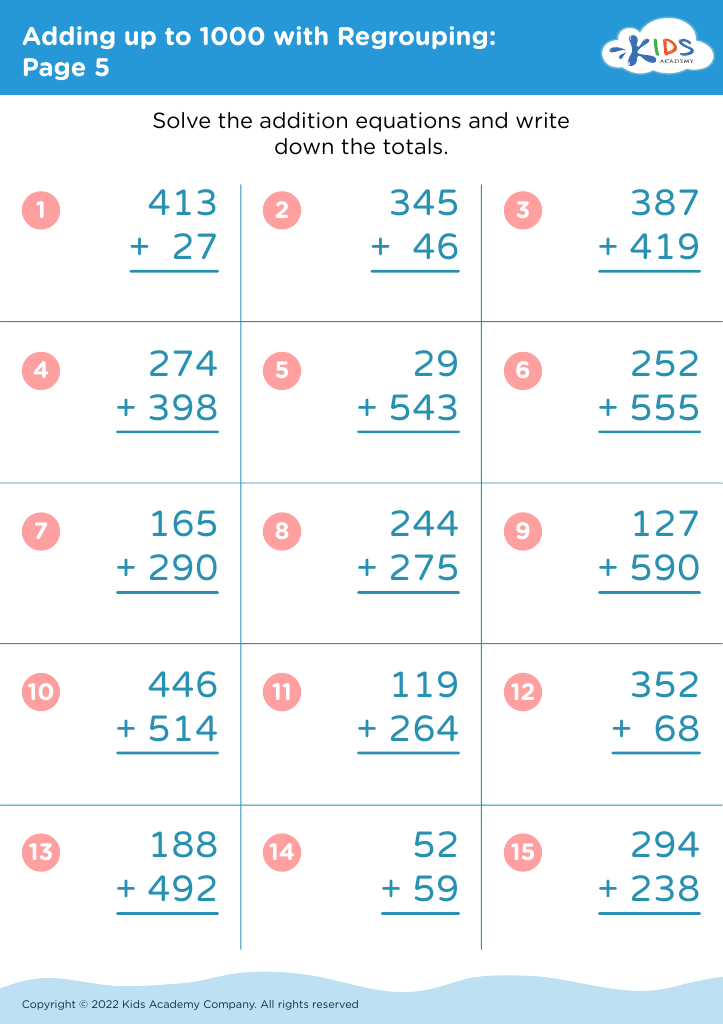
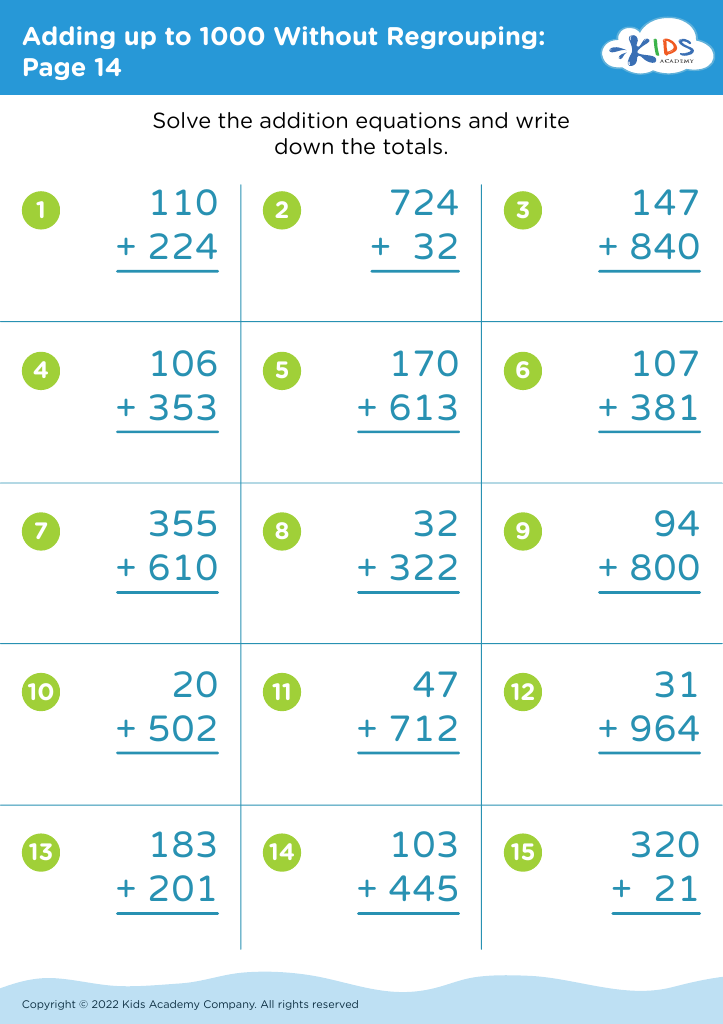
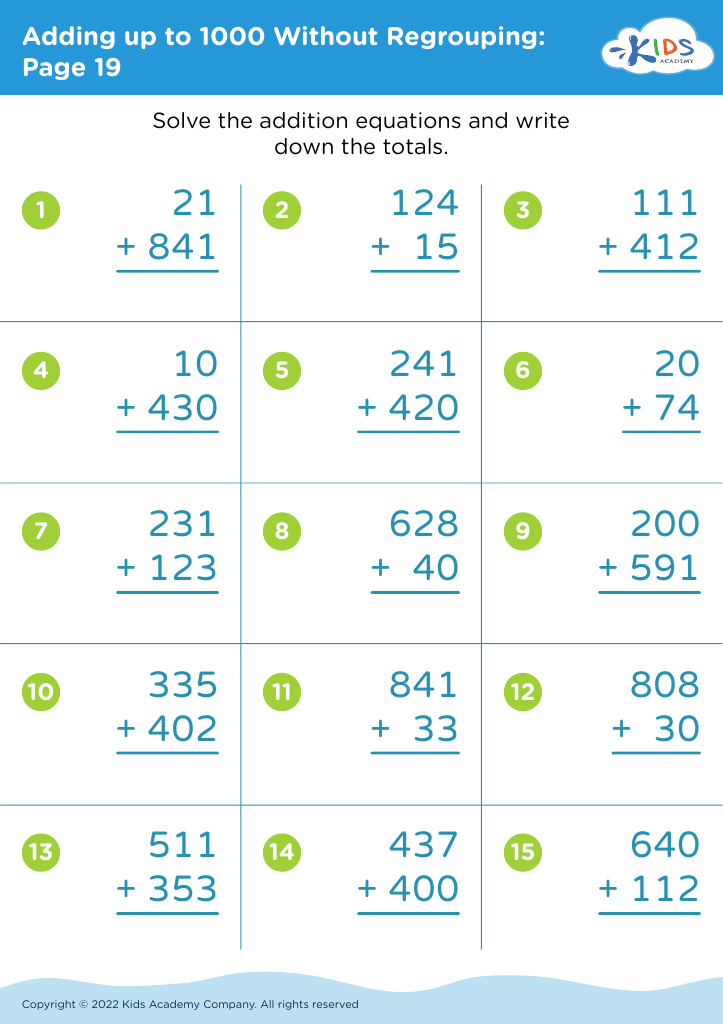
Discover the engaging world of color recognition with our "Adding Up to 1000 Worksheets" designed specifically for children aged 8-9. These worksheets combine fun and learning, helping young learners enhance their math skills while identifying and differentiating between vibrant colors. As students practice addition with numbers up to 1000, they also develop their visual literacy by associating numbers with colors. Our worksheets are crafted to promote critical thinking and improve focus, making math enjoyable and interactive. Perfect for classroom or home use, these resources prepare your child for math success in a creative way. Download your printable worksheets today!



Color recognition is an essential skill for children, especially for ages 8-9, as it enhances their cognitive development and supports various learning areas. Firstly, understanding colors helps kids in daily life, from choosing appropriate clothes to identifying items in their environment. This skill fosters observation and attention to detail, which are crucial for academic success.
Moreover, color recognition lays the foundation for more advanced concepts in art and science. In subjects like mathematics and geography, incorporating colors can make abstract concepts more relatable and easier to grasp. For instance, understanding color coding in graphs or maps facilitates data interpretation.
Additionally, involving children in activities that center around color, such as art projects or nature explorations, can build creativity and critical thinking. Engaging with colors encourages self-expression and enhances emotional intelligence as children learn to associate colors with feelings and experiences.
By recognizing the importance of color in their children's development, parents and teachers can create meaningful learning experiences that capture kids' interests. This promotes a love for learning, encourages exploration, and cultivates a well-rounded understanding of the world around them. Therefore, emphasizing color recognition is vital for cognitive and emotional growth in children during these formative years.








