Filters

19 filtered results

Clear all filters
Favorites
With answer key
Interactive

19 filtered results

Difficulty Level

Grade


Enhance your child's math skills with our engaging Counting Practice Adding Up to 1000 Worksheets, designed specifically for ages 8-9. These interactive worksheets provide a fun and effective way for young learners to master addition and develop their counting abilities. Each worksheet offers varied exercises that challenge students to add numbers accurately, reinforcing their understanding of mathematical concepts. With colorful designs and clear instructions, these worksheets make learning enjoyable while building confidence in math. Ideal for teachers and parents seeking additional resources for home or classroom use, our counting practice is perfect for preparing your child for future math success!
Check out this FREE Trial Lesson on Adding up to 1000 for age 8-9!

L

Favorites
With answer key
Interactive
  • 8-9
  • Counting practice
  • Adding up to 1000
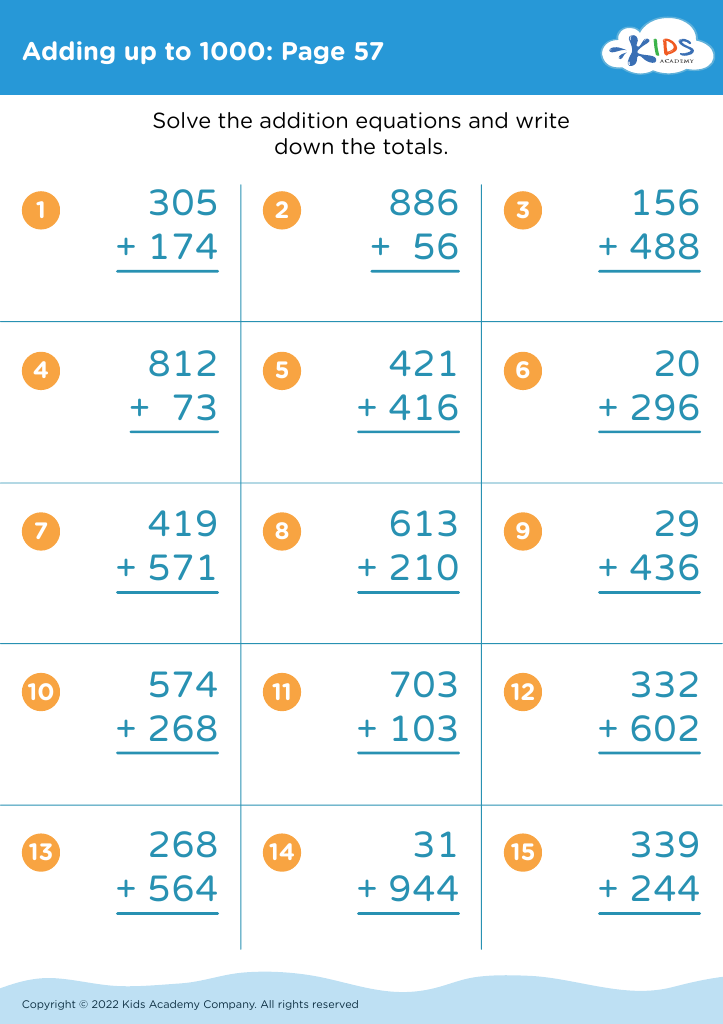
Adding up to 1000: Page 57

Adding up to 1000: Page 57

Adding up to 1000: Page 57
Worksheet
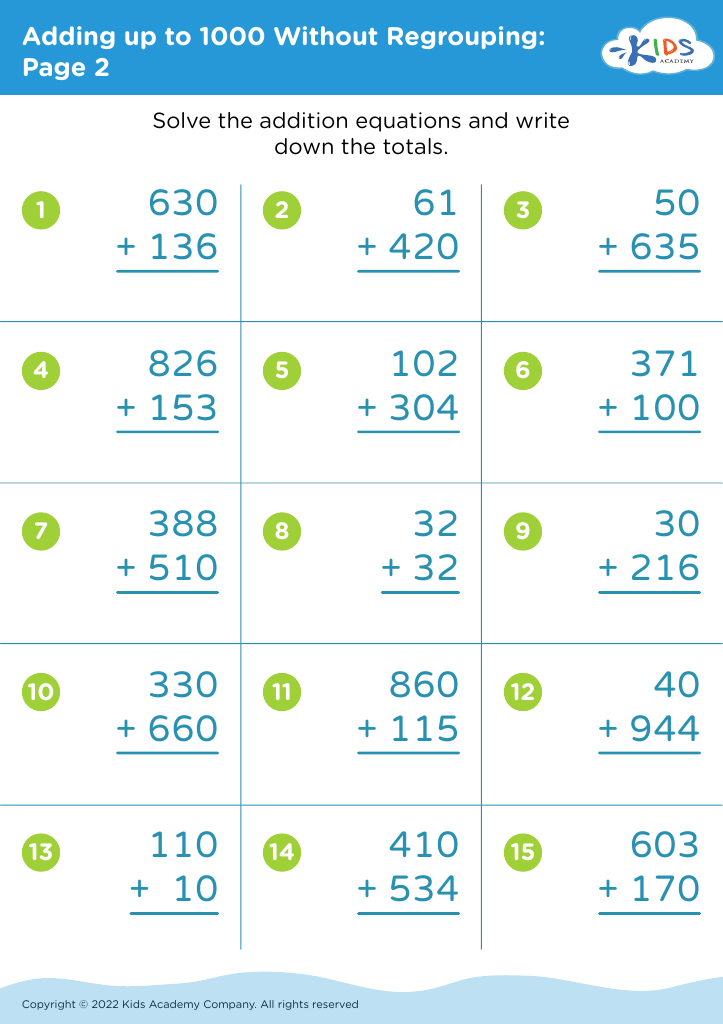
Adding up to 1000 Without Regrouping: Page 2
Worksheet
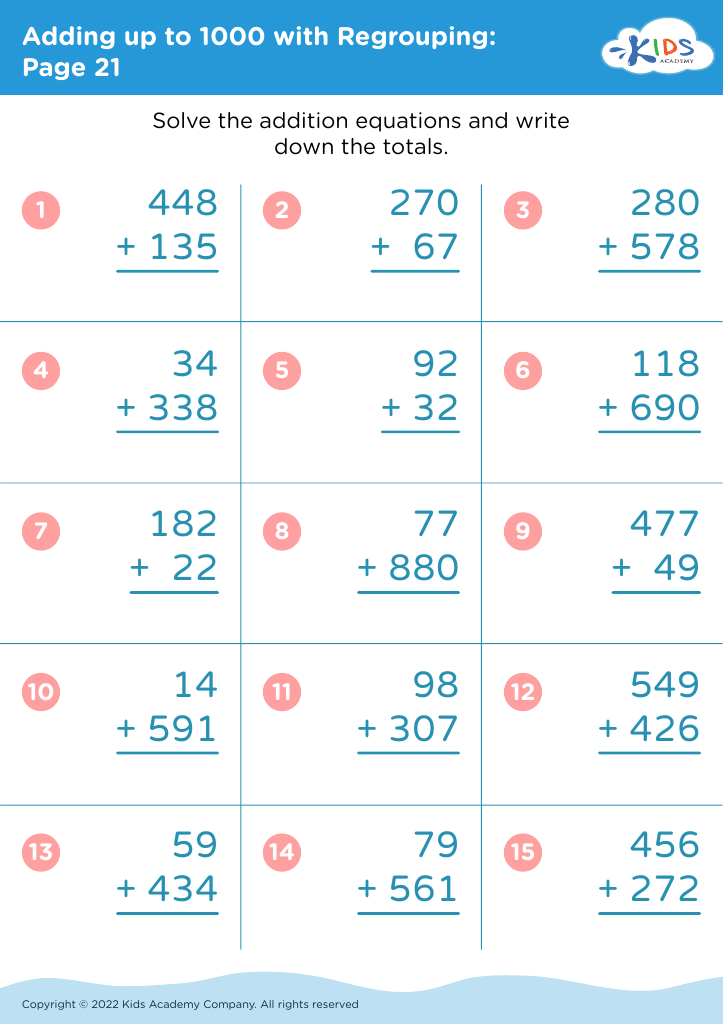
Adding up to 1000 with Regrouping: Page 21
Worksheet
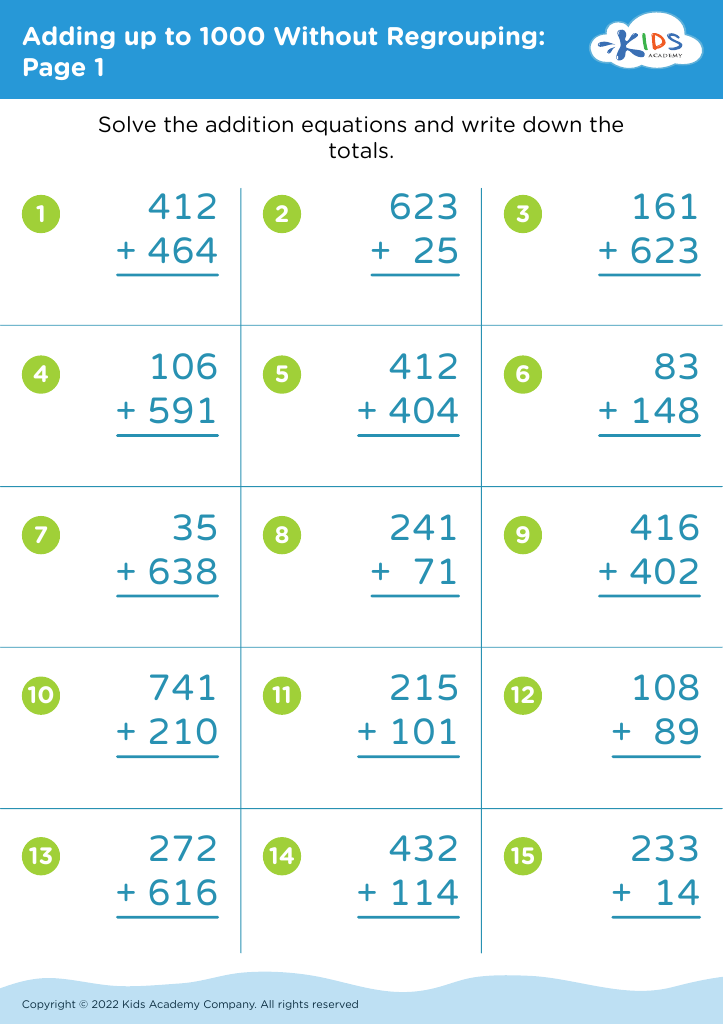
Adding up to 1000 Without Regrouping: Page 1
Worksheet
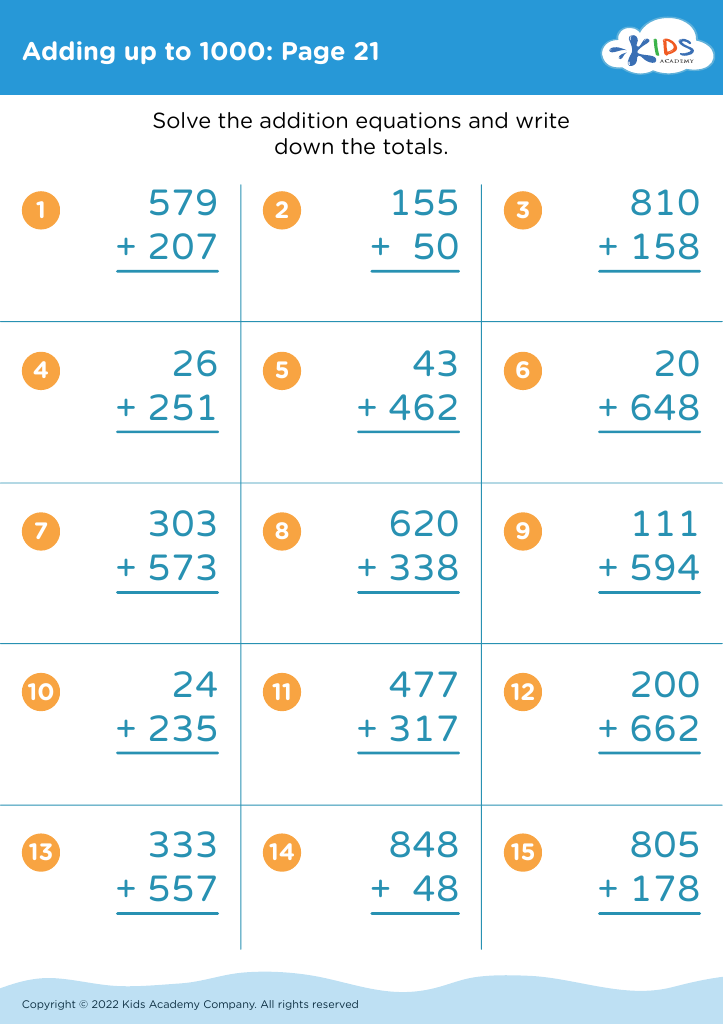
Adding up to 1000: Page 21

Adding up to 1000: Page 21

Adding up to 1000: Page 21
Worksheet
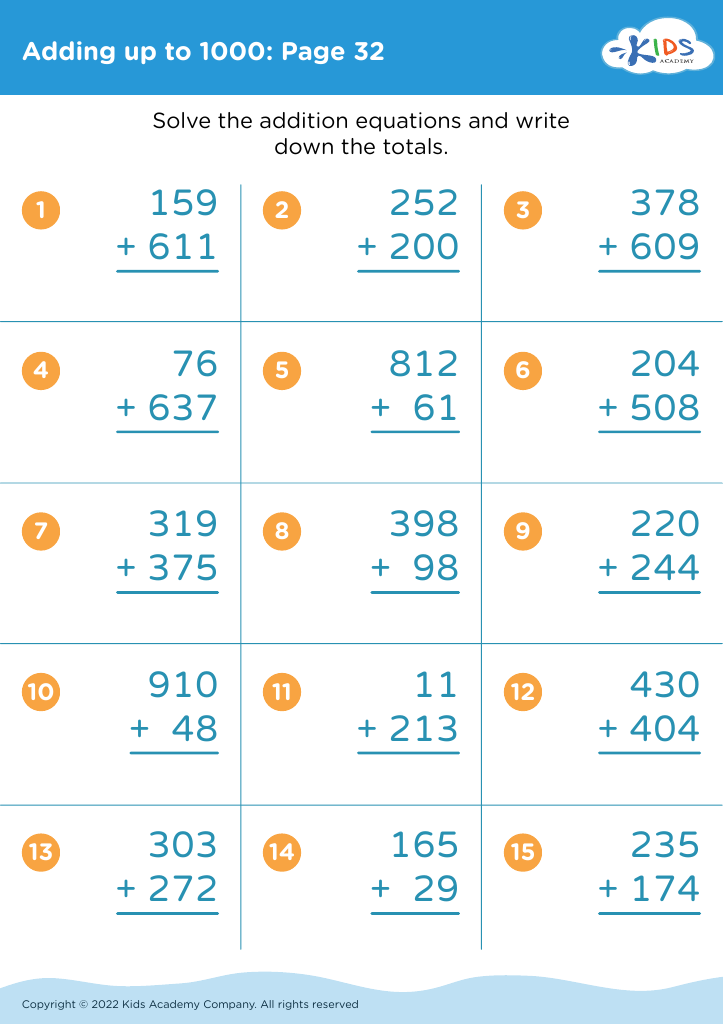
Adding up to 1000: Page 32

Adding up to 1000: Page 32

Adding up to 1000: Page 32
Worksheet
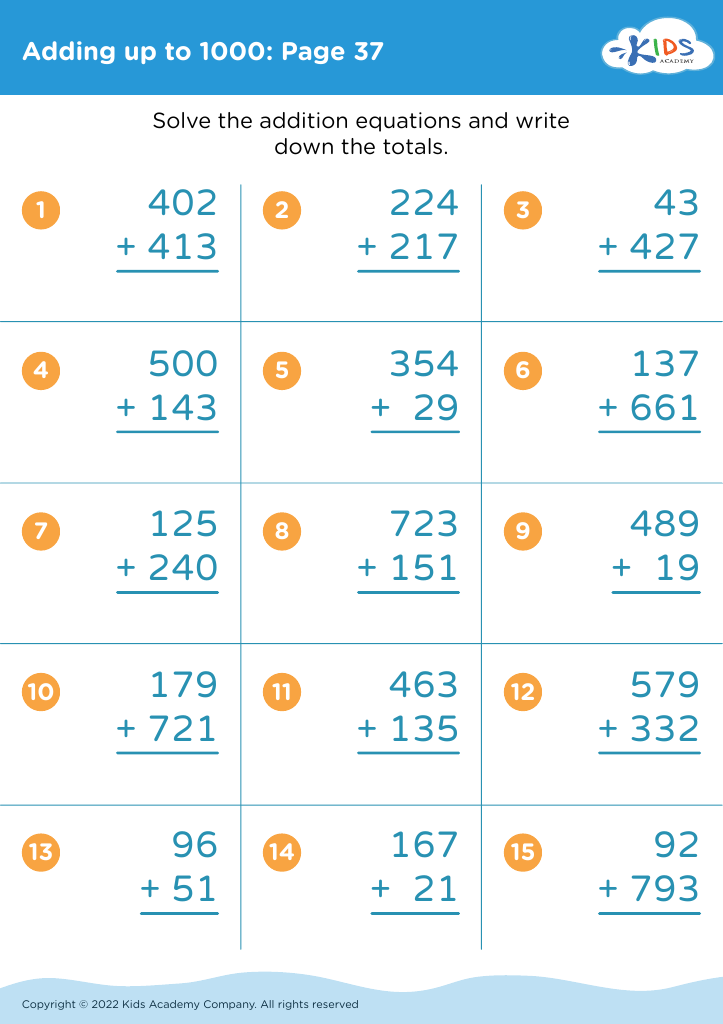
Adding up to 1000: Page 37

Adding up to 1000: Page 37

Adding up to 1000: Page 37
Worksheet
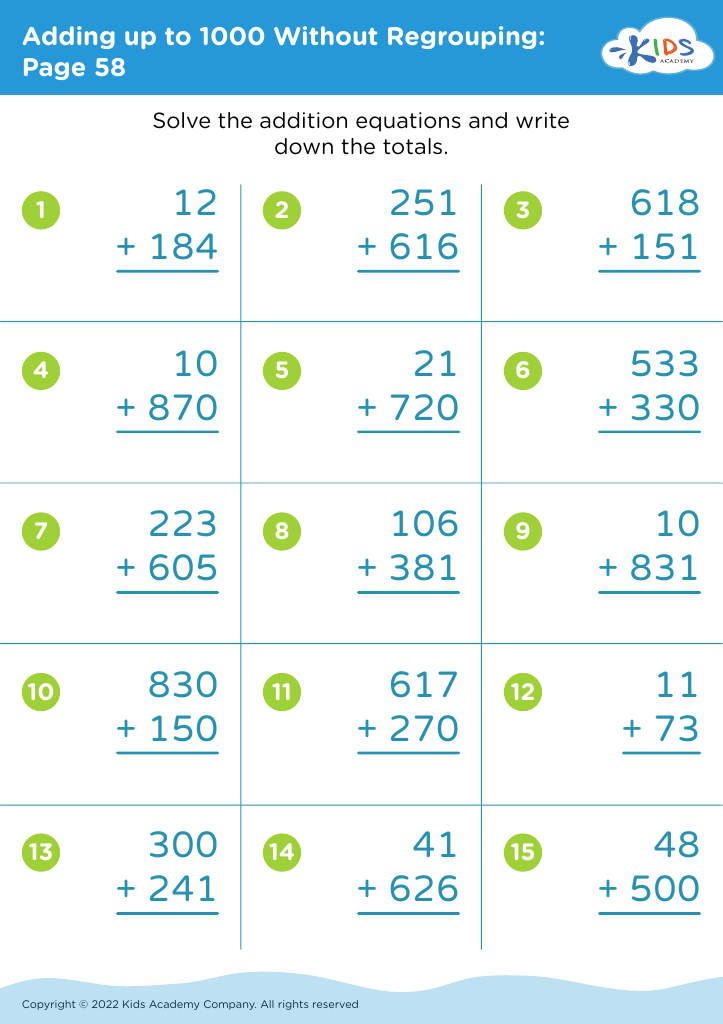
Adding up to 1000 Without Regrouping: Page 58
Worksheet
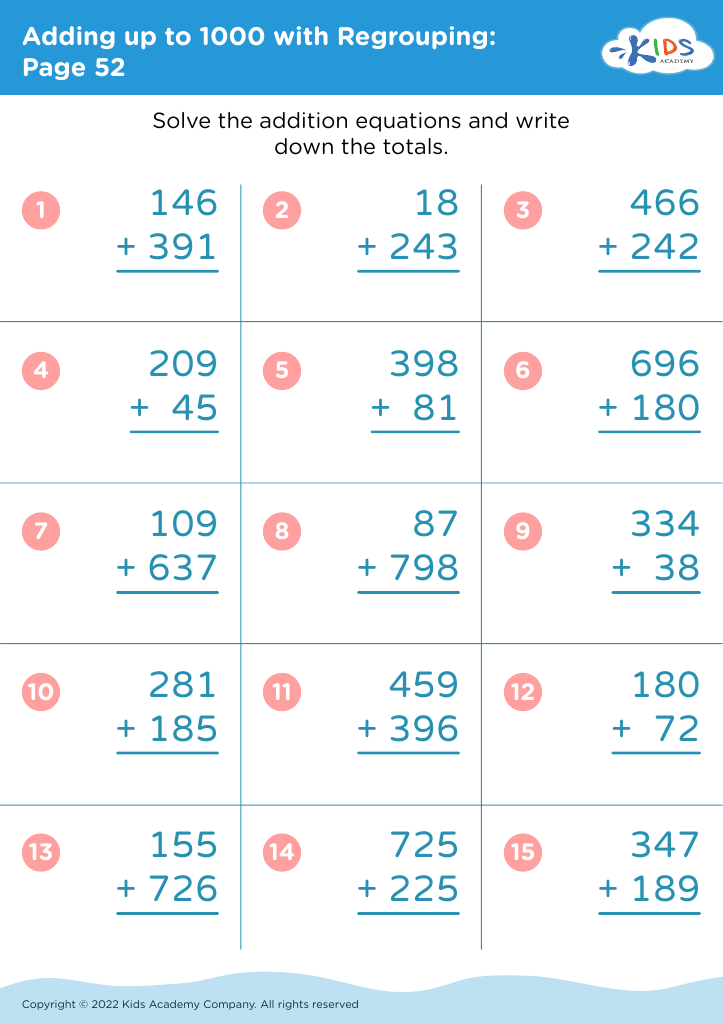
Adding up to 1000 with Regrouping: Page 52
Worksheet
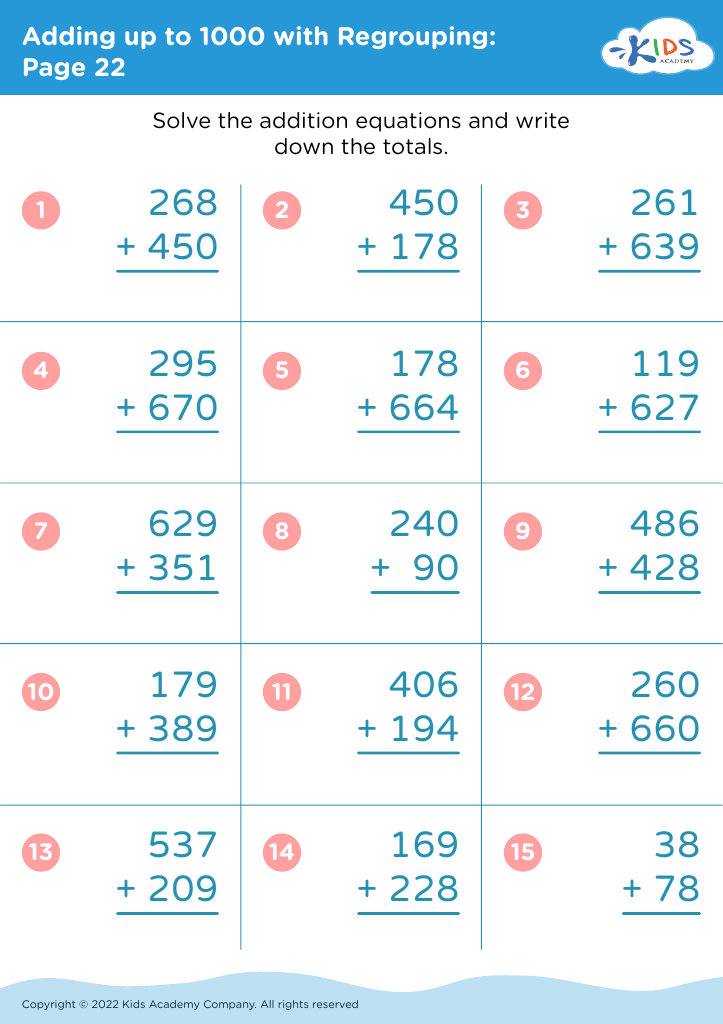
Adding up to 1000 with Regrouping: Page 22
Worksheet
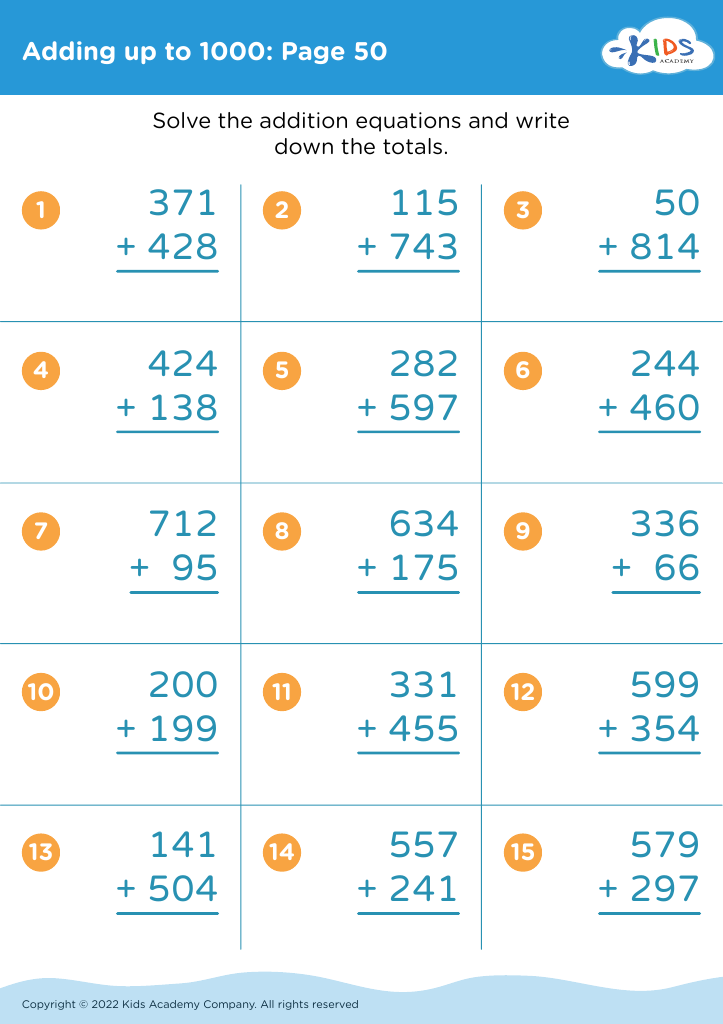
Adding up to 1000: Page 50

Adding up to 1000: Page 50

Adding up to 1000: Page 50
Worksheet
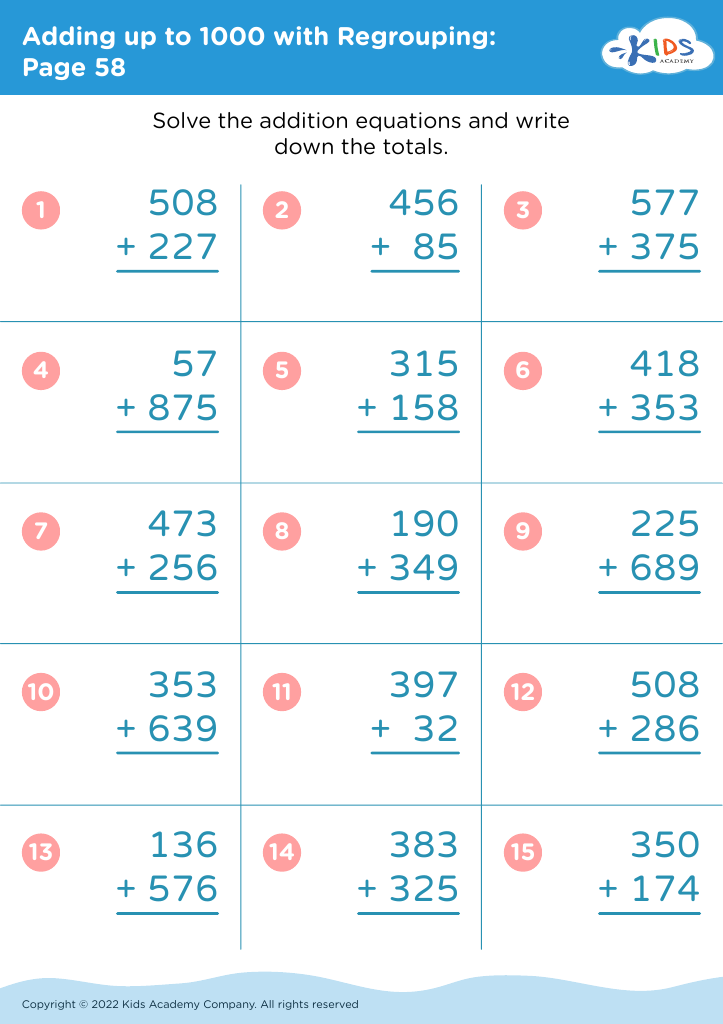
Adding up to 1000 with Regrouping: Page 58
Worksheet
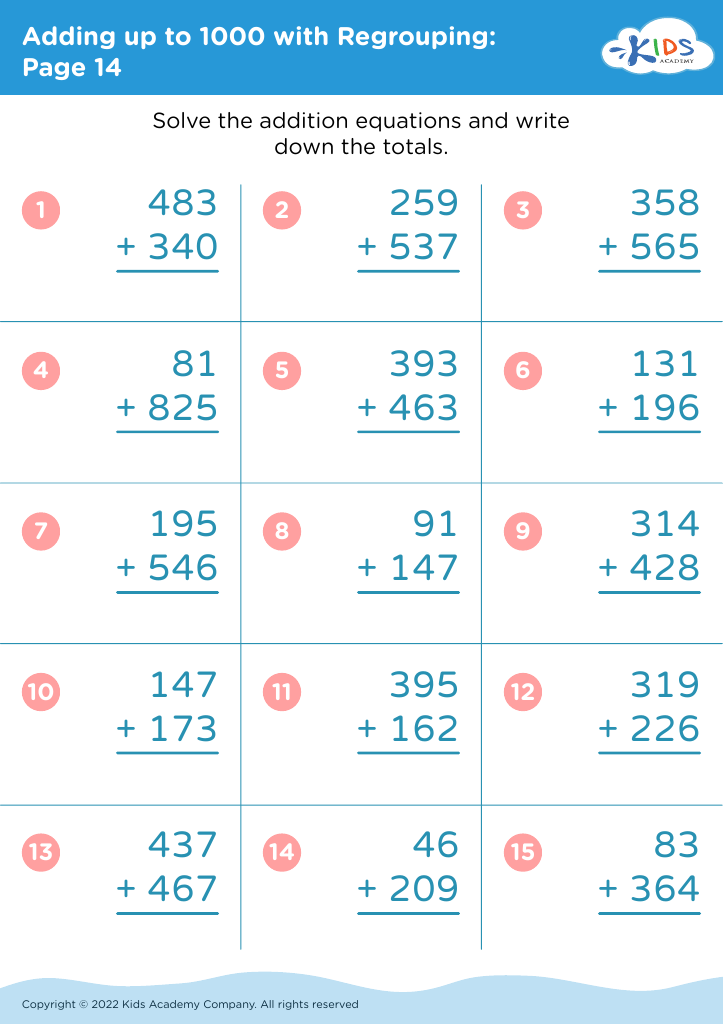
Adding up to 1000 with Regrouping: Page 14
Worksheet
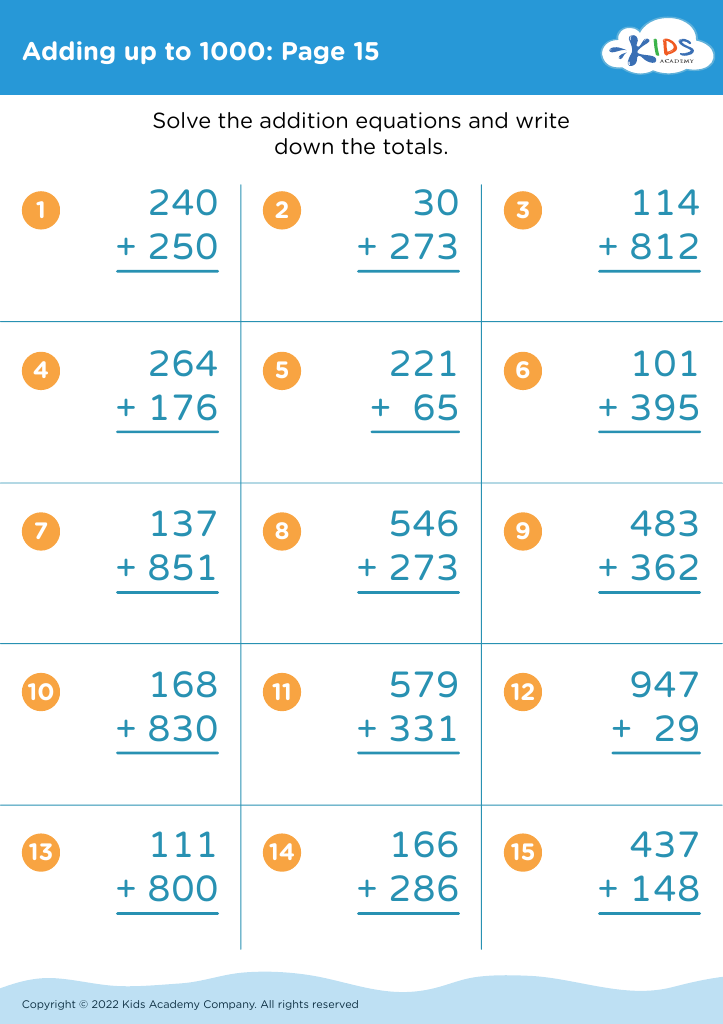
Adding up to 1000: Page 15

Adding up to 1000: Page 15

Adding up to 1000: Page 15
Worksheet
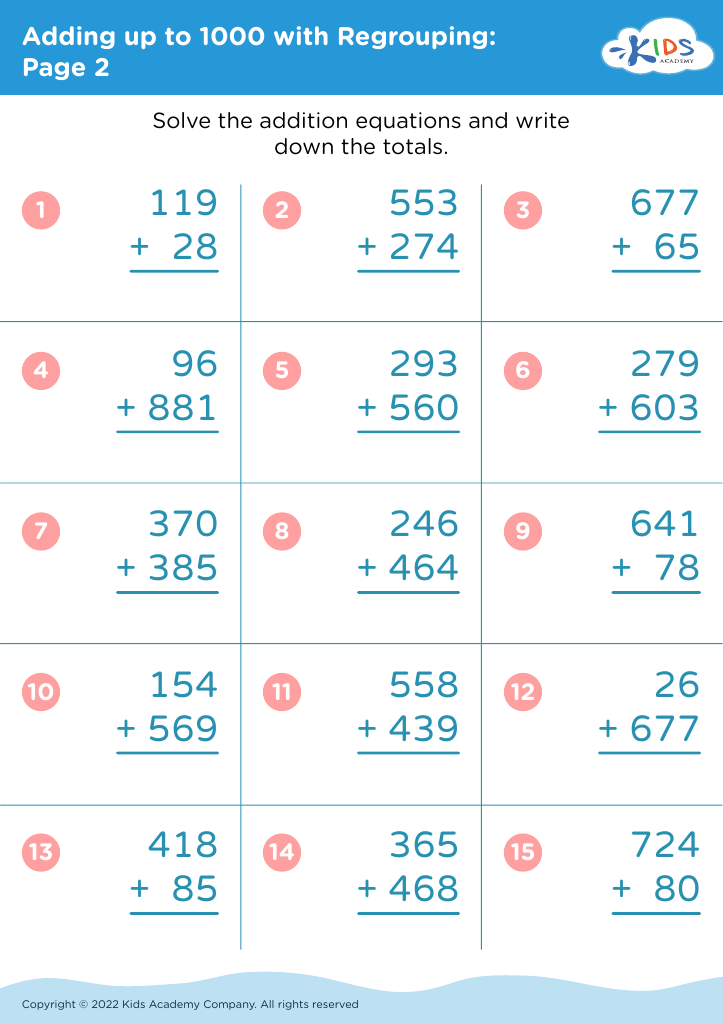
Adding up to 1000 with Regrouping: Page 2
Worksheet
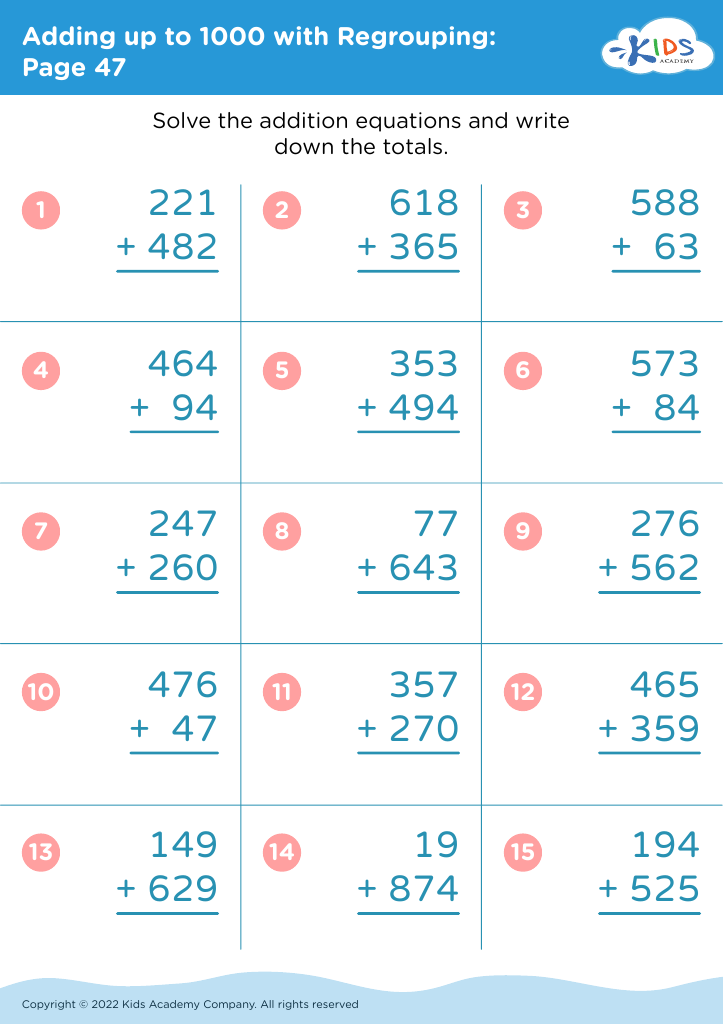
Adding up to 1000 with Regrouping: Page 47
Worksheet
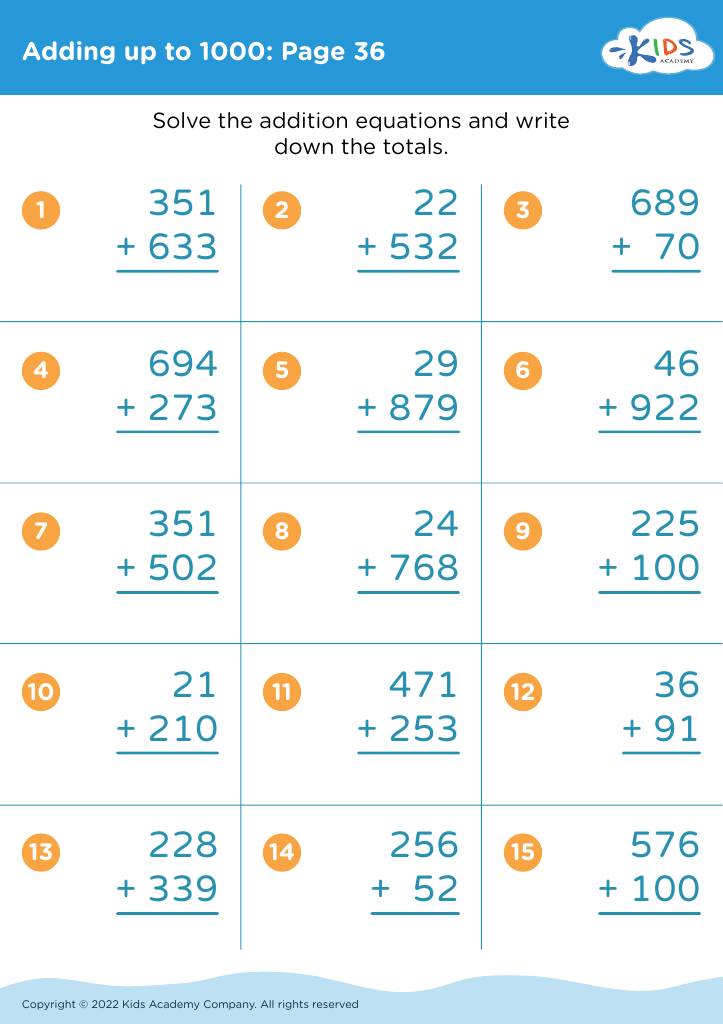
Adding up to 1000: Page 36

Adding up to 1000: Page 36

Adding up to 1000: Page 36
Worksheet
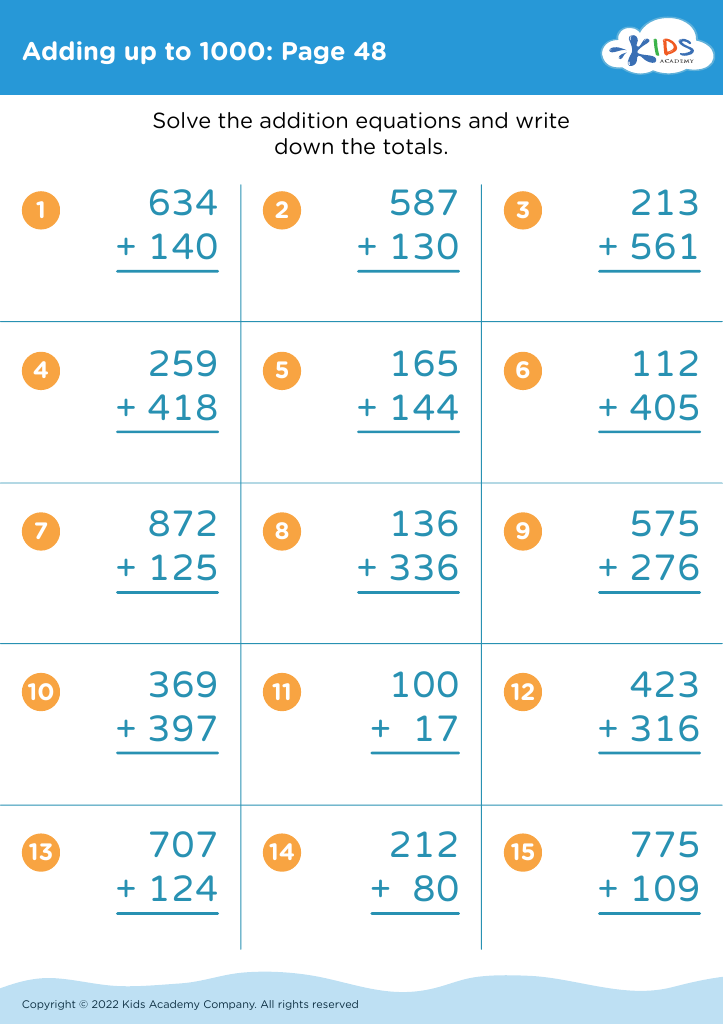
Adding up to 1000: Page 48

Adding up to 1000: Page 48

Adding up to 1000: Page 48
Worksheet
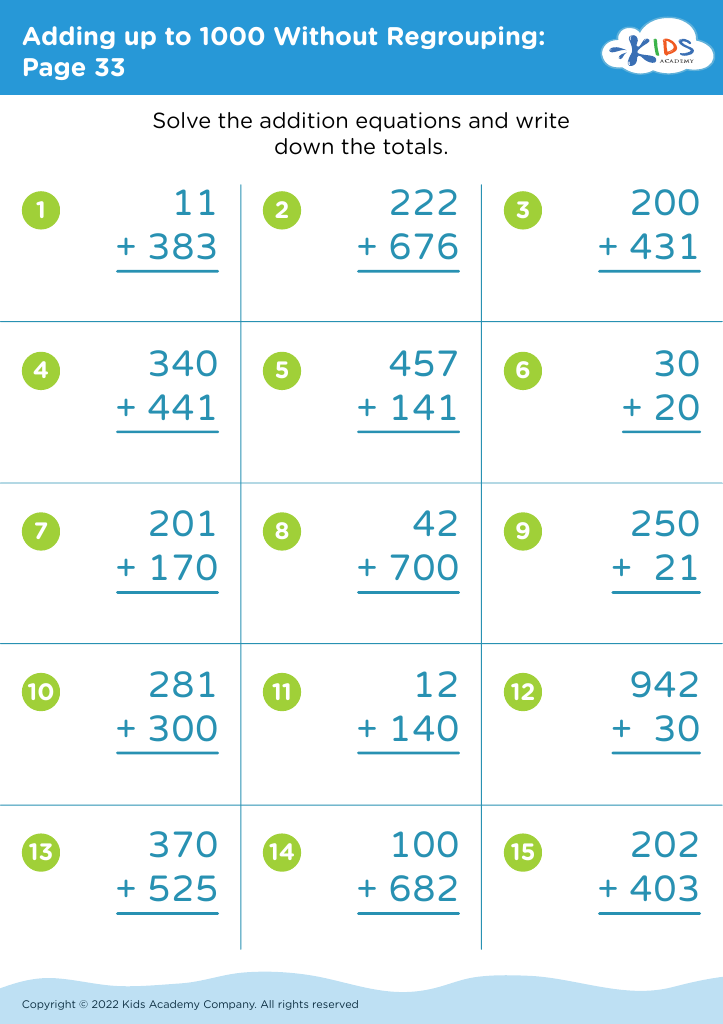
Adding up to 1000 Without Regrouping: Page 33
Worksheet


Counting practice and addition skills are fundamental for children aged 8-9, especially as they approach more complex mathematical concepts. Understanding how to add up to 1000 serves as a critical building block in their mathematical development and problem-solving abilities. This age group often transitions from concrete to more abstract reasoning, making solid counting practices essential for developing confidence and competence in math.

Additionally, mastering numbers up to 1000 helps improve numerical literacy, which is vital in everyday life, from budgeting allowance to understanding time and measurements. When parents and teachers emphasize counting practice, they foster students’ ability to recognize patterns, relationships, and mathematical concepts fluently.

Furthermore, the skills developed during this practice help prepare students for advanced math areas such as multiplication, division, and eventually fractions and decimals. Addressing any difficulties during this stage ensures a stronger foundation, minimizing future challenges in learning math. Engaging activities, whether through games or practical applications, can create a positive and enjoyable learning environment, reinforcing that math is both fun and applicable. In this way, focused counting practice becomes not just an academic task but an essential life skill.