
Critical Thinking Adding up to 1000 Worksheets for Ages 8-9
5 filtered results
Difficulty Level
Grade
Age
-
From - To
Subject
Activity
Standards
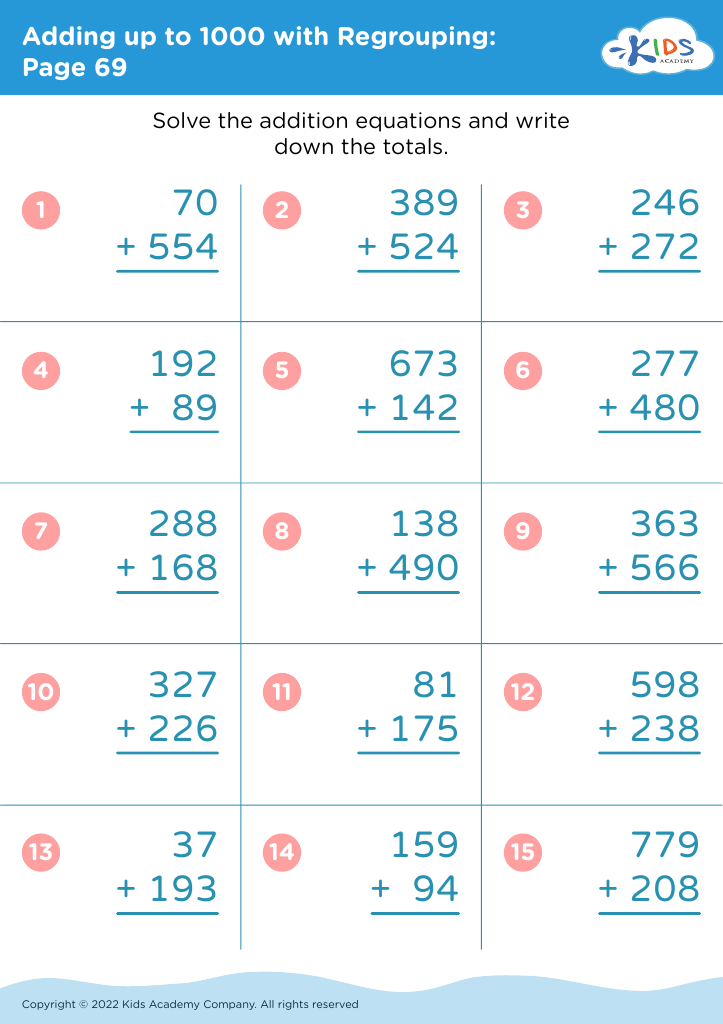
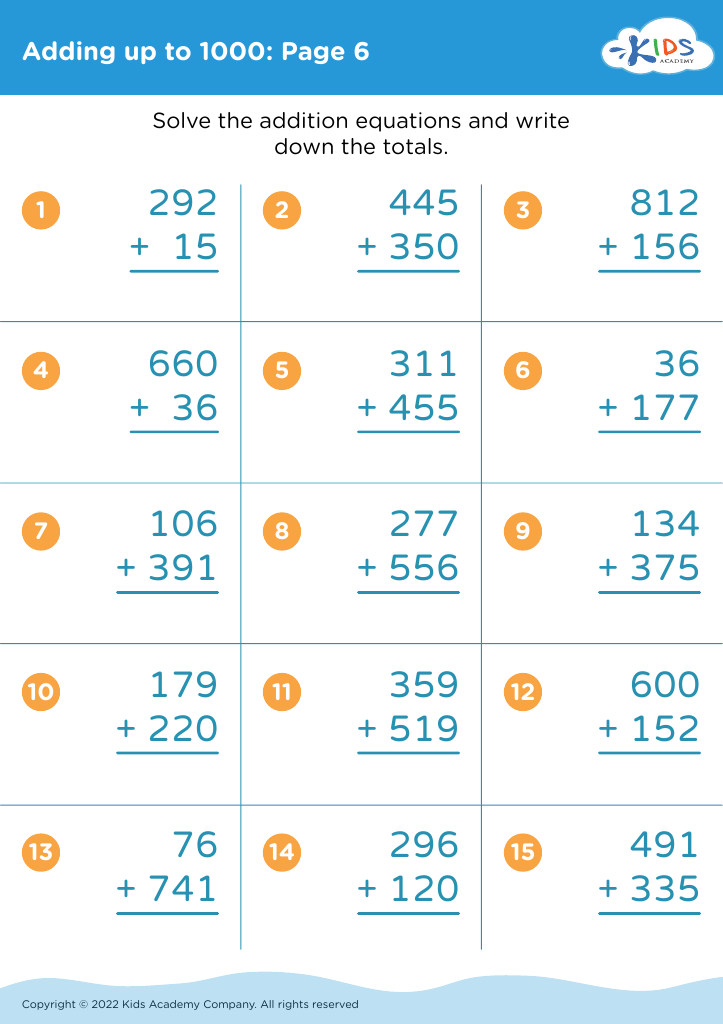
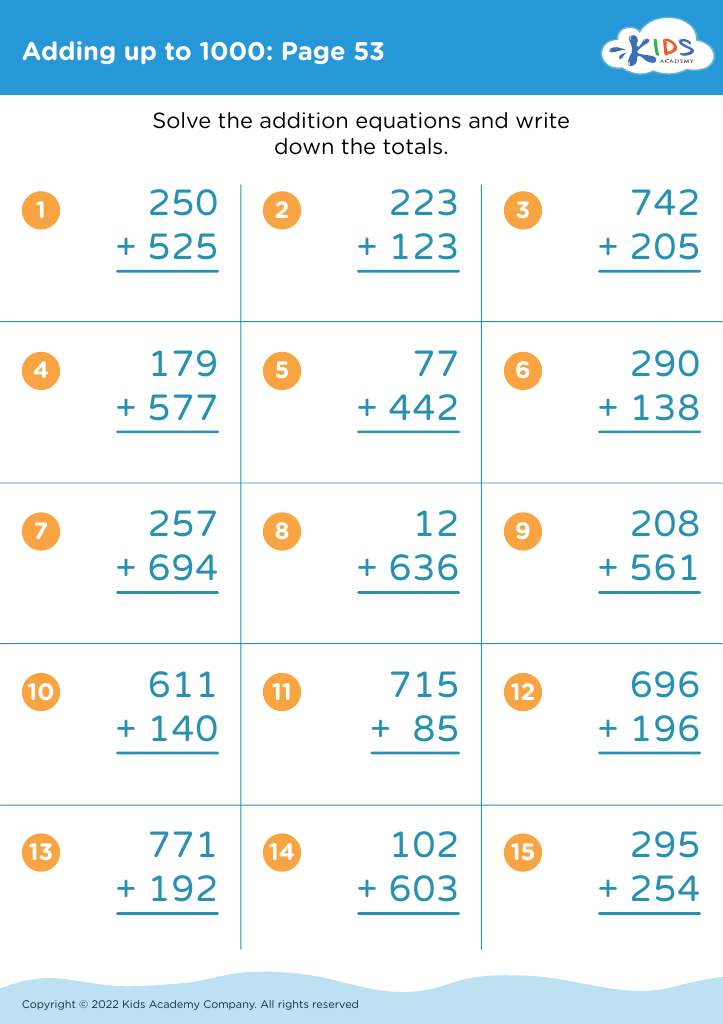
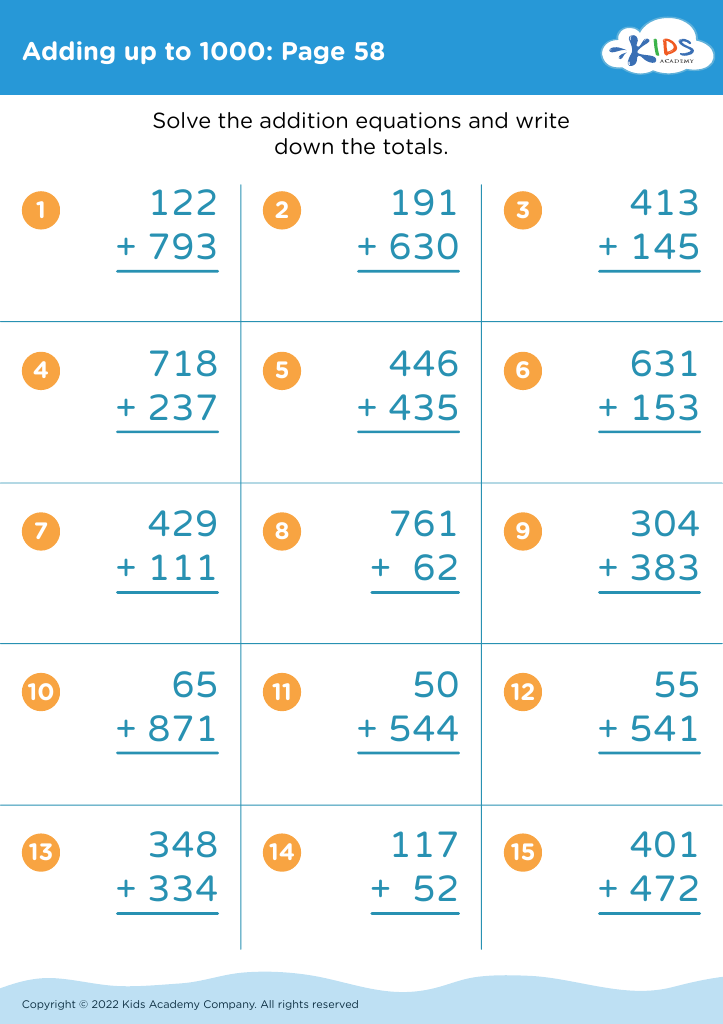
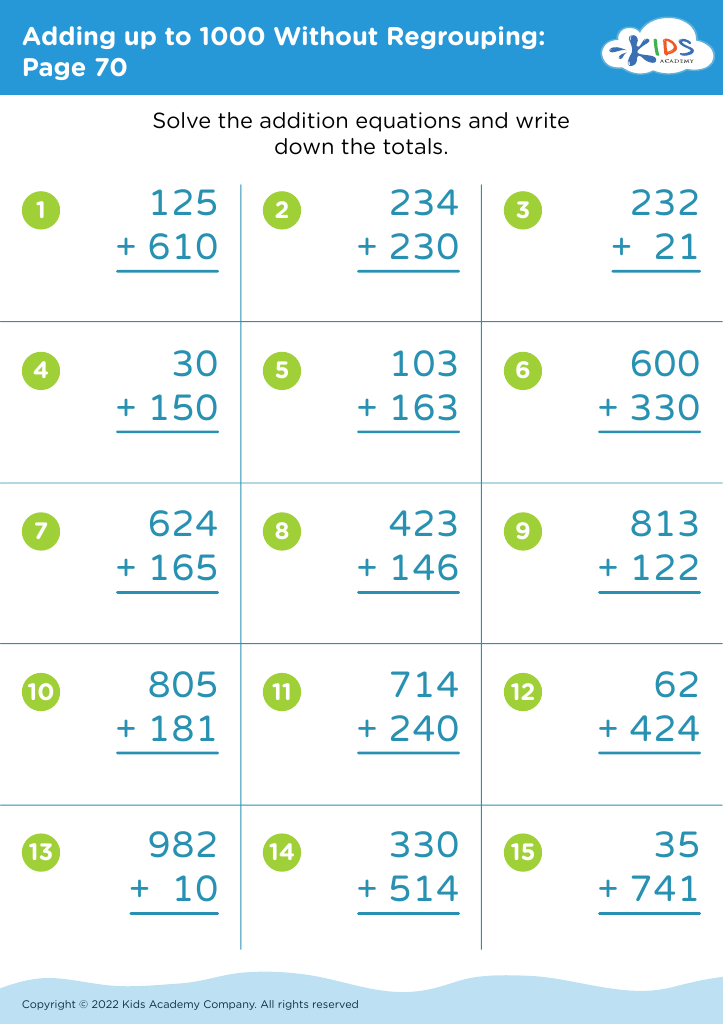
Enhance your child's critical thinking skills with our engaging "Adding Up to 1000 Worksheets" designed for ages 8-9. These worksheets provide a fun and challenging way for young learners to strengthen their addition and problem-solving abilities while working towards sums up to 1000. Each activity encourages logical reasoning and critical analysis, making math both enjoyable and educational. Ideal for classroom use or at-home practice, our printable resources are tailored to engage inquisitive minds and reinforce foundational math skills. With colorful designs and varied exercises, your child will develop confidence and competence in mathematics as they explore the world of numbers!
Favorites
With answer key
Interactive
Join Kids Academy for Free
Who is primarily going to use this learning content?



Critical thinking is essential for children aged 8-9, as it lays the foundation for effective problem-solving and decision-making skills. This developmental stage is a critical window for nurturing curiosity and the ability to analyze information thoughtfully. When parents and teachers emphasize critical thinking, they encourage children to question assumptions, evaluate evidence, and consider different perspectives, skills that are vital in a rapidly changing world.
Engaging children in activities that promote critical thinking, such as open-ended discussions, hands-on projects, and critical analysis of stories, helps them develop the ability to connect ideas and synthesize new information. This not only boosts their academic performance but also enhances their creativity and innovation.
Moreover, critical thinking fosters independence; children learn to think for themselves rather than relying solely on external opinions. This confidence translates into better decision-making in their everyday lives and prepares them for future challenges, both academically and socially.
By prioritizing critical thinking, parents and teachers equip children with tools to navigate complexities, understand diverse viewpoints, and position themselves as active, informed participants in society. Ultimately, this investment in critical thinking skills will empower children to thrive in both their academic journeys and future careers.








