Develop critical thinking Adding up to 1000 Worksheets for Ages 8-9
3 filtered results
-
From - To
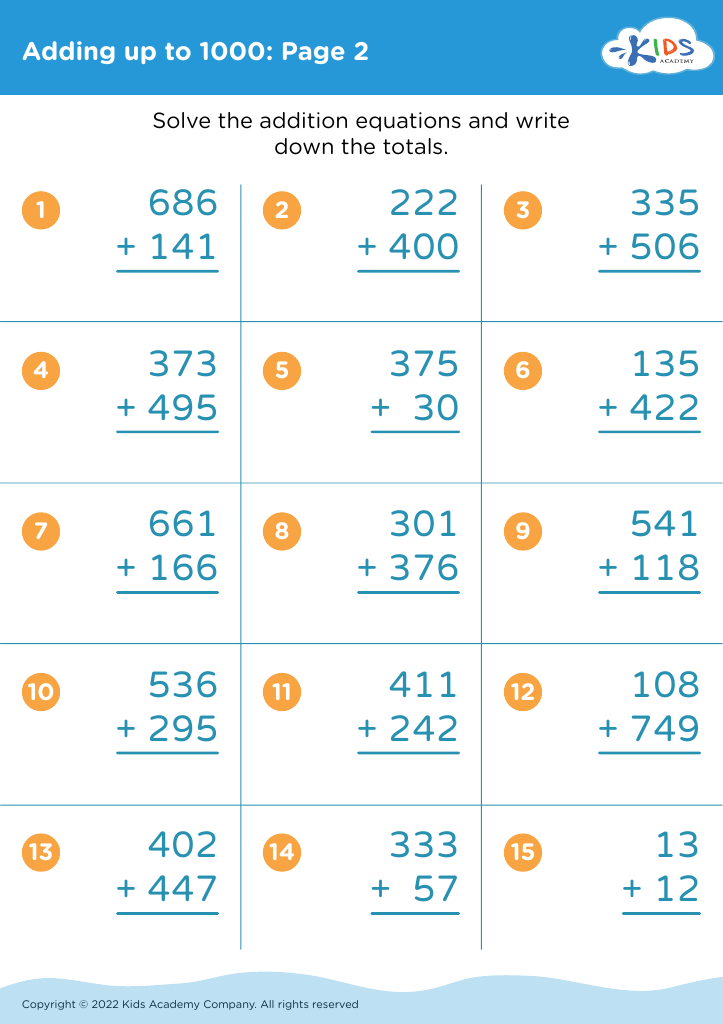
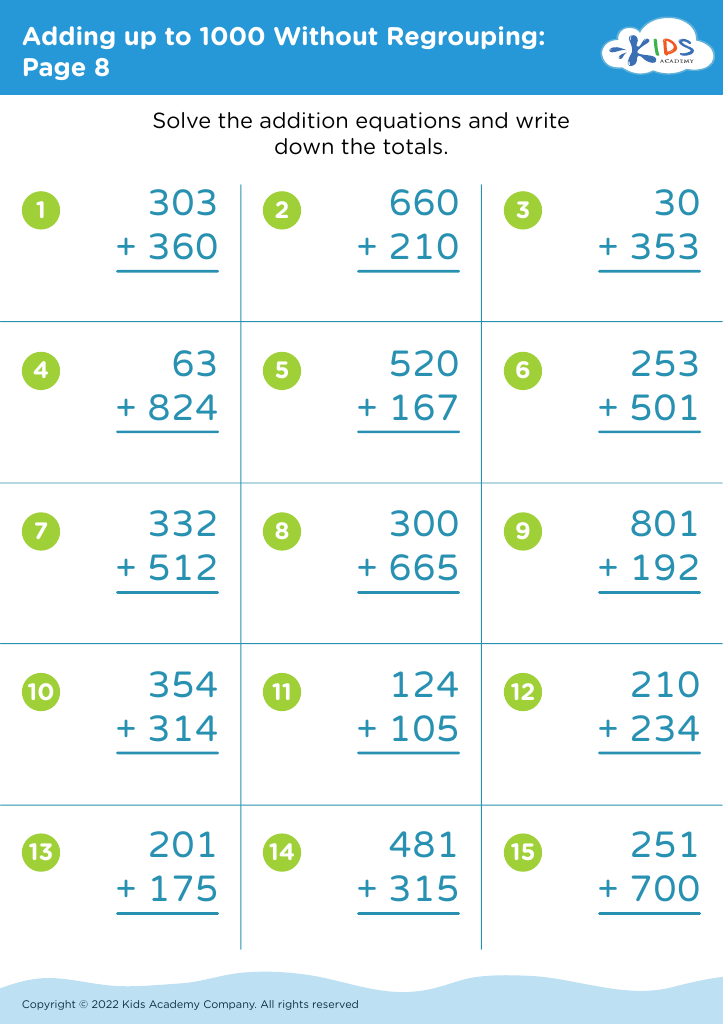
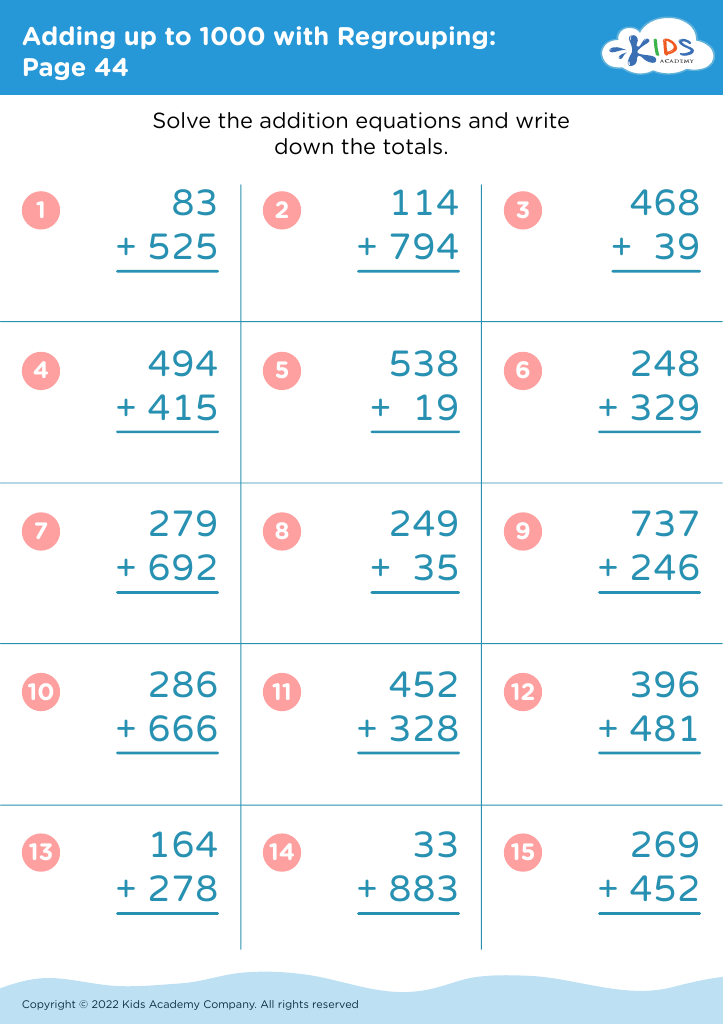
Explore our "Adding Up to 1000" worksheets specifically designed for 8 to 9-year-olds to enhance their critical thinking skills! This comprehensive collection features a variety of engaging and interactive math exercises that encourage students to approach problems creatively and analytically. Each worksheet prompts learners to think beyond simple arithmetic, fostering skills in pattern recognition, logical reasoning, and problem-solving. Perfect for home or classroom use, these worksheets support diverse learning styles while building a strong mathematical foundation. Empower your child's cognitive development and prepare them for more advanced concepts with our thoughtfully designed resources that make learning fun and effective!



Developing critical thinking skills in children aged 8-9 is essential for their overall growth and future success. At this age, children are beginning to understand the world on a deeper level, and honing their critical thinking abilities enables them to analyze, evaluate, and make informed decisions. Parents and teachers should care about fostering these skills for several reasons.
Firstly, critical thinking encourages curiosity and a love for learning. As children engage in problem-solving and reasoning, they become more motivated to explore new ideas and concepts. This not only enriches their educational experience but also nurtures a lifelong passion for knowledge.
Secondly, critical thinking equips children with essential life skills. Learning to assess evidence, identify biases, and construct reasoned arguments helps children navigate real-world situations confidently and responsibly. This preparation is vital in an age where misinformation is prevalent.
Furthermore, developing critical thinking skills promotes independence. Children become empowered to form their opinions and judgments, fostering self-confidence and resilience.
In conclusion, investing in critical thinking for ages 8-9 not only cultivates academically proficient students but also responsible, creative, and engaged citizens, making this a crucial focus for both parents and teachers.








