Fraction Addition Adding up to 1000 Worksheets for Ages 8-9
5 filtered results
-
From - To
Enhance your child's math skills with our "Fraction Addition Adding up to 1000 Worksheets" designed for ages 8-9. These engaging worksheets focus on developing a solid understanding of fraction addition, helping children confidently handle sums up to 1000. By offering a variety of problems, these worksheets not only solidify essential math concepts but also foster critical thinking and problem-solving abilities. Perfect for supplementation at home or in the classroom, our meticulously crafted worksheets ensure students practice fraction addition with ease, laying a strong foundation for future math success. Boost your child’s confidence and proficiency with our expertly designed resources!
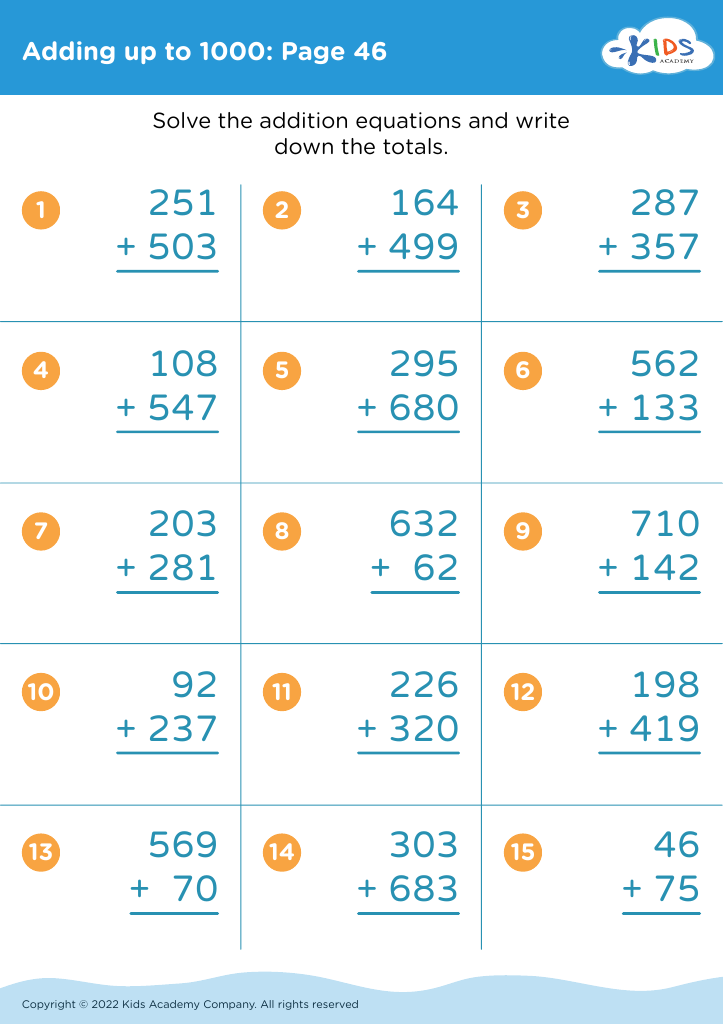
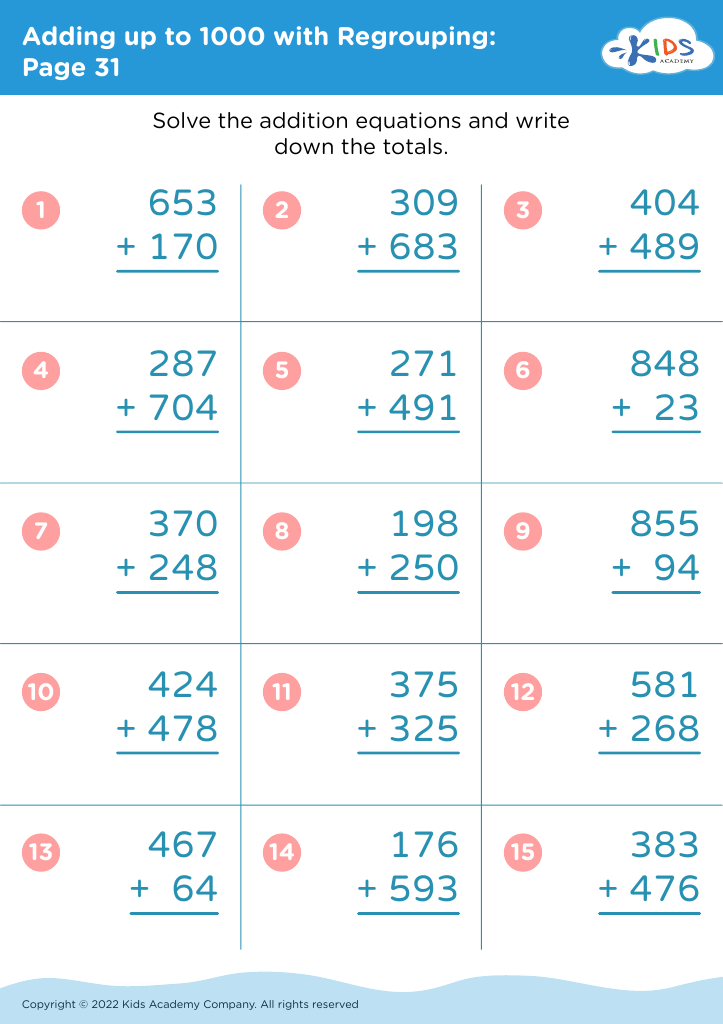
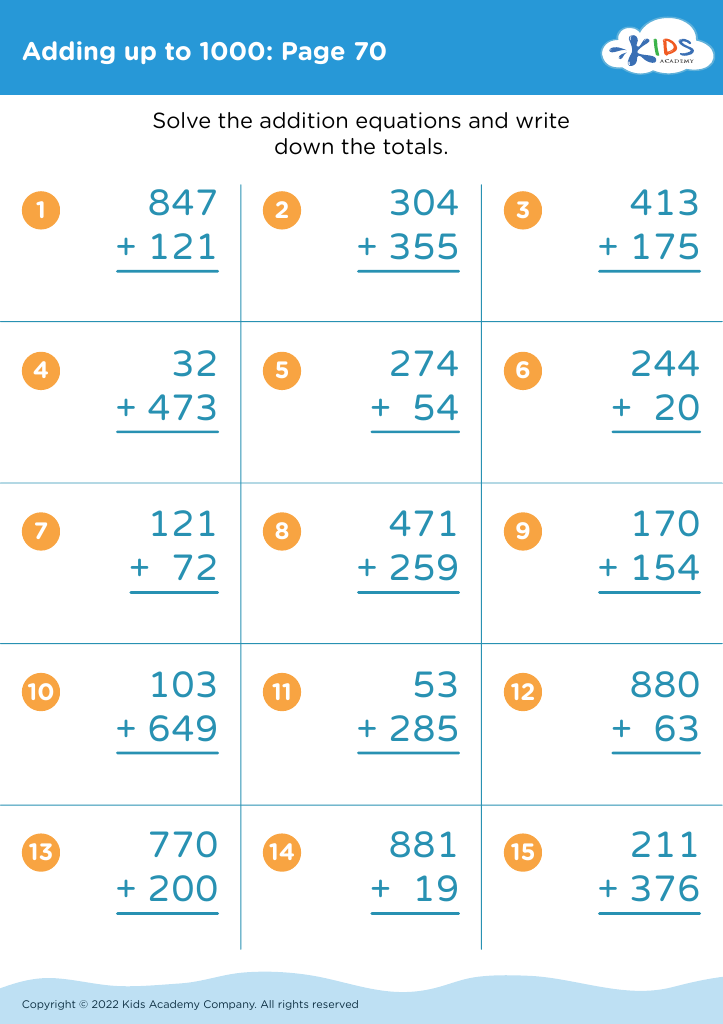
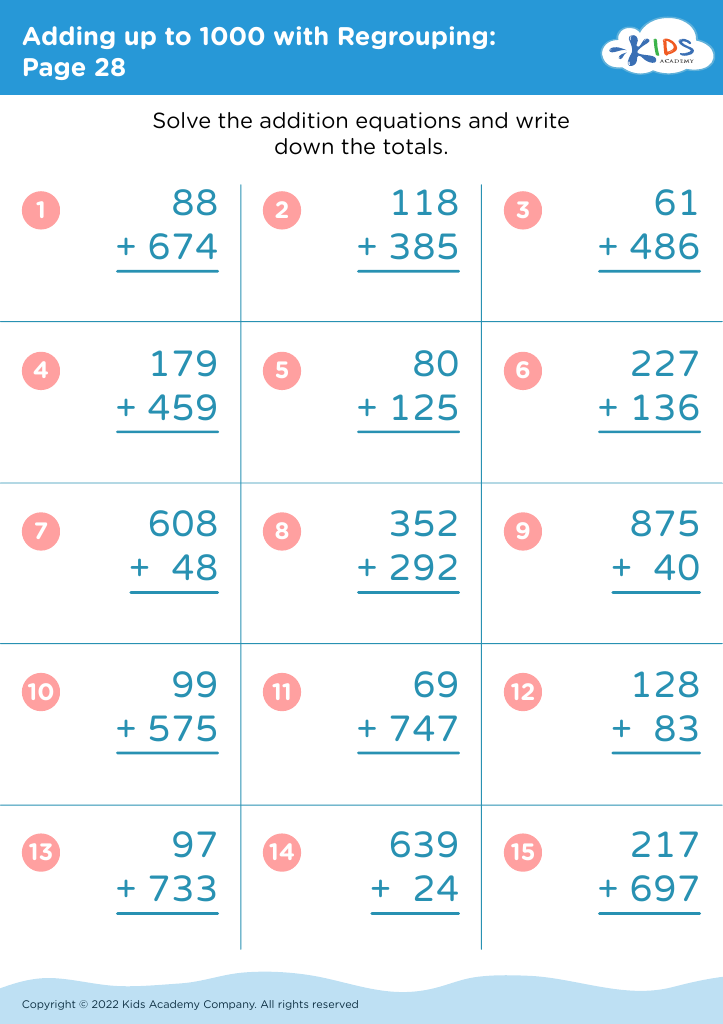
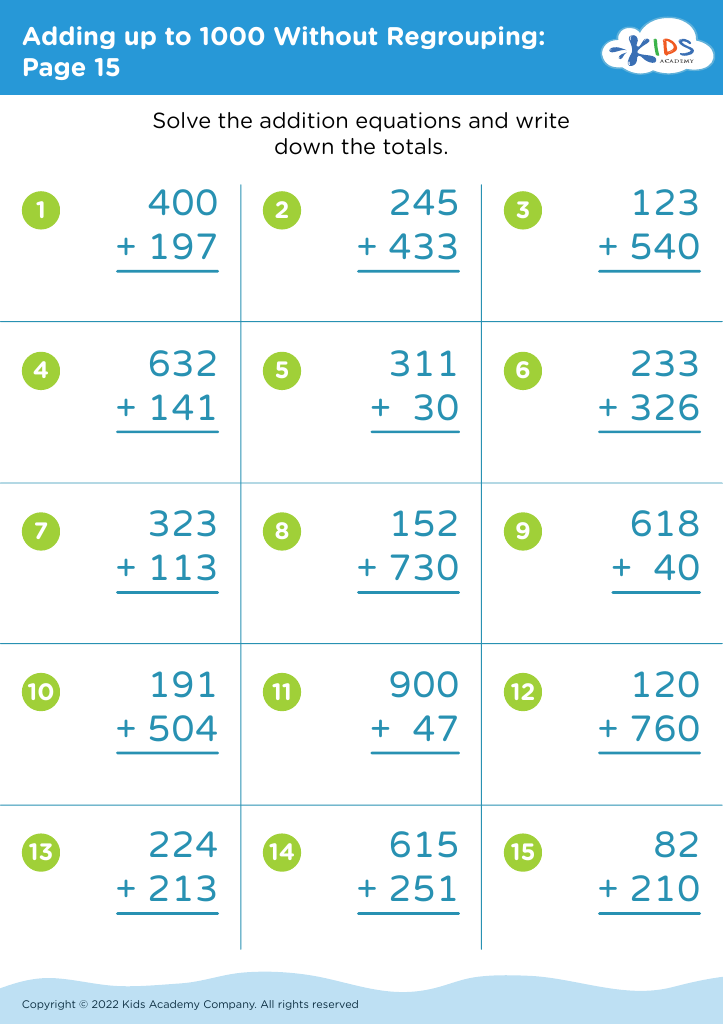



Caring about fraction addition up to 1000 for children ages 8-9 holds significant importance for several reasons. At this developmental stage, students are building foundational math skills crucial for later academic success. Understanding fractions deepens their numerical comprehension and improves their ability to solve complex problems. By exposing children to larger numbers, parents and teachers help them become comfortable with more complicated arithmetic operations and better prepared for future math challenges.
Engaging with fractions and addition at an early age bolsters cognitive skills such as critical thinking, pattern recognition, and logical reasoning. These skills are transferable to other subject areas and everyday activities. Early proficiency in math boosts self-confidence and reduces anxiety, promoting a positive attitude towards the subject.
Additionally, mastering fraction addition empowers children to make real-world connections. For instance, they learn to measure ingredients for recipes, understand time schedules, and manage finances by understanding parts of a whole. These practical applications underscore the relevance of math in daily life, making learning engaging and meaningful.
In summary, prioritizing fraction addition for young learners equips them with crucial academic skills, enhances cognitive development, fosters a love for math, and provides valuable life skills, setting a strong foundation for their future education and everyday problem-solving.








