Math problem-solving Adding up to 1000 Worksheets for Ages 8-9
4 filtered results
-
From - To
Introduce your child to the fascinating world of math problem-solving with our "Adding Up to 1000 Worksheets" specially designed for ages 8-9! These engaging worksheets are perfect for enhancing critical thinking and arithmetic skills as your child tackles addition problems up to 1000. Each activity focuses on real-life scenarios, encouraging students to apply math in practical ways. With a variety of challenges, learners will build confidence and mastery in adding, while also developing their reading comprehension and analytical abilities. Accessible, fun, and educational, these worksheets are an excellent resource to support your child’s math journey and promote lifelong learning!
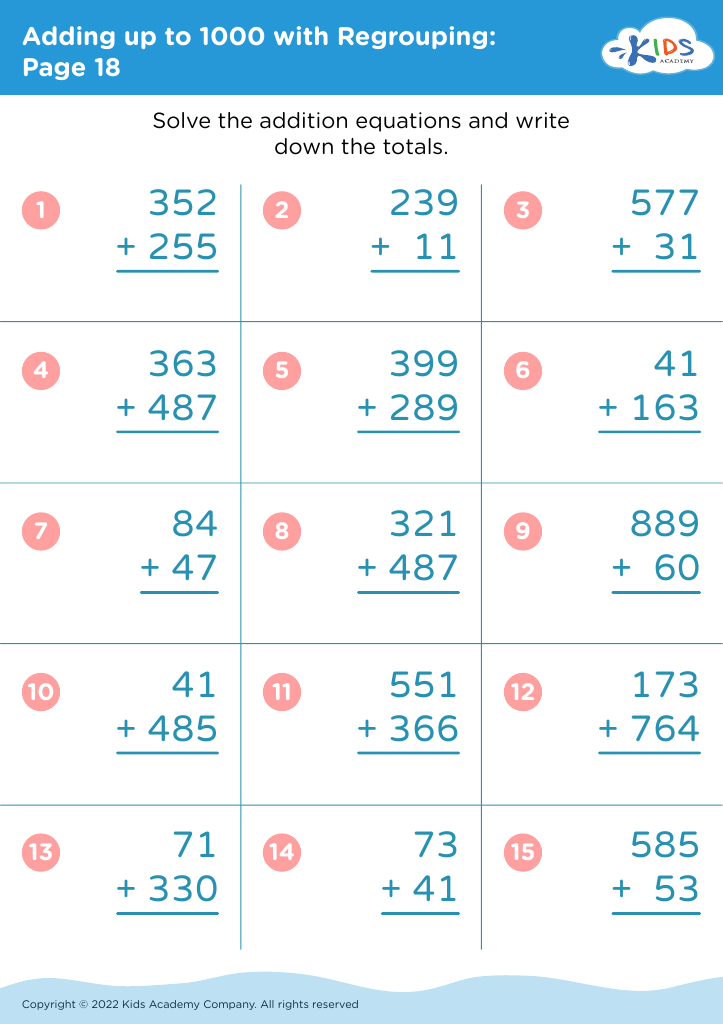
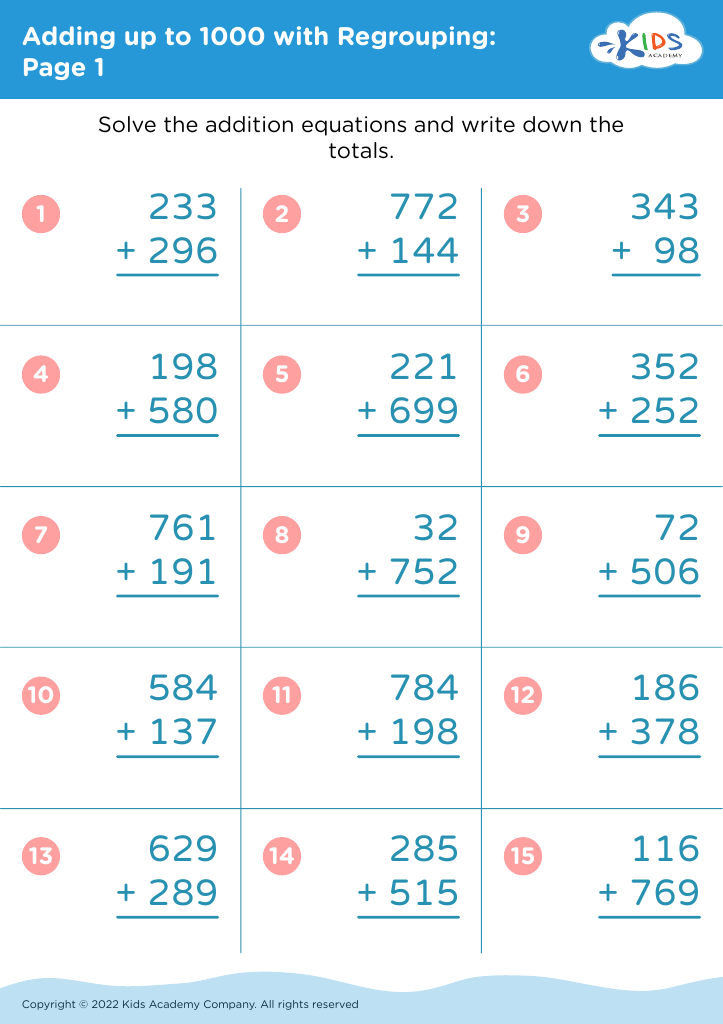
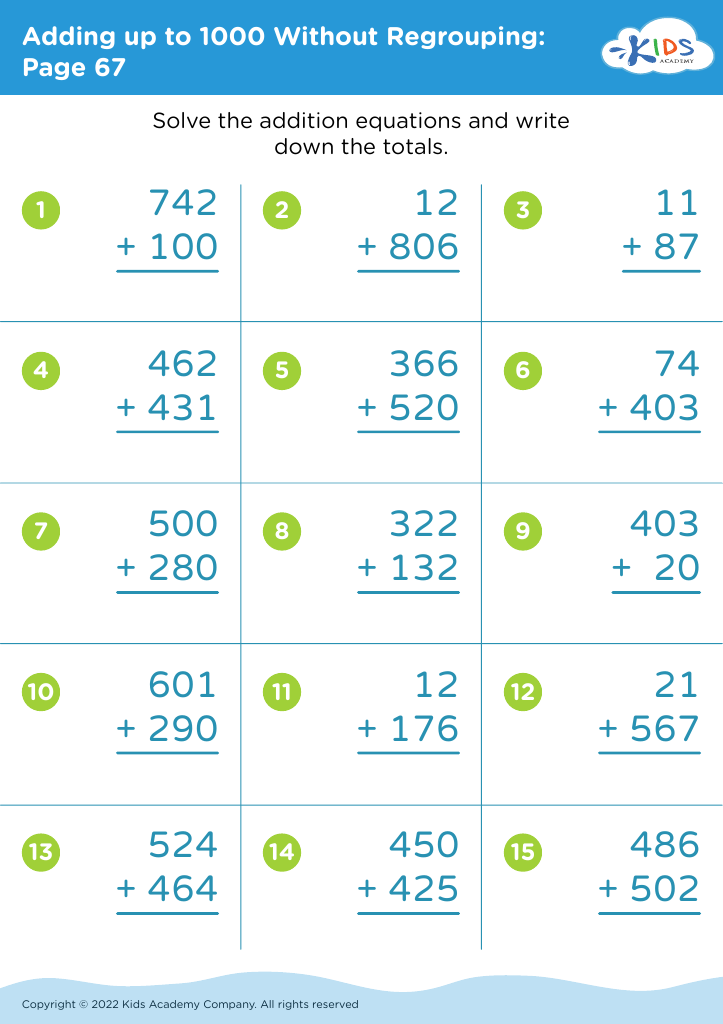
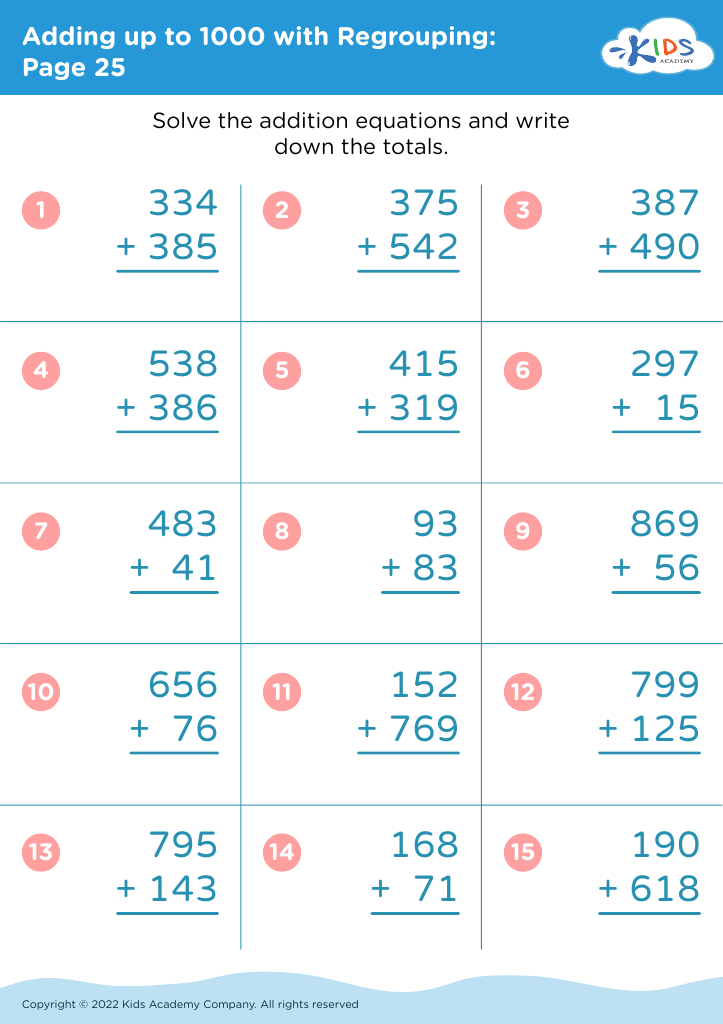



Math problem-solving, especially when it involves addition up to 1000, is crucial for children aged 8-9 for several reasons. First, mastering these skills enhances their numerical literacy, providing a strong foundation for more complex mathematical concepts in later grades. When children engage in problem-solving, they learn to think critically, analyze problems, and come up with effective strategies to find solutions. This cognitive development translates to better academic performance in math as well as other subjects.
Additionally, working with larger numbers prepares students for real-life applications. Everyday situations, such as budgeting allowance or understanding prices while shopping, frequently involve such computations. This relevance boosts their confidence and interest in math, making them more enthusiastic learners.
Moreover, fostering a problem-solving mindset cultivates perseverance and resilience in children. They learn that mistakes are part of the learning process, which encourages a healthy attitude towards challenges in academics and beyond.
Lastly, collaboration is often at the heart of learning math, and problem-solving activities provide opportunities for teamwork, where students can share ideas and learn from one another. Thus, prioritizing math problem-solving is essential for holistic development, social skills, and a positive attitude towards learning in children.








