Pattern recognition Adding up to 1000 Worksheets for Ages 8-9
3 filtered results
-
From - To
Enhance your child's math skills with our "Pattern Recognition Adding Up to 1000 Worksheets" tailored for ages 8-9. These engaging worksheets are designed to help young learners identify patterns and build strong addition skills while working with numbers up to 1000. Each exercise challenges students to recognize sequences and expand their problem-solving abilities. Incorporating fun and interactive elements, these worksheets align with essential learning objectives for this age group, making mathematics both enjoyable and educational. Boost your child's confidence in math and pattern recognition by exploring our expertly crafted worksheets today! Discover more at Kids Academy.
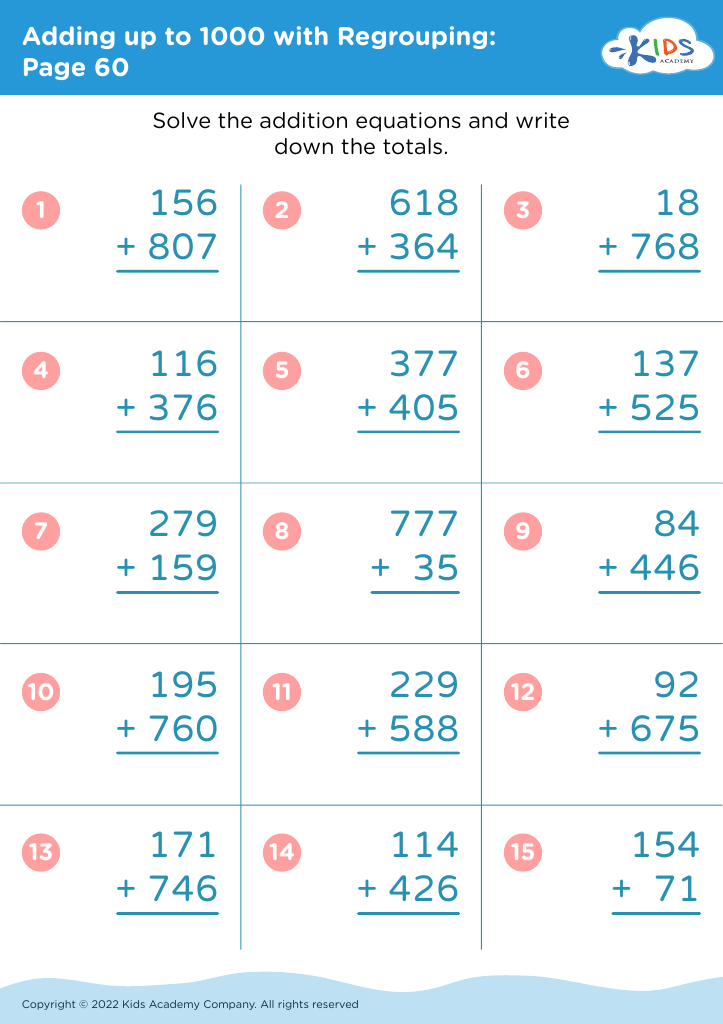
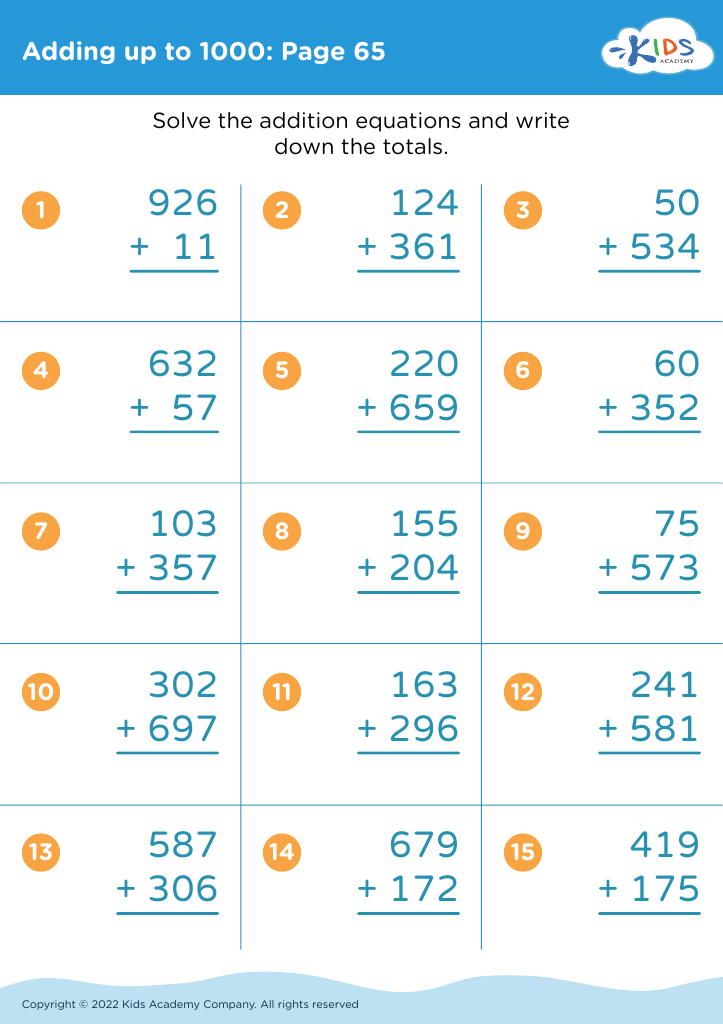
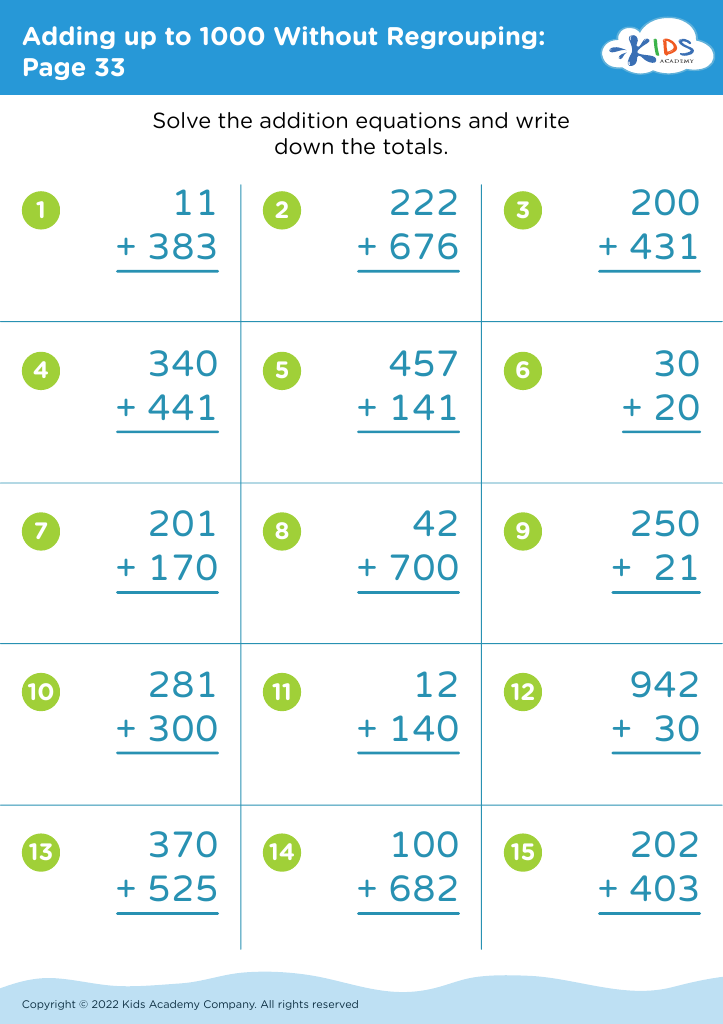



Pattern recognition and the ability to add up to 1000 are fundamental skills for children ages 8-9 that parents and teachers should prioritize to support a child’s mathematical development. Recognizing patterns helps children predict events, understand relationships, and develop critical thinking skills. These mental habits are essential not just for math but also for problem solving in daily life.
When children work on adding numbers up to 1000, they strengthen their number sense, an understanding of the size and scope of numbers. This foundation is crucial for more advanced math concepts encountered later in their education, such as multiplication, division, and fractions. Mastering addition makes future mathematical operations easier and less intimidating.
Also, the skills learned through pattern recognition and addition are applicable across various subjects and in everyday activities. For example, children may find patterns in spelling rules during language arts or science investigations. Recognizing numerical relationships helps with budgeting their allowance or understanding time.
Early engagement in these cognitive exercises fosters a positive attitude towards math, making children more confident in their abilities. Confidence in math translates to higher overall academic achievement and a greater propensity to pursue STEM subjects in the future. Therefore, parents and teachers play a crucial role in nurturing these skills, setting children up for long-term academic and practical success.








