Reading analog clocks Adding up to 1000 Worksheets for Ages 8-9
3 filtered results
-
From - To
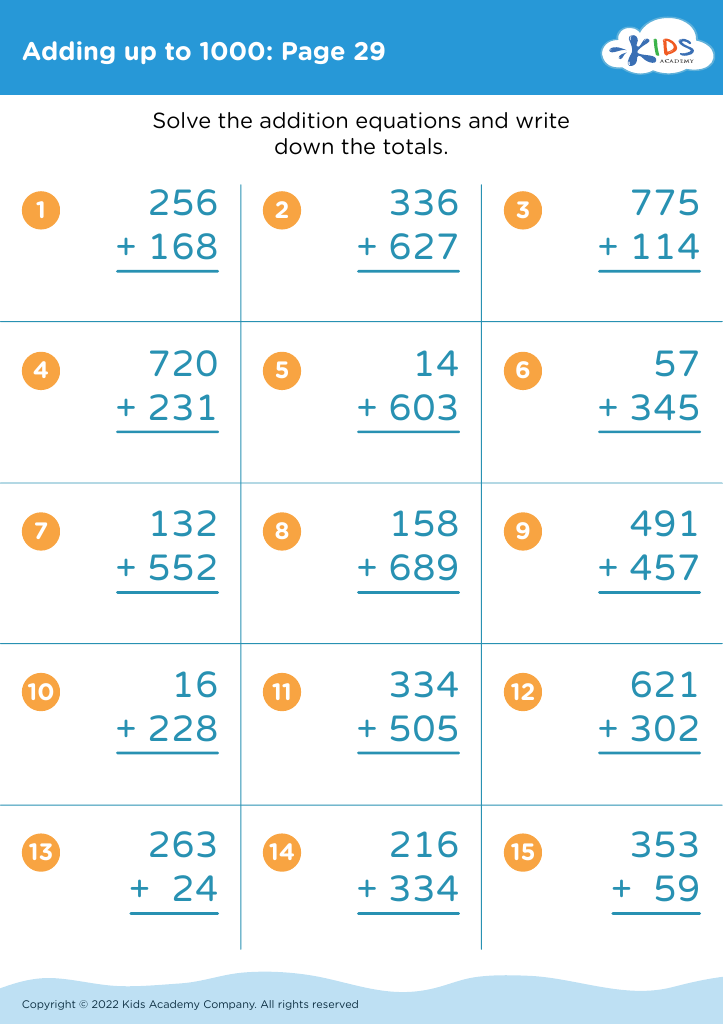
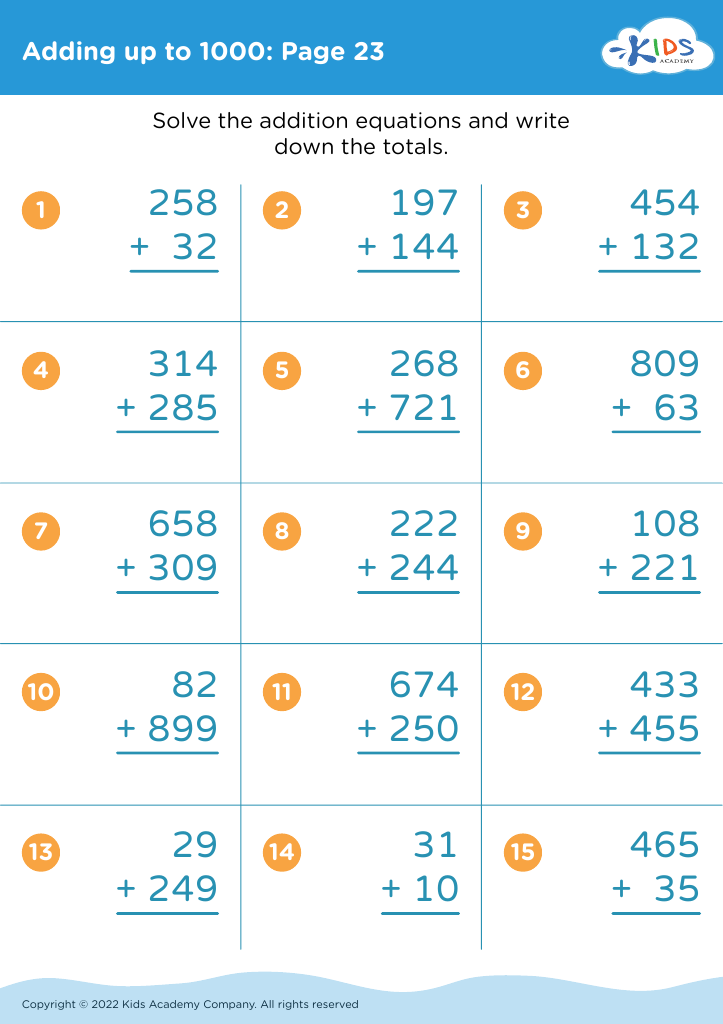
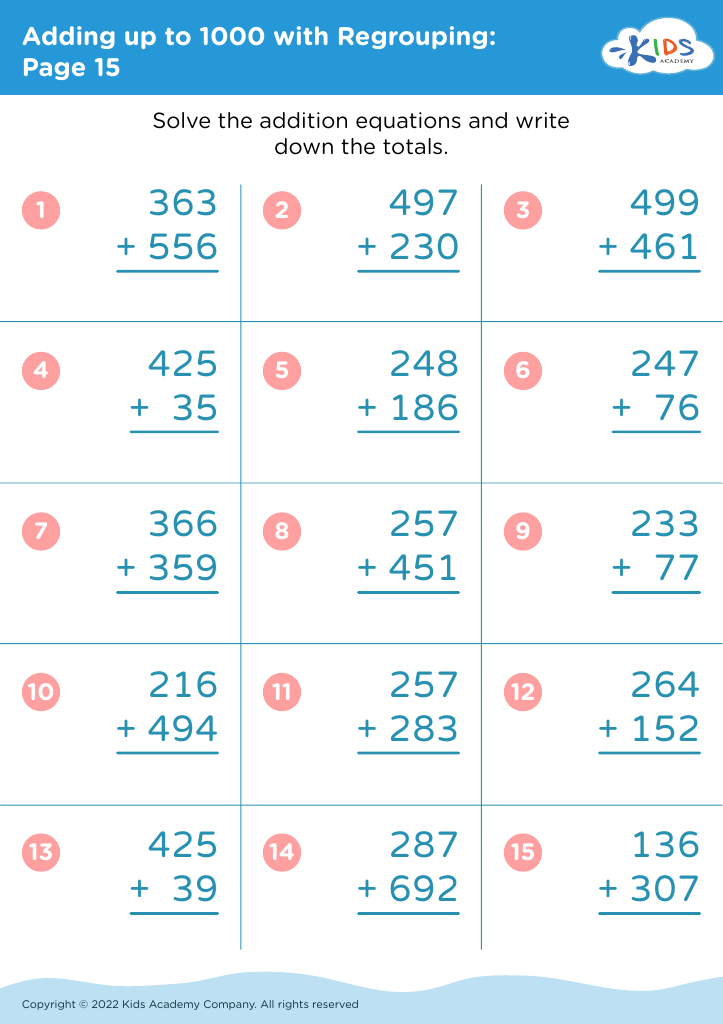
Enhance your child's math and time-telling skills with our "Reading Analog Clocks Adding Up to 1000 Worksheets" designed for ages 8-9. These engaging, printable worksheets combine the fundamentals of reading analog clocks with exciting addition challenges, enabling students to practice counting while developing their understanding of time. Each worksheet is tailored to reinforce essential skills like calculating total time and solving addition problems, promoting a solid foundation in math and time management. Perfect for classroom use, homework, or at-home practice, these resources ensure interactive learning experiences that keep kids motivated. Start building essential skills today with our fun, educational worksheets!



Reading analog clocks is an essential skill for children ages 8-9 as it supports their overall understanding of time management and numeracy. Unlike digital clocks, analog clocks require students to interpret the position of the minute and hour hands, which fosters critical thinking and problem-solving skills. This foundational skill can enhance their ability to tell time accurately in various contexts, such as scheduling activities, understanding class routines, and managing homework.
Teaching children to read analog clocks can also strengthen their mathematical sense, especially when they begin to manipulate time in fractions or angles. It introduces concepts such as half, quarter, and full hours, allowing children to develop a deeper understanding of numbers and their relationships. Moreover, mastering analog time-telling fosters independence, which bolsters children's confidence and self-reliance.
Furthermore, parental and teacher involvement is crucial; practicing this skill at home or during classroom activities allows for reinforcement. Engaging in discussions around schedule management and daily routines helps children forge connections between time and their experiences. Ultimately, prioritizing time-telling skills equips young learners with vital life skills that extend beyond the classroom and into their daily lives, fostering their development both academically and personally.








