Understand patterns Adding up to 1000 Worksheets for Ages 8-9
3 filtered results
-
From - To
Discover the joy of mastering math with our "Understand Patterns Adding up to 1000 Worksheets" specially designed for ages 8-9! Aligned with core educational standards, these engaging and fun worksheets help kids identify and understand numerical patterns while boosting their addition skills up to 1000. Perfect for classroom or at-home learning, each printable worksheet offers comprehensive exercises aimed at enhancing logical thinking and problem-solving abilities. Packed with vibrant illustrations and clear instructions, our resources ensure your child remains focused and motivated. Empower your young learner today and make math enjoyable with Kids Academy printable worksheets!
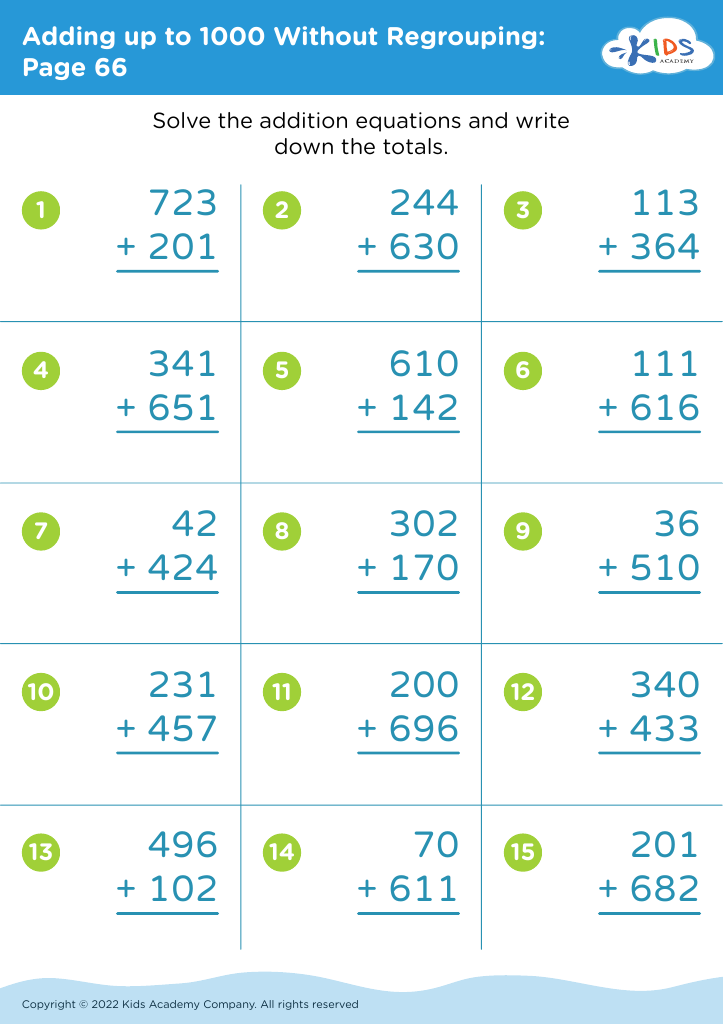
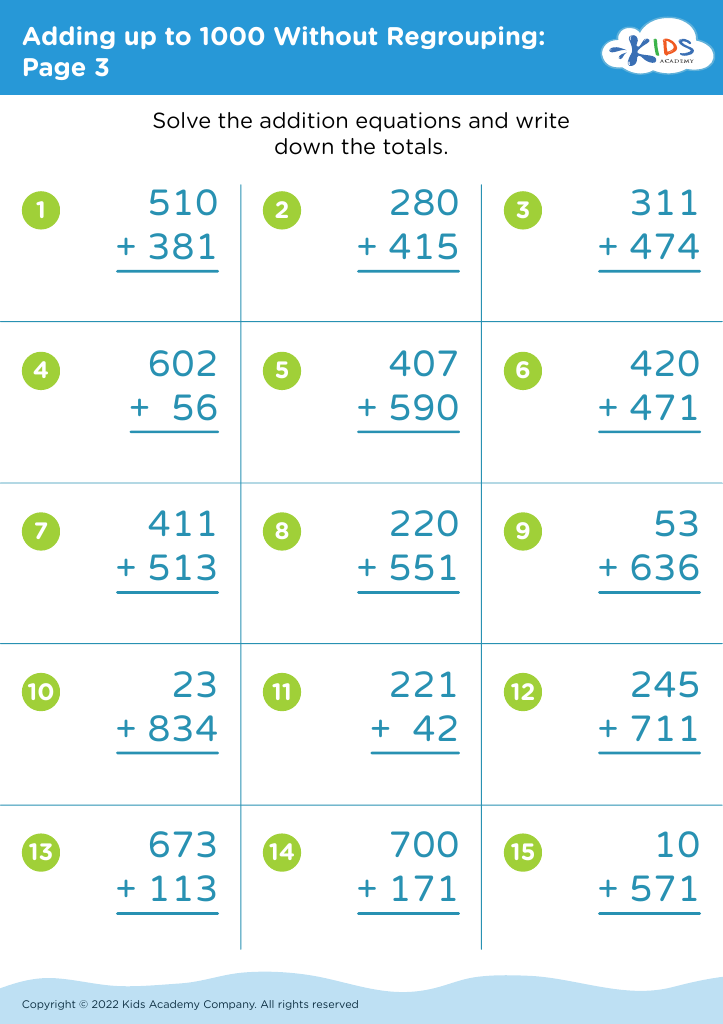
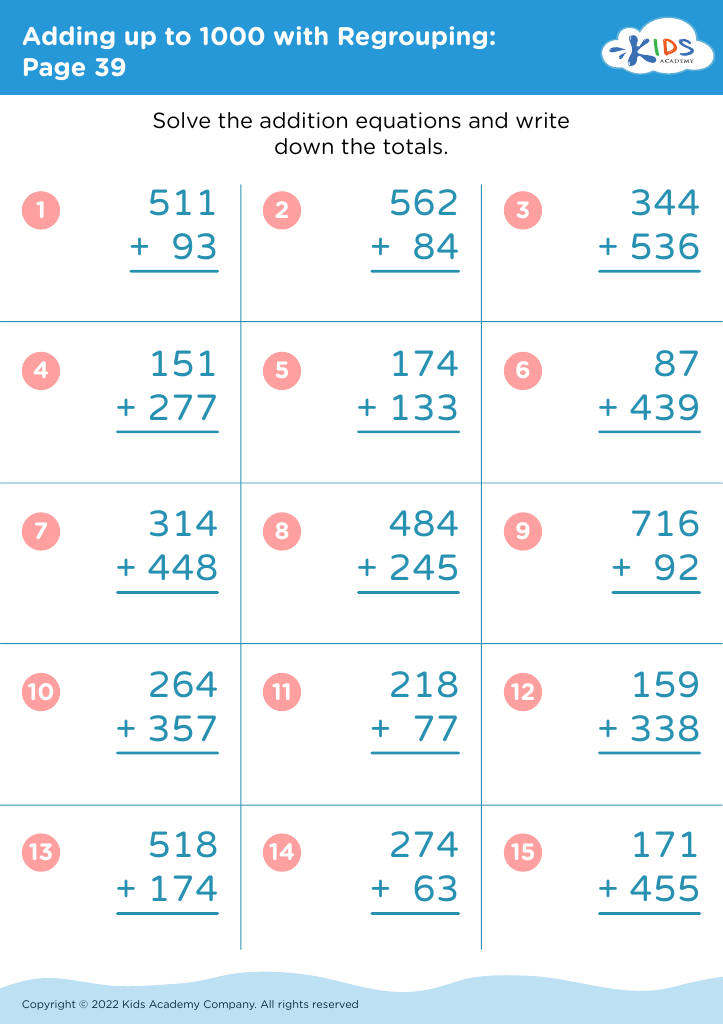



Understanding patterns and adding up to 1000 for children aged 8-9 is pivotal in setting a strong mathematical foundation. At this age, kids are transitioning from simple arithmetic to more complex mathematical concepts. Recognizing and comprehending patterns enhances their ability to see relationships between numbers, which is essential for problem-solving and logical thinking. These skills become crucial as they progress to more advanced math topics, such as algebra and geometry.
Furthermore, learning to add up to 1000 helps students grasp the concept of place value on a much deeper level. For instance, understanding how tens, hundreds, and units work together builds a solid base for future arithmetic operations. This foundational knowledge is critical not only for academic success but also for practical life skills like managing money and time.
For parents and teachers, investing time in these concepts fosters a child’s confidence in their math abilities. Positive experiences in early math can reduce math anxiety and promote a lifelong appreciation for the subject. Moreover, these skills are directly linked to logical thinking and analytical abilities, which are vital across all areas of learning and everyday decision-making. Thus, fostering these skills at a young age sets children up for long-term success both academically and in daily life.








