Understanding division Adding up to 1000 Worksheets for Ages 8-9
3 filtered results
-
From - To
Explore our "Understanding Division: Adding Up to 1000 Worksheets" designed specifically for children ages 8-9. These engaging worksheets focus on introducing division concepts tied to the importance of adding up to 1000. Kids will practice division through fun and interactive problems that reinforce their skills in a meaningful way. Our worksheets keep learning enjoyable while helping students navigate through real-life scenarios, promoting confidence and problem-solving abilities. Perfect for teachers and parents looking to enhance mathematical understanding, these resources provide a structured approach to mastering division. Help your child become a division whiz today with our thoughtfully crafted worksheets!
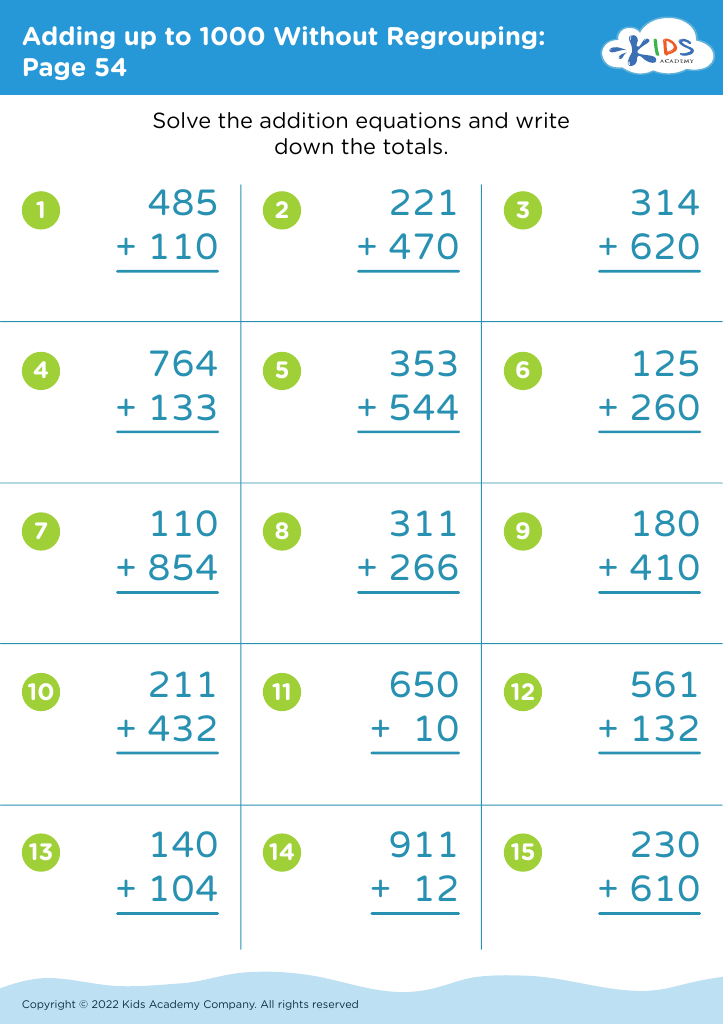
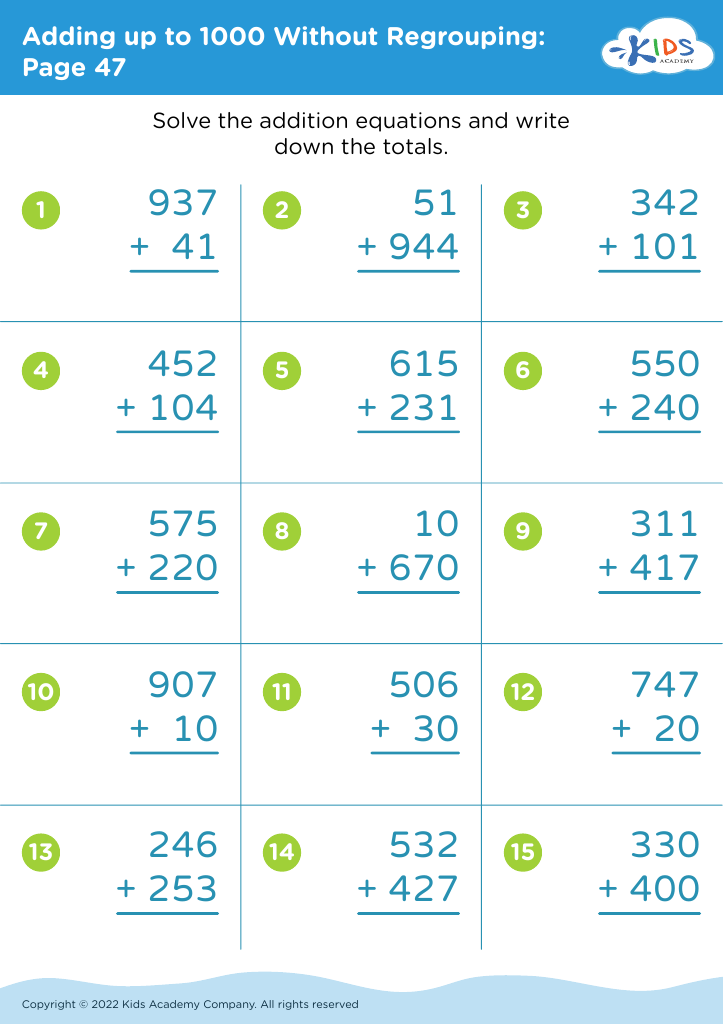
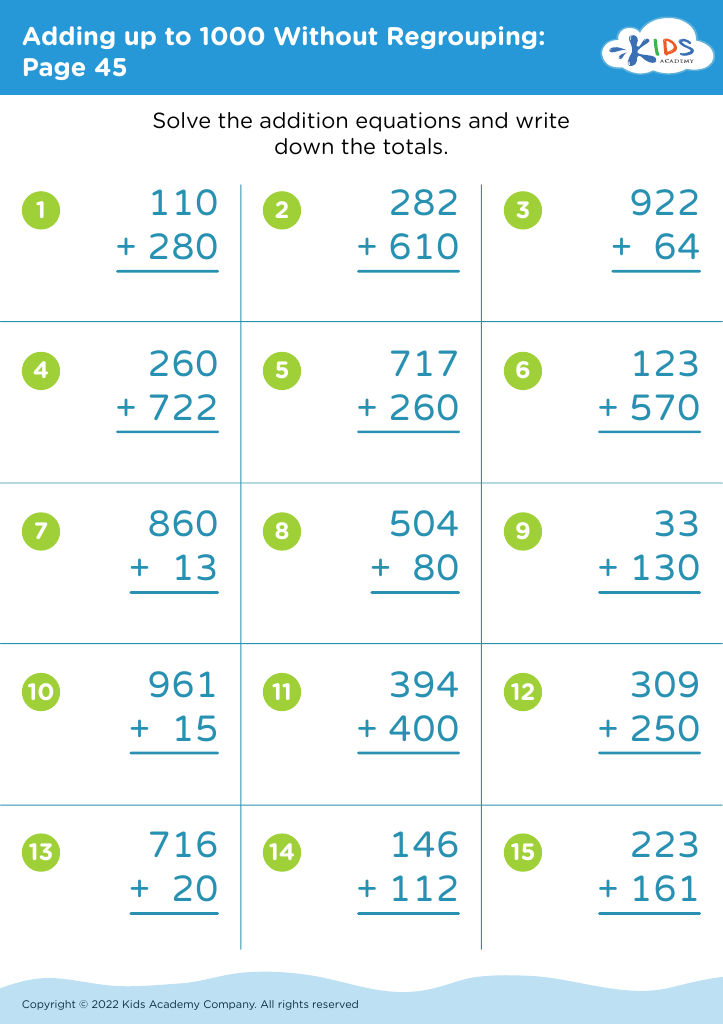



Understanding division, especially in the context of adding up to 1000, is a critical skill for children aged 8 to 9 as it lays the foundation for more advanced mathematical concepts. During this developmental stage, children are not only expanding their numeric skills but also beginning to make connections between multiplication and division. Grasping division helps students understand how to break down numbers into equal parts, fostering problem-solving abilities.
Moreover, the context of adding up to 1000 introduces larger numbers, promoting numerical fluency and enhancing their confidence in dealing with more complex calculations. This understanding is crucial for everyday situations, such as dividing items among friends or group projects.
Parents and teachers should care because a strong grasp of division enhances a child's critical thinking skills and lays the groundwork for understanding ratios, fractions, and, eventually, algebra. It also encourages logical reasoning and cognitive development, helping children approach math with a positive attitude. By prioritizing these skills, adults can empower children not just in mathematics, but also in developing an analytical mindset that is invaluable in academics and life beyond the classroom.








