Understanding fractions Adding up to 1000 Worksheets for Ages 8-9
44 filtered results
-
From - To
Dive into our "Understanding Fractions Adding up to 1000 Worksheets for Ages 8-9." Tailored for third graders, these worksheets make mastering fractions exciting and manageable. By combining fraction concepts with addition up to 1000, our activities bridge the gap between basic arithmetic and more advanced math skills. Students will practice identifying, comparing, and adding fractions in engaging exercises. These worksheets adhere to common core standards, ensuring age-appropriate and progressive learning. Perfect for home or classroom use, they help build a solid foundation in mathematical proficiency and confidence. Unlock the joy of learning fractions with our expertly designed worksheets!
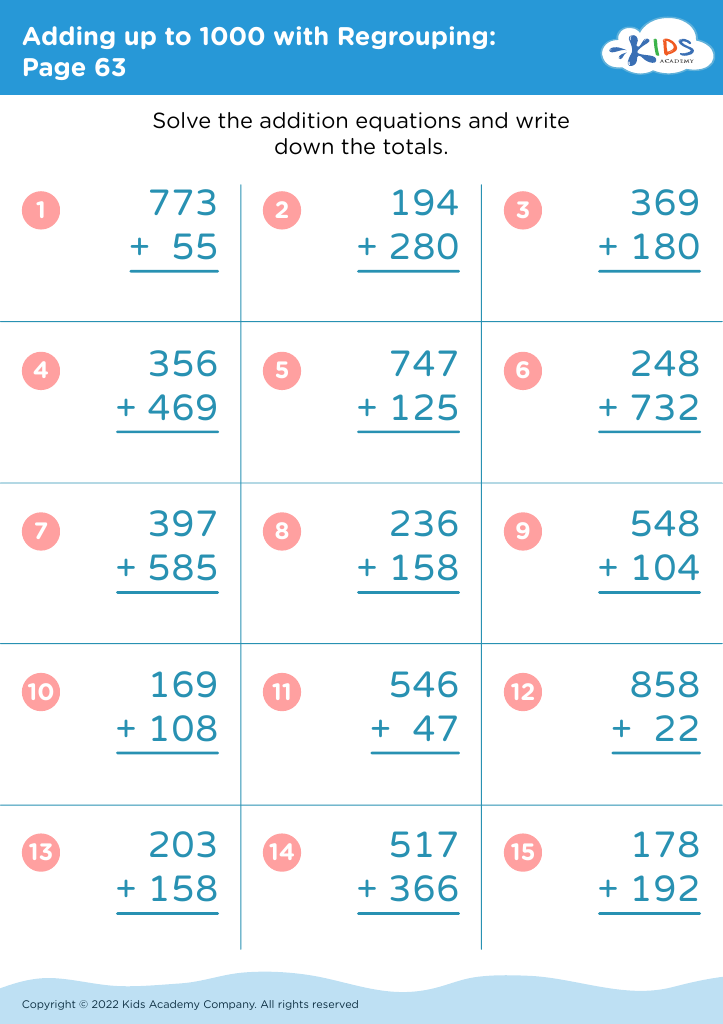
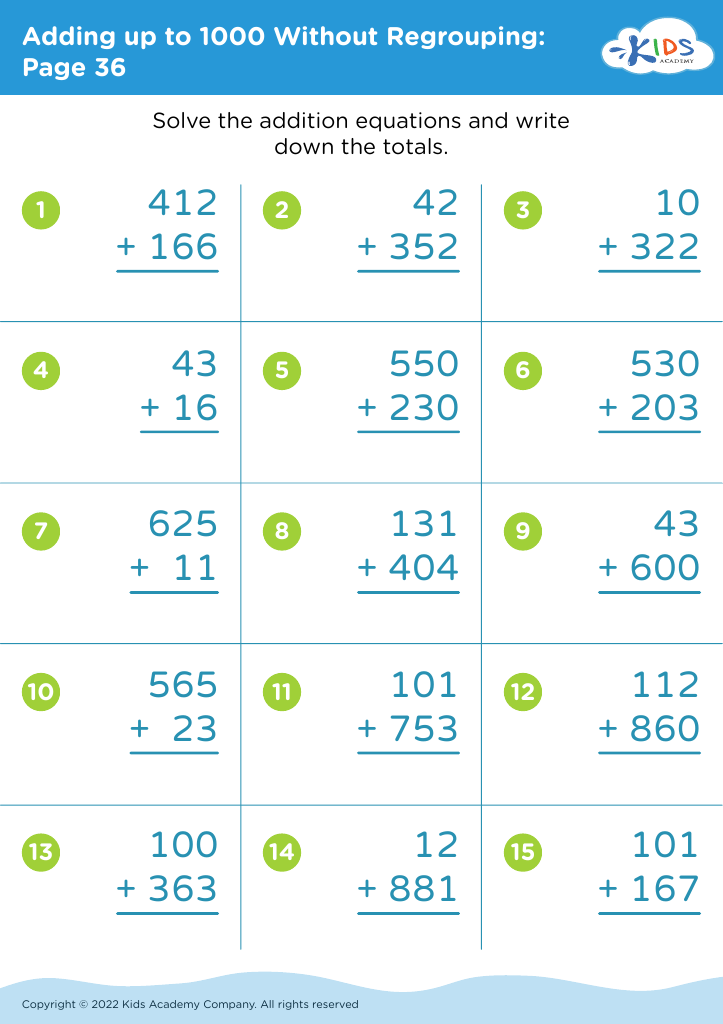
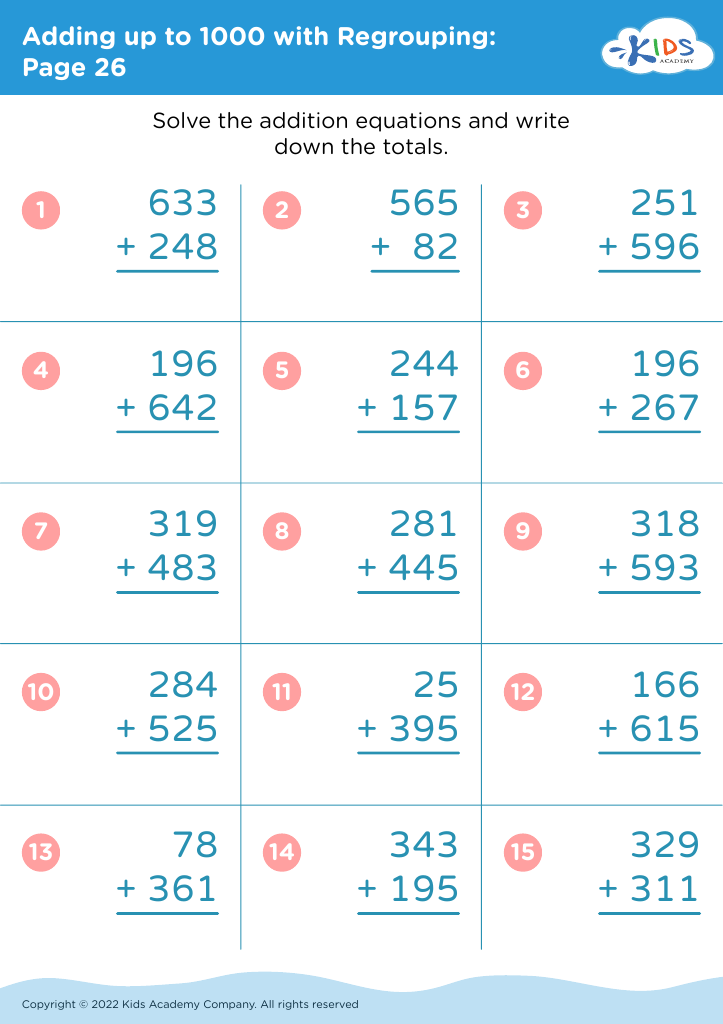
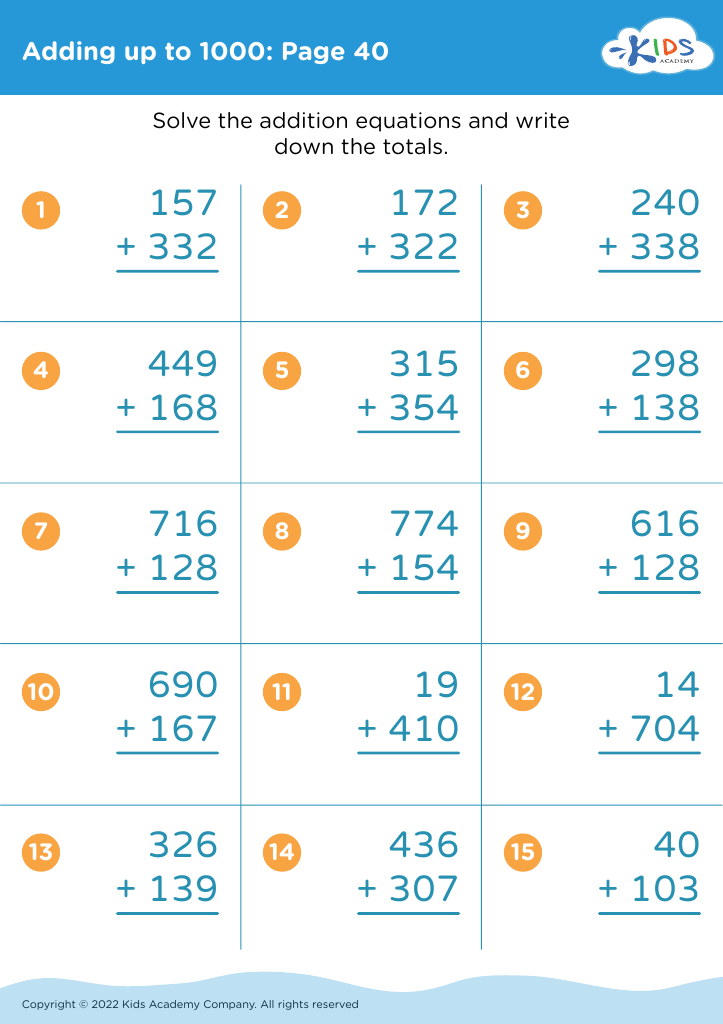
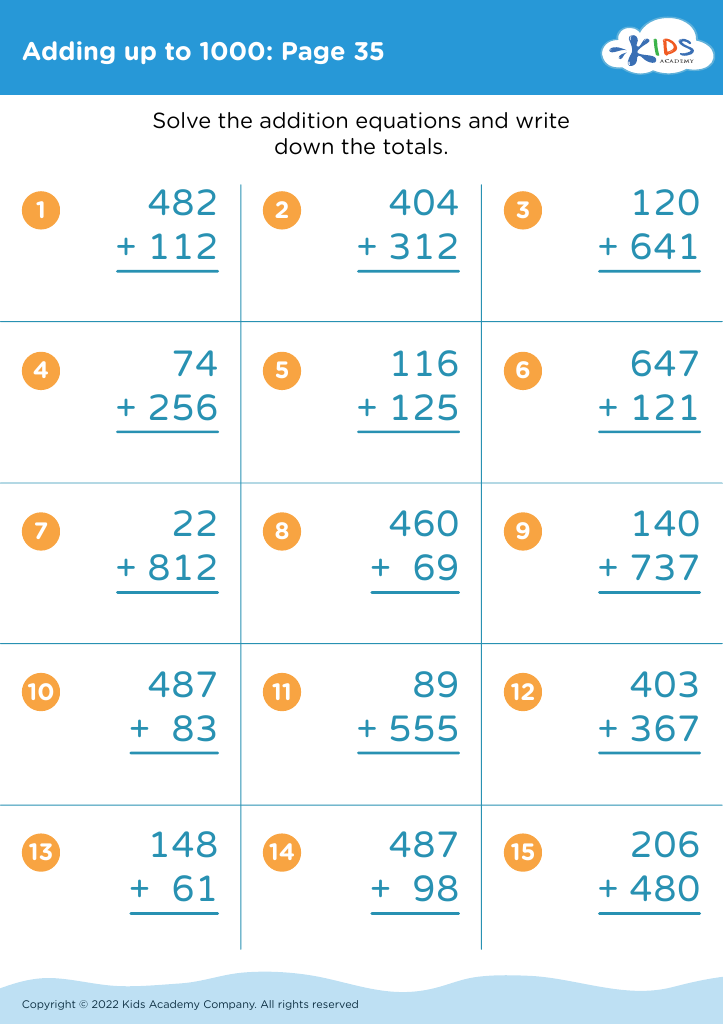
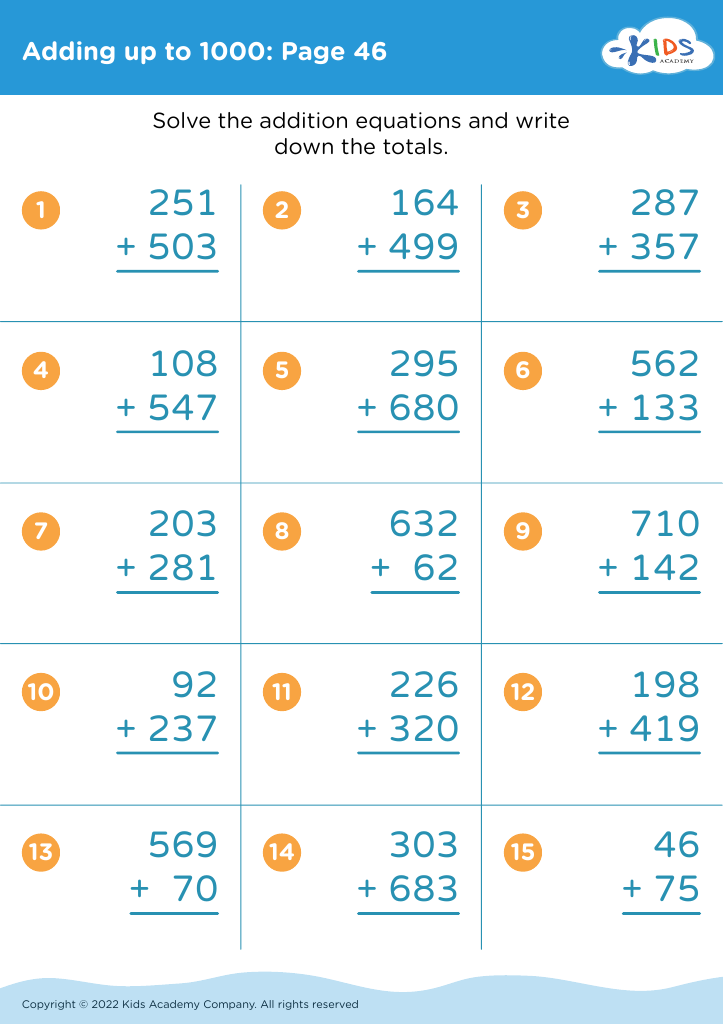
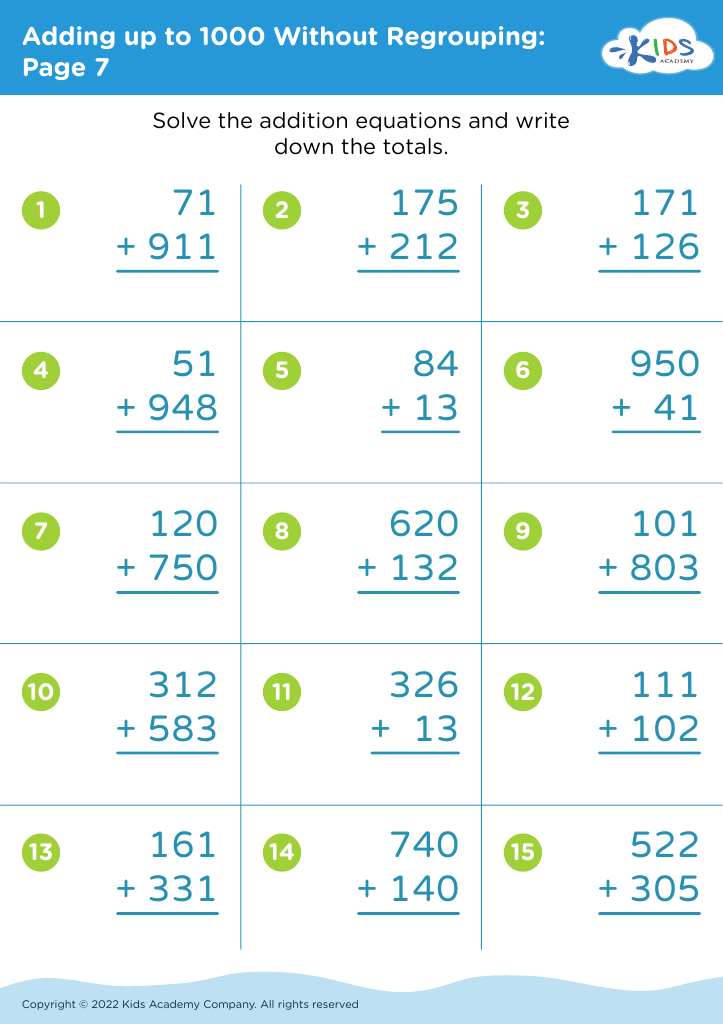
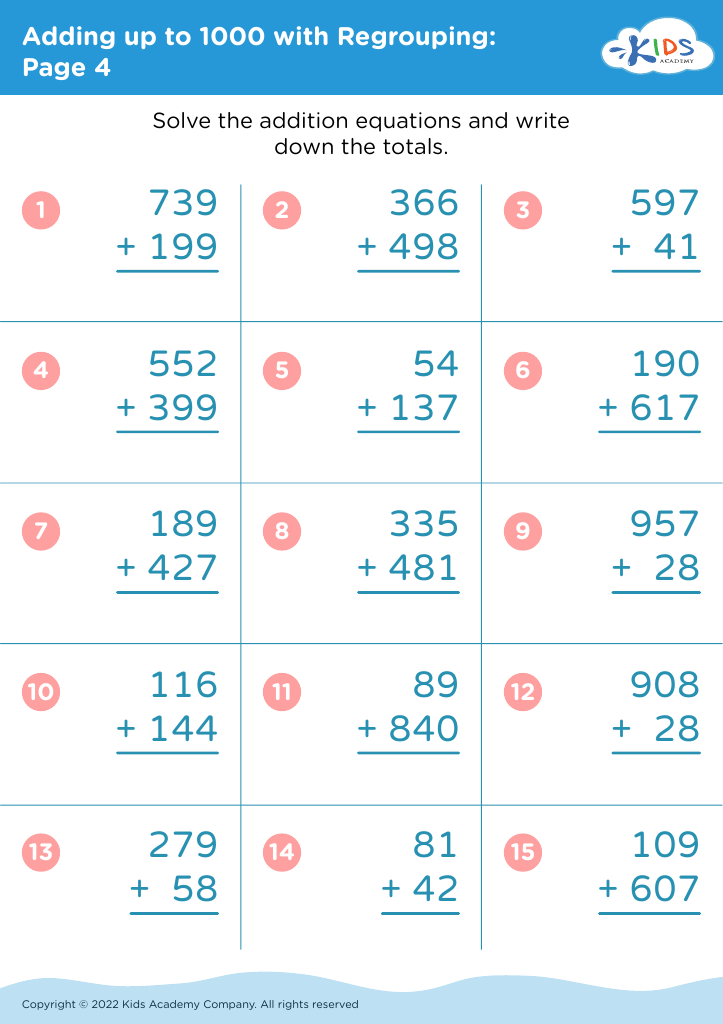
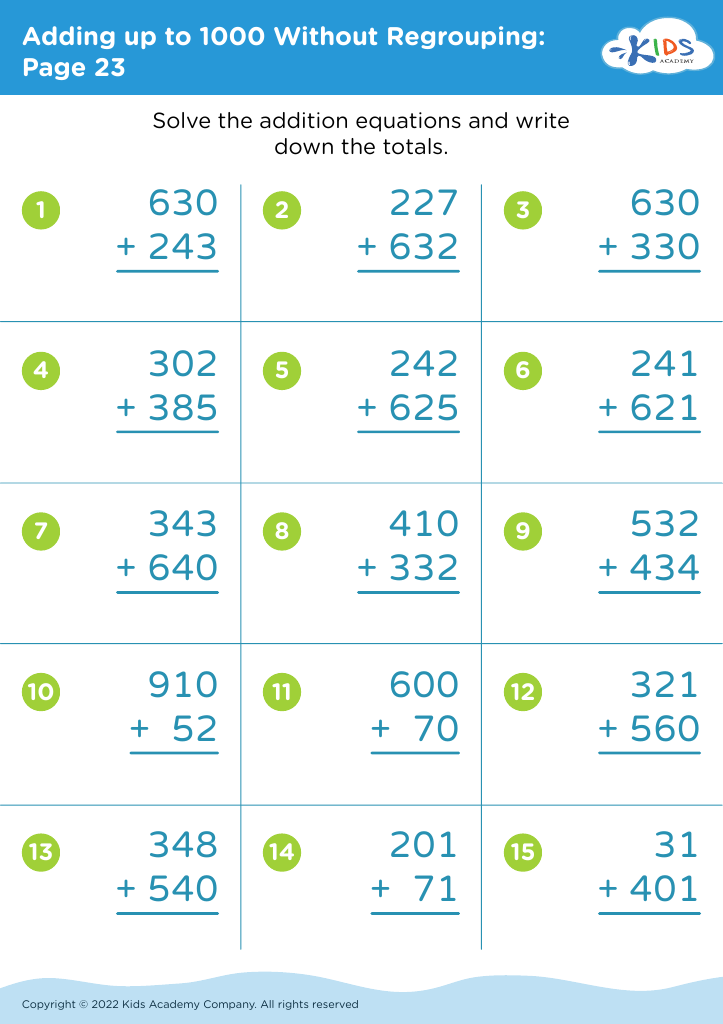
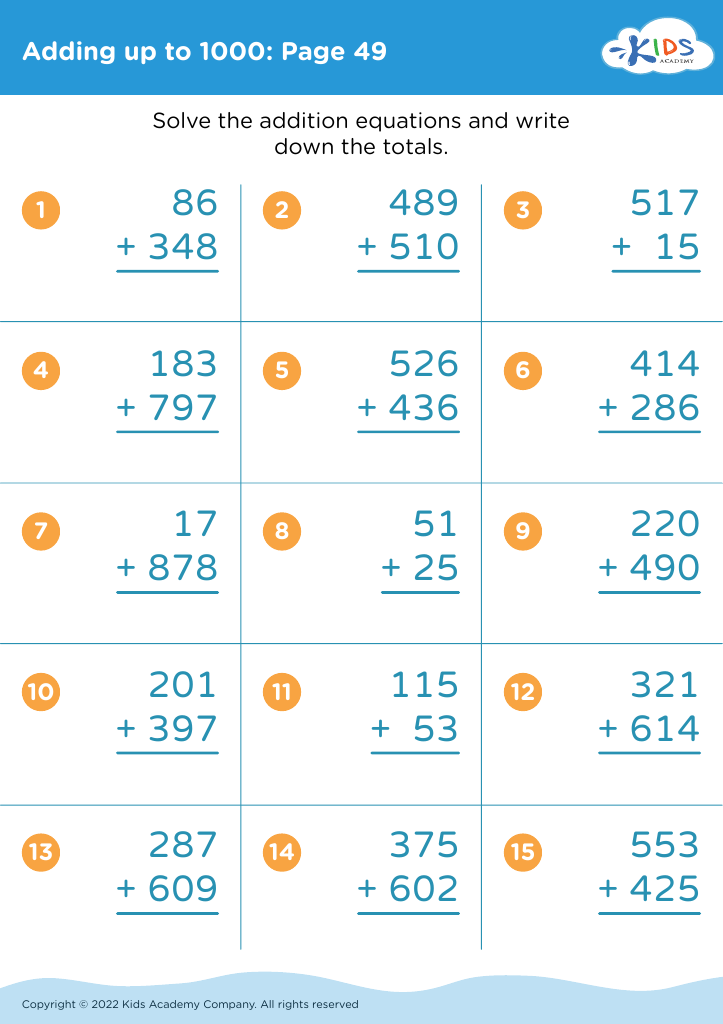
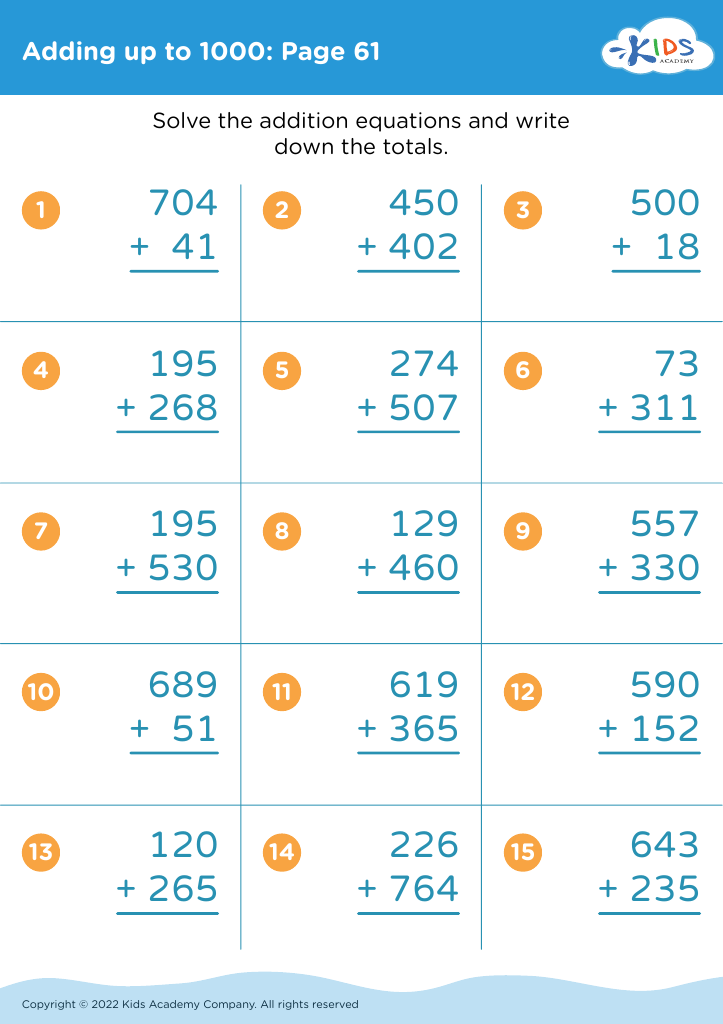
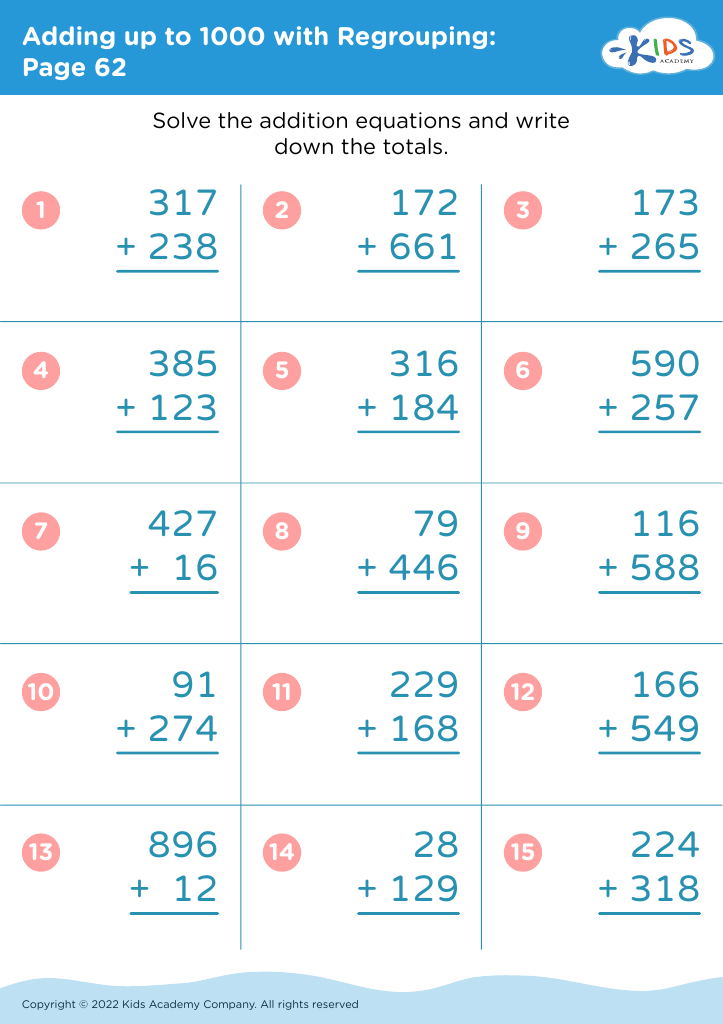



Understanding fractions and adding up to 1000 are essential mathematical skills for children ages 8-9 because they lay the foundation for more advanced math concepts and practical applications in everyday life. At this developmental stage, grasping these concepts helps children to think logically and gain a deeper understanding of numbers and how they work.
Fractions are an introduction to the idea that numbers can represent parts of a whole. Mastering fractions helps children with concepts like decimal equivalence, measurement, and probability, all of which are crucial in higher-level math and science courses. Understanding fractions also has real-world applications, including dividing a pizza among friends, measuring ingredients for a recipe, or understanding time.
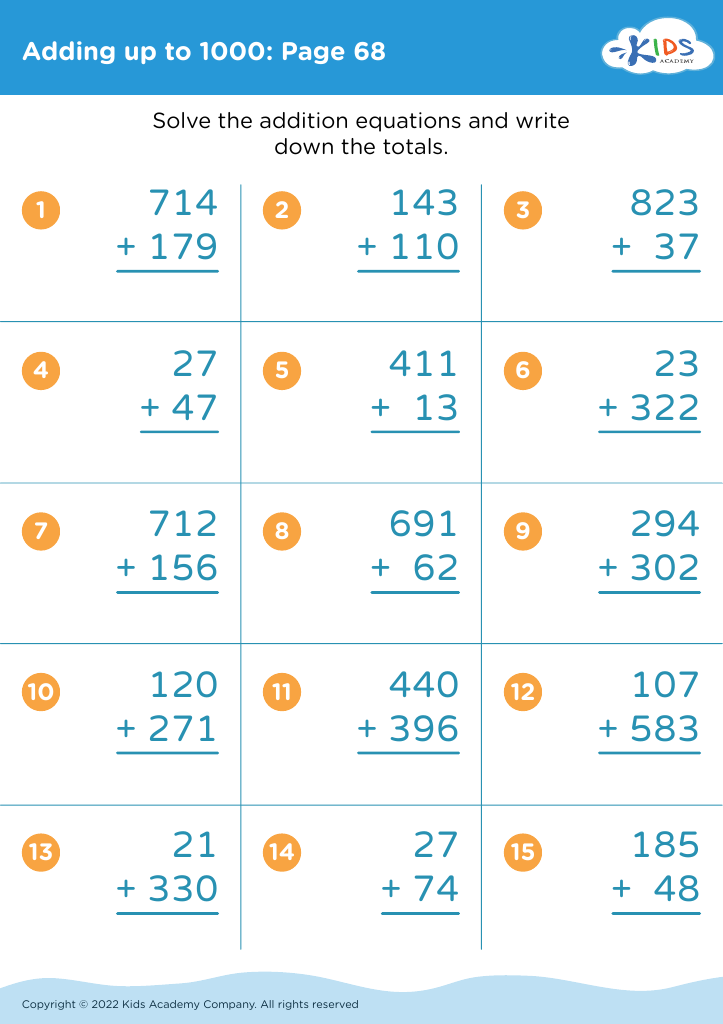
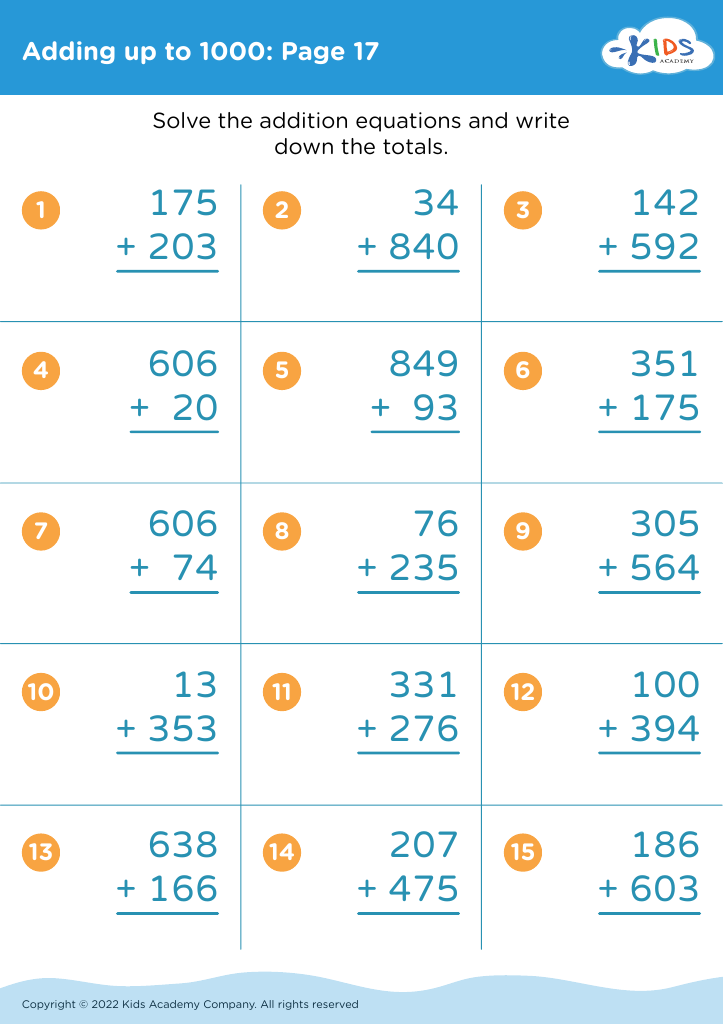
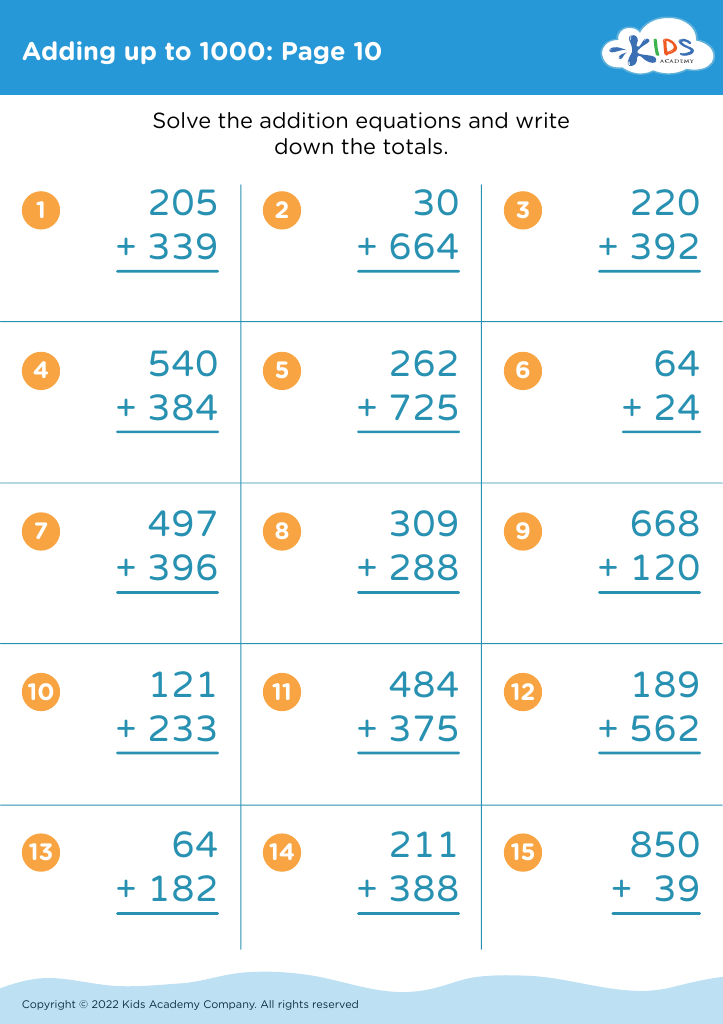
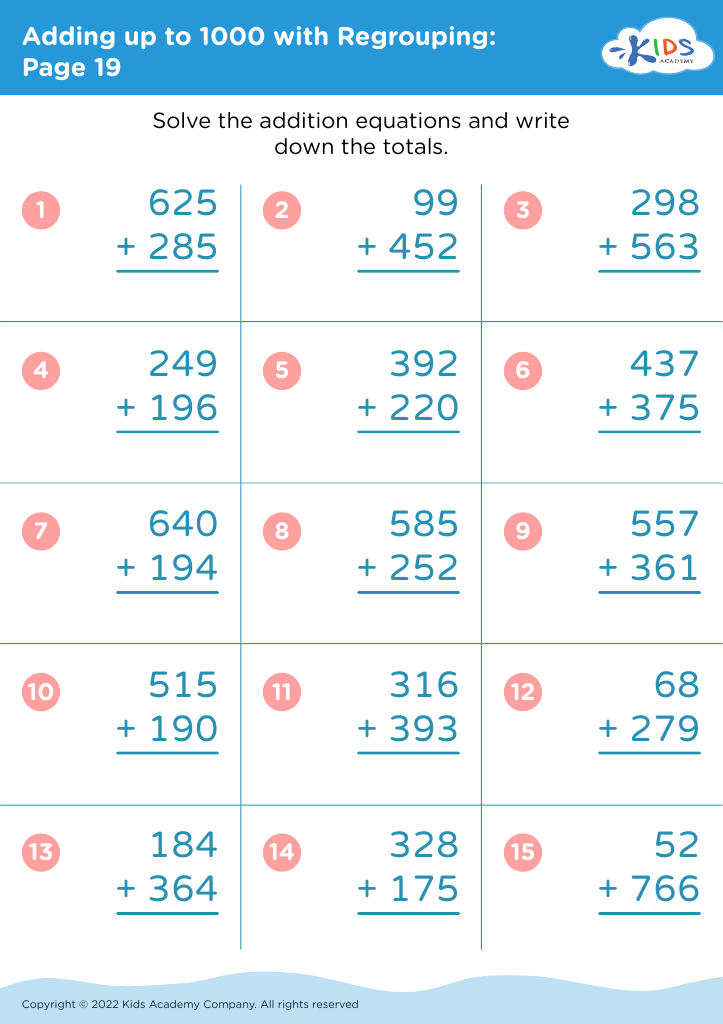
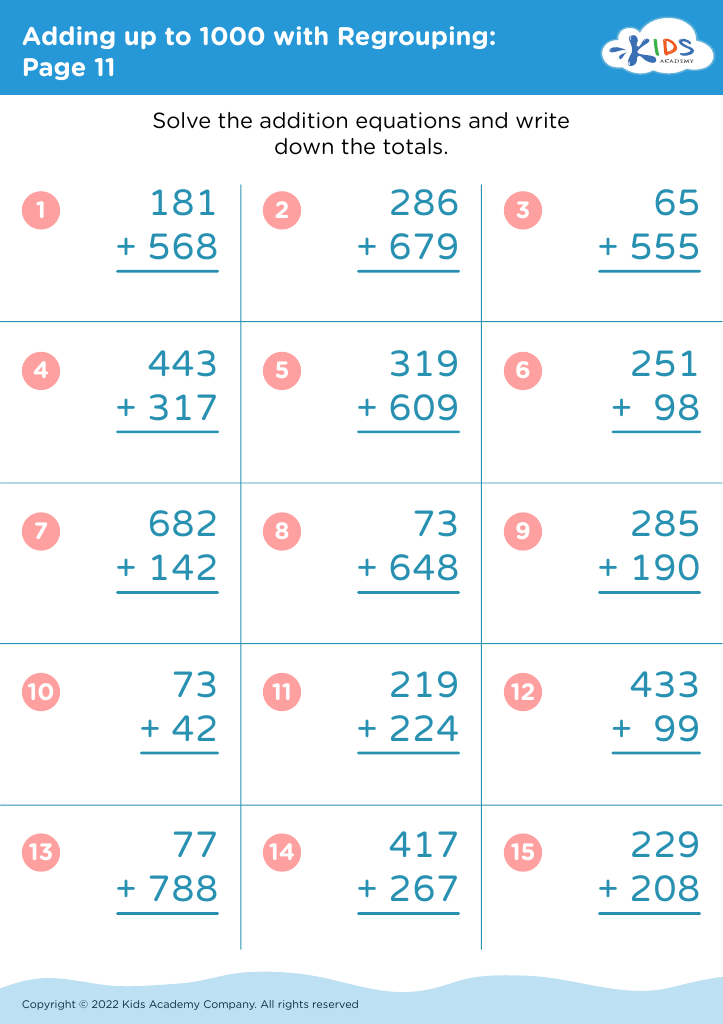
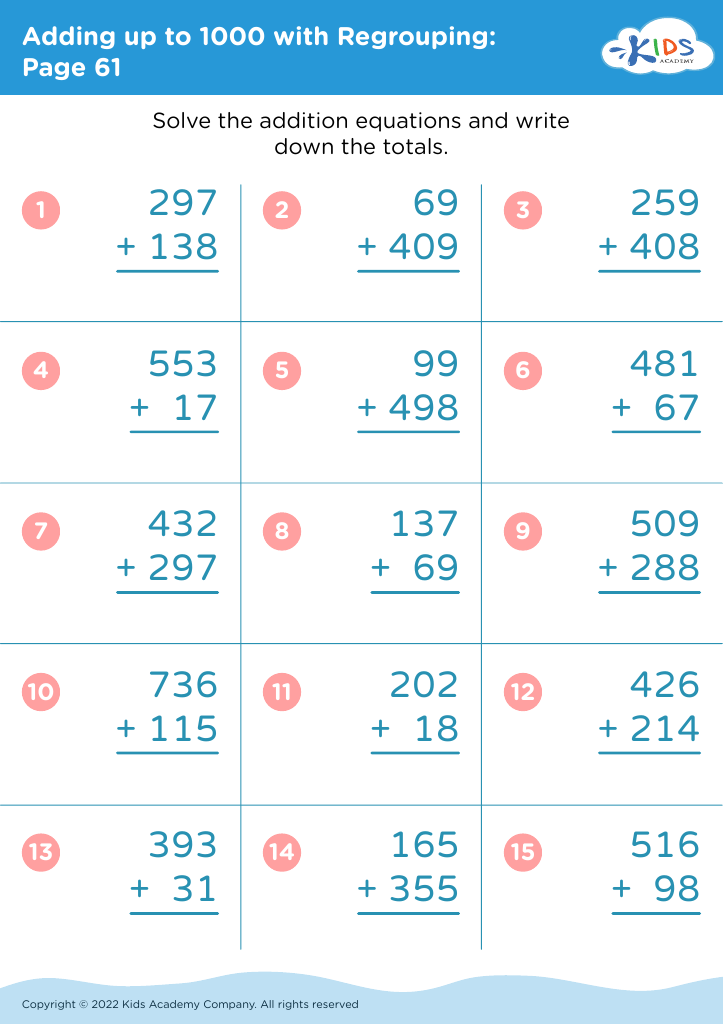
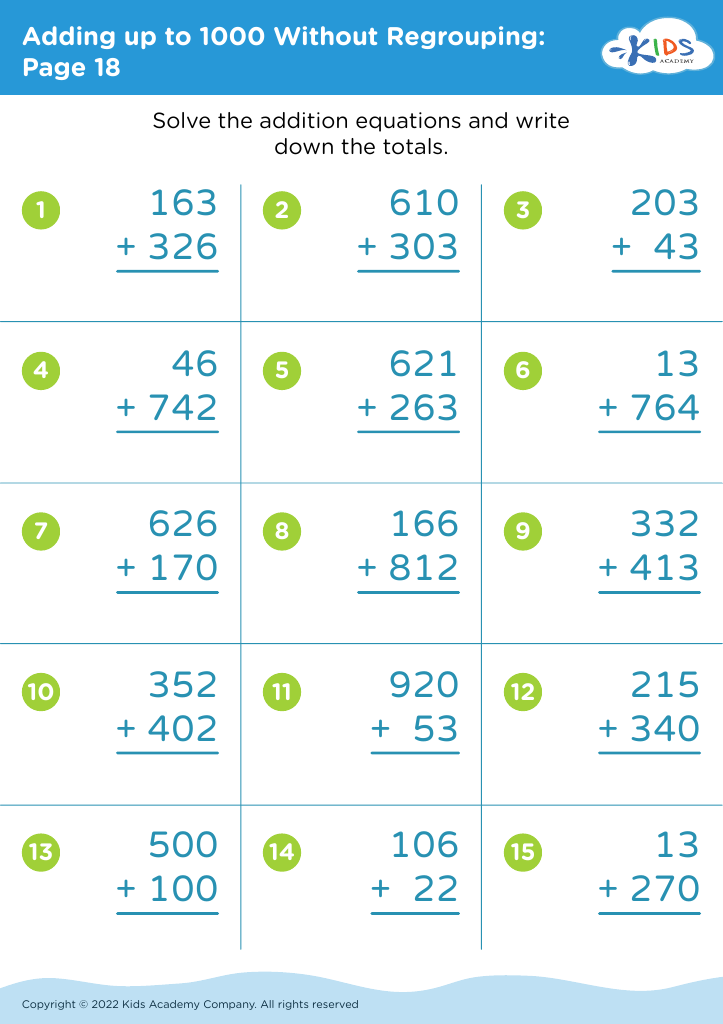
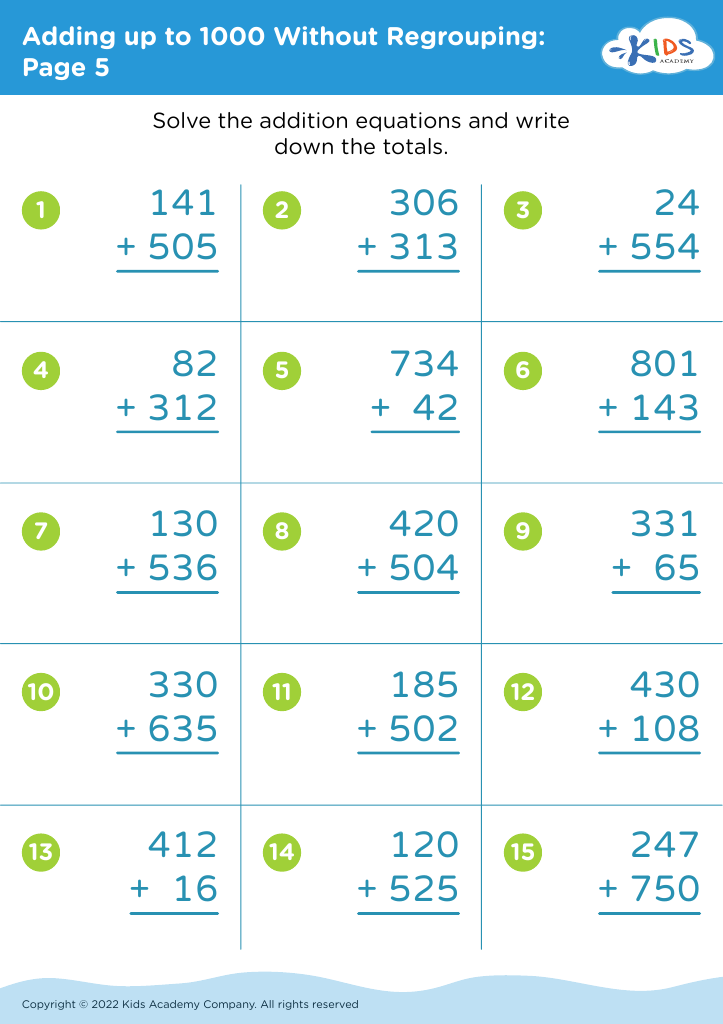
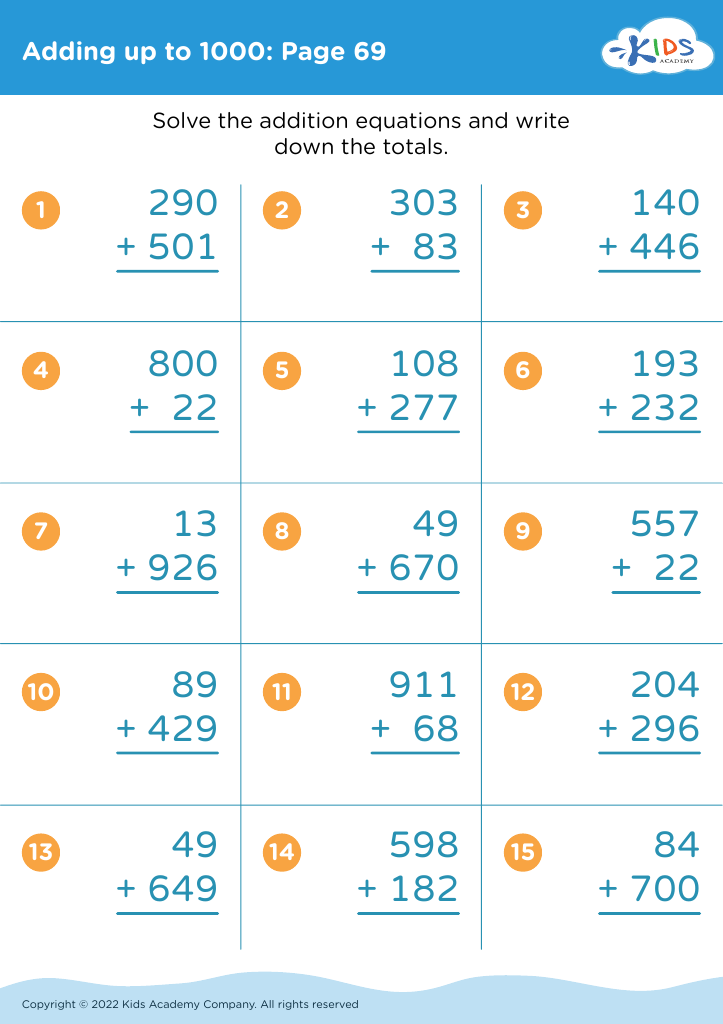
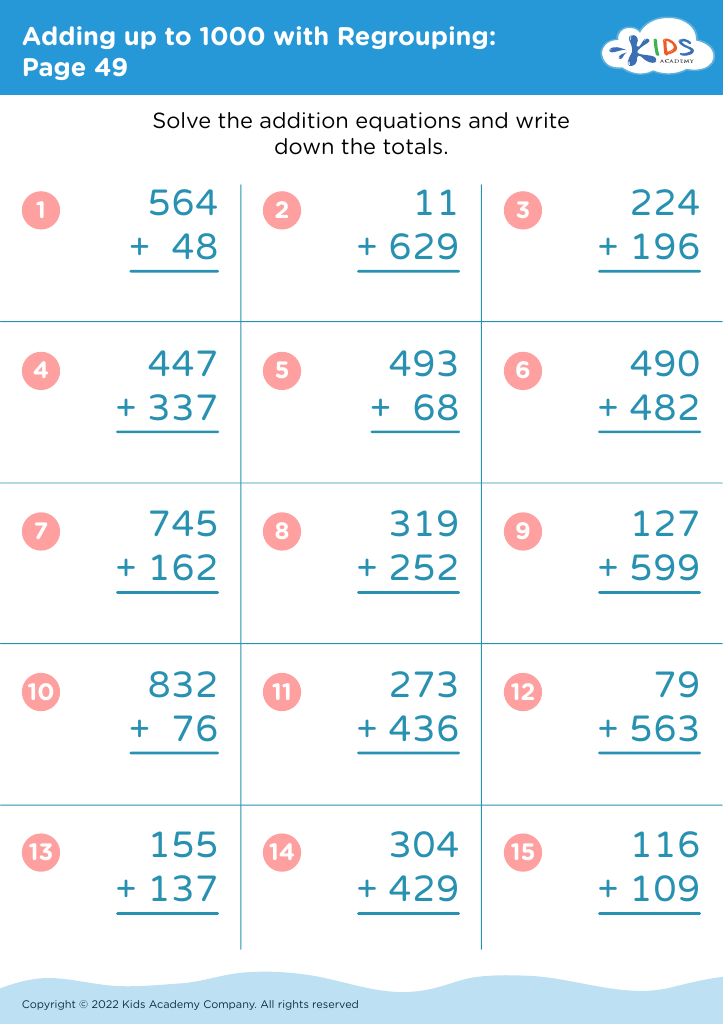
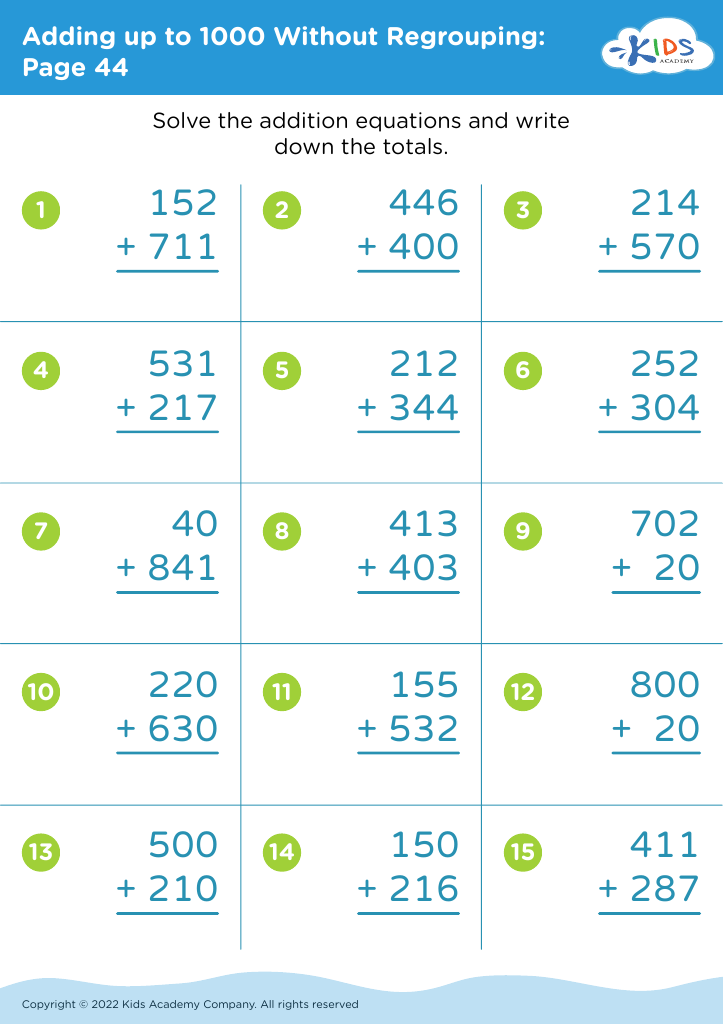
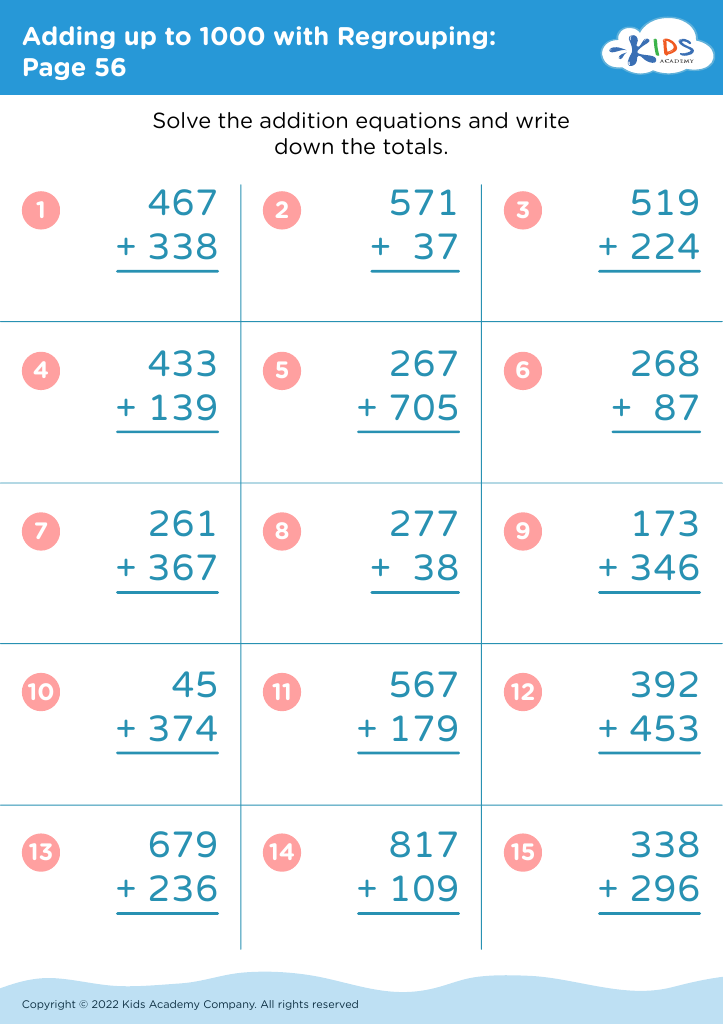
Adding up to 1000 expands a child's ability to handle larger numbers and understand place value better. Place value is fundamental in math, and fluency in adding up to 1000 will support future learning, like multiplication, division, and algebra. It also aids in problem-solving and logical thinking, skills necessary not only in academia but also in everyday tasks like budgeting and time management.
Hence, parents and teachers should focus on these skills to support a child's numerical fluency, problem-solving capacity, and confidence in tackling more complex math problems in the future.








