Understanding patterns Adding up to 1000 Worksheets for Ages 8-9
5 filtered results
-
From - To
Explore our "Understanding Patterns Adding Up to 1000 Worksheets," designed specifically for children aged 8-9. These engaging worksheets help young learners grasp mathematical patterns essential for mastering addition. Students will develop critical thinking skills as they connect concepts and identify sequences, empowering them to solve problems that sum to 1000. With colorful, interactive exercises, your child will enjoy hands-on learning while strengthening their mathematical foundation. Perfect for classroom use or at-home practice, these worksheets will boost confidence and enhance numeracy skills. Discover the joy of learning patterns in math and pave the way for future success with our enriching resources!
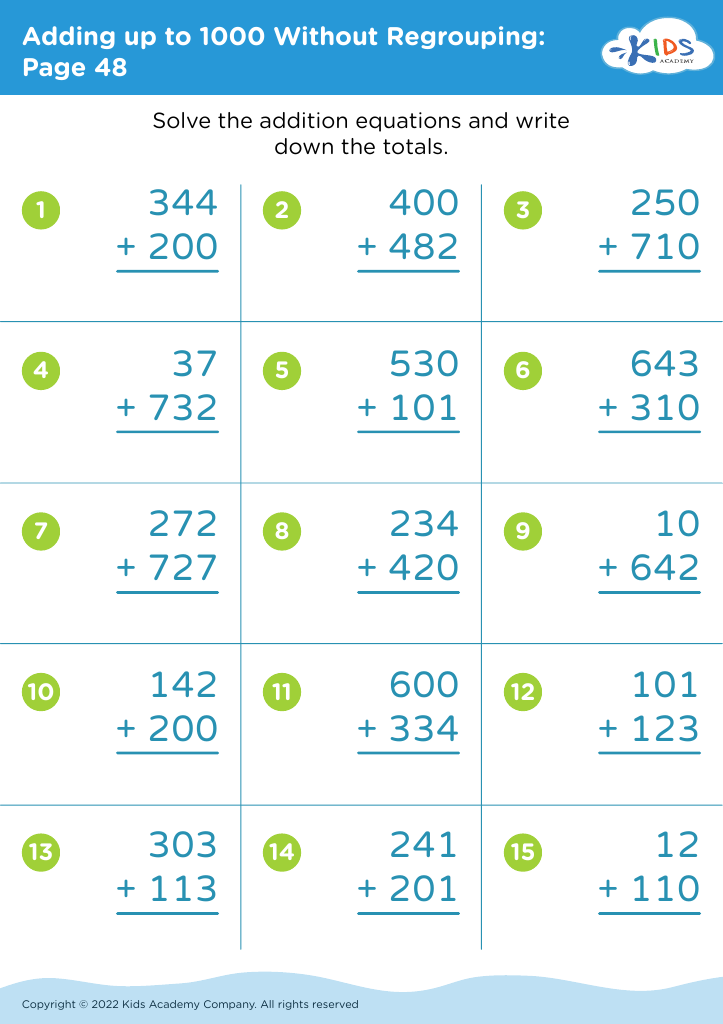
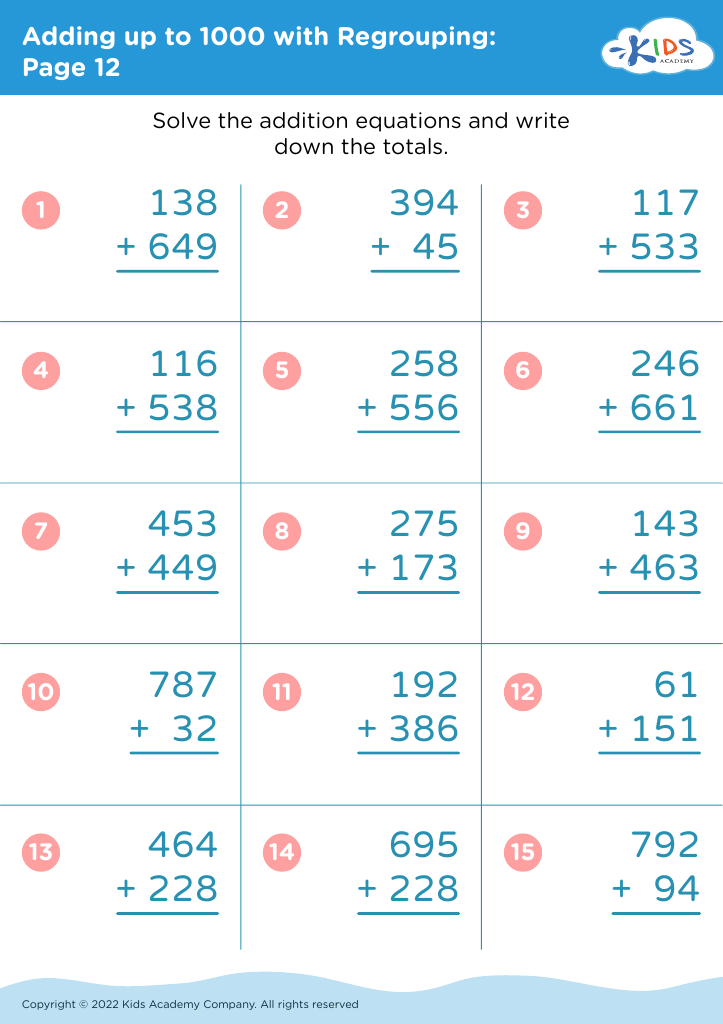
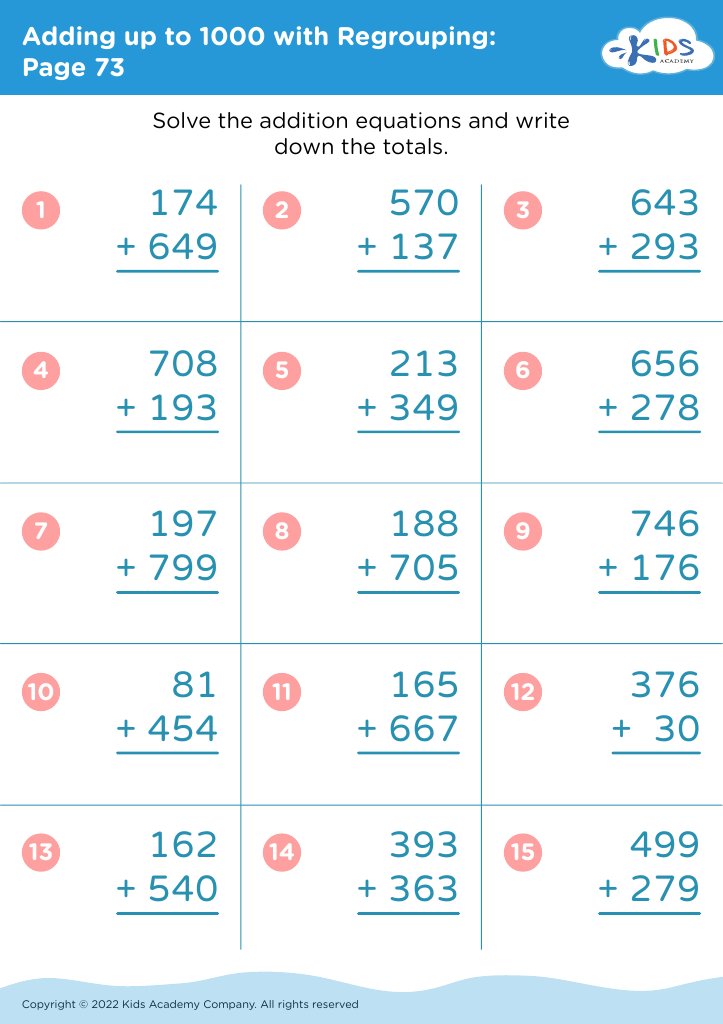
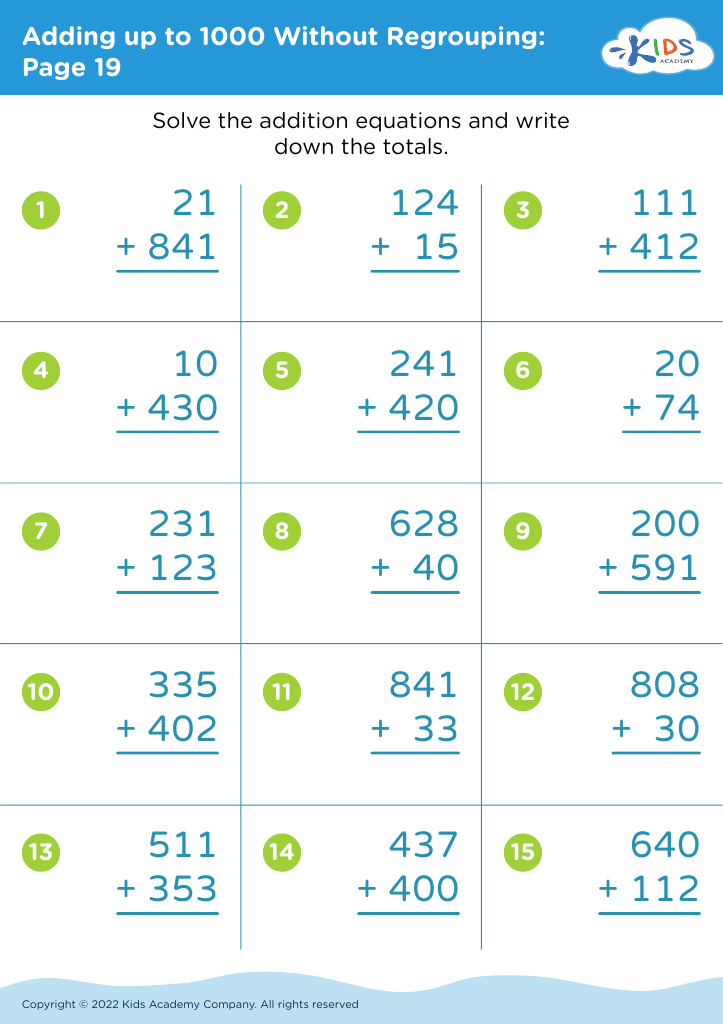
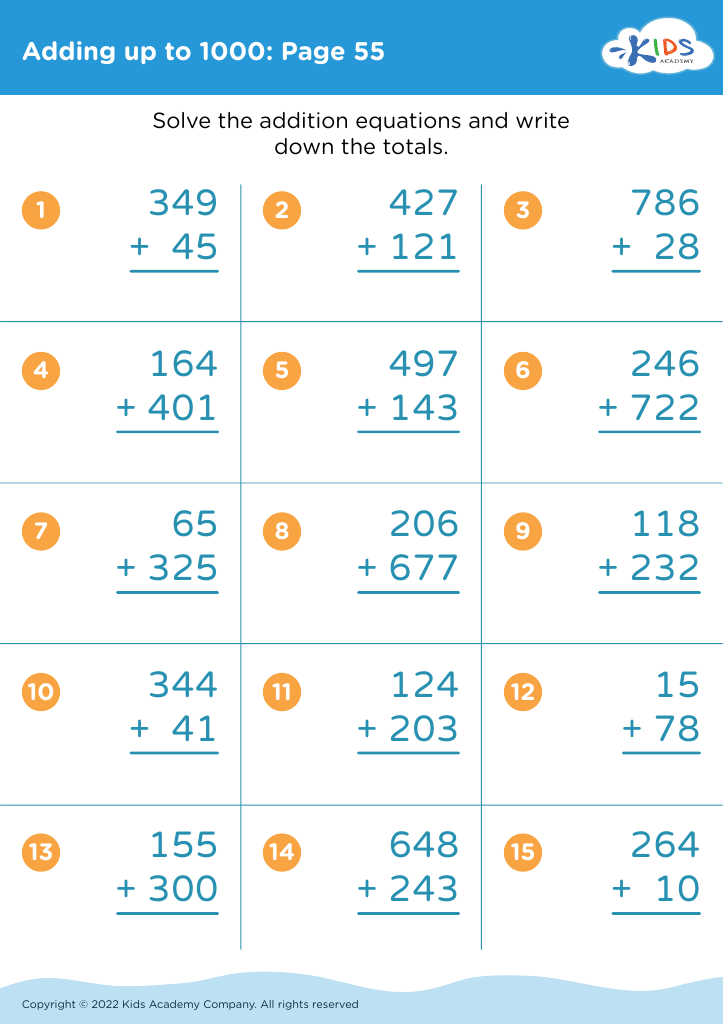



Understanding patterns and adding up to 1000 is essential for children aged 8-9 as it builds a strong foundation in numerical literacy and critical thinking. At this age, students are transitioning from basic arithmetic to more complex mathematical concepts, making pattern recognition crucial for their cognitive development.
When children learn to identify patterns, they gain insights into how numbers interact. For example, recognizing sequences or relationships can help them solve problems more efficiently and develop mental math strategies. Mastery of addition that totals 1000 fosters a sense of confidence as they engage with increasingly challenging math tasks.
Moreover, connecting addition to real-life scenarios enhances their relational understanding of numbers. For instance, they might explore how budgeting or measurements incorporate the concept of 1000, which nurtures practical mathematical applications. Engaging with these patterns not only prepares them for future topics such as multiplication or fractions but cultivates persistence and problem-solving skills—qualities invaluable both in academics and everyday life.
Ultimately, parents and teachers should prioritize understanding patterns and addition up to 1000, as it equips children with essential, transferable skills, promoting future learning and reinforcing a positive attitude toward mathematics.








