Understanding sequencing Adding up to 1000 Worksheets for Ages 8-9
3 filtered results
-
From - To
Explore our "Understanding Sequencing: Adding Up to 1000 Worksheets" designed for children ages 8-9. These engaging worksheets help young learners master the concept of sequencing numbers and develop their addition skills up to 1000. Through fun, interactive exercises, students will enhance their ability to recognize patterns and sequentially solve addition problems. Each worksheet is crafted to boost critical thinking while reinforcing mathematical concepts, making learning enjoyable and effective. Perfect for classroom use or home study, these resources empower students to build confidence in their math abilities. Dive into our comprehensive worksheets and watch your child's arithmetic skills flourish!
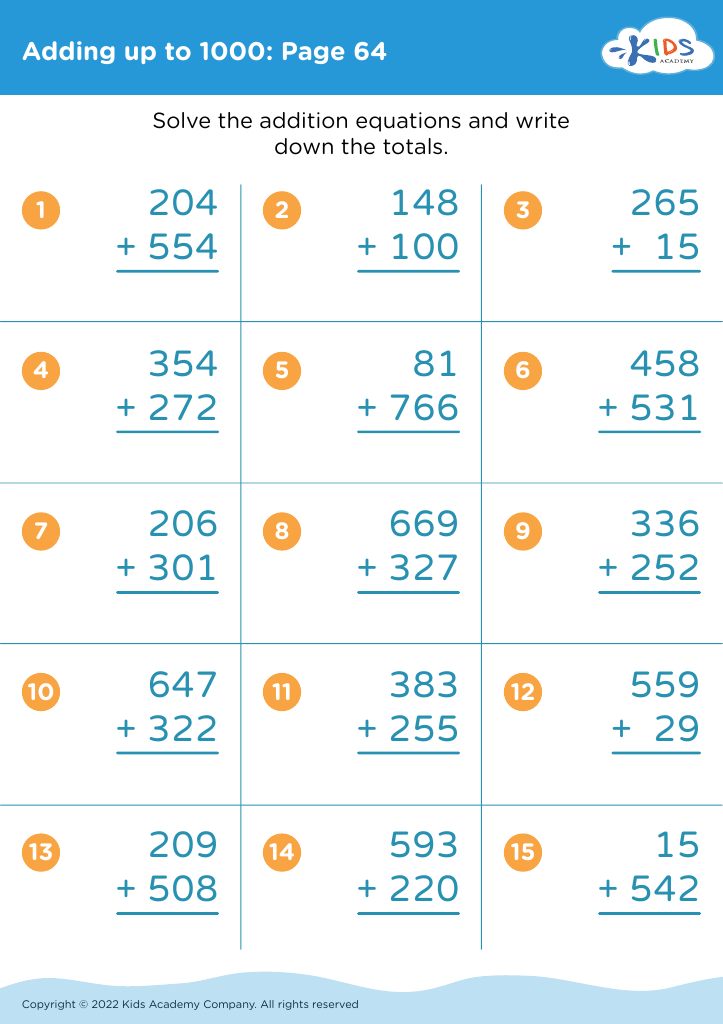
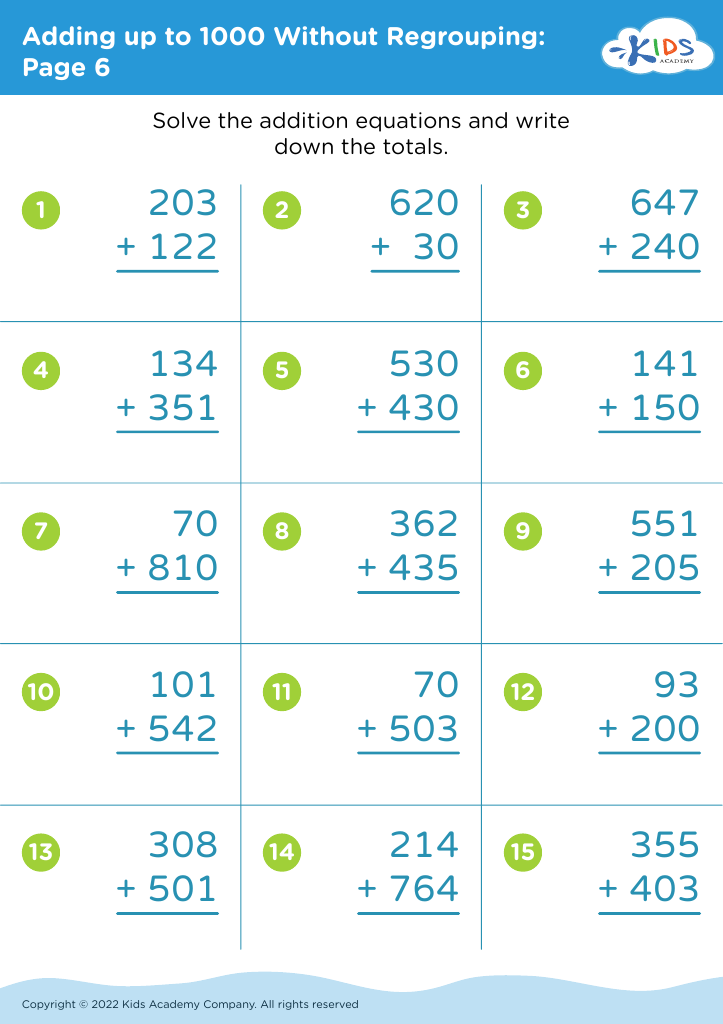
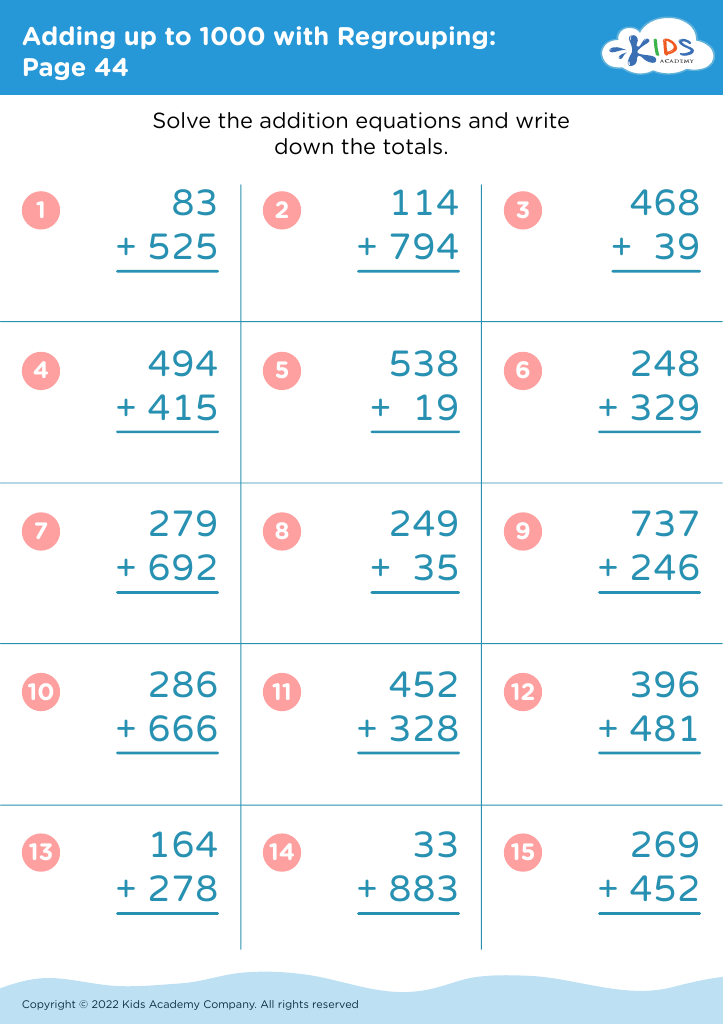



Understanding sequencing in addition is a vital skill for children aged 8-9, as it lays the foundation for their mathematical development and helps them become proficient problem solvers. At this age, students are expected to grasp more complex concepts, and mastering sequencing for numbers up to 1000 is essential for building their confidence and fluency in mathematics.
When children understand the order of operations in addition, they can approach math problems systematically. This skill also enhances their ability to tackle word problems, as they can identify which numbers to add first and recognize patterns in addition. Moreover, learning to sequence numbers fosters logical thinking and critical reasoning, core components that benefit their overall academic performance.
Parents and teachers should prioritize this area to ensure kids are well-prepared for advanced mathematical concepts in later grades, as these foundational skills will appear in topics such as regrouping, algebra, and even fractions. Additionally, reinforcing sequencing can make math more engaging, as students can use games and activities that incorporate these skills in fun and interactive ways. By caring about this aspect of their education, parents and teachers not only support academic growth but also cultivate a positive attitude towards learning.








