Vocabulary expansion Adding up to 1000 Worksheets for Ages 8-9
4 filtered results
-
From - To
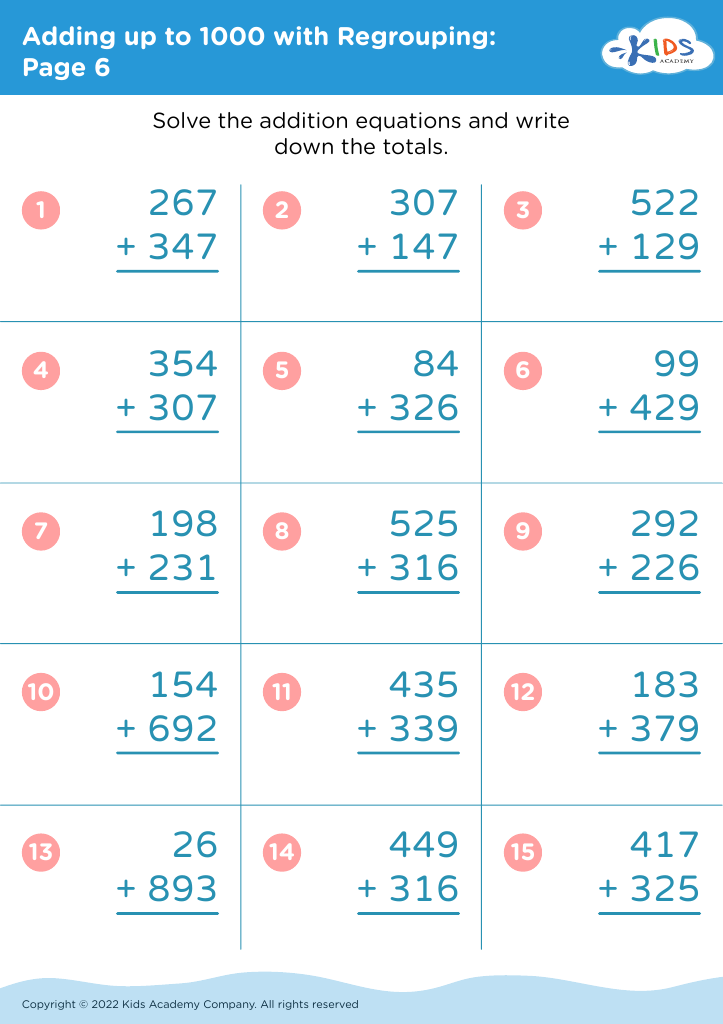
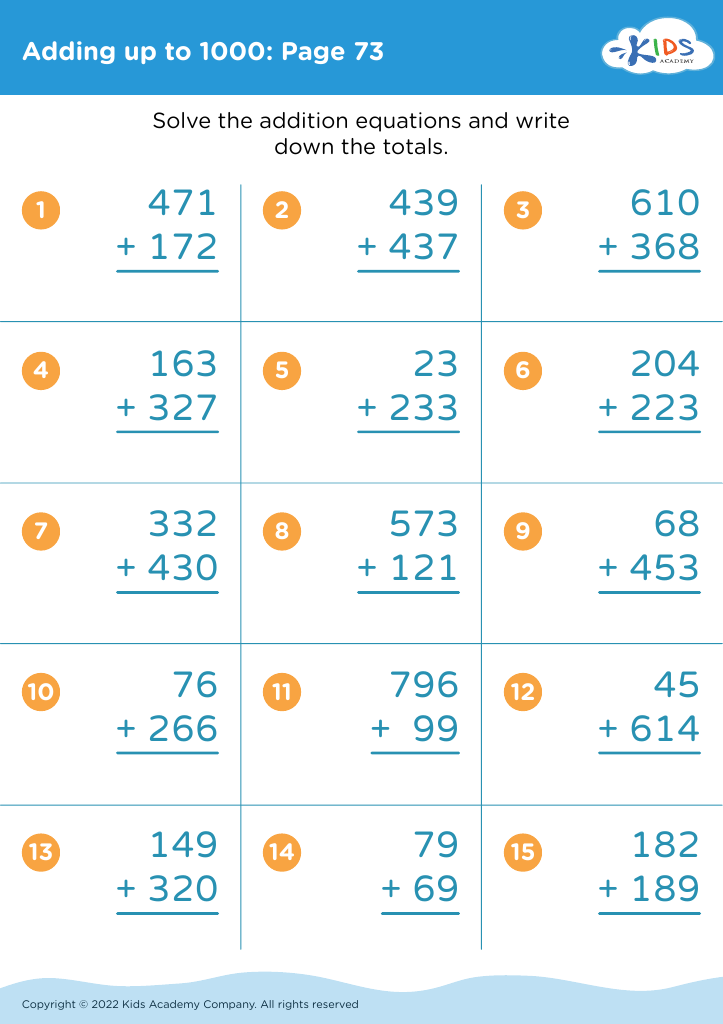
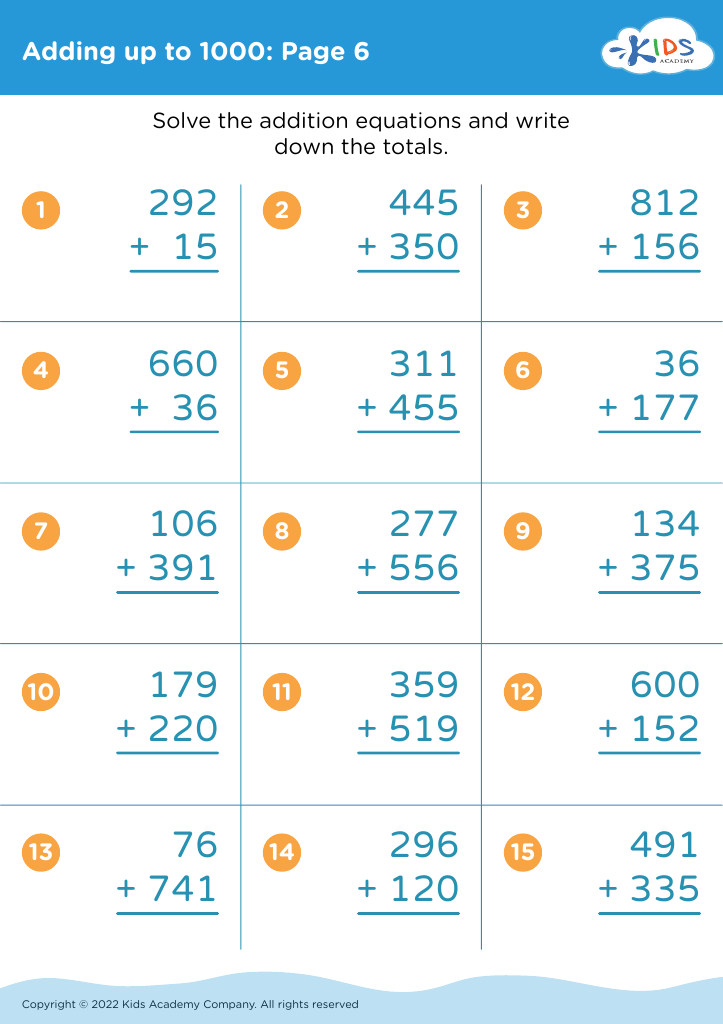
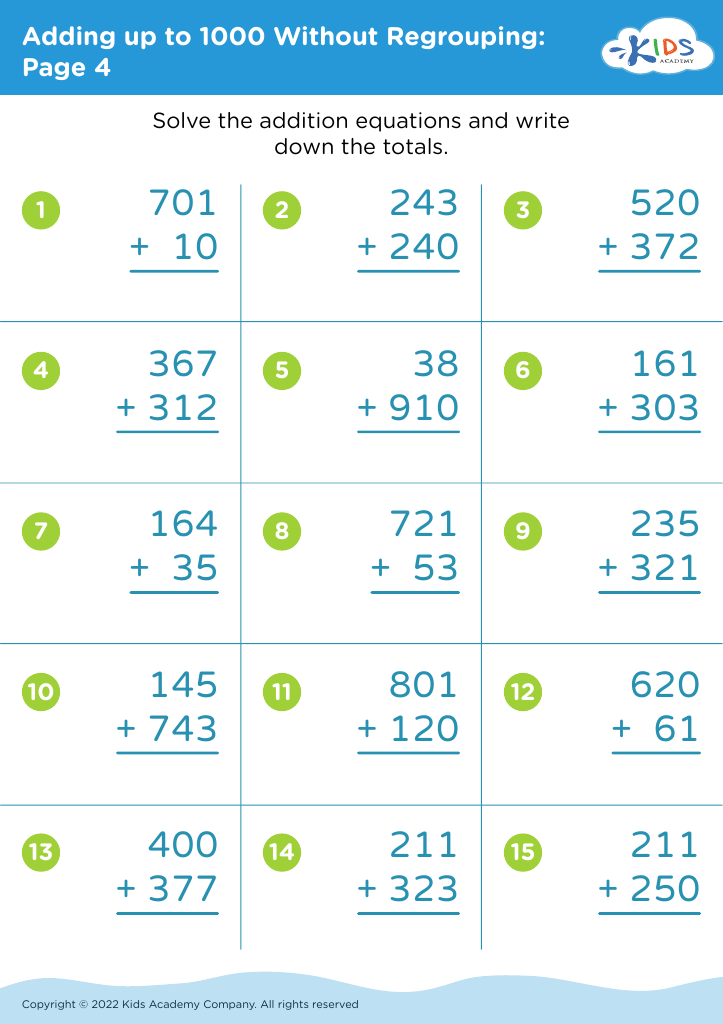
Unlock the practice of adding up to 1000 with our expertly crafted worksheets for 8-9-year-olds! At Kids Academy, we understand the importance of math and language. Our "Vocabulary Expansion Adding up to 1000 Worksheets" are designed to enhance mathematical skills while simultaneously broadening your child's language mastery. Each engaging exercise integrates math and vocabulary, ensuring comprehensive development. Watch as your child's numerical confidence and word knowledge flourish. Equip them with the tools they need to succeed both in and out of the classroom. Explore our worksheets today, and contribute to their educational journey with fun and effective learning activities.



Expanding a child's vocabulary to reach about 1,000 new words by ages 8-9 is crucial for their academic and social development. At this age, solid vocabulary skills significantly enhance reading comprehension, which is foundational for academic success. A rich vocabulary enables children to understand more complex texts, follow detailed instructions, and express themselves more clearly and precisely in both oral and written forms.
Furthermore, a broad vocabulary fosters better communication skills, which are essential for building strong relationships and functioning effectively in social settings. It helps children articulate their thoughts, emotions, and needs more adeptly, reducing frustration and misunderstandings.
Additionally, vocabulary expansion is linked to cognitive development. Learning new words enhances general knowledge and contributes to better problem-solving and critical thinking abilities. It opens doors to curiosity and further learning as children encounter and understand more concepts.
Moreover, a strong vocabulary lays the groundwork for lifelong learning and academic excellence. It builds confidence, encourages curiosity, and increases a child's ability to engage meaningfully with the world around them. Therefore, parents and teachers should prioritize vocabulary expansion to support children's overall development and future success.








