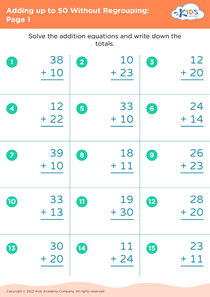
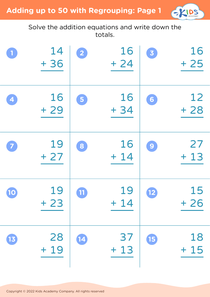
Addition skills Adding up to 50 Misc Worksheets for Ages 8-9
3 filtered results
-
From - To
Enhance your child's math abilities with our "Addition Skills: Adding Up to 50" miscellaneous worksheets designed specifically for ages 8-9. These engaging and diverse worksheets focus on building strong addition skills through a variety of exercises, including word problems, visual aids, and fun challenges. Perfect for reinforcing concepts and boosting confidence, students will have the opportunity to practice adding numbers up to 50 in an enjoyable and interactive manner. Whether in the classroom or at home, these worksheets are a valuable resource for developing math fluency and ensuring a solid foundation in addition. Empower your child’s learning journey today!
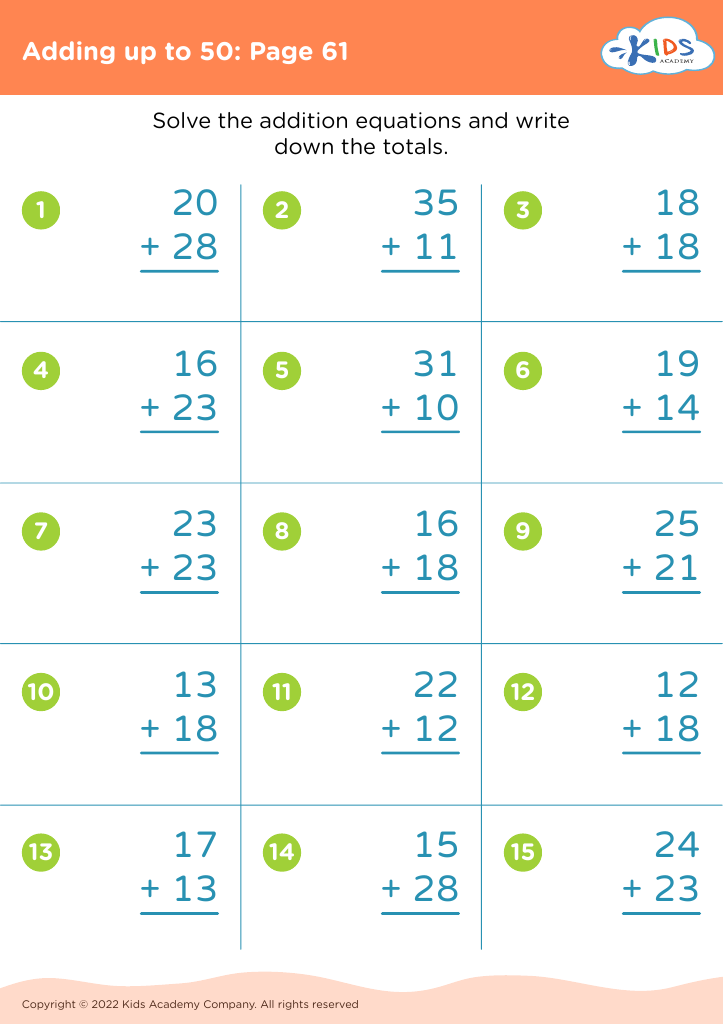
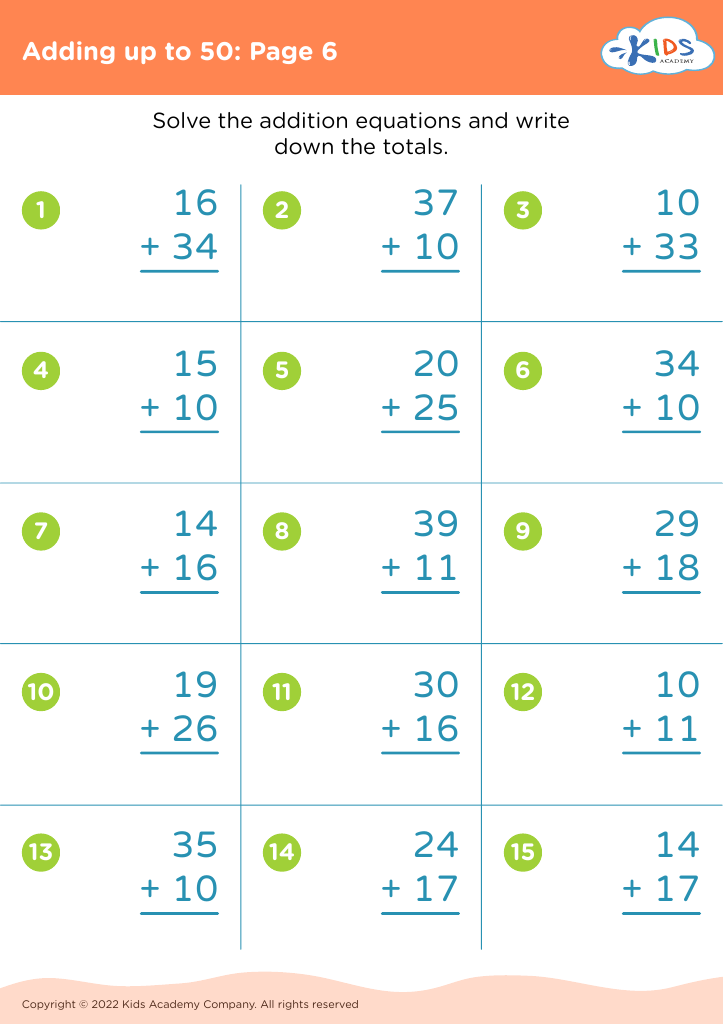
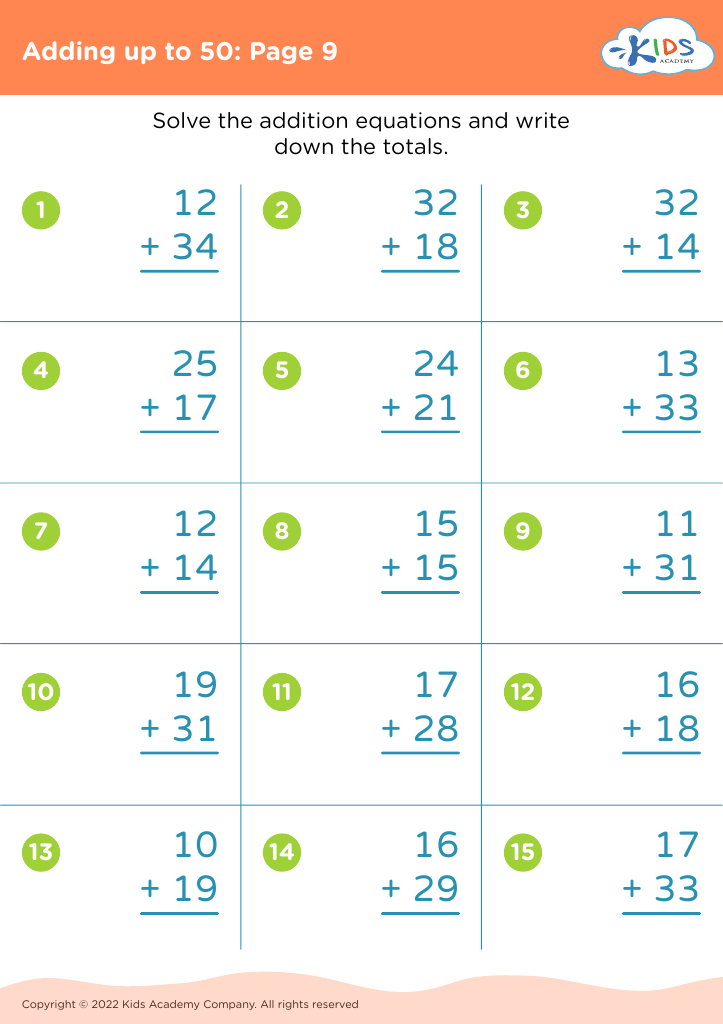


Addition skills, particularly the ability to add up to 50, are fundamental for children aged 8-9 as they serve as building blocks for more complex mathematical concepts. Mastering these skills not only enhances a child's confidence in their ability to perform calculations but also fosters critical thinking and problem-solving abilities. Addition skills are essential in daily life, from budgeting allowances to understanding time and distance, and they lay the groundwork for succeeding in future math-related subjects such as multiplication, fractions, and even algebra.
Furthermore, children at this age are developing cognitive skills that are sharpened through practice. Activities that involve addition can be made engaging, turning learning into an enjoyable experience, encouraging curiosity and a positive attitude towards math.
Teachers and parents play a crucial role in supporting this learning journey. By incorporating fun games and everyday scenarios that necessitate addition, they can make these skills more relatable and practical. It prepares children not just for school, but also for real-world applications. In a world where numeracy can influence various aspects of life, fostering strong addition skills ensures that children are equipped to navigate their futures with competence and confidence.