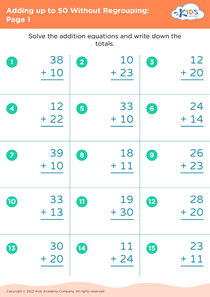
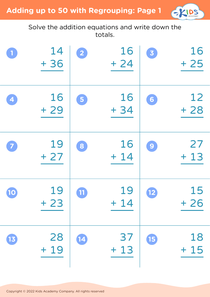
Basic Math Skills Adding up to 50 Misc Worksheets for Ages 8-9
5 filtered results
-
From - To
Explore our engaging "Basic Math Skills: Adding up to 50" worksheets, designed specifically for children ages 8-9. These miscellaneous worksheets provide diverse problem-solving opportunities, helping young learners strengthen their addition skills in a fun and interactive way. Our comprehensive collection includes exercises that challenge students to add numbers up to 50, enhancing their confidence and proficiency in math. Whether at home or in the classroom, these worksheets are perfect for supporting various learning styles while promoting critical thinking. Boost your child's mathematical understanding and make learning enjoyable with our carefully crafted resources tailored for this crucial developmental stage.
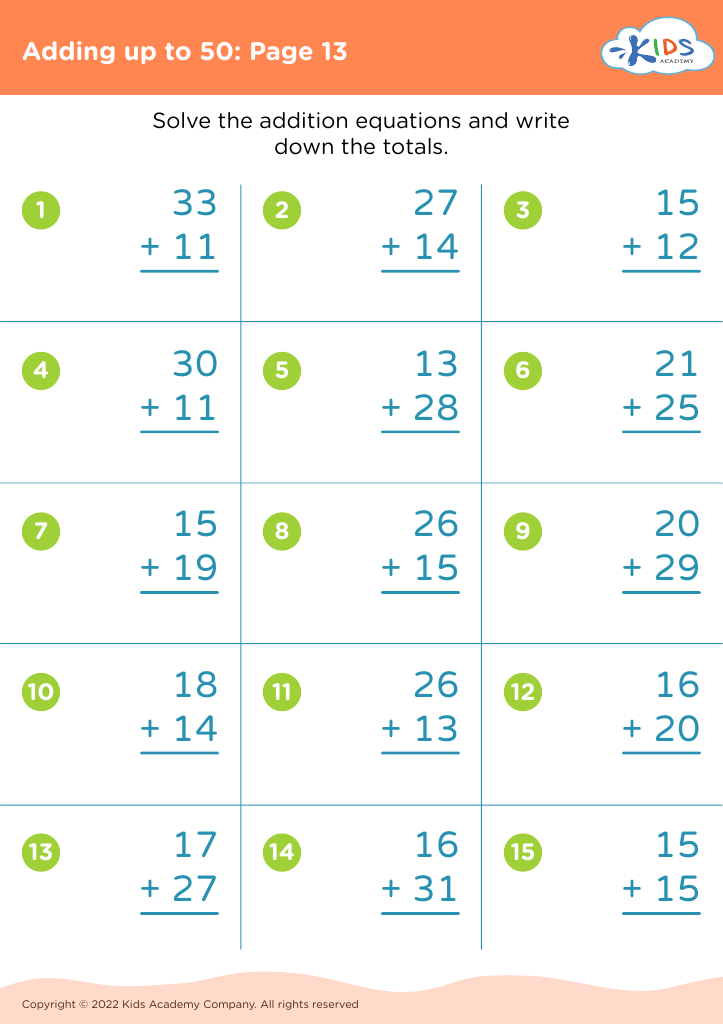
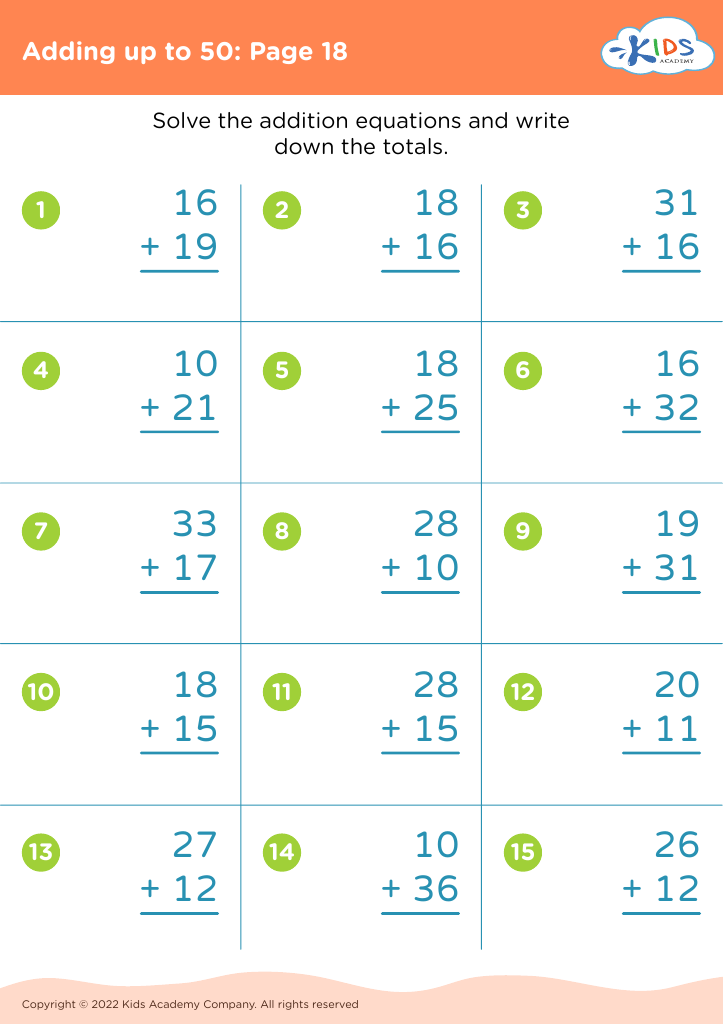
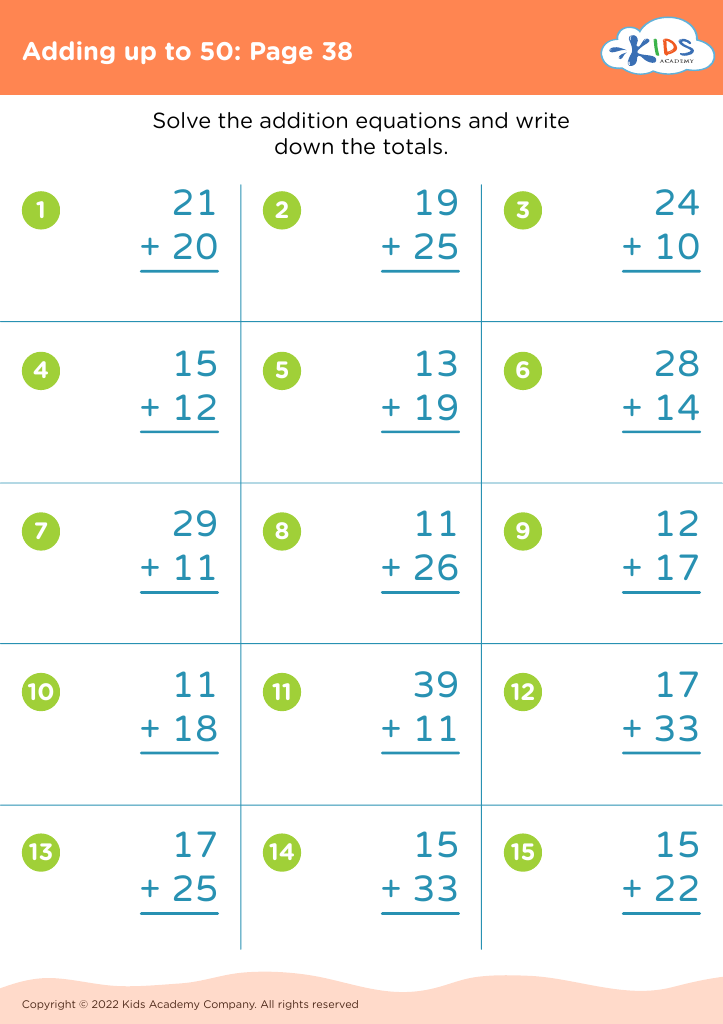
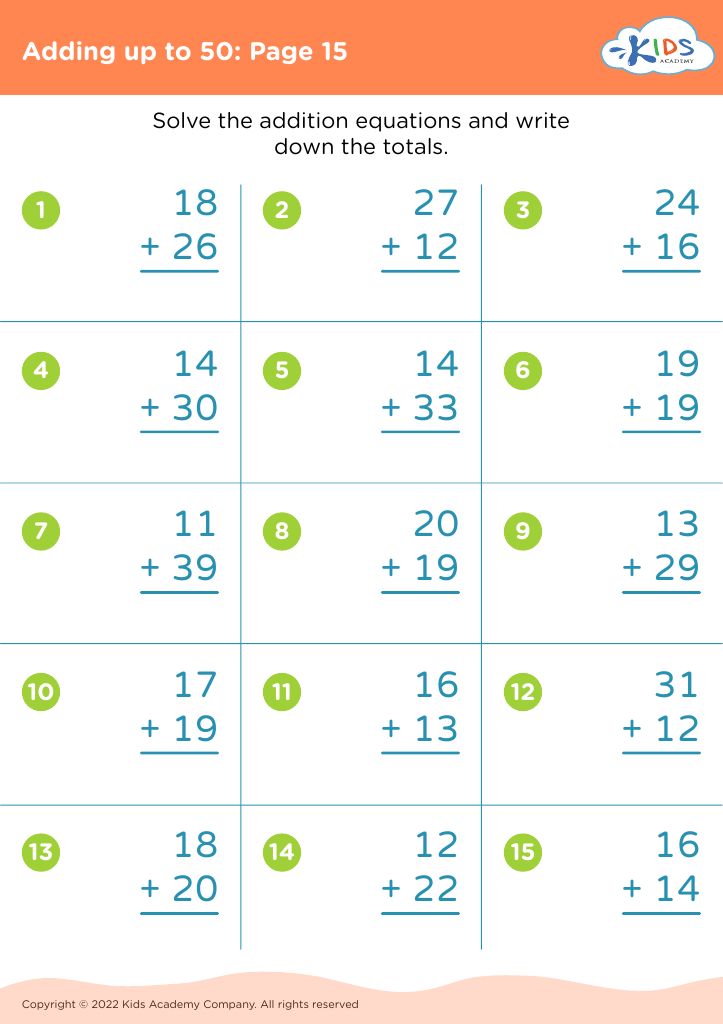
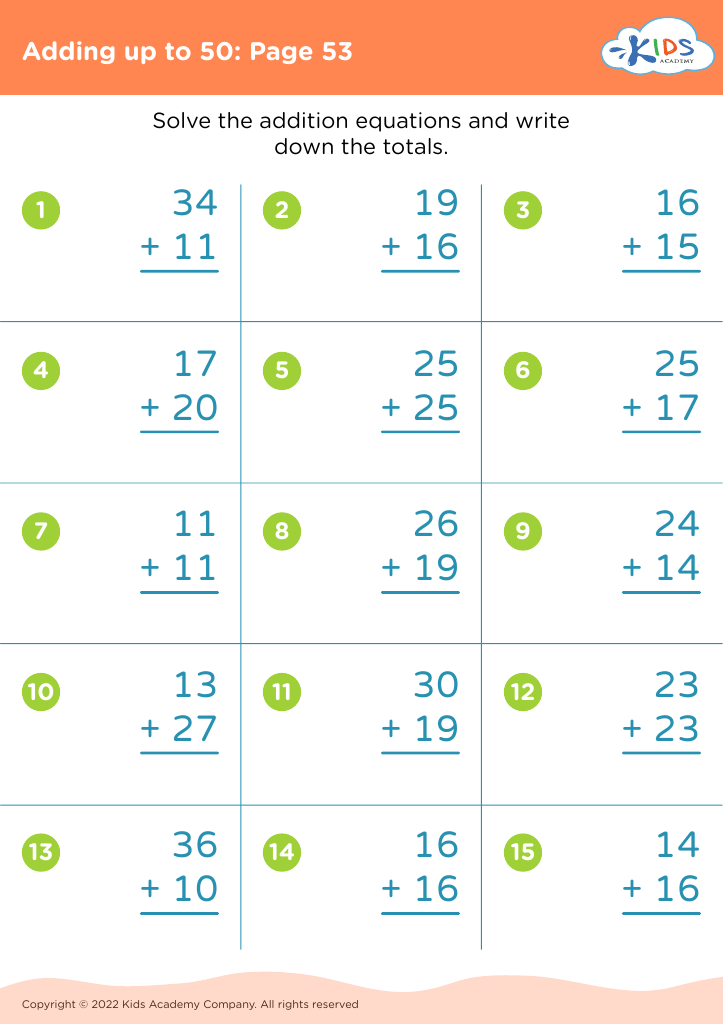


Basic math skills, particularly the ability to accurately add up to 50, are foundational for children aged 8 to 9. Mastery of these skills supports not only academic success but also practical life skills that are essential as they grow older. At this age, children are transitioning from simple addition to more complex math concepts, and a strong grasp of basic addition helps build the confidence and understanding necessary for future learning.
For parents and teachers, emphasizing these skills can unlock a child's potential. A solid understanding of basic arithmetic is crucial for problem-solving, critical thinking, and everyday activities like budgeting allowance or cooking recipes. Moreover, children who struggle with basic math can experience anxiety and a lack of motivation in school, which can hinder their overall learning.
Additionally, engaging children with fun and interactive methods to practice addition up to 50 can make learning enjoyable. This not only strengthens their abilities but fosters a positive attitude toward math. By prioritizing these academic benchmarks, parents and teachers equip children with practical skills and a resilient mindset, setting the stage for long-term success in math and beyond. Remember, every small addition adds up to a bigger understanding!