Fraction simplification Adding up to 50 Misc Worksheets for Ages 8-9
5 filtered results
-
From - To
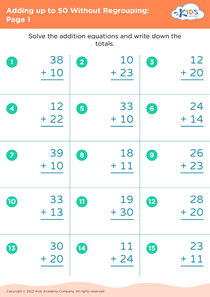
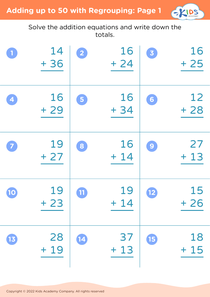
Unlock the mystery of fraction simplification with our engaging "Fraction Simplification Adding up to 50 Misc Worksheets" designed for 8 to 9-year-olds. These interactive activities make learning fun and accessible, helping young minds grasp the basics of fractions and addition within 50. Each worksheet features diverse problems that challenge students to simplify fractions through intuitive, step-by-step guidance. Perfect for classroom use or at-home practice, these printables boost math confidence, foster essential arithmetic skills, and inspire a love for learning. Download today and watch your child’s understanding of fractions soar!
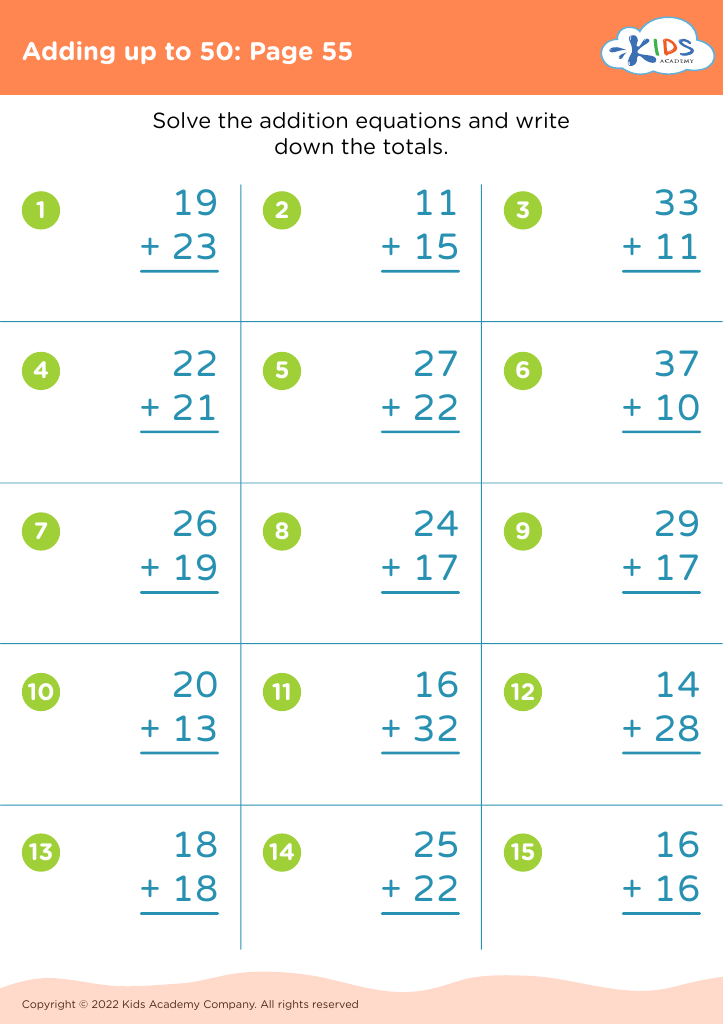
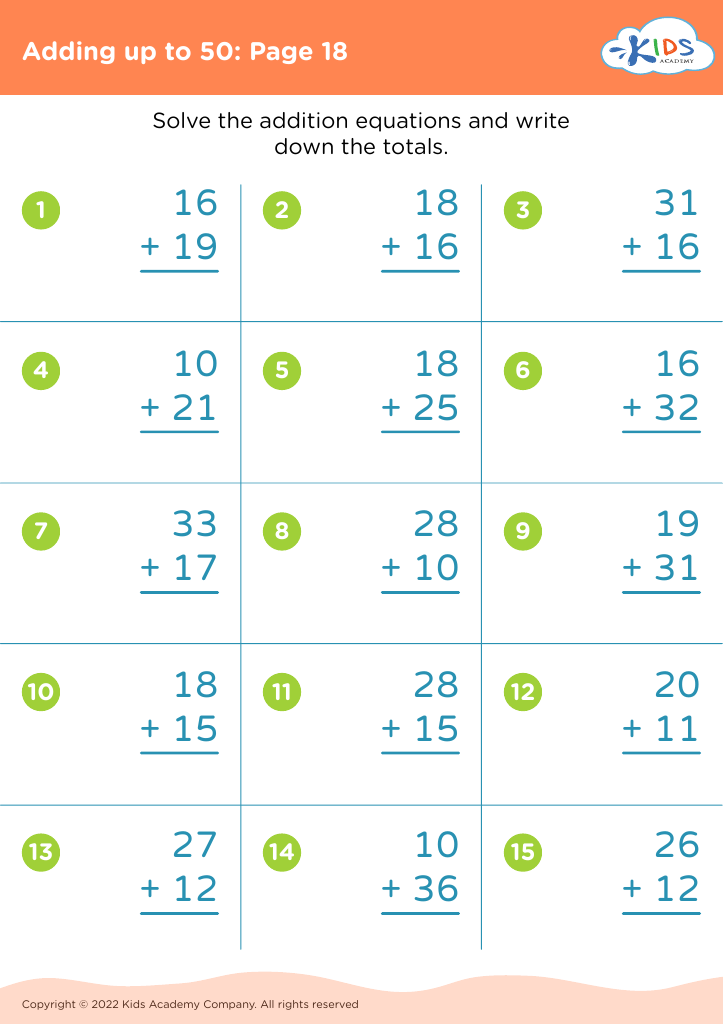
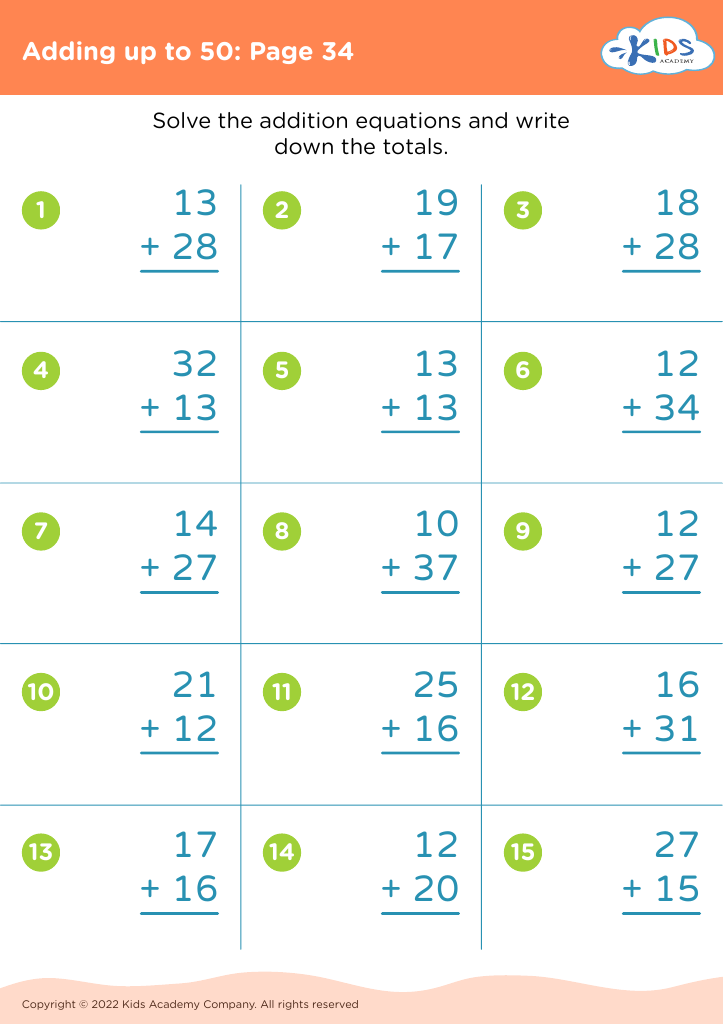


Parents and teachers play a pivotal role in fostering foundational maths skills in children aged 8-9, making concepts like fraction simplification and addition up to 50 extremely important. Simplifying fractions is key for developing numerical fluency and is fundamental for understanding more advanced mathematical concepts in future grades. It helps children to recognize equivalent fractions and reinforces the idea that different representations can have the same value, promoting better comprehension and flexible thinking.
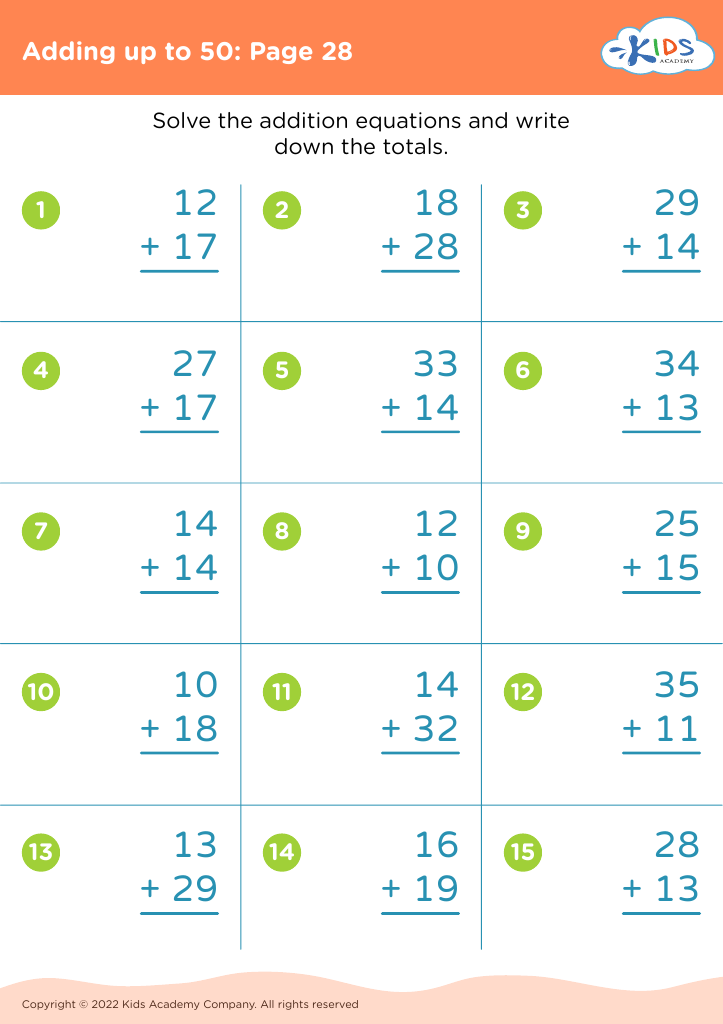
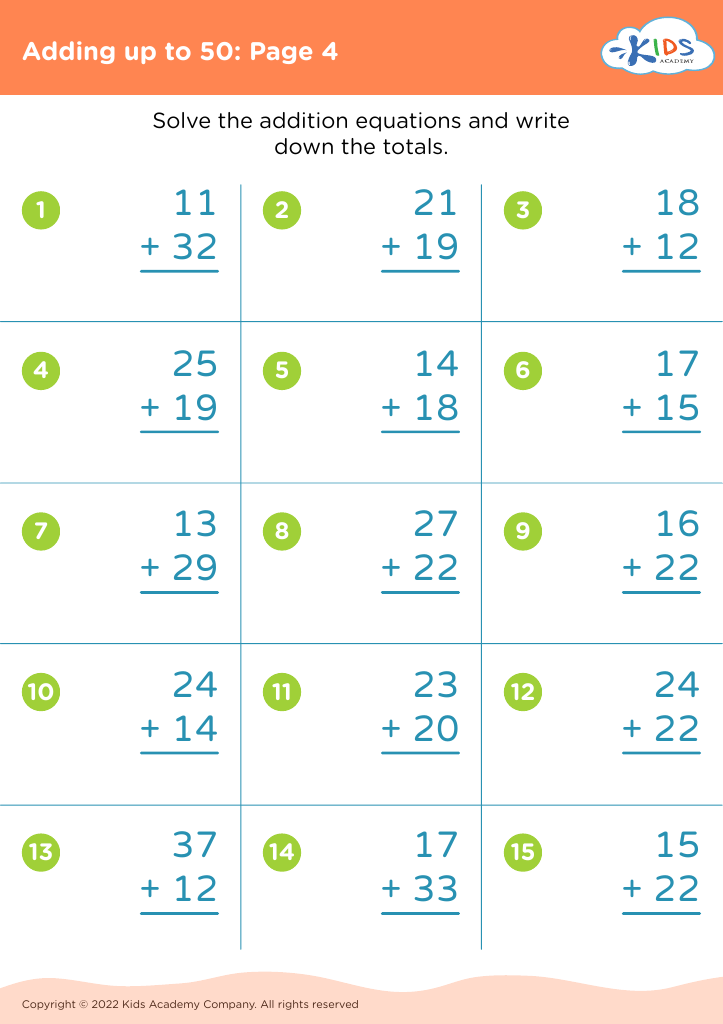
Adding up to 50 is another critical area that aids in cementing basic arithmetic skills. Mastery in addition allows for quicker mental calculations and underpins all future learning in mathematics, such as multiplication, division, and problem-solving. Practicing addition within a controlled range (like up to 50) is beneficial as it is both manageable and challenging, helping to build confidence and proficiency.
Moreover, engaging in these exercises helps children develop patience, persistence, and strategic thinking. These skills are not only useful academically but are invaluable in daily life problem-solving scenarios. Teachers and parents should care because fostering a strong foundation in mathematics from a young age will set children up for success, encouraging a positive attitude towards learning and boosting their overall academic performance.