Simplifying Fractions Adding up to 50 Misc Worksheets for Ages 8-9
4 filtered results
-
From - To
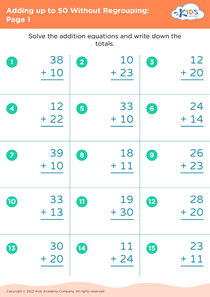
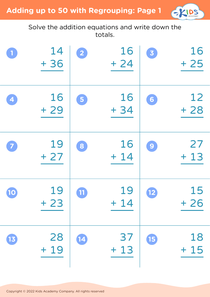
Explore our engaging collection of worksheets designed to help children aged 8-9 master simplifying fractions while adding up to 50! These fun and interactive resources not only reinforce crucial math skills but also encourage critical thinking and problem-solving. Each worksheet includes colorful visuals and practical exercises to make learning enjoyable. Perfect for classroom use or at-home practice, these materials are tailored to meet the developmental needs of young learners. Help your child build confidence in their math abilities and understand the concepts of fractions in a simplified way. Start their journey to math mastery with our comprehensive activity sheets today!
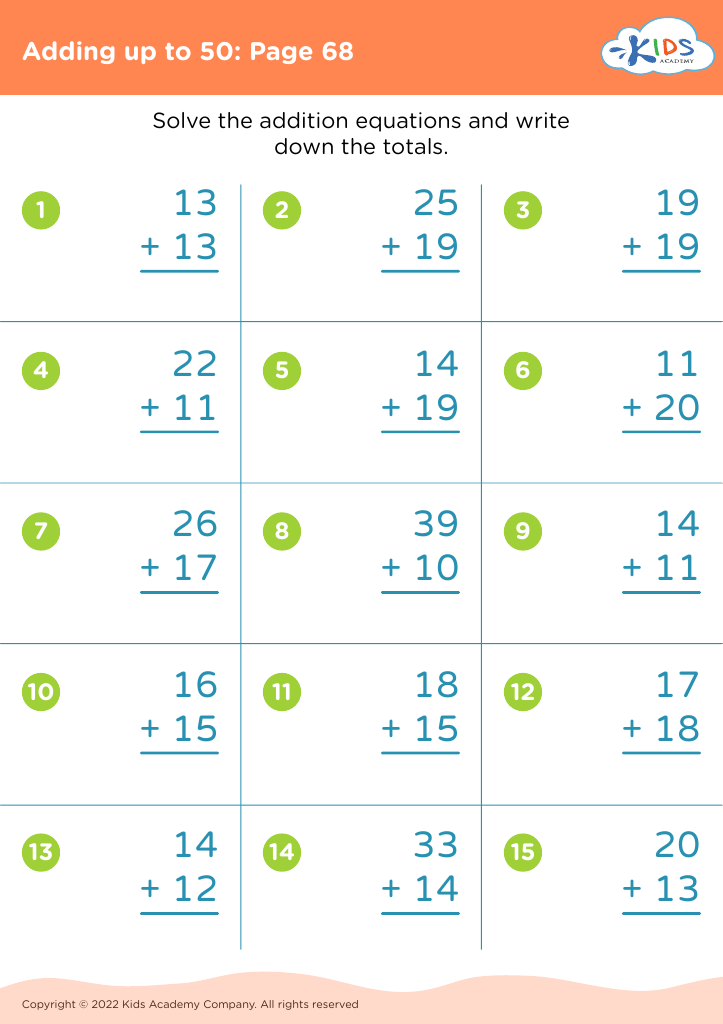
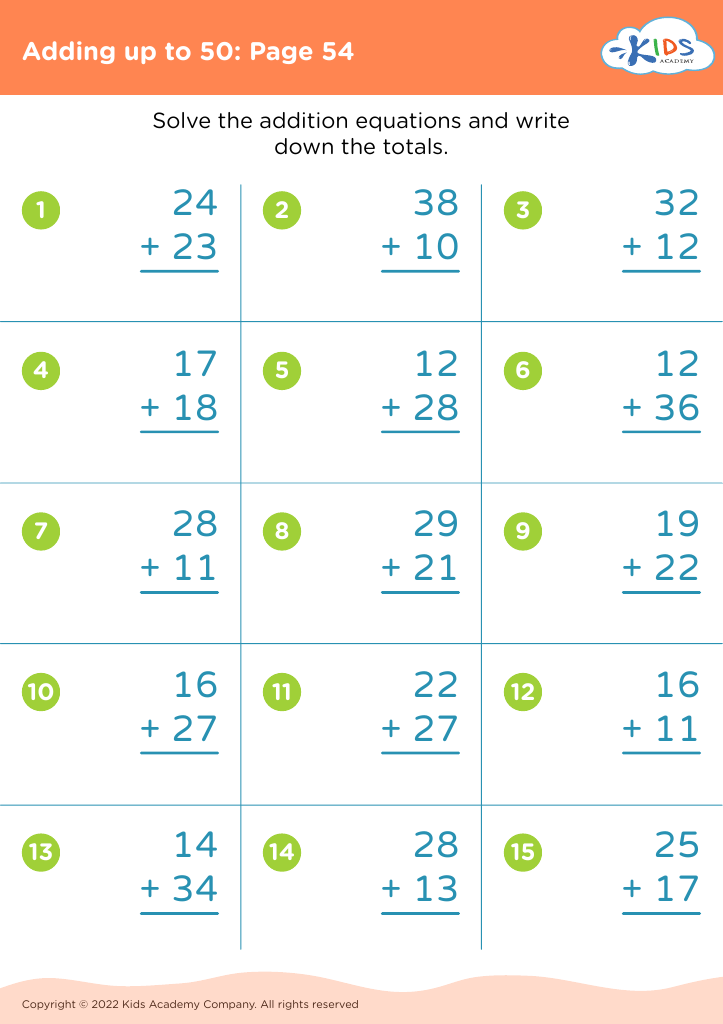


Simplifying fractions is an essential skill for children aged 8-9, as it lays the groundwork for more advanced mathematical concepts. When parents and teachers prioritize this foundational skill, they help young learners develop critical thinking and problem-solving abilities essential for future academic success. Simplifying fractions is not just about reducing numbers; it encourages children to recognize patterns and relationships among numbers, enhancing their overall mathematical intuition.
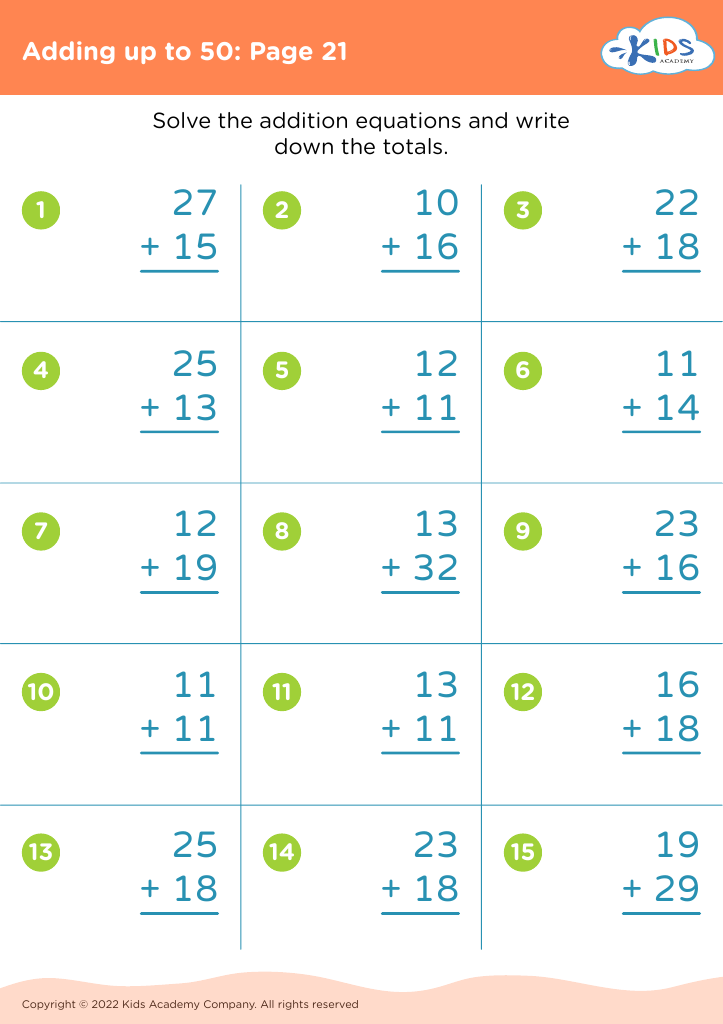
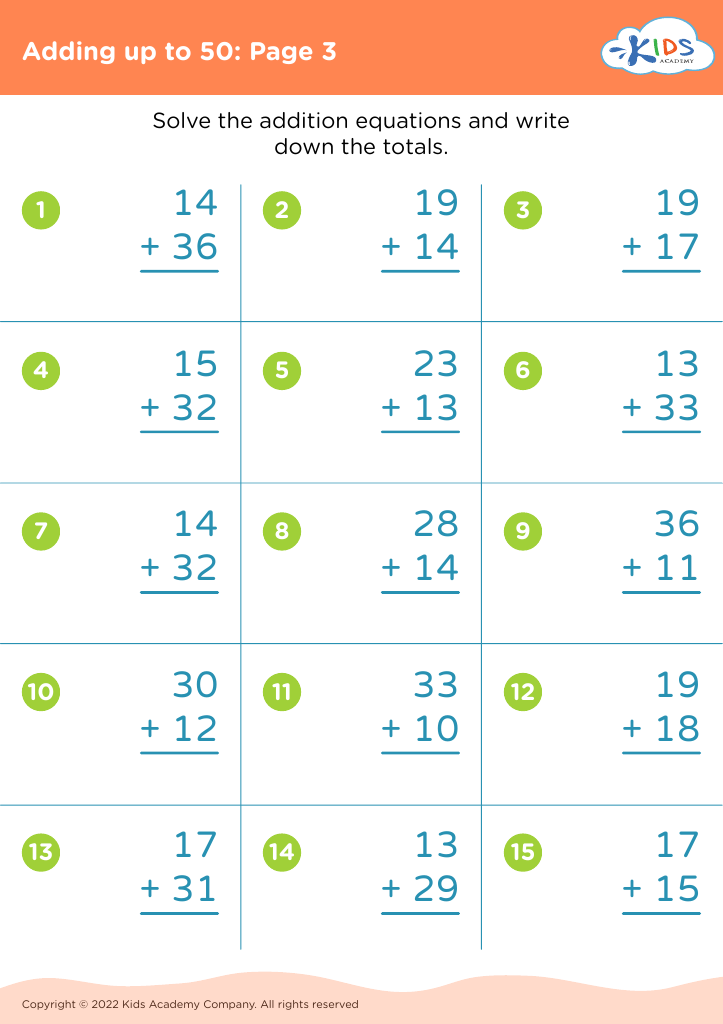
Incorporating engaging activities, such as "Adding up to 50," makes learning fun and interactive. These exercises enhance numerical fluency while tapping into children's creativity and critical thinking. Understanding how to simplify fractions helps children approach real-world problems, like cooking or dividing objects, making mathematical concepts more relatable and practical.
Moreover, mastering fraction simplification fosters confidence in math, reducing anxiety around numbers. This early confidence will benefit children as they face more challenging math topics in higher grades. Cumulatively, nurturing these skills promotes a positive attitude toward math, encouraging lifelong learning. Therefore, parents and teachers should be invested in helping young learners grasp simplifying fractions and related concepts, ensuring they build a solid mathematical foundation for future success.