Understanding adjectives Adding up to 50 Misc Worksheets for Ages 8-9
4 filtered results
-
From - To
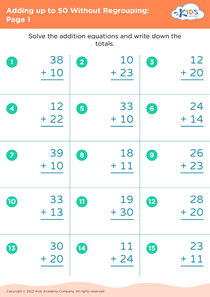
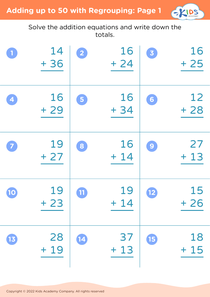
Navigate the exciting learning path for children ages 8-9 with worksheets that blend math and language arts. Our "Understanding Adjectives Adding up to 50 Misc Worksheets" foster the development of key skills. Young learners will master adding numbers up to 50 while simultaneously enhancing their grasp of adjectives through engaging exercises. These diverse worksheets are designed to build arithmetic proficiency and reinforce grammar knowledge in a fun, interactive way. Perfect for reinforcing school lessons and offering additional practice at home, our resources are essential tools for nurturing well-rounded educational growth. Empower your child’s learning journey today!
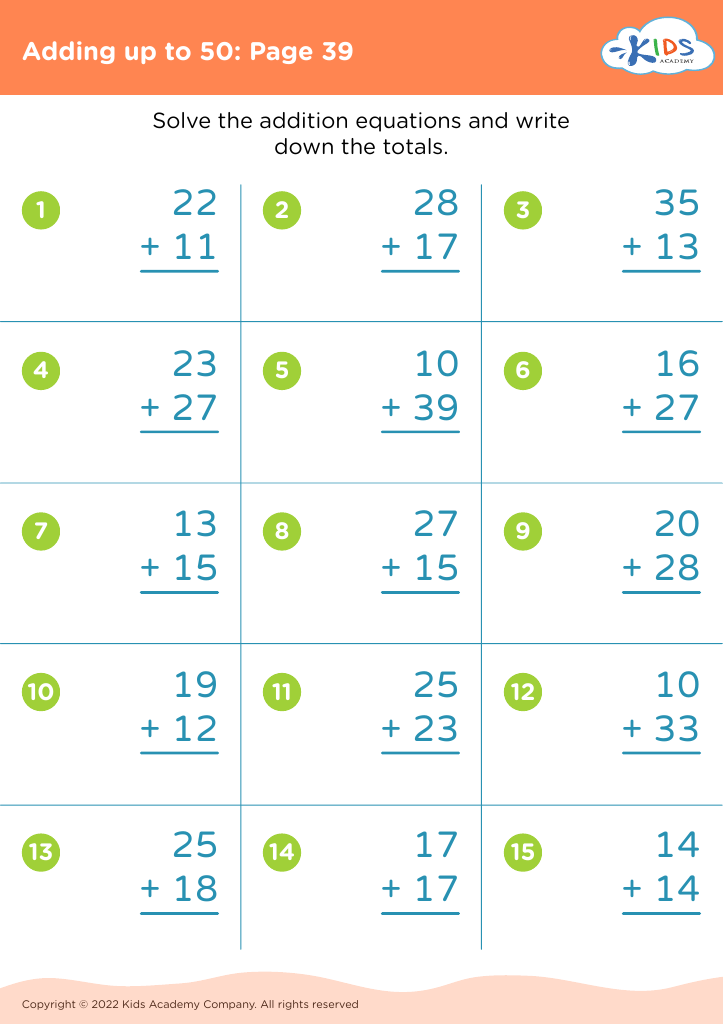
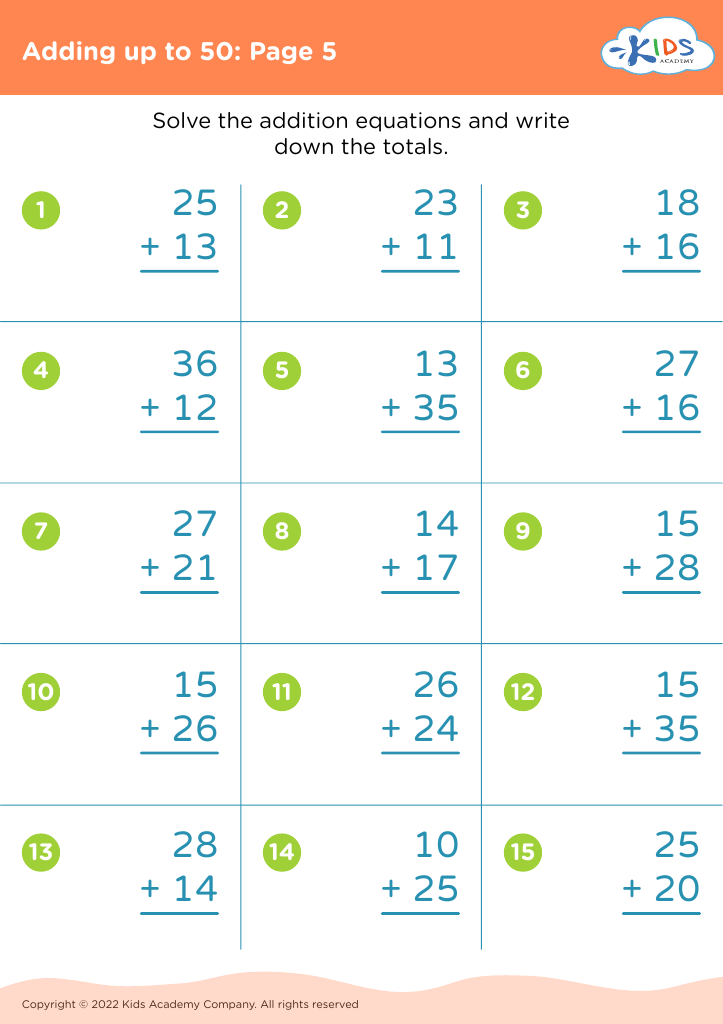


Parents and teachers should understand the importance of teaching adjectives, the concept of adding up to 50, and introducing various miscellaneous educational topics to children ages 8-9. These elements collectively contribute to a child's language, mathematical, and cognitive development, which are critical at this stage.
Understanding adjectives enhances a child's vocabulary and language skills. When children know how to use descriptive words, they can communicate more effectively, express themselves creatively, and develop strong writing and reading comprehension skills. This foundation in language arts will support all areas of learning.
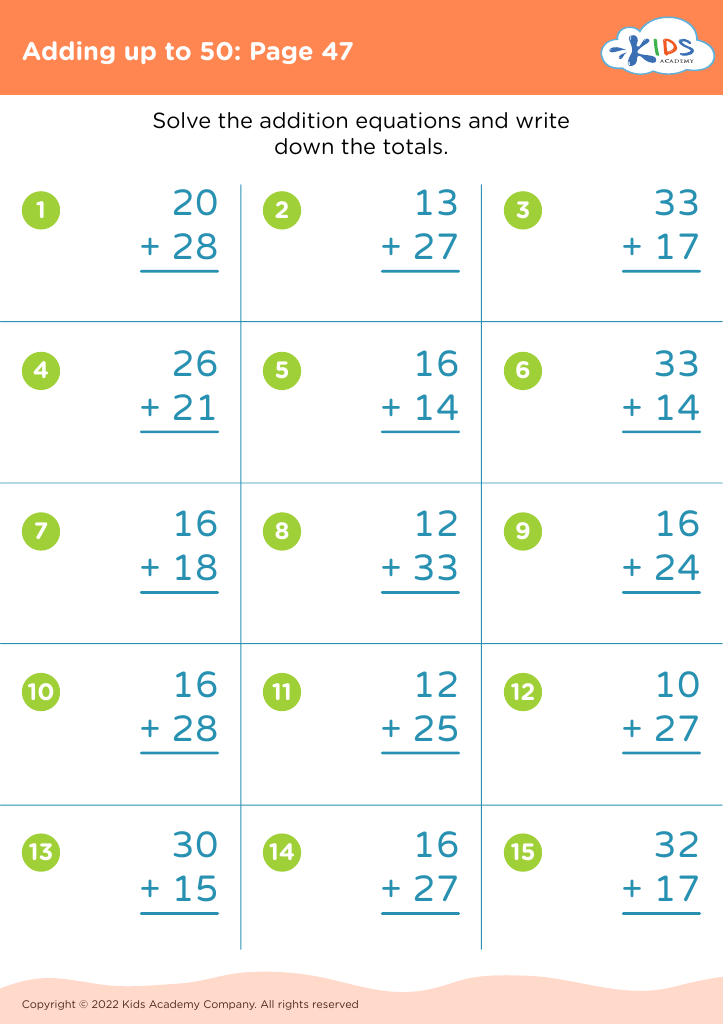
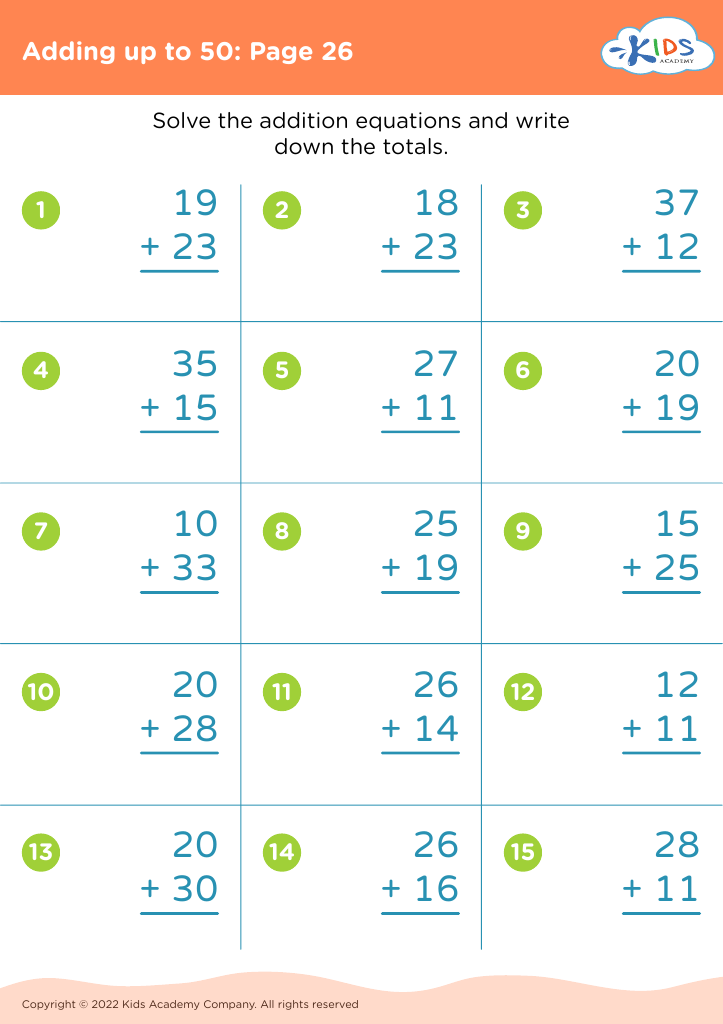
Adding up to 50 involves fundamental addition skills that are crucial for early mathematical understanding. This skill helps children build a solid grasp of number operations, laying the groundwork for more complex mathematical concepts they will encounter later. Practicing addition also improves problem-solving and analytical thinking abilities.
Miscellaneous educational topics, such as science experiments, social studies, and art, broaden a child's knowledge and interests. Engaging in diverse activities stimulates curiosity, enhances creativity, and fosters a love for learning. These varied experiences bolster overall cognitive growth and adaptability.
In summary, focusing on these themes nurtures a well-rounded development, ensuring that children build the necessary skills to thrive academically and socially.