Understanding fractions Adding up to 50 Misc Worksheets for Ages 8-9
17 filtered results
-
From - To
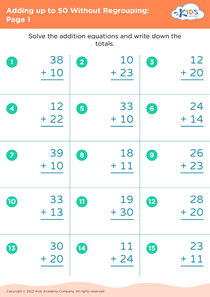
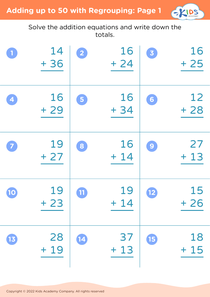
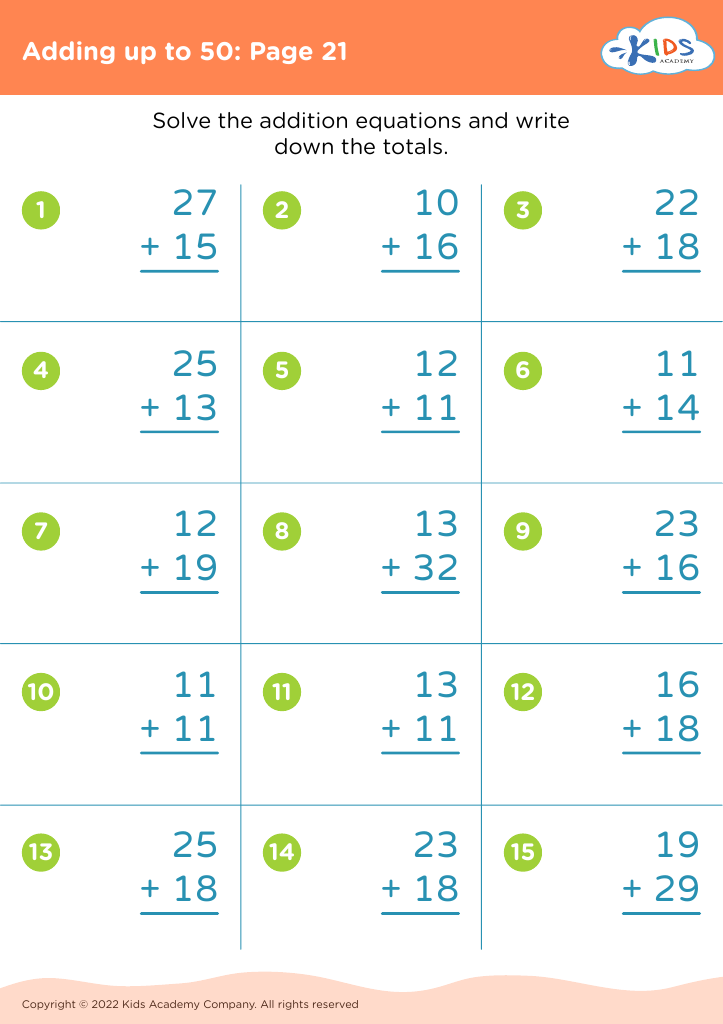
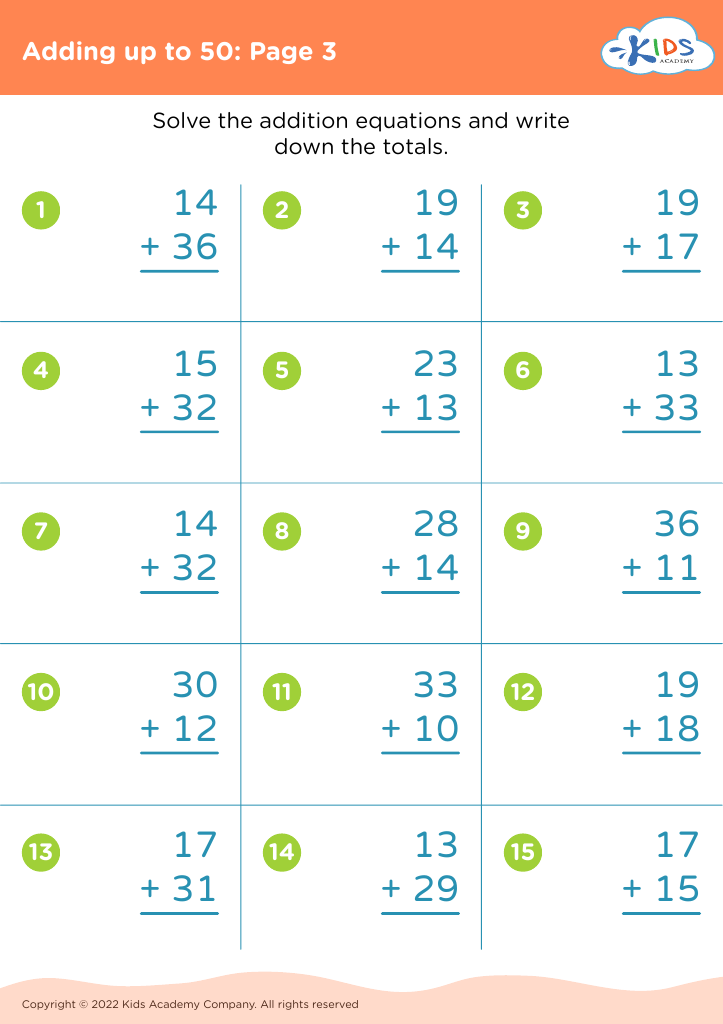
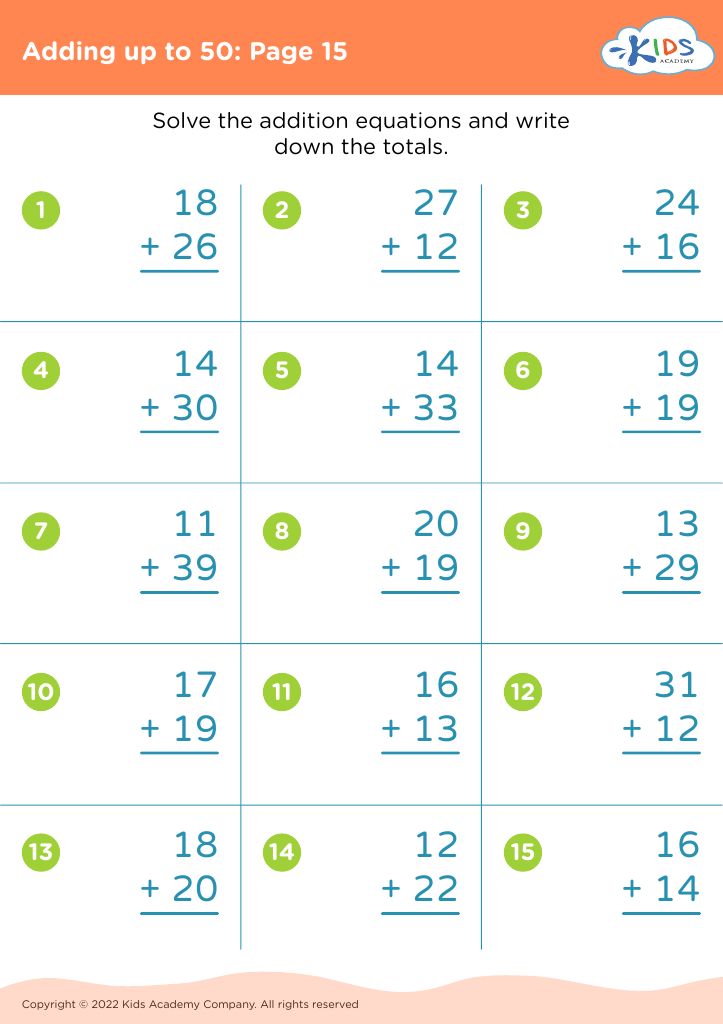
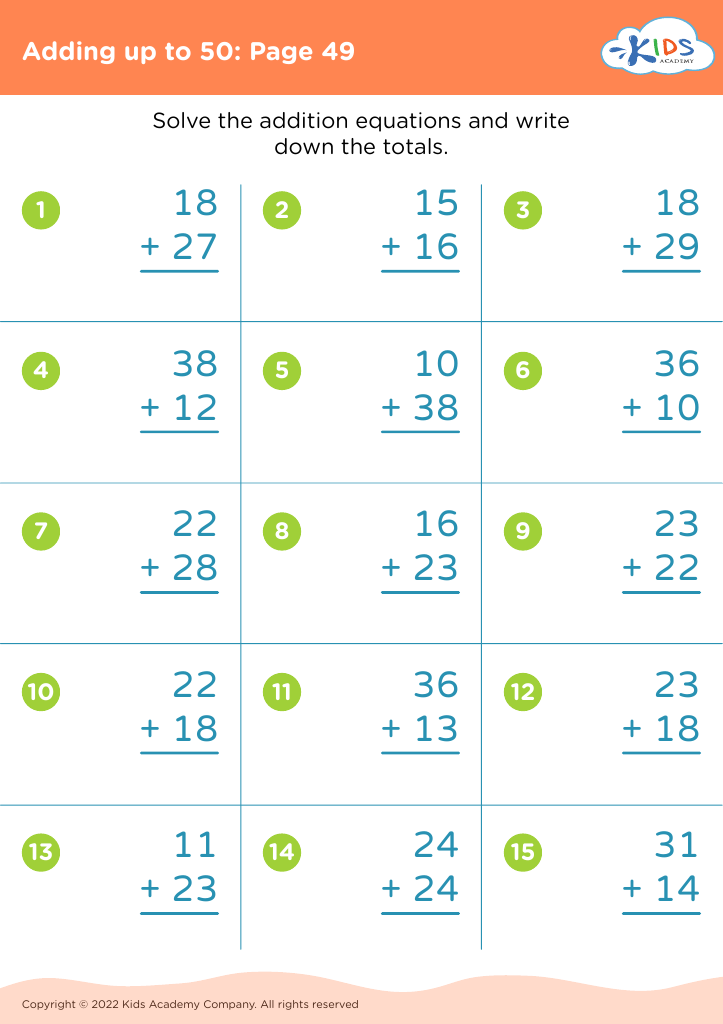
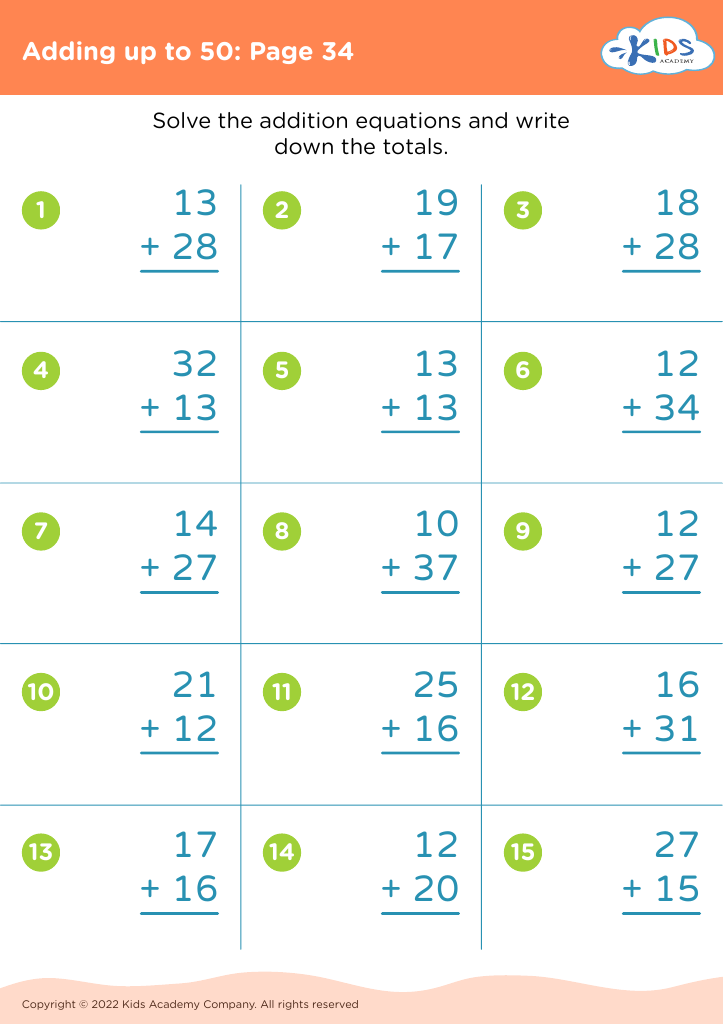
Explore our "Understanding Fractions Adding Up to 50 Misc Worksheets" designed for children ages 8-9. These engaging, printable worksheets help young learners grasp the fundamental concepts of fractions through interactive exercises and visual aids. Students will enhance their fraction comprehension while practicing addition skills, all within the context of sums up to 50. Perfect for classroom use or at-home learning, these worksheets provide a fun and effective way for kids to improve their math proficiency. Encourage your child's confidence in math with our thoughtfully crafted resources that promote critical thinking and problem-solving abilities. Start their journey to mastering fractions today!
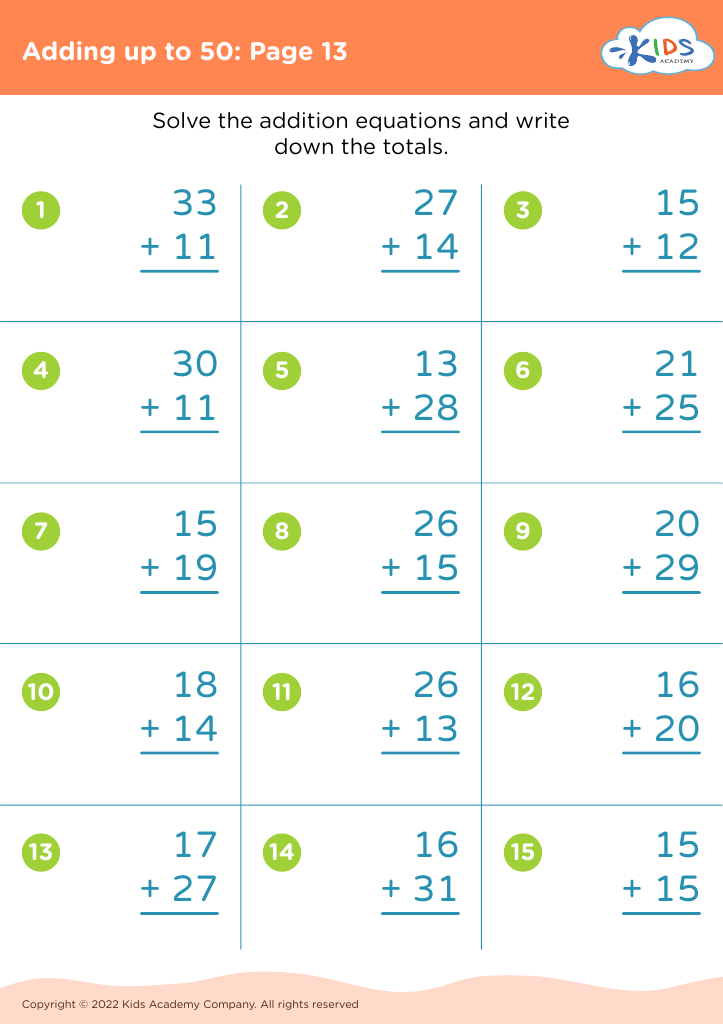
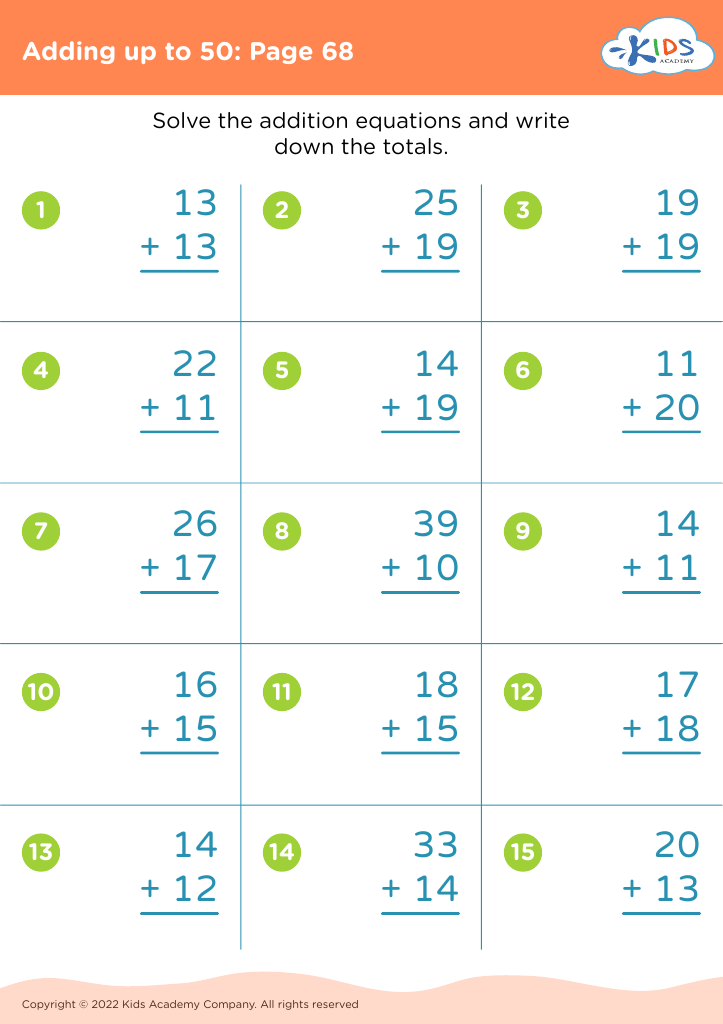
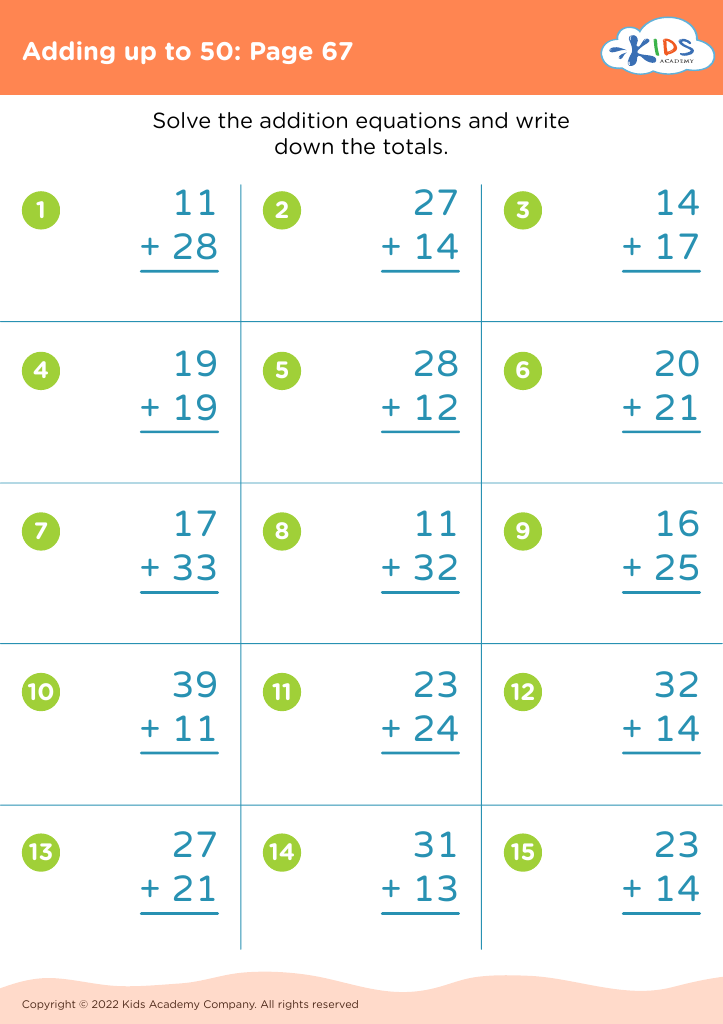
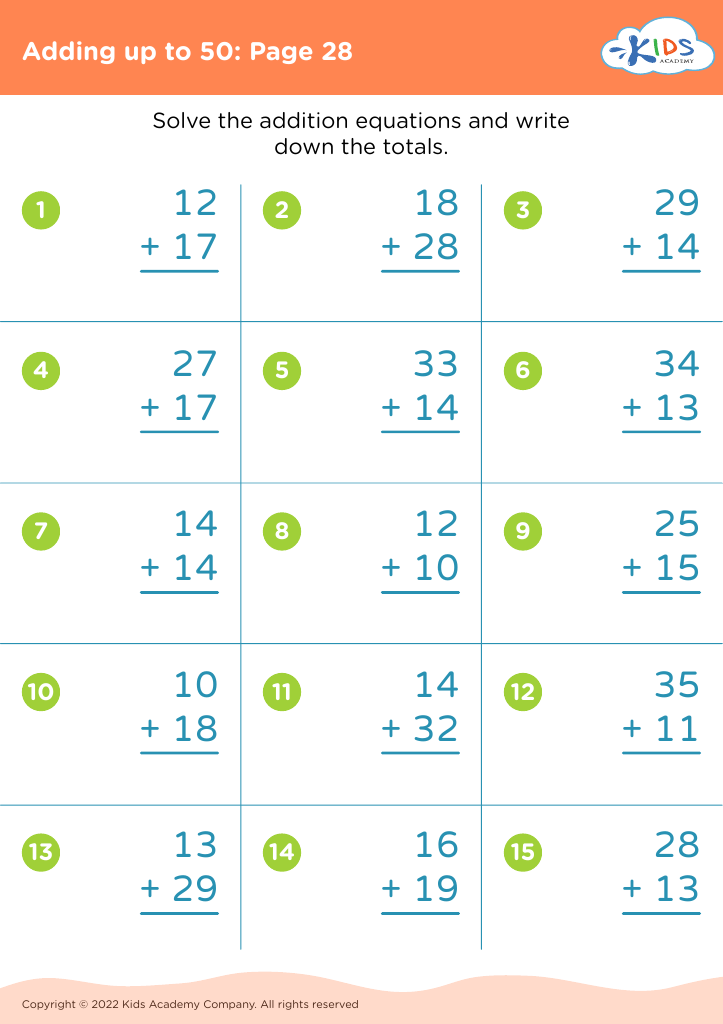
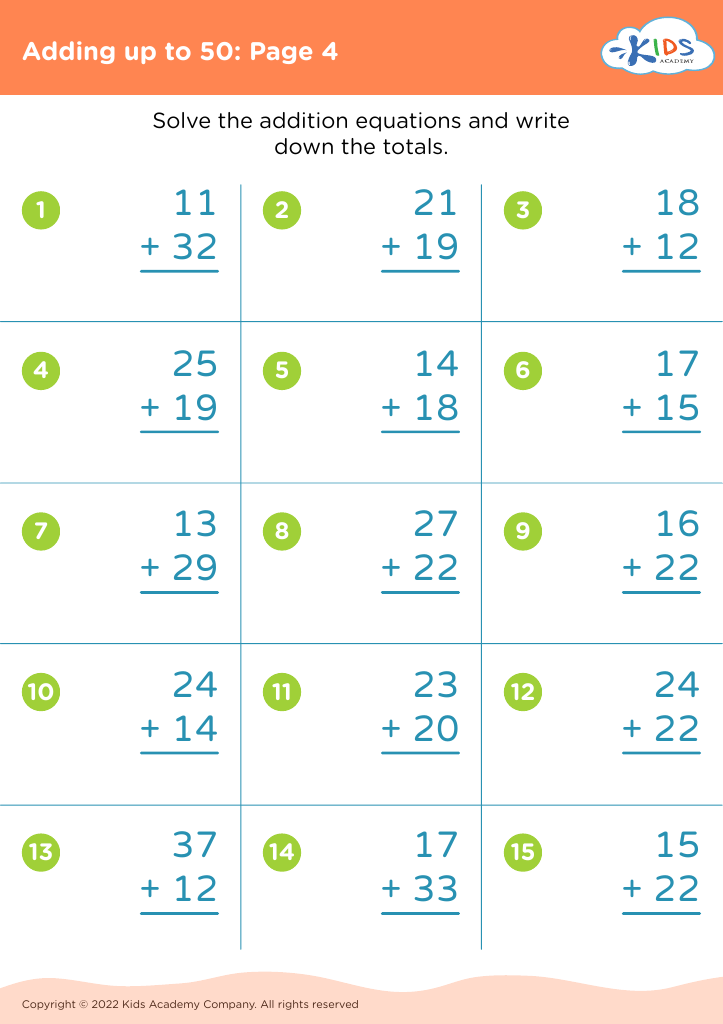
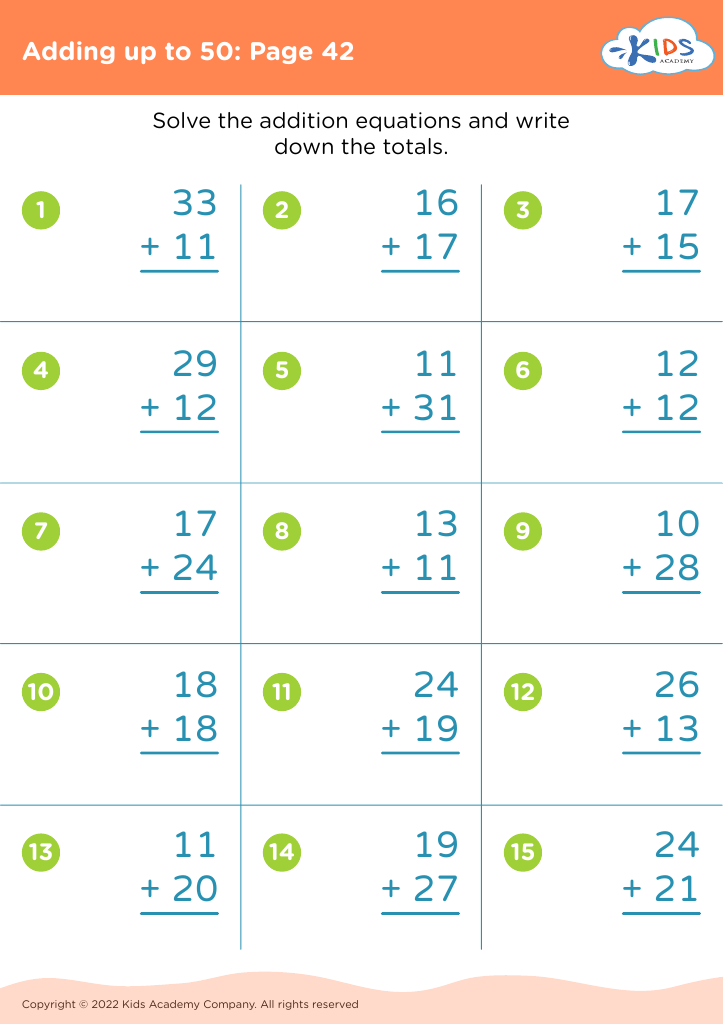
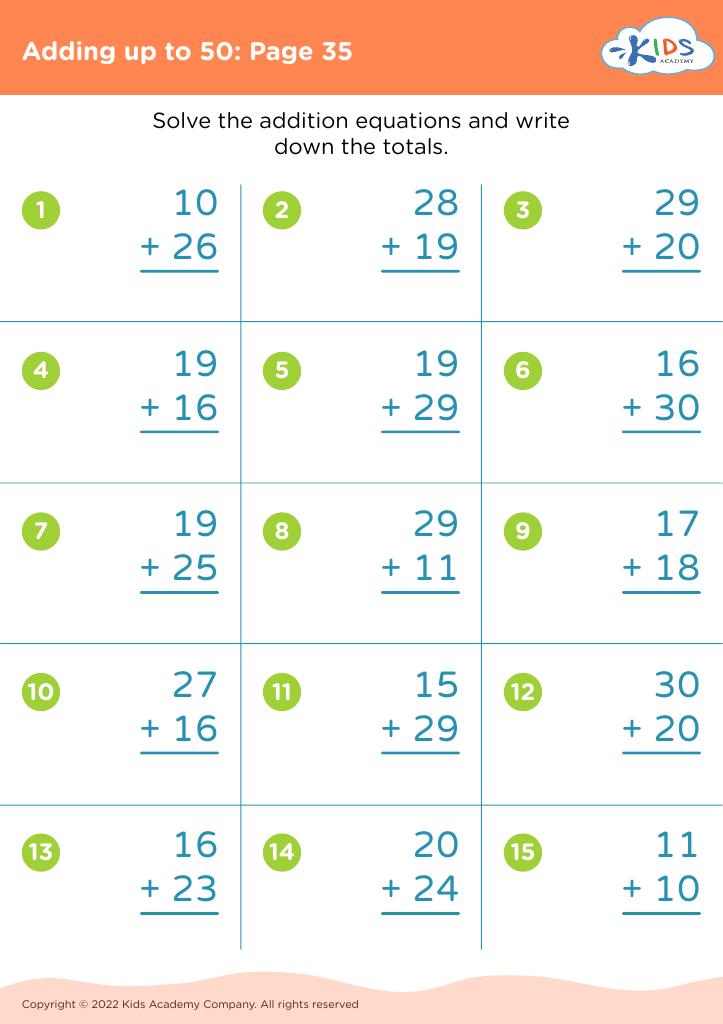
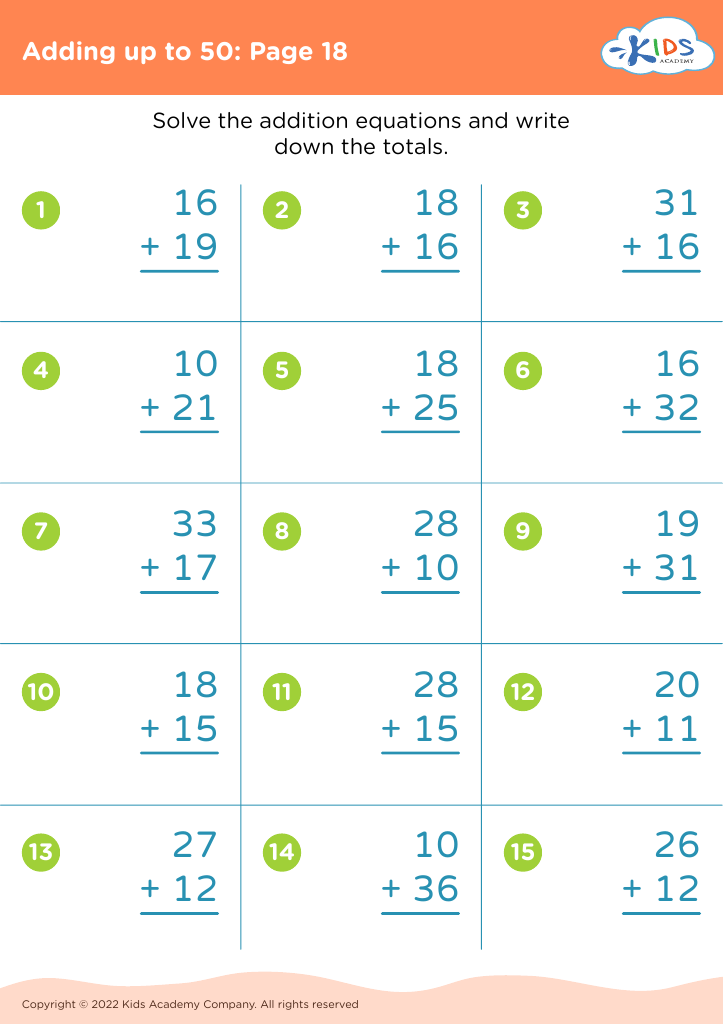
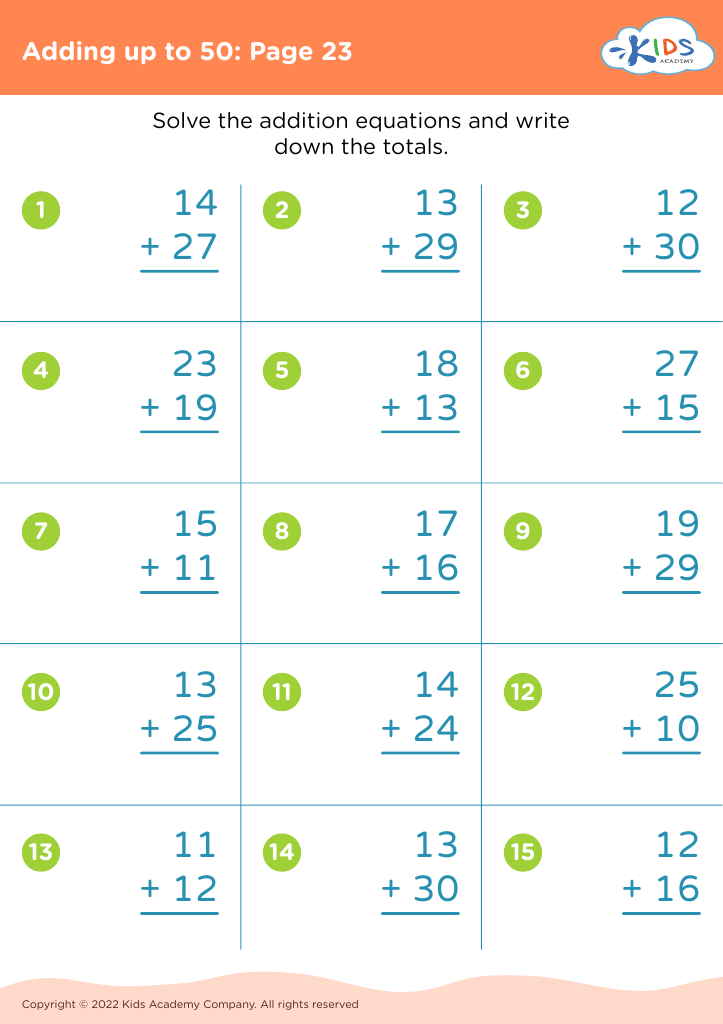
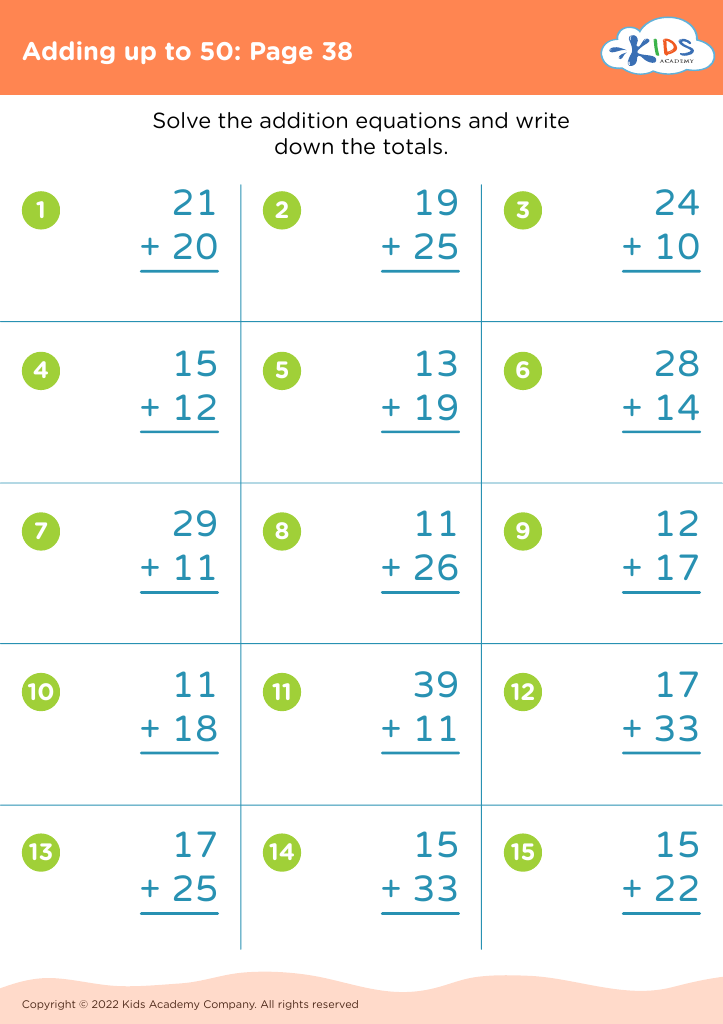
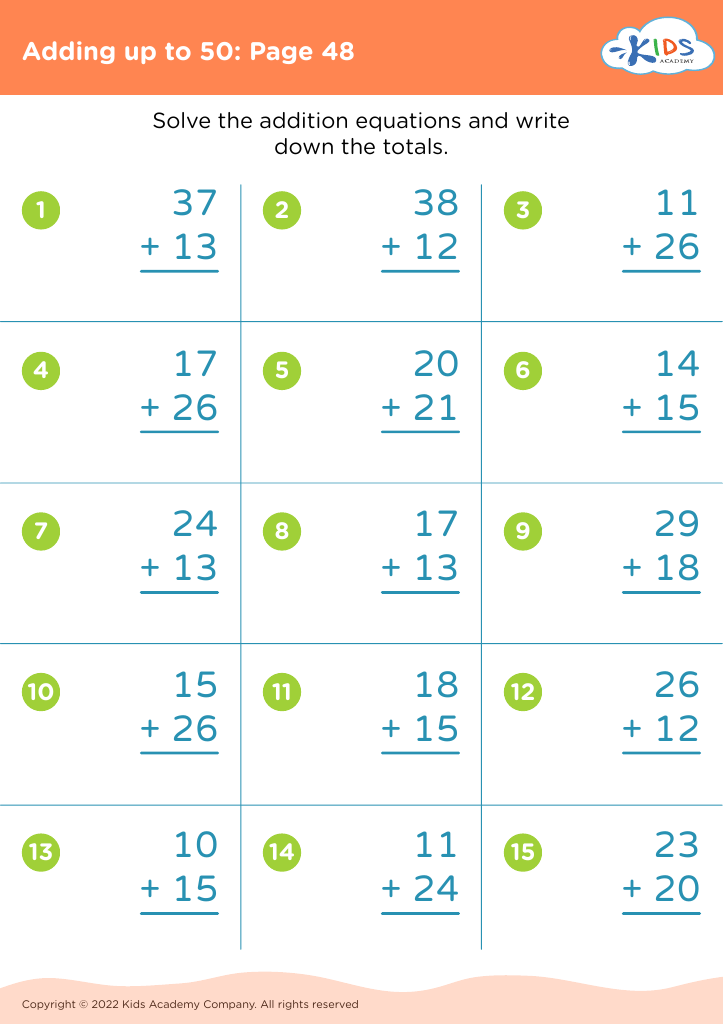
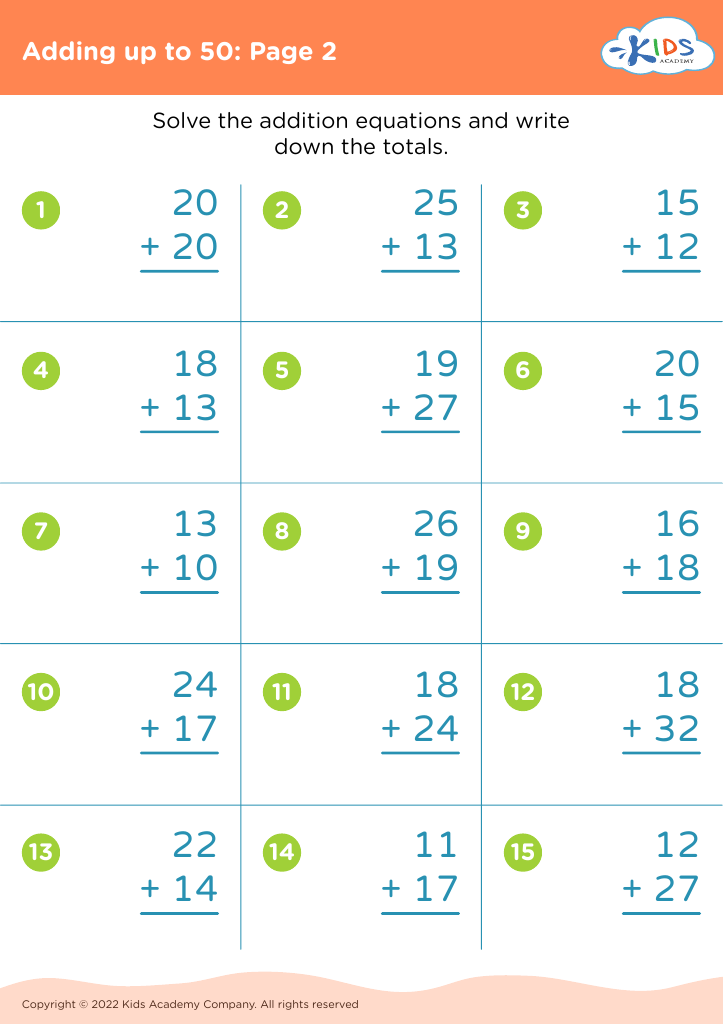


Understanding fractions is crucial for children aged 8-9 as it lays the foundation for advanced math skills they will encounter later. This age group is at a pivotal stage in cognitive development; they begin to understand not just numbers, but the relationships between them. Mastering fractions helps improve their problem-solving abilities and promotes critical thinking.
Adding fractions can be particularly challenging yet rewarding. When students engage with concepts like "adding up to 50," they learn how to manipulate numbers and understand part-whole relationships. This knowledge is not just theoretical; it translates directly into everyday scenarios, such as cooking, budgeting, and time management. For parents and teachers, fostering this understanding can help build confidence and proficiency in math, reducing anxiety around the subject.
Moreover, a strong grasp of fractions and their applications paves the way for subjects such as geometry and algebra in subsequent grade levels. Engaging with these concepts early encourages a positive attitude toward math and promotes lifelong learning skills. Ultimately, investing time in helping children understand fractions prepares them for more complex mathematical problem-solving as they progress through their education.