Simplifying Fractions Adding up to 50 with Regrouping Worksheets for Ages 8-9
4 filtered results
-
From - To
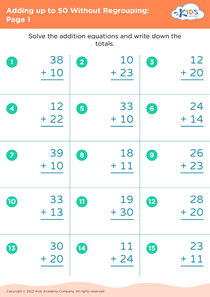
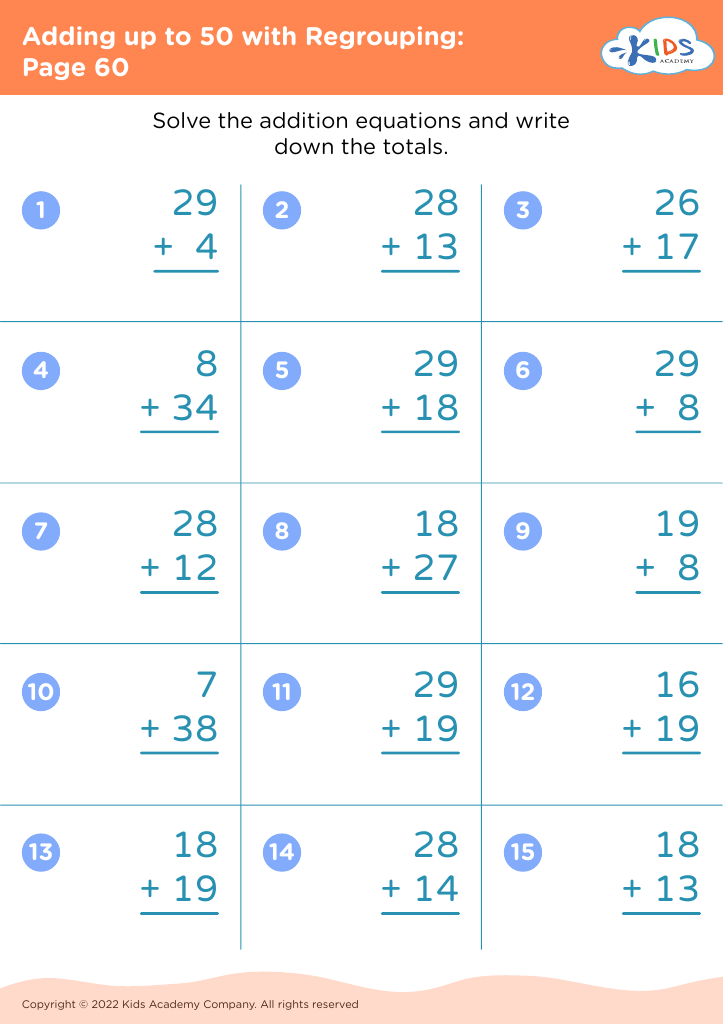
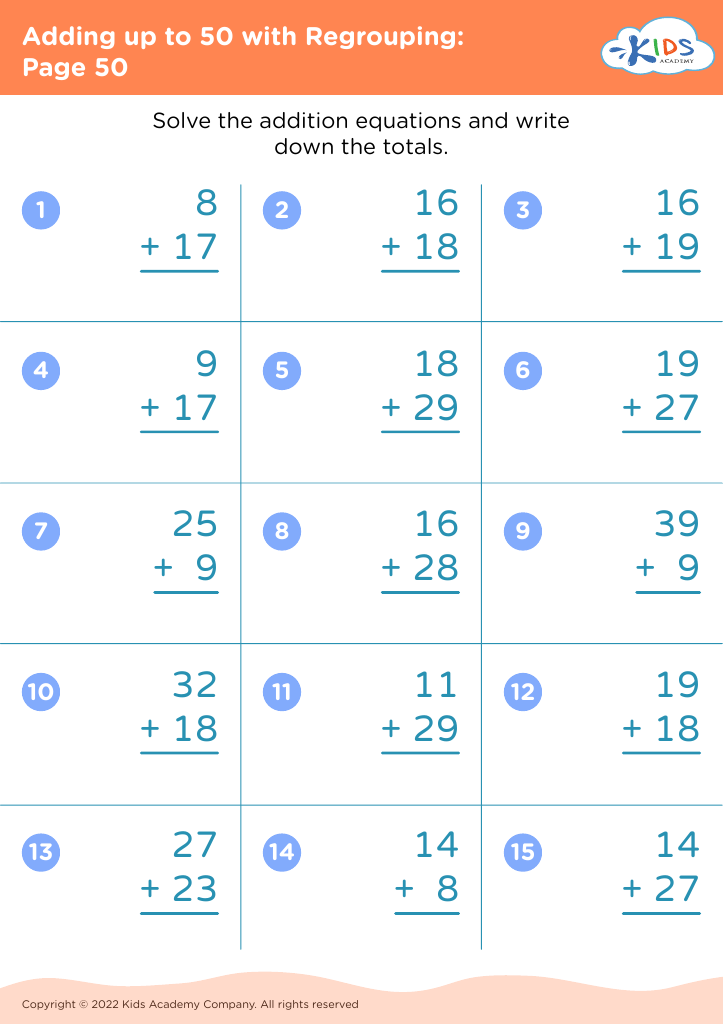
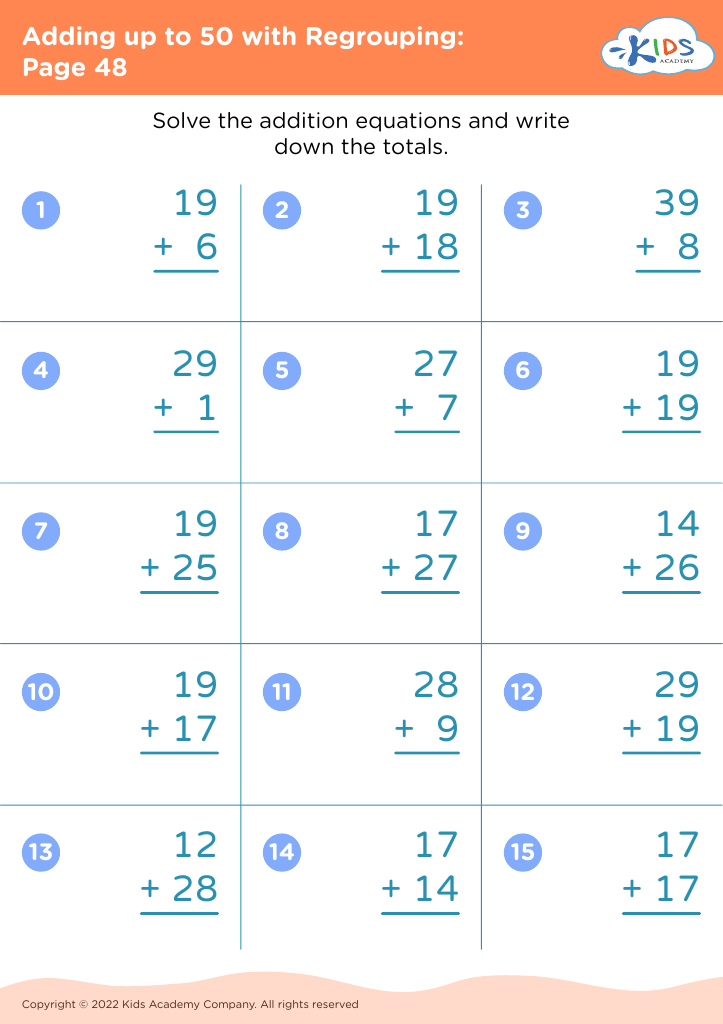
Enhance your child's math skills with our "Simplifying Fractions Adding up to 50 with Regrouping Worksheets," designed specifically for ages 8-9. These engaging worksheets focus on simplifying fractions in a fun and interactive way while introducing the concept of regrouping. Children will strengthen their understanding of fractions and learn to approach mathematical problems confidently. This resource features a variety of hands-on exercises that gradually increase in complexity, encouraging independent problem-solving and critical thinking. Perfect for at-home practice or classroom use, these worksheets will help young learners master fractions and build a solid foundation for their future math endeavors.
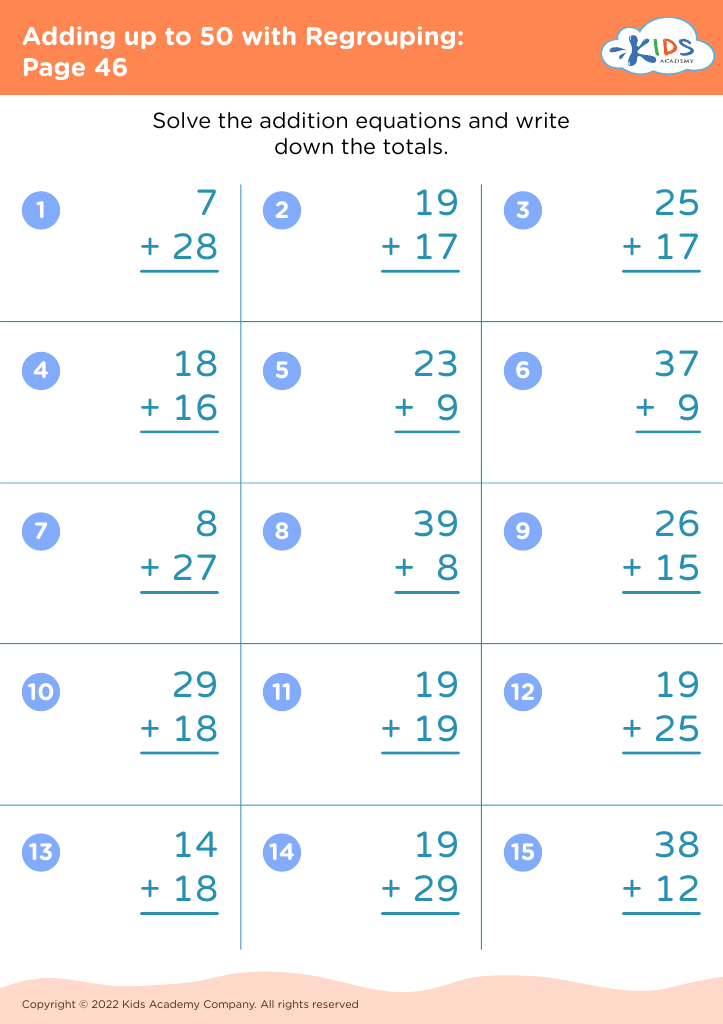


Parents and teachers should care about teaching children aged 8-9 to simplify fractions that add up to 50 with regrouping because these foundational skills not only enhance math understanding but also promote critical thinking and problem-solving abilities. At this age, children are developing their mathematical prowess, and fractions play a critical role in future math concepts.
Simplifying fractions helps students grasp the concept of equivalence, allowing them to manipulate mathematical expressions with greater ease. Furthermore, learning to perform operations involving regrouping fosters number sense, enabling students to see relationships between numbers and understand the logic behind calculations. By managing numbers effectively, students build confidence in their math skills, which is crucial during these formative years.
Moreover, applying these concepts in real-life scenarios, such as dividing pizza slices or sharing resources, makes math more relevant and engaging for young learners. This hands-on approach deepens their understanding and encourages a love for learning. Ultimately, mastering these skills prepares children for more complex math tasks in the future, supporting their academic growth and instilling a lifelong appreciation for mathematics.