Enhance number recognition Adding up to 50 Without Regrouping Worksheets for Ages 8-9
3 filtered results
-
From - To
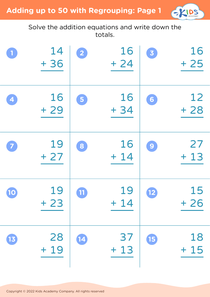
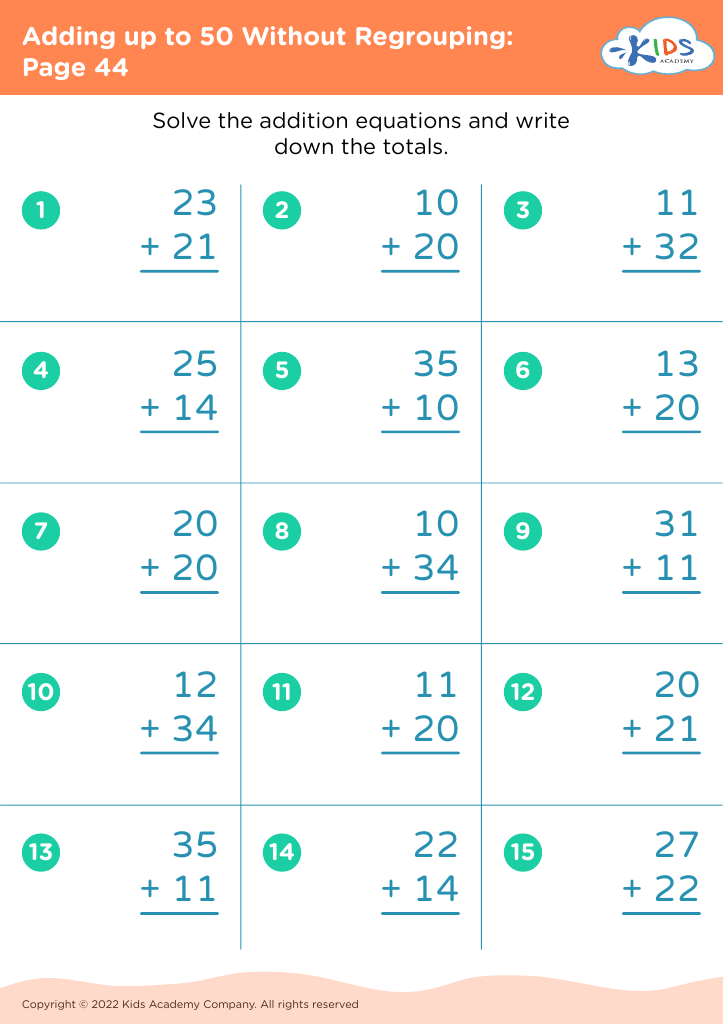
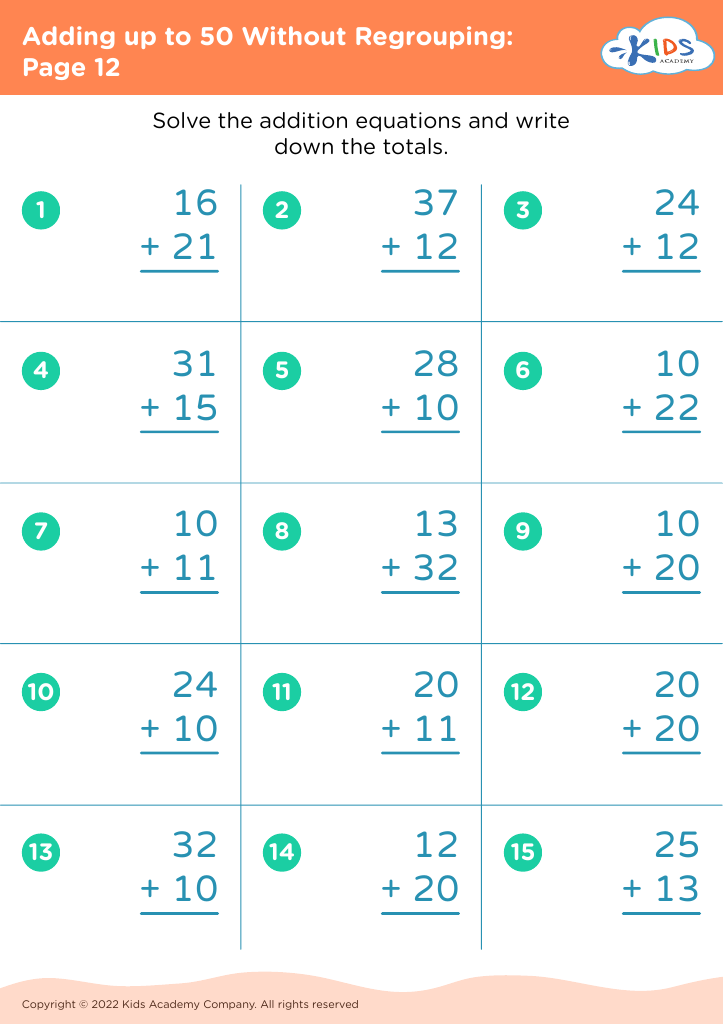
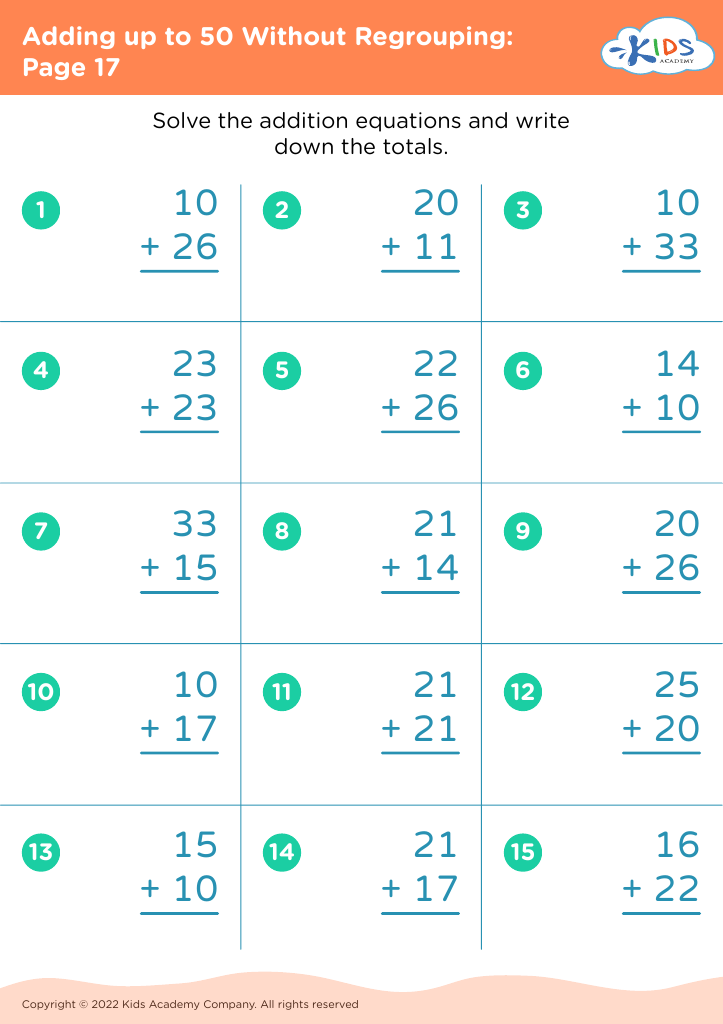
Welcome to our collection of "Enhance Number Recognition: Adding Up to 50 Without Regrouping Worksheets" designed for ages 8-9! These engaging worksheets focus on strengthening number recognition through fun addition exercises that help young learners master fundamental math skills. By practicing addition sums up to 50, students gain confidence without the complexity of regrouping. Our comprehensive resources encourage interactive learning, making math enjoyable and effective. Perfect for classroom use or at-home practice, these worksheets foster mathematical fluency while supporting the critical development of number recognition. Dive into our engaging materials to support your child's mathematical journey today!


Enhancing number recognition and addition skills for children aged 8-9 is crucial in their early mathematical education, especially for adding up to 50 without regrouping. Mastering these skills lays a strong foundation for more complex math concepts that will be encountered later.
For parents, fostering these abilities not only aids in children's academic success but also boosts their confidence in problem-solving. A solid grip on number recognition means that children can easily identify and manipulate numbers, which is essential for everyday activities, such as shopping or managing allowances. This practical application makes math more relatable and witnesses children transferring classroom skills into real-life contexts.
Teachers play a pivotal role in this developmental stage. By promoting activities that reinforce number recognition and addition, educators create a conducive learning environment. Engaging students in games, group activities, and interactive lessons encourages active participation and retention.
Both parents and teachers should care about this developmental skill because it nurtures critical thinking and logical reasoning while building a positive attitude towards math. Ensuring children gain proficiency in these basics will pave the way for later success in academics and ensure they approach future challenges with confidence and enthusiasm.