Reading comprehension Adding up to 50 Without Regrouping Worksheets for Ages 8-9
3 filtered results
-
From - To
Enhance your child's reading comprehension skills with our "Adding Up to 50 Without Regrouping Worksheets" designed specifically for ages 8-9. These engaging worksheets not only focus on mathematical addition, allowing children to master sums up to 50 without regrouping, but also integrate vital reading comprehension practices. With carefully crafted word problems and clear instructions, your child will improve their ability to read, interpret, and analyze information. Perfect for reinforcing classroom learning or as fun home activities, these worksheets provide invaluable practice that fosters confidence and academic growth. Unlock your child's potential in both math and reading with our thoughtfully designed resources!
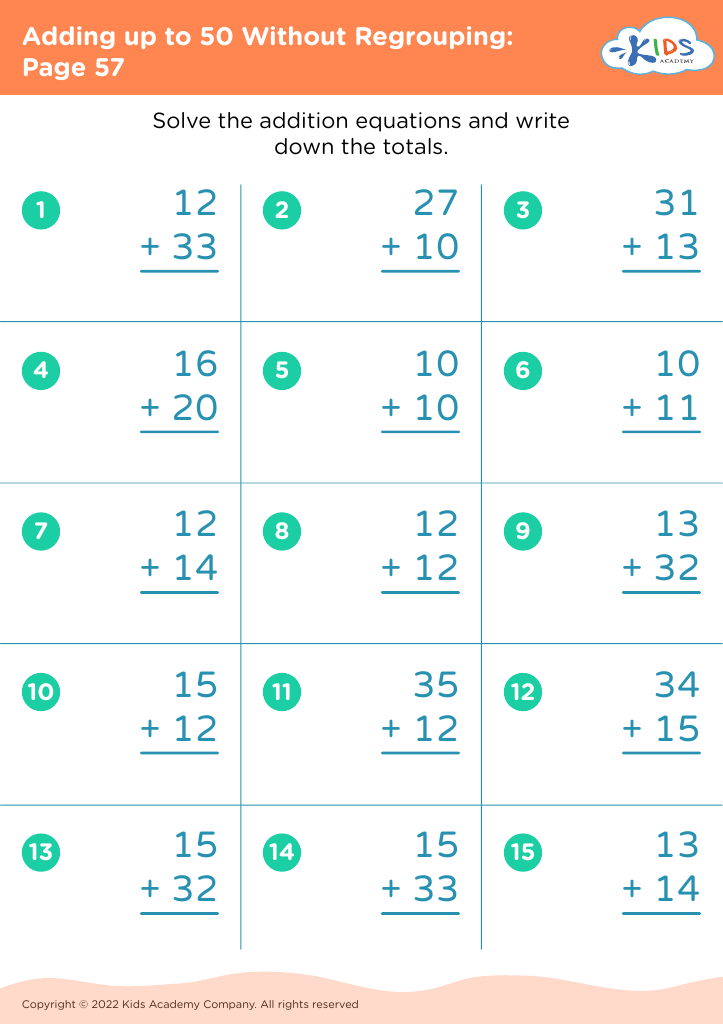
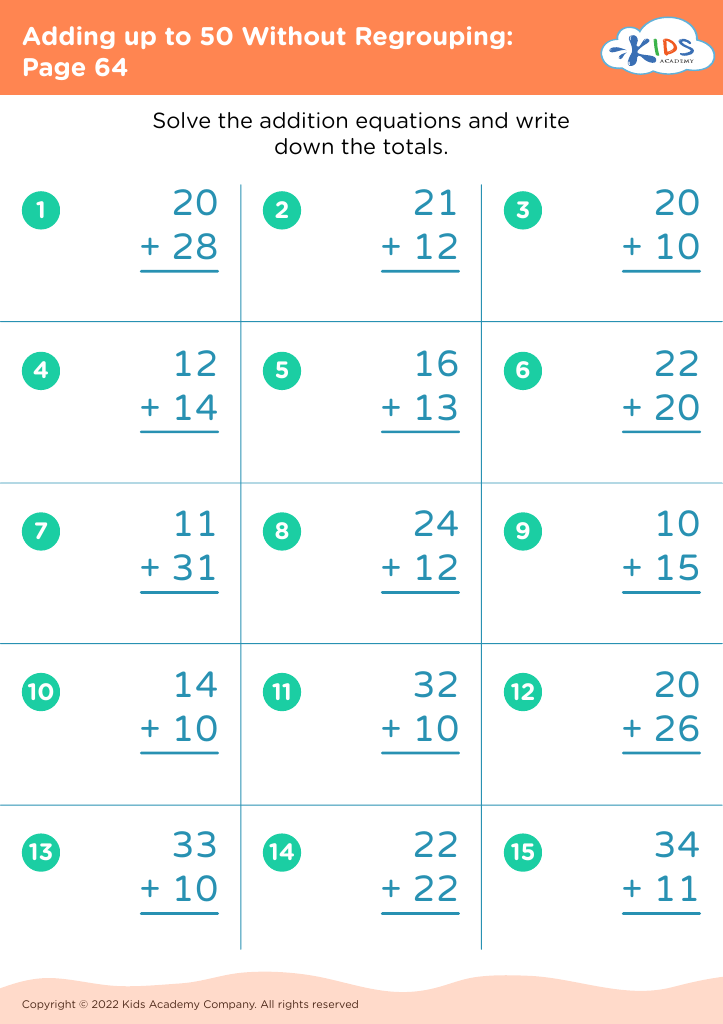
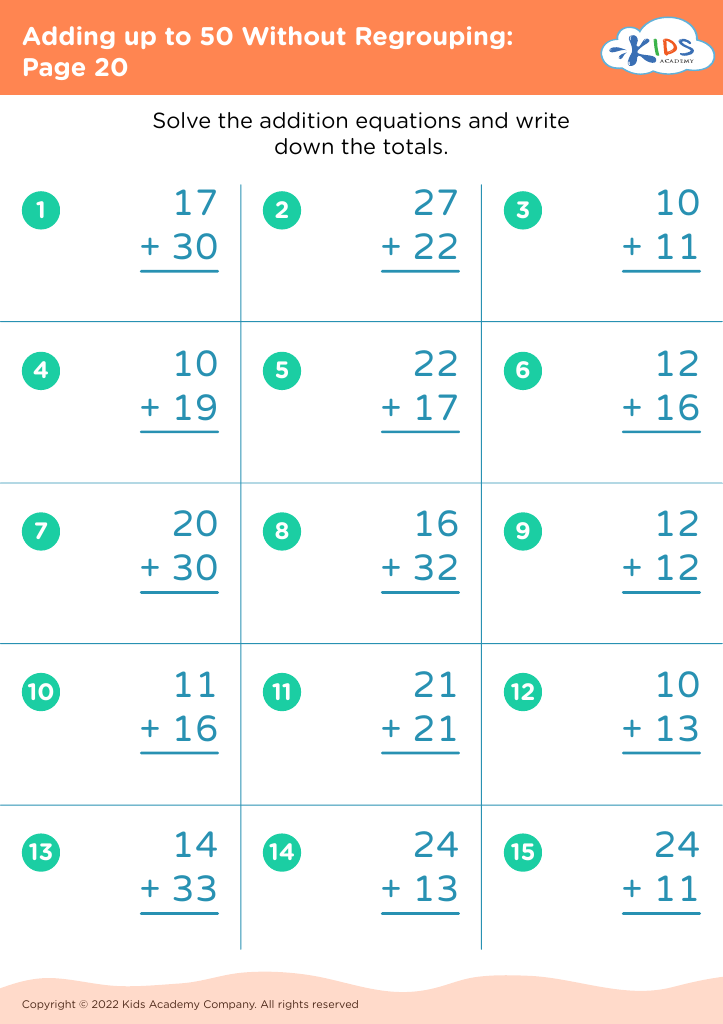


Reading comprehension is crucial for children ages 8-9 as it lays the foundation for all future learning. At this stage, students enter more complex texts, enabling them to develop critical thinking and analytical skills. When combined with math concepts, such as adding numbers to 50 without regrouping, comprehension reinforces their ability to apply learned skills across subjects.
For parents and teachers, fostering reading comprehension allows children to interpret and understand math problems effectively. This cross-curricular understanding can enhance their confidence and motivation, leading to better academic performance. Moreover, strong comprehension skills encourage a love for reading, a critical lifelong skill.
Additionally, paying attention to mathematical operations like adding up to 50 without regrouping encourages mental math and number sense. This reinforces the importance of numeracy, along with literacy, in a child's overall education. When children master these concepts, they build a solid foundation for future learning, minimizing frustration and boosting self-esteem.
By integrating reading comprehension with math exercises, parents and teachers strengthen cognitive connections, preparing children not only for tests but also for real-world problem-solving scenarios. Investing in these skills today supports their tomorrow as adept learners and thinkers.