Recognizing Patterns Adding up to 50 Without Regrouping Worksheets for Ages 8-9
4 filtered results
-
From - To
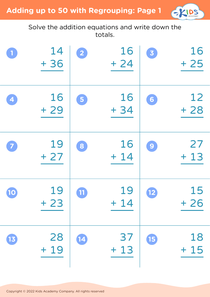
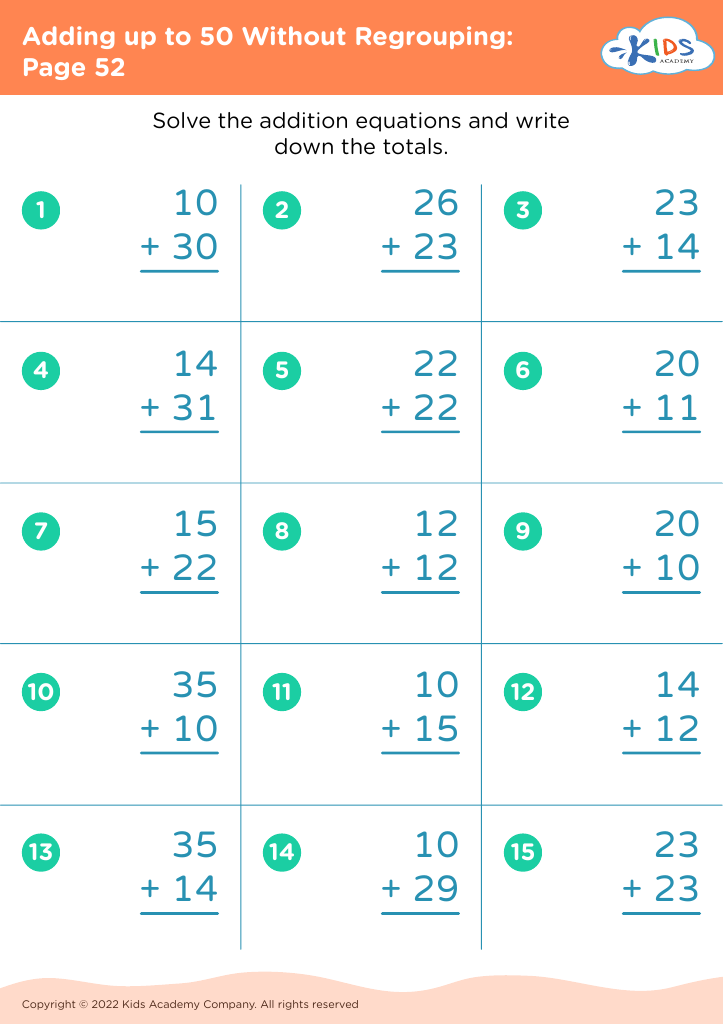
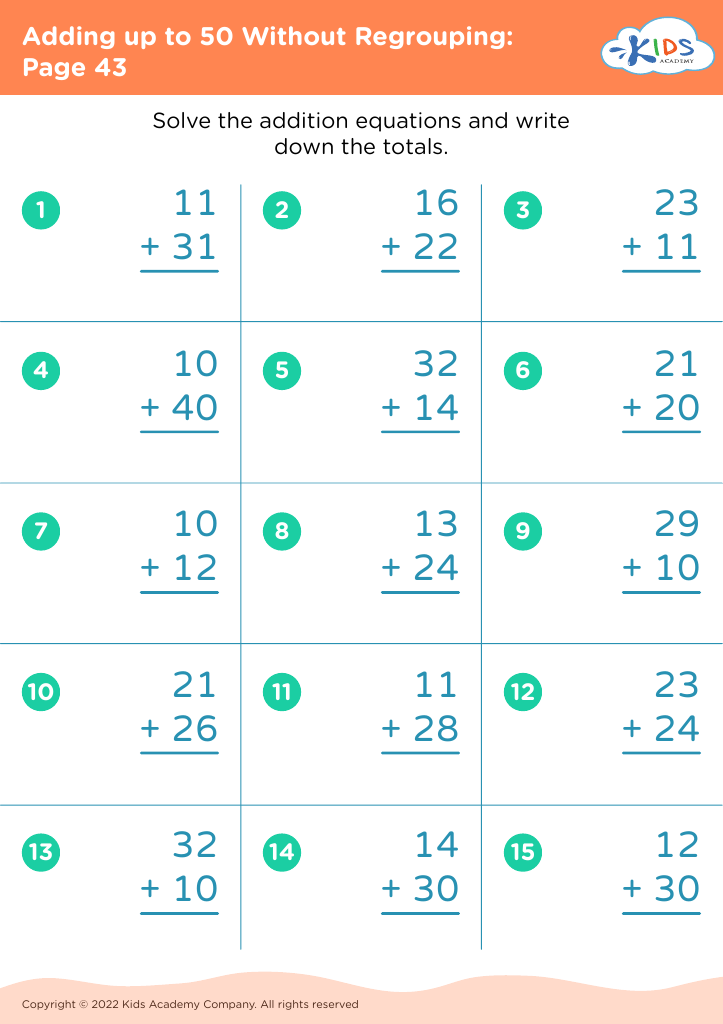
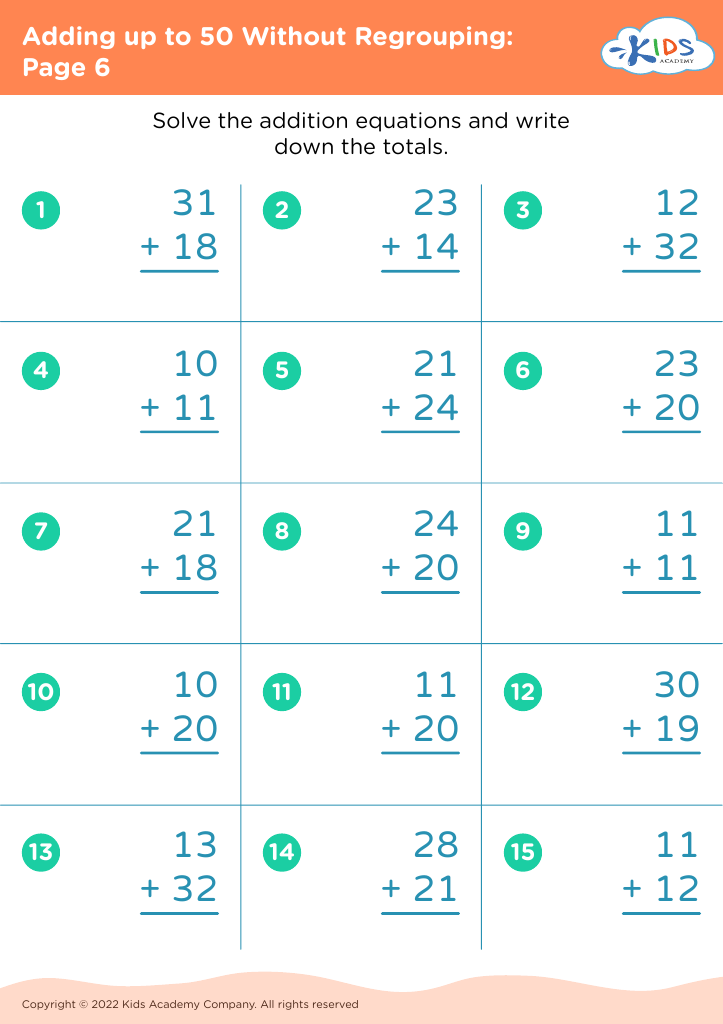
Discover our engaging "Recognizing Patterns Adding up to 50 Without Regrouping Worksheets" designed for kids aged 8-9! These worksheets enhance mathematical thinking by helping students identify and apply patterns in addition. By exploring sums that total up to 50, learners will build confidence and proficiency in addition skills without the complication of regrouping. Each worksheet provides a variety of exercises to cater to different learning styles, making math fun and accessible. Perfect for classroom use or home practice, these materials encourage critical thinking and problem-solving. Elevate your child's math journey with exciting and educational activities that promote mastery of addition!
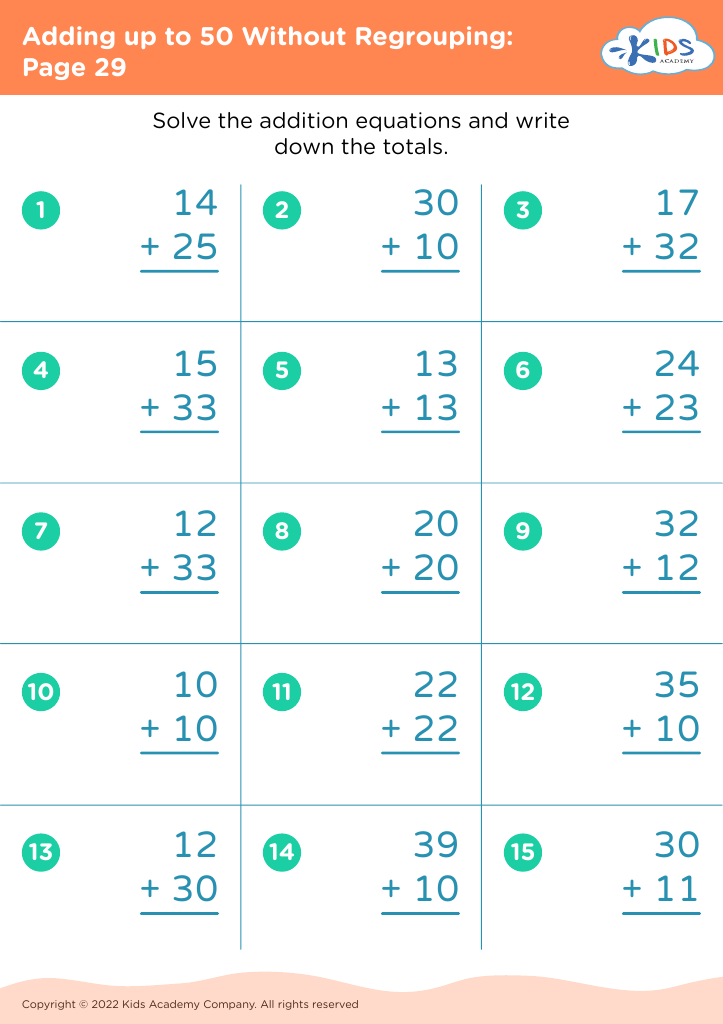


Recognizing patterns in mathematics is crucial for children aged 8-9, particularly when adding numbers up to 50 without regrouping. This skill lays a strong foundation for their future mathematical understanding. First, it enhances their ability to quickly and accurately perform calculations. By identifying patterns—such as doubles, near doubles, or the use of number complements—students can streamline the addition process, fostering confidence and efficiency in their math skills.
Additionally, pattern recognition fosters critical thinking and problem-solving abilities. When students learn to spot patterns, they begin to understand mathematical relationships, paving the way for more complex concepts such as algebraic thinking. This cognitive development is essential for academic success across subjects, not just in math.
Moreover, recognizing patterns also makes math more engaging and enjoyable. When children can see the connections within numbers, they often feel a sense of accomplishment and excitement about learning. This positive attitude towards mathematics can influence their long-term relationship with the subject.
Ultimately, for parents and teachers, supporting this skill not only enhances a child's current math capabilities but also builds a solid groundwork for future learning, encouraging positive attitudes and fostering a lasting interest in mathematics.