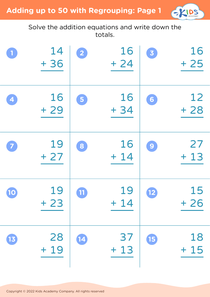
Recognizing shapes Adding up to 50 Without Regrouping Worksheets for Ages 8-9
5 filtered results
-
From - To
Discover our engaging "Recognizing Shapes Adding Up to 50 Without Regrouping Worksheets" designed specifically for children ages 8-9. These worksheets seamlessly combine shape recognition with fundamental math skills, helping students solidify their understanding while having fun. Through a variety of activities, learners will identify various shapes and solve addition problems that total up to 50, all without the need for regrouping. This resource not only enhances critical thinking and spatial awareness but also boosts confidence in arithmetic skills. Perfect for classroom use or at home, these worksheets encourage interactive learning and pave the way for a strong mathematical foundation.
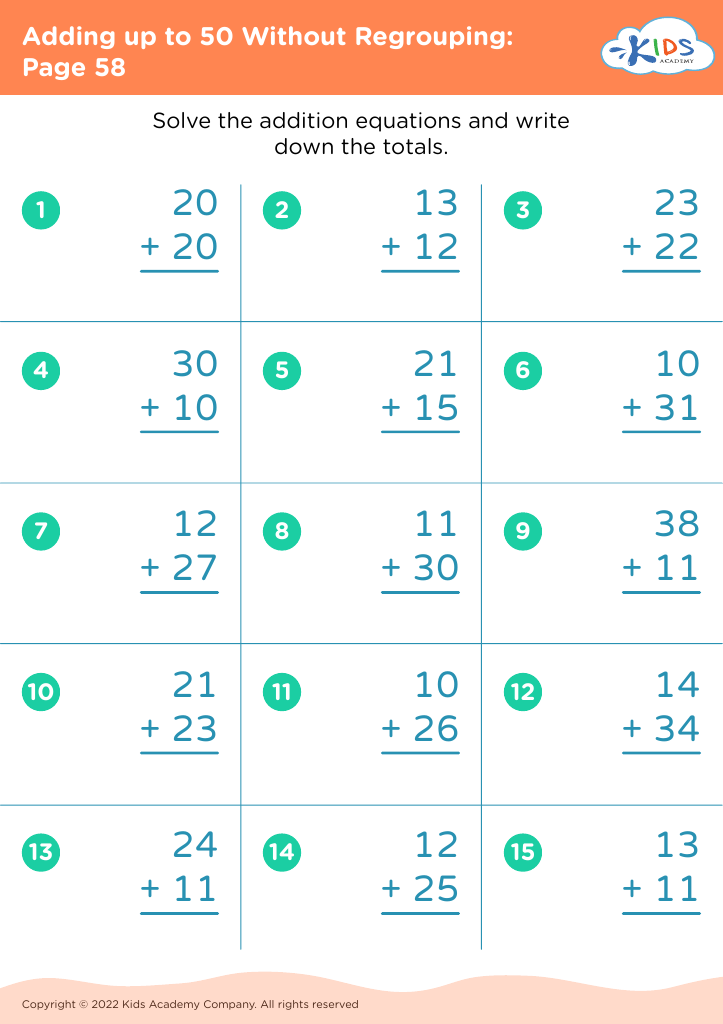
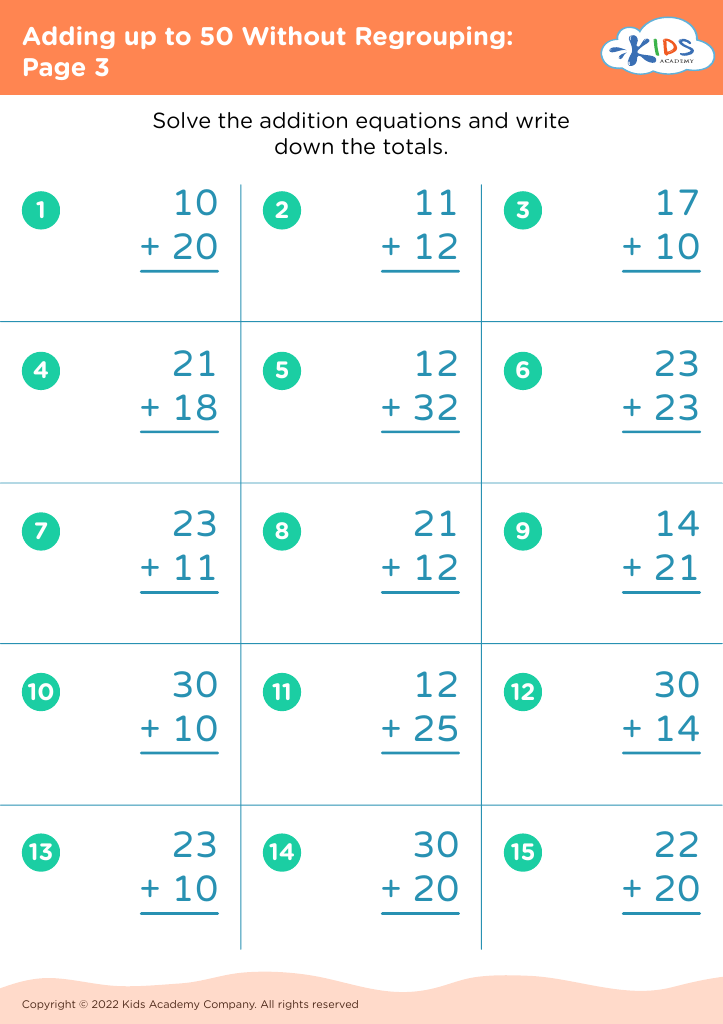
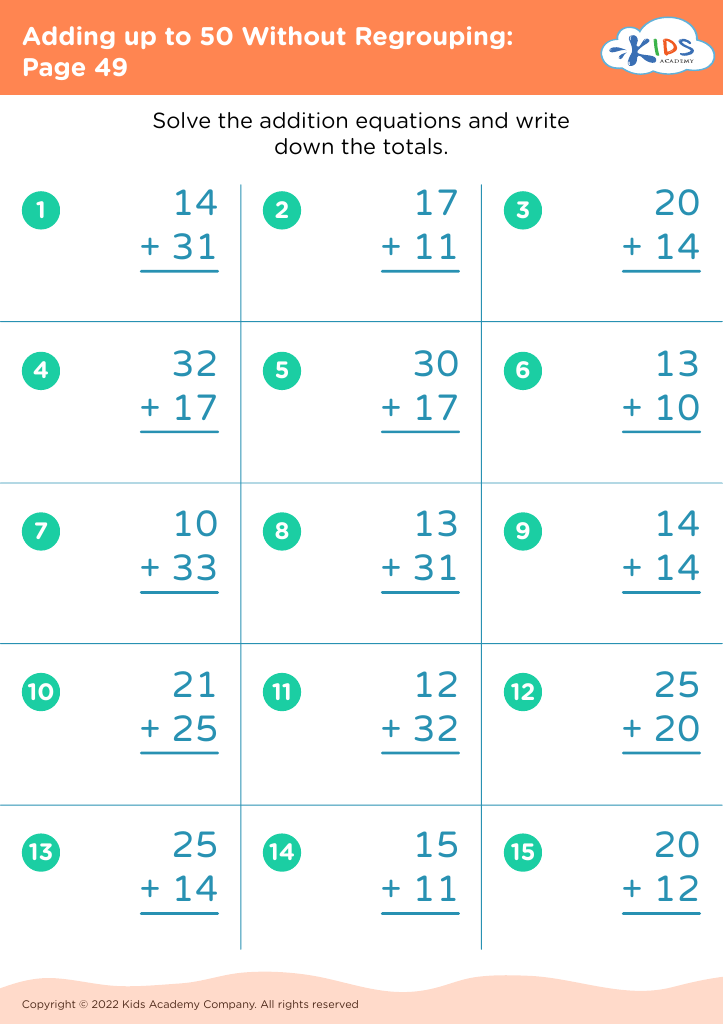
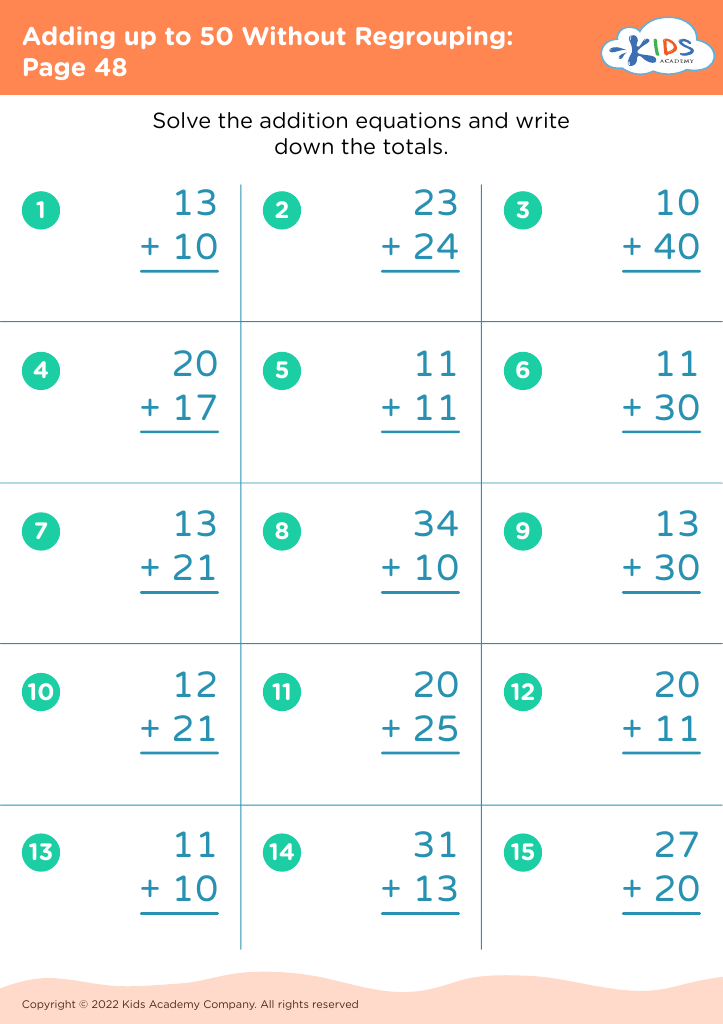
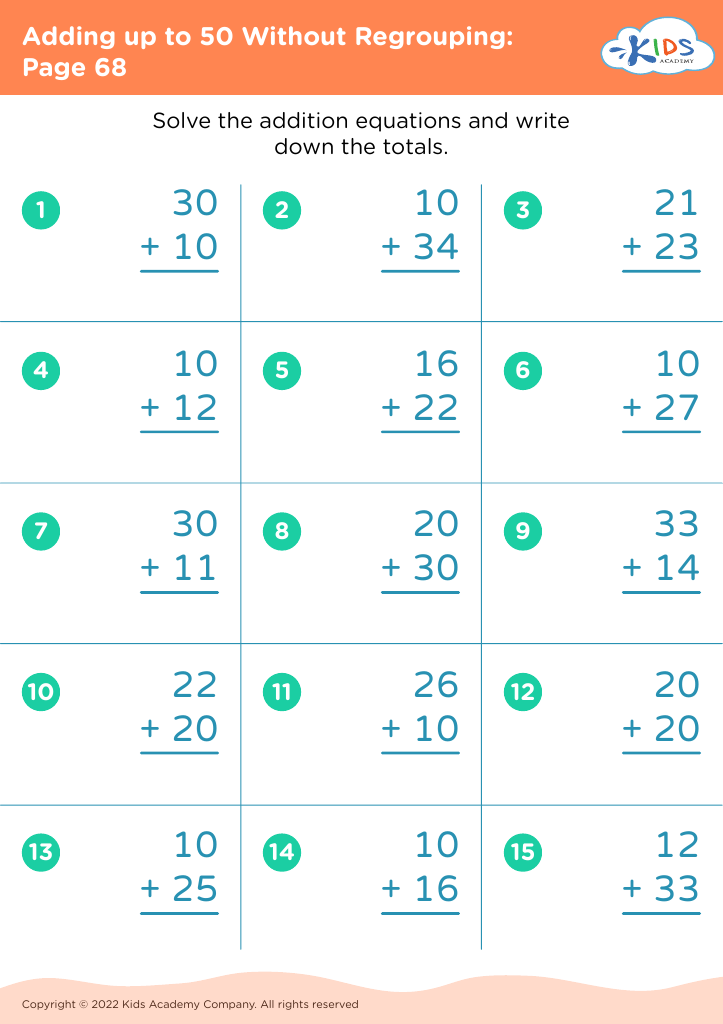


Recognizing shapes and mastering addition skills without regrouping are fundamental components of mathematical literacy for children ages 8-9. Both skills are critical for fostering a well-rounded understanding of mathematics, which supports further learning in more complex topics.
Recognizing shapes helps children develop spatial awareness and critical thinking. This skill is essential not just in mathematics but also in everyday life, where understanding layout, design, and structure plays a key role. It encourages creativity, as students explore how different shapes can combine and transform.
On the other hand, adding up to 50 without regrouping teaches children the principles of number sense and mental math. This foundational skill allows students to quickly and accurately perform calculations, which is vital in problem-solving scenarios. It also enhances their confidence in dealing with numbers, guiding them to tackle more difficult mathematical concepts in the future.
For parents and teachers, nurturing these skills means setting a strong groundwork for a child's academic journey. Engaging in shape recognition and addition builds enthusiasm for learning, making mathematics enjoyable and motivating them to explore further. Ultimately, instilling these skills creates a generation of confident learners ready to face challenges in both academic and real-world situations.