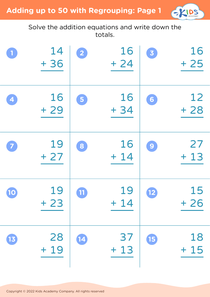
Understanding fractions Adding up to 50 Without Regrouping Worksheets for Ages 8-9
13 filtered results
-
From - To
Enhance your child's math skills with our "Understanding Fractions Adding up to 50 Without Regrouping Worksheets," designed specifically for ages 8-9. These worksheets offer a fun and engaging way to explore fractions, helping young learners deepen their understanding of numerical relationships. Students will practice identifying and adding fractions without the need for regrouping, building their confidence in math. Ideal for reinforcing classroom learning or providing extra practice at home, our worksheets foster critical thinking and problem-solving skills. Watch your child excel as they master these fundamental concepts in a supportive and interactive format. Download today and make math enjoyable!
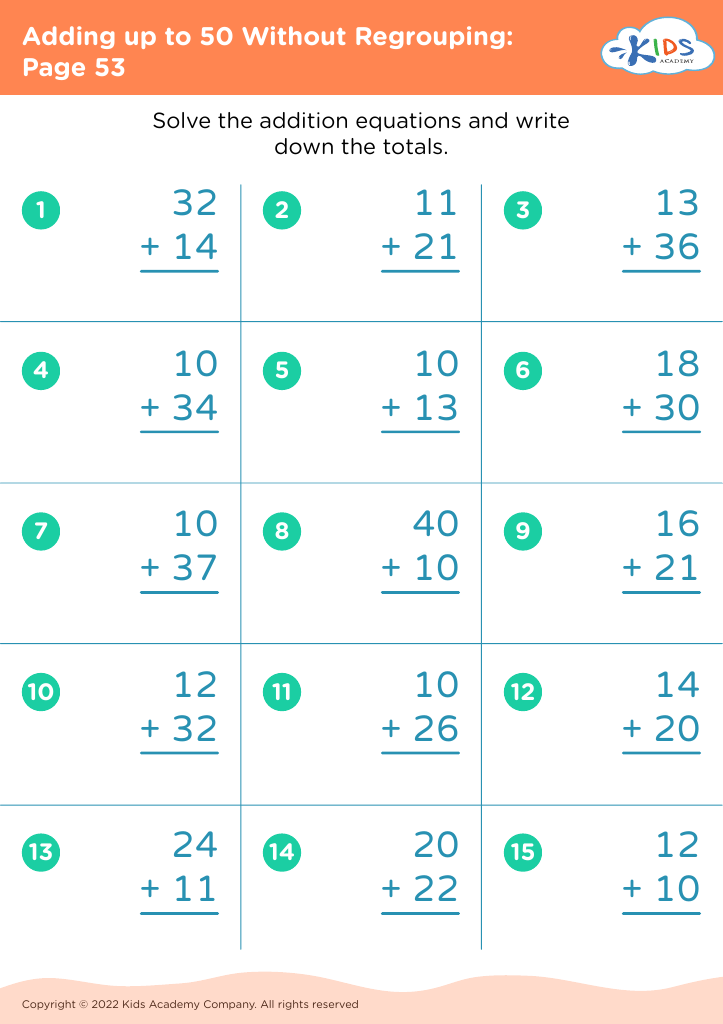
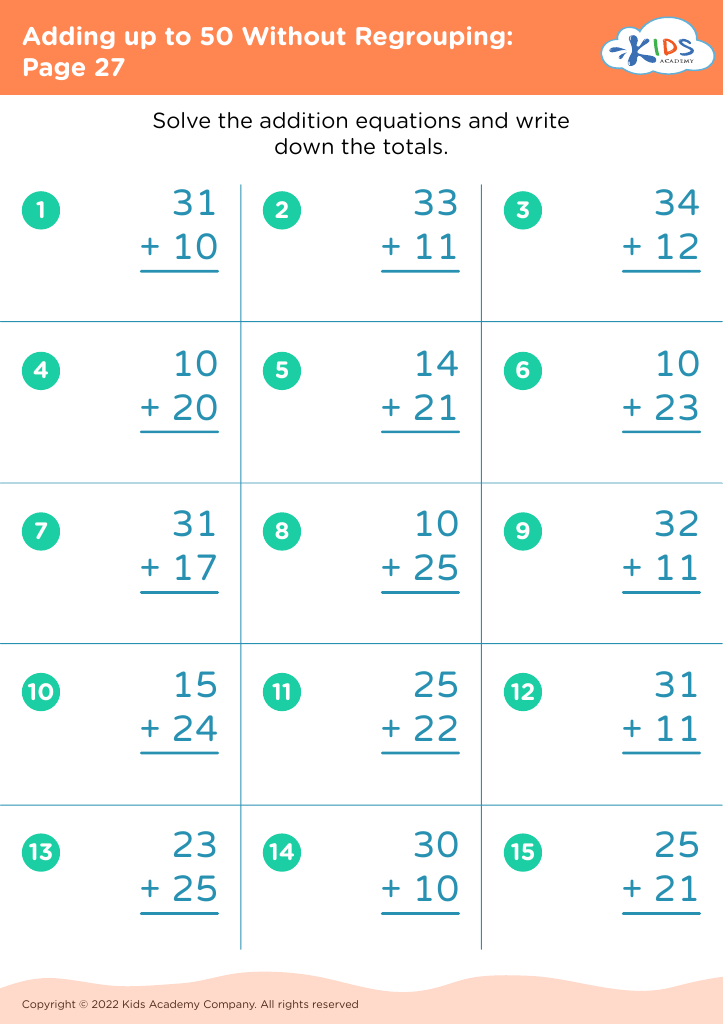
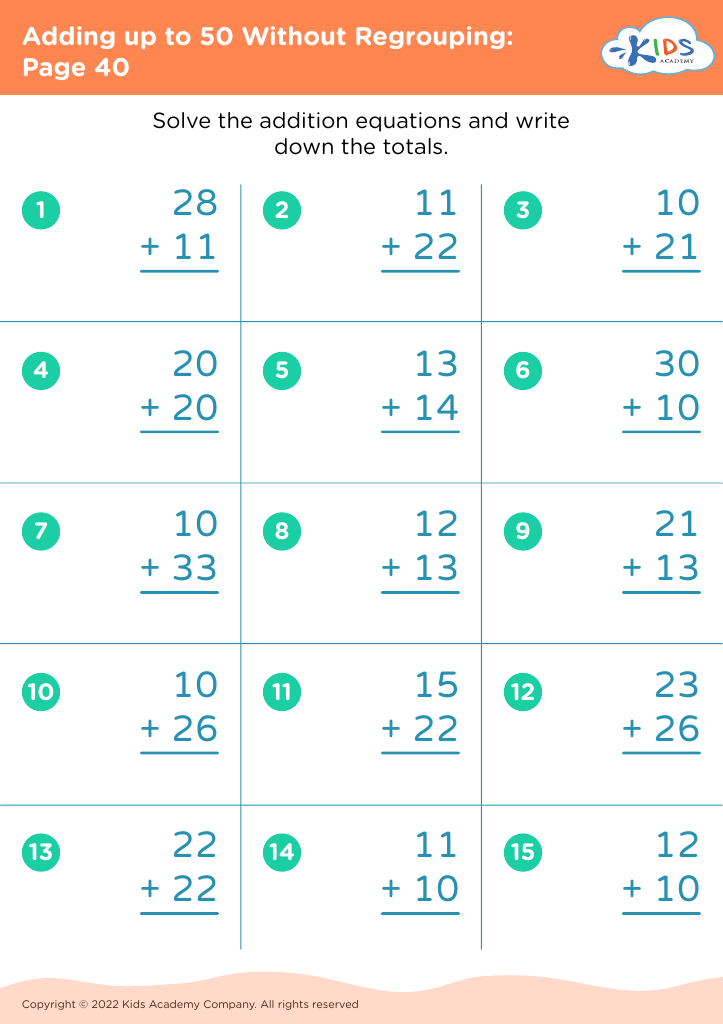
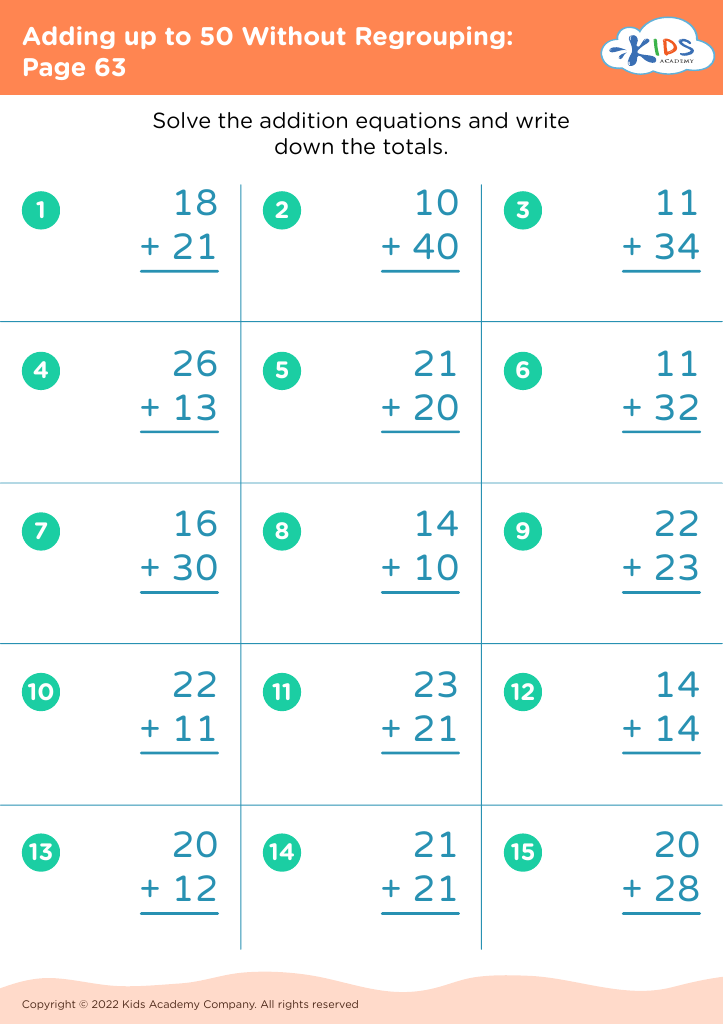
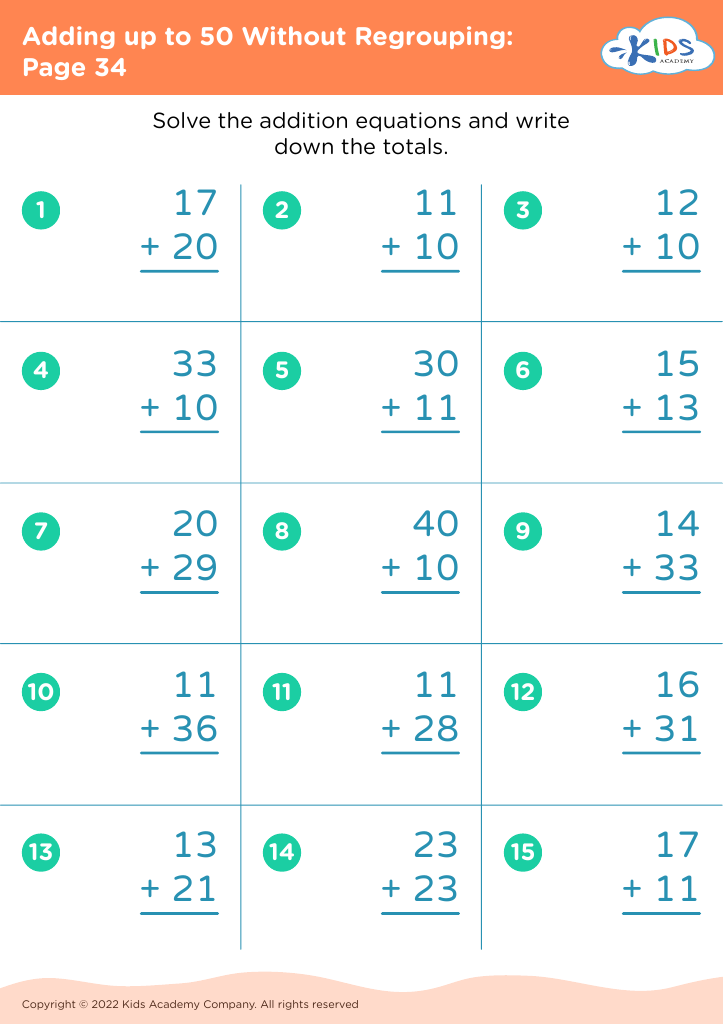
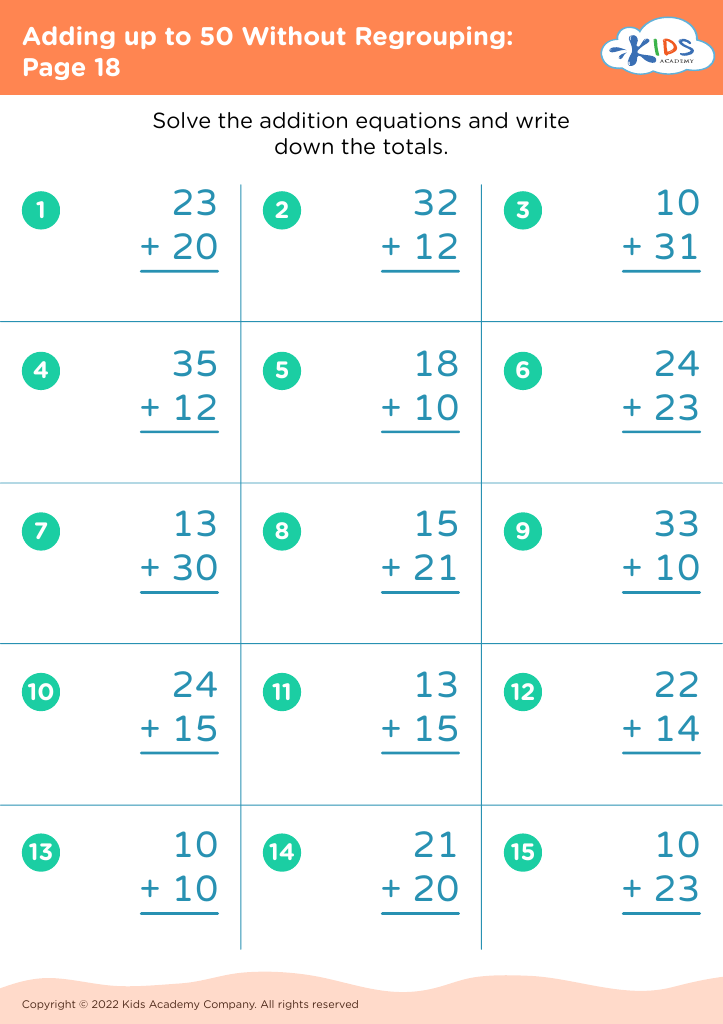
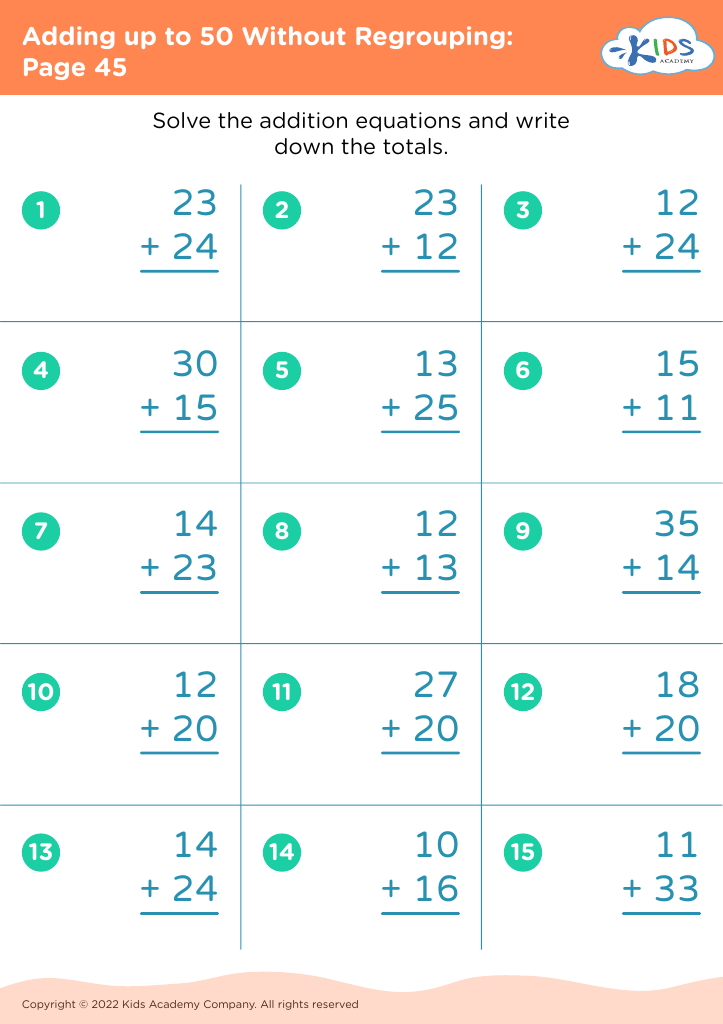
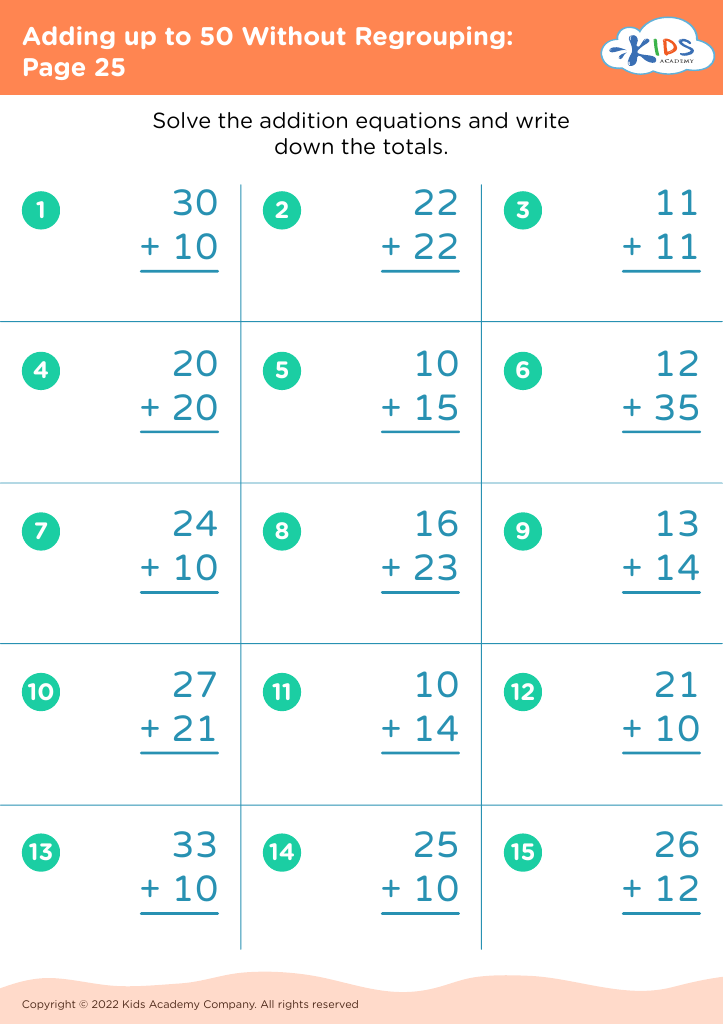
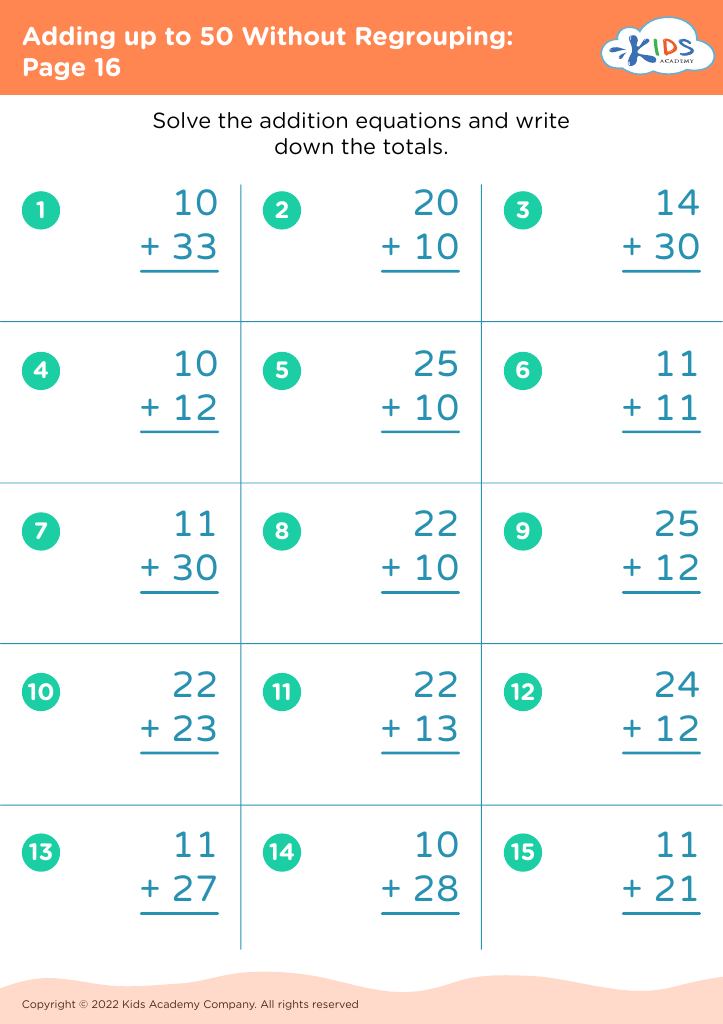
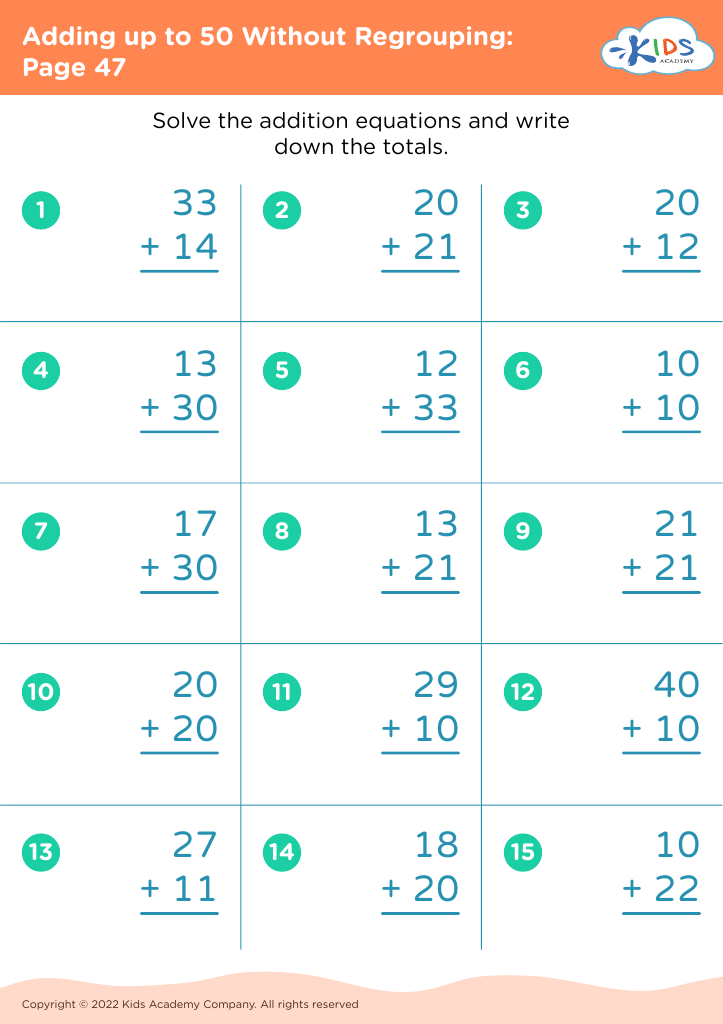
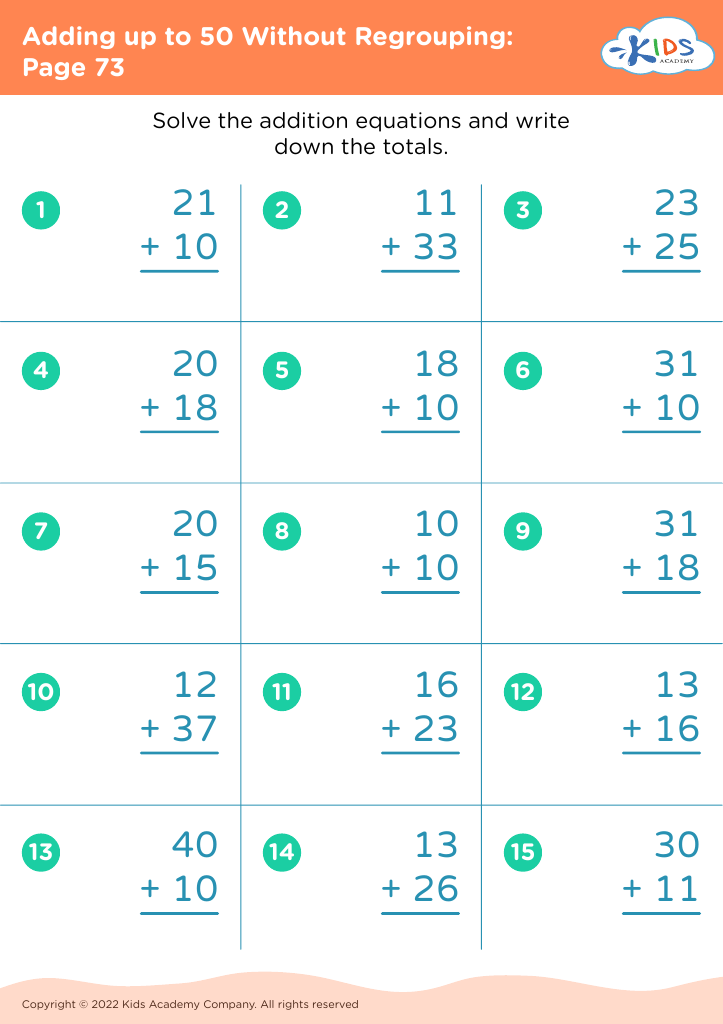
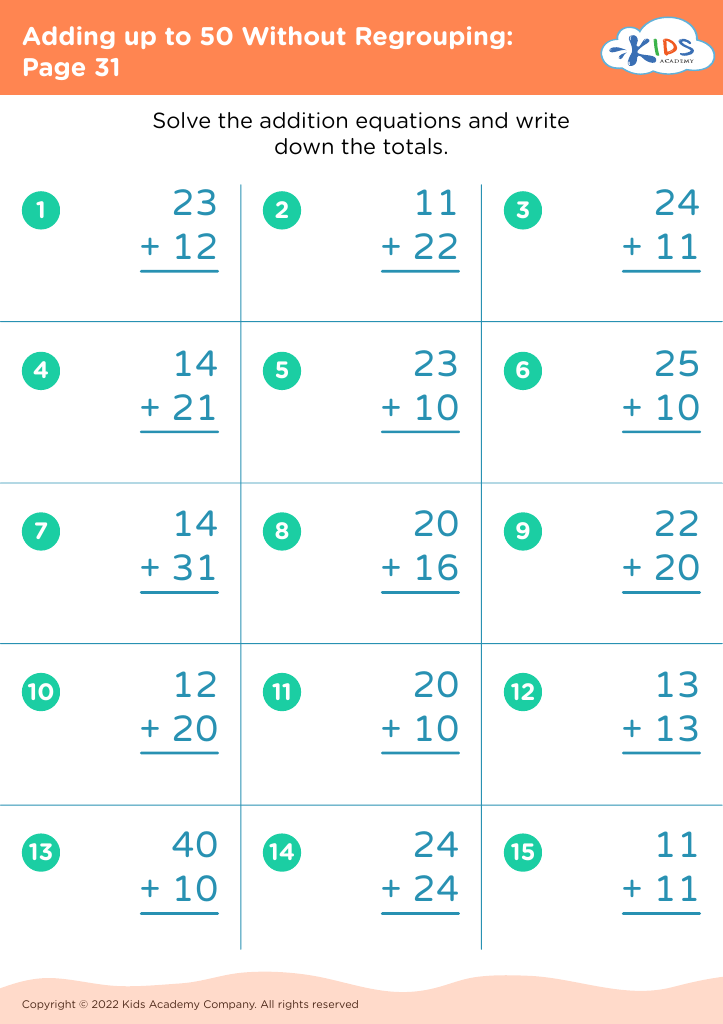
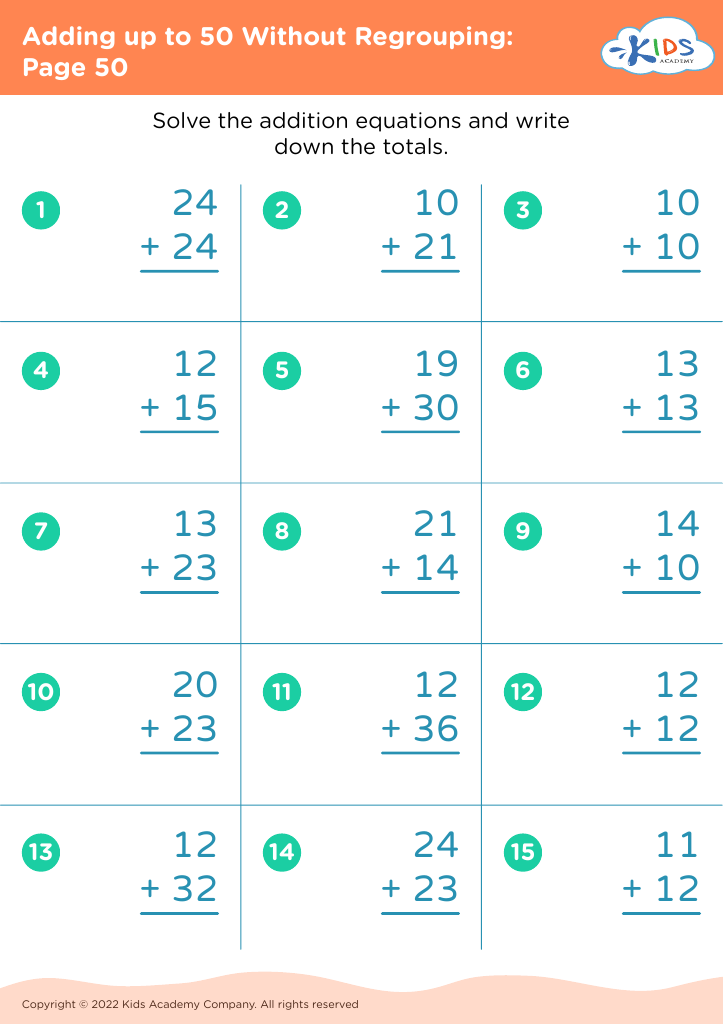


Understanding fractions and their addition is a fundamental skill for children ages 8-9, as it builds the groundwork for more complex mathematical concepts. At this age, students transition from basic arithmetic to more abstract reasoning. Mastering fractions aids in developing critical thinking and problem-solving abilities—skills that are essential not only in mathematics but also in real-life situations.
When children learn to add fractions without regrouping, such as combining 1/4 and 2/4, they grasp concepts of equivalence and part-whole relationships, which are crucial for understanding ratios and proportions later on. These skills are often used in daily activities, such as cooking or sharing items, making the learning very applicable and relevant.
For parents and teachers, fostering a strong foundation in fractions enhances students’ confidence and enjoyment in math, potentially reducing math anxiety as they progress into higher grades. Engaging in fraction activities together—like cooking or measuring—can further reinforce these concepts in fun and meaningful ways. In short, understanding fractions is essential for tackling future math challenges and for the development of a positive attitude towards learning. Promoting these skills shows a commitment to a child's educational journey and future success.