Understanding patterns Adding up to 50 Without Regrouping Worksheets for Ages 8-9
5 filtered results
-
From - To
Explore our "Understanding Patterns: Adding Up to 50 Without Regrouping" worksheets designed specifically for children aged 8-9. These interactive resources aim to enhance young learners' mathematical skills by focusing on number patterns and strategies to add numbers efficiently. By engaging with these worksheets, students will develop a solid foundation in addition while improving their problem-solving skills. With a variety of fun and challenging exercises, children will learn how to identify patterns and make connections that simplify addition up to 50. Perfect for classroom activities or home practice, our worksheets empower children to master these essential math concepts with confidence!
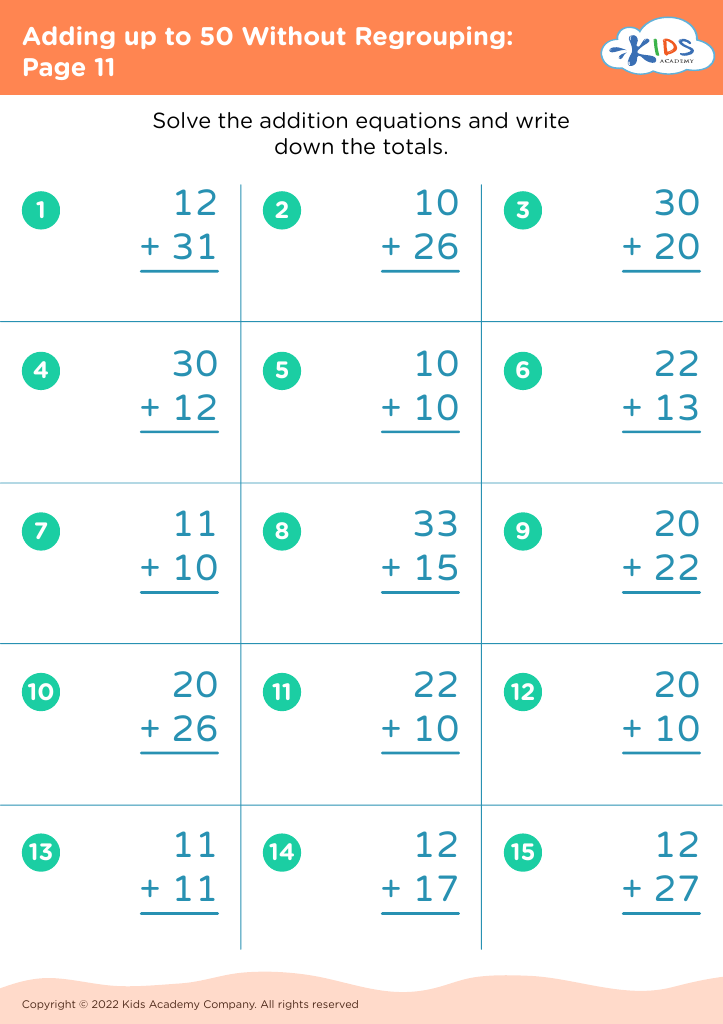
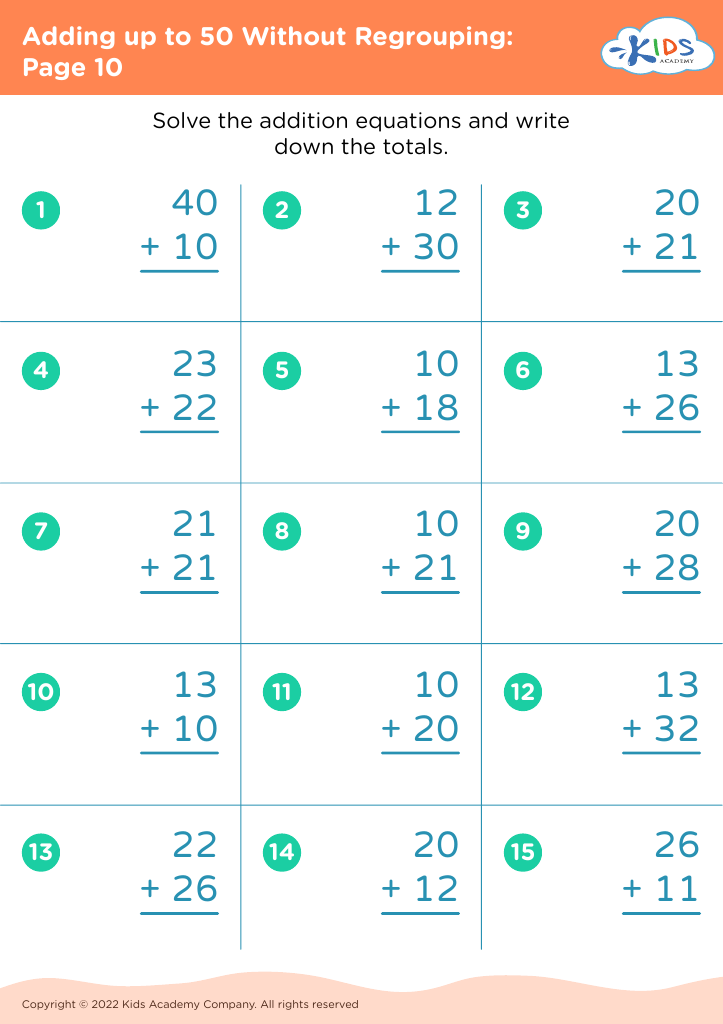
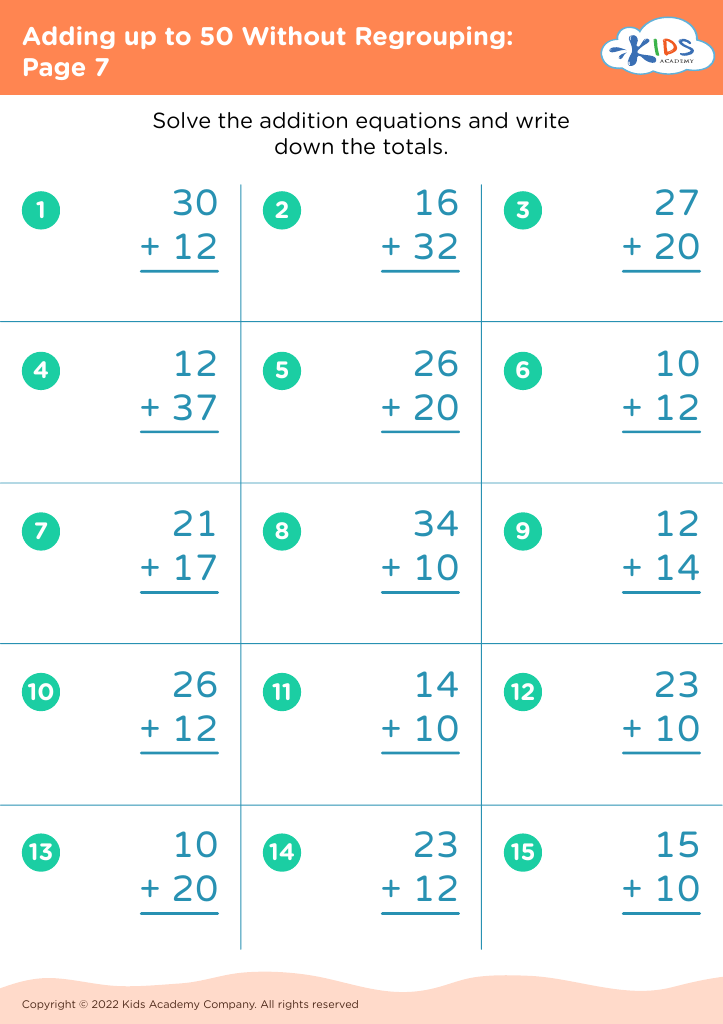
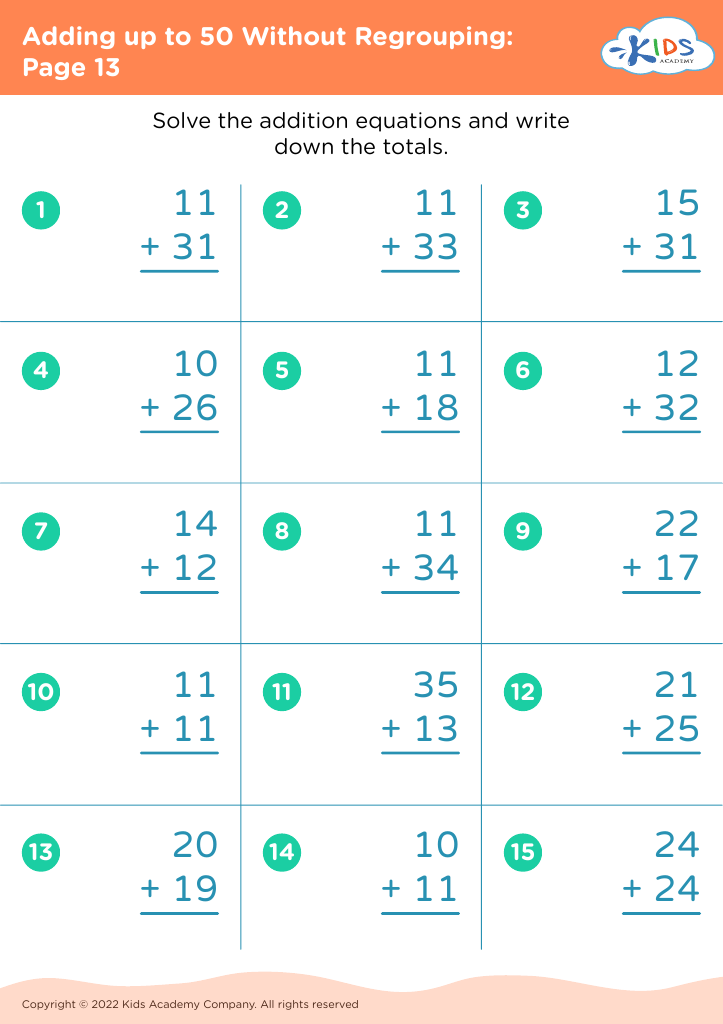
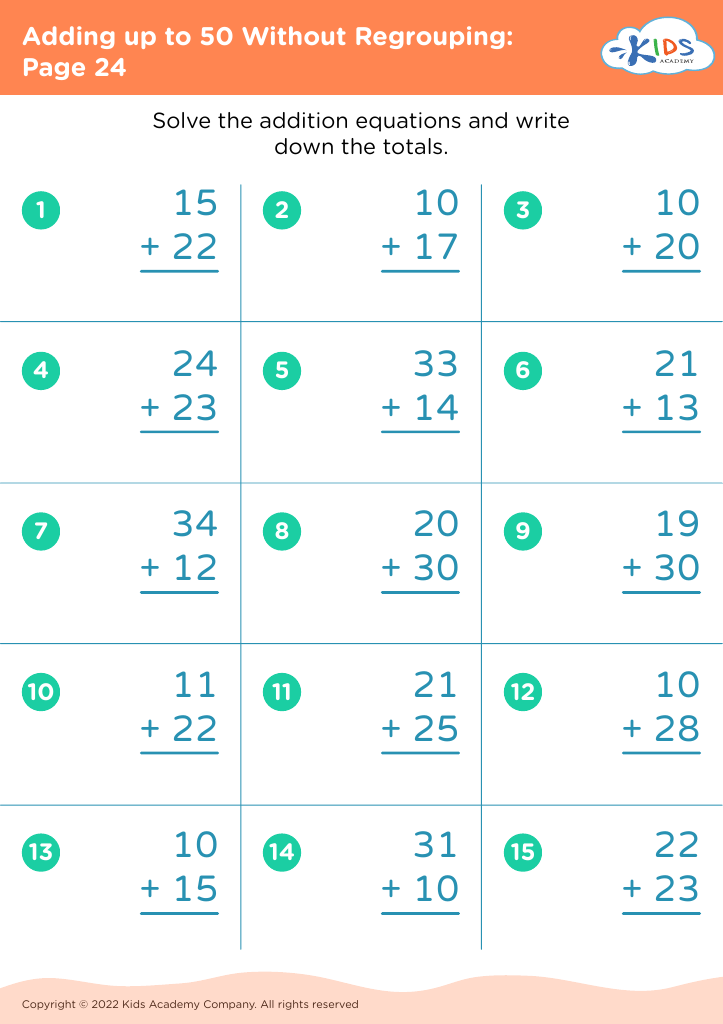


Understanding patterns in addition, especially when adding up to 50 without regrouping, is a crucial skill for children aged 8-9. It forms the foundation for more advanced mathematical concepts and problem-solving skills that they will encounter as they progress in their education.
First, recognizing patterns helps students internalize basic addition facts, making it easier to perform calculations accurately and quickly. When students learn to identify relationships between numbers, they become more proficient in mental math, reducing their reliance on calculators or pen and paper.
Moreover, mastering this skill fosters critical thinking. As children explore different ways to combine numbers to reach a total of 50, they develop reasoning abilities that are essential for tackling complex problems later in math curricula. This ability to see connections also nurtures creativity in problem-solving, preparing them for challenges beyond mathematics.
Furthermore, parents and teachers play an integral role in reinforcing the importance of these skills. By engaging children in activities that promote pattern recognition and strategic thinking, they can boost confidence and solidify mathematical foundations. Ultimately, a strong grasp of these concepts empowers students to navigate their future educational pursuits more confidently and competently.