Decision making skills Addition & Subtraction Worksheets for Ages 8-9
3 filtered results
-
From - To
Enhance your child's decision-making abilities with our interactive Addition & Subtraction Worksheets designed specifically for ages 8-9. These worksheets go beyond basic math practice, challenging young learners to apply critical thinking skills as they solve addition and subtraction problems. Your child will learn to analyze, decide on the best strategies, and build confidence in their math abilities. Tailored for both classroom and home use, each worksheet features engaging tasks that make decision-making fun and educational. Give your child the tools they need to succeed in math and life with our expertly crafted resources.
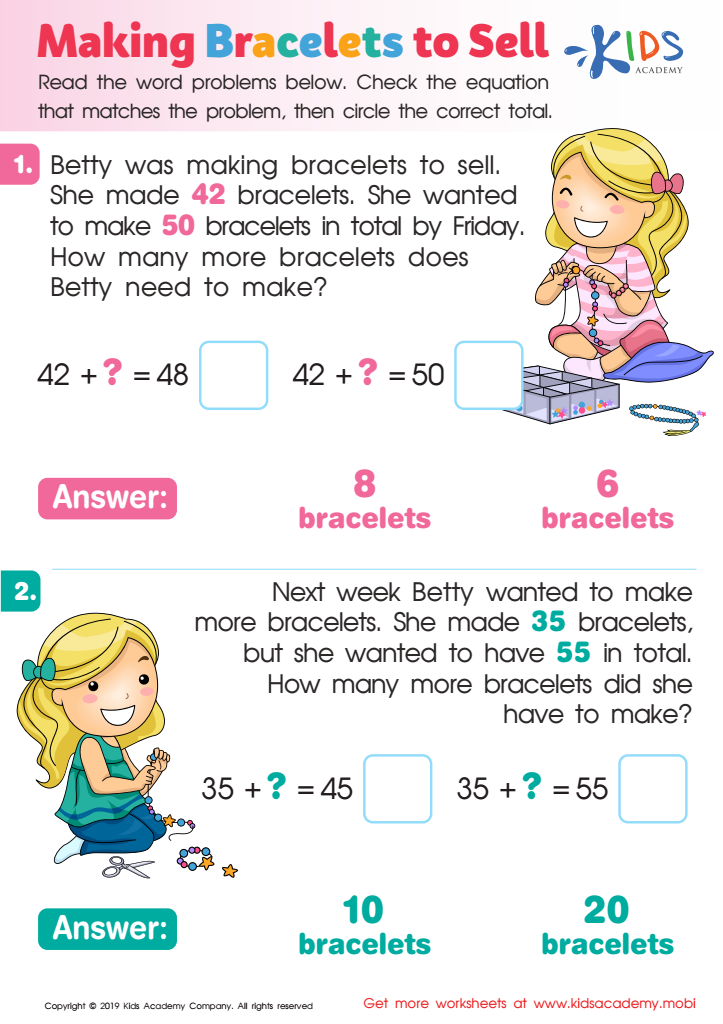
Making Bracelets to Sell Worksheet
 Assign to My Students
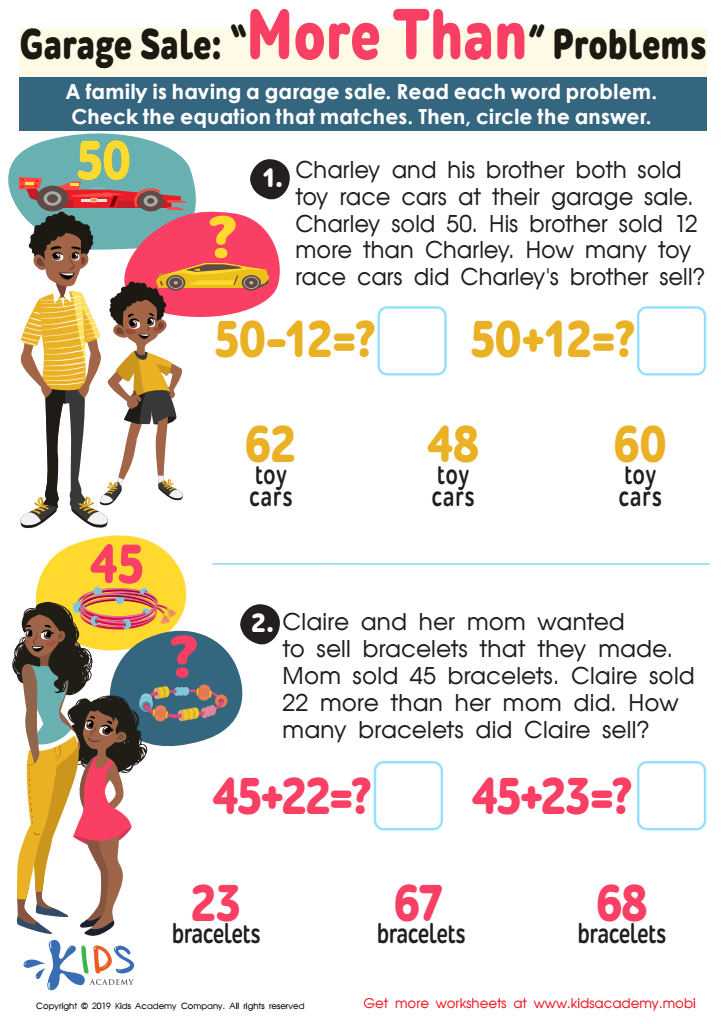
Garage Sale - More yhan Worksheet








Parents and teachers should care about decision-making skills in addition and subtraction for ages 8-9 because these fundamental skills form the foundation of future math learning and everyday problem-solving. At this developmental stage, children's brains are highly receptive to learning basic arithmetic operations, which are critical for understanding more complex math concepts later on. By focusing on addition and subtraction, children start to build numerical fluency, enabling them to tackle advanced math problems with confidence and ease.
Developing decision-making skills in math promotes critical thinking and logical reasoning. For instance, determining the best strategy to solve an addition or subtraction problem helps students evaluate their options, foresee potential outcomes, and make informed choices. These cognitive processes are transferable skills that apply to various aspects of life, from academic challenges to social interactions. Moreover, mastering these skills early on instills a sense of accomplishment and boosts self-esteem, fostering a positive attitude towards learning.
A strong grasp of addition and subtraction also supports everyday activities, such as managing allowance, measuring ingredients in a recipe, or understanding time and schedules. Parents and teachers who actively encourage and nurture these skills set children on a path to become confident, analytical, and independent thinkers, essential traits for lifelong success.








