Enhance critical thinking Addition & Subtraction Worksheets for Ages 8-9
5 filtered results
-
From - To
Enhance your child's critical thinking skills with our carefully designed addition and subtraction worksheets for ages 8-9! These engaging activities challenge young learners to think analytically and solve problems effectively. Featuring a variety of scenarios and fun illustrations, our worksheets promote not just basic arithmetic, but also reasoning and logic. As learners tackle each problem, they develop essential skills that extend beyond math. Perfect for home learning or classroom settings, these worksheets encourage exploration and independent thought. Equip your child with the tools to succeed mathematically and critically—download our Enhance Critical Thinking Addition & Subtraction Worksheets today!
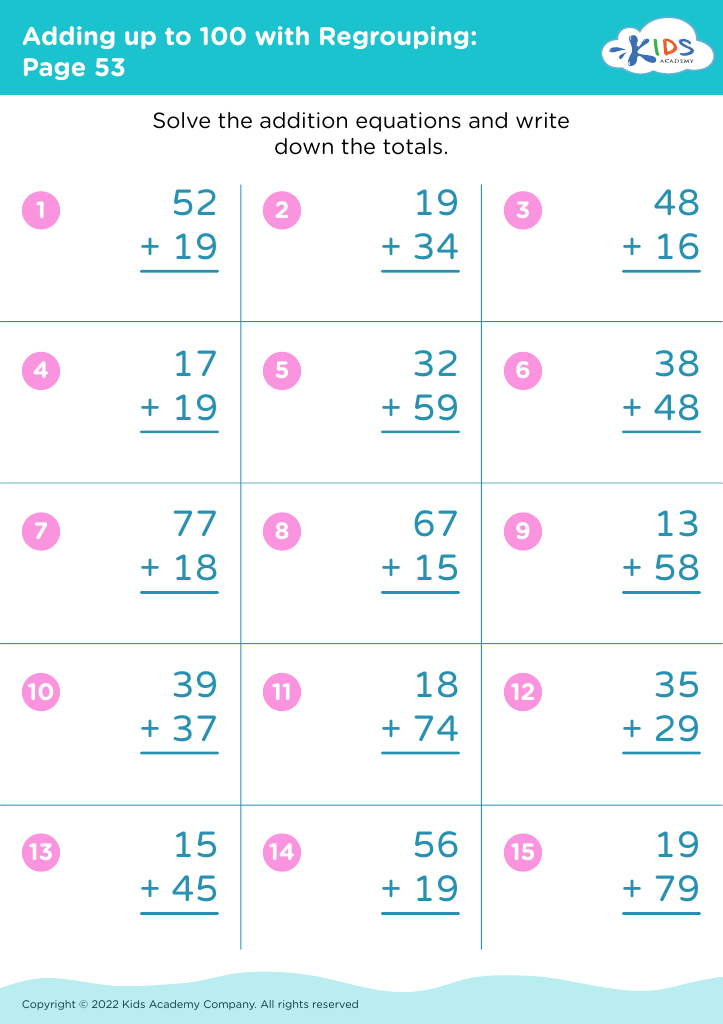
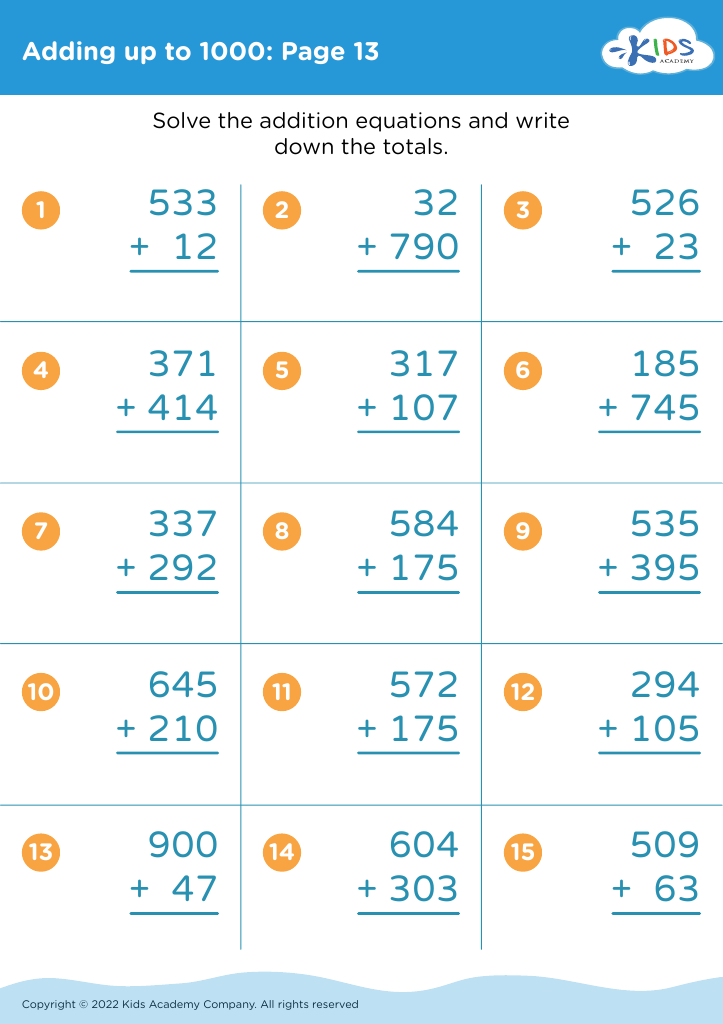
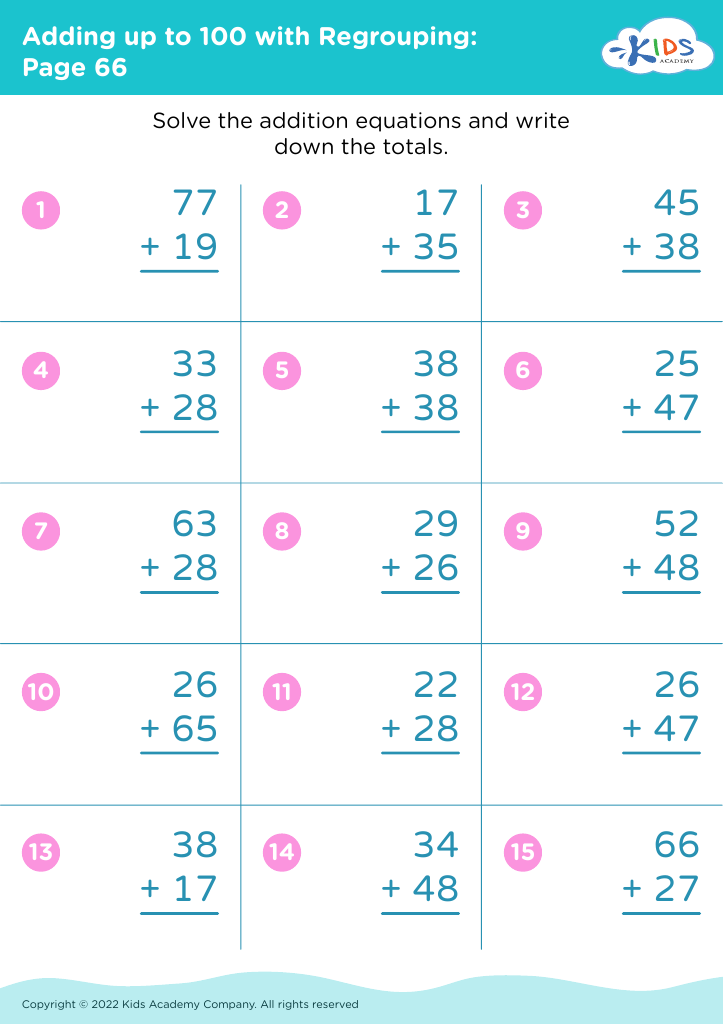
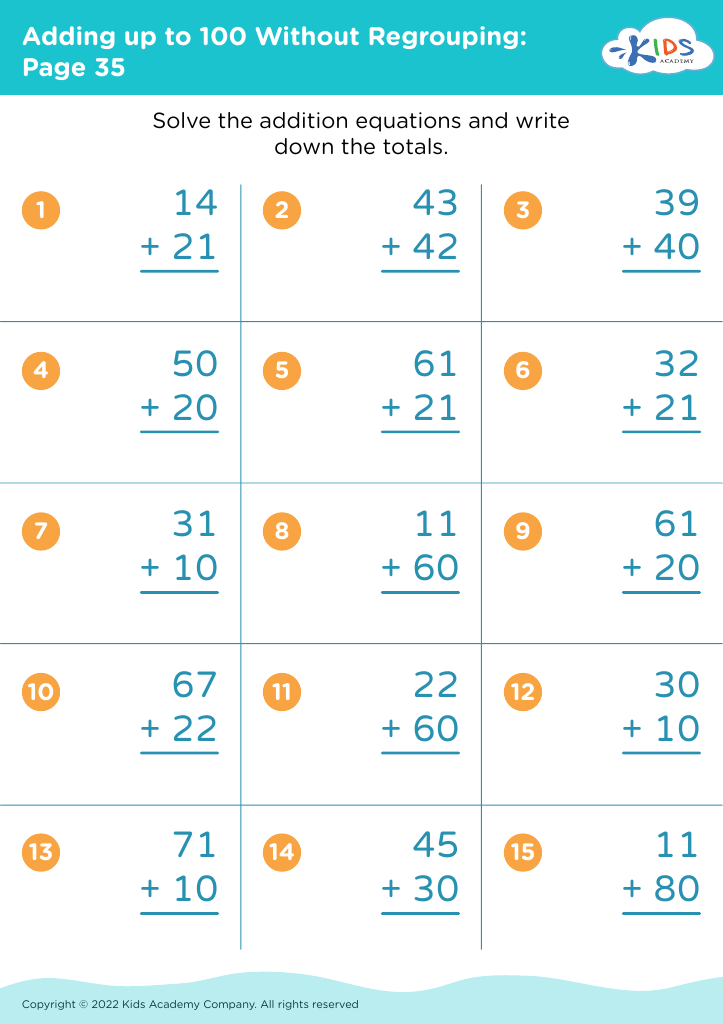
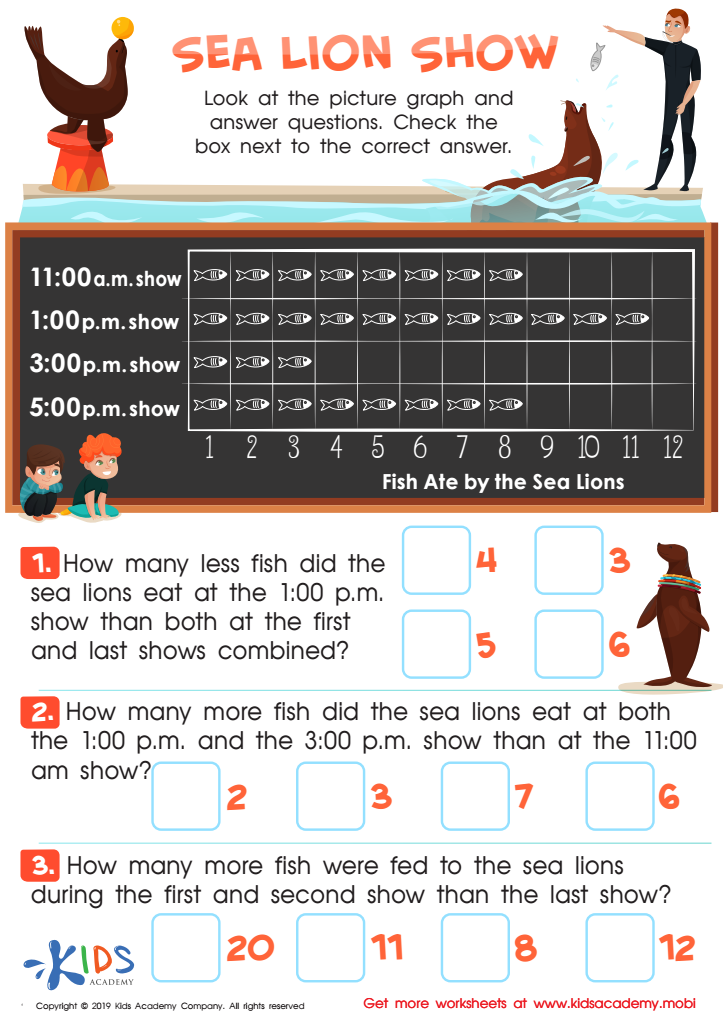
Sea Lion Show Worksheet
 Assign to My Students








Enhancing critical thinking skills in addition and subtraction for children ages 8-9 is crucial for their cognitive development and future learning. At this age, students are transitioning from basic arithmetic to more complex problem-solving tasks, laying the foundation for higher-level math skills. By fostering critical thinking, children learn to analyze problems deeply, evaluate different solution strategies, and make logical deductions. This not only helps them perform better in mathematics but also equips them with essential life skills.
Furthermore, promoting critical thinking in math encourages a growth mindset. When students tackle challenging problems, they develop perseverance and the ability to learn from mistakes, essential qualities for success in any field. Teachers and parents can engage children through interactive activities, such as puzzles and games, which make learning enjoyable while reinforcing these important skills.
Moreover, a strong grasp of addition and subtraction is key for understanding more advanced mathematical concepts, such as fractions and basic algebra. This early intervention can prevent difficulties later in their education. Ultimately, cultivating critical thinking about numbers arms children with the ability to approach challenges strategically, positioning them for academic success and empowering them in their everyday decision-making.








