
Mathematics skills Addition & Subtraction Worksheets for Ages 8-9
3 filtered results
Difficulty Level
Grade
Age
-
From - To
Subject
Activity
Standards
Enhance your child's mathematical ability with our comprehensive collection of Addition & Subtraction Worksheets designed for ages 8-9. These engaging and thoughtfully crafted worksheets help children master essential math skills, promoting fluency in addition and subtraction through various problems and exercises. Each worksheet is tailored to stimulate critical thinking and problem-solving, ensuring that learning remains both fun and effective. Perfect for classroom use or home practice, these resources support your child's journey toward numerical confidence and academic success. Equip your young learner with the tools they need to excel in math! Explore our collection today.
Favorites
With answer key
Interactive
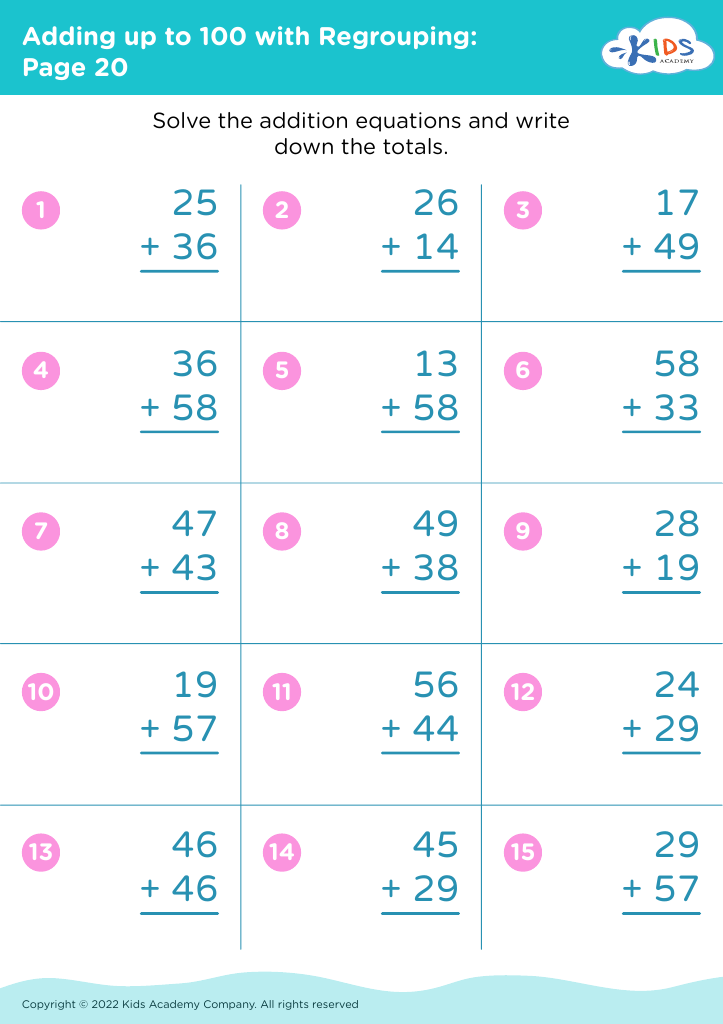
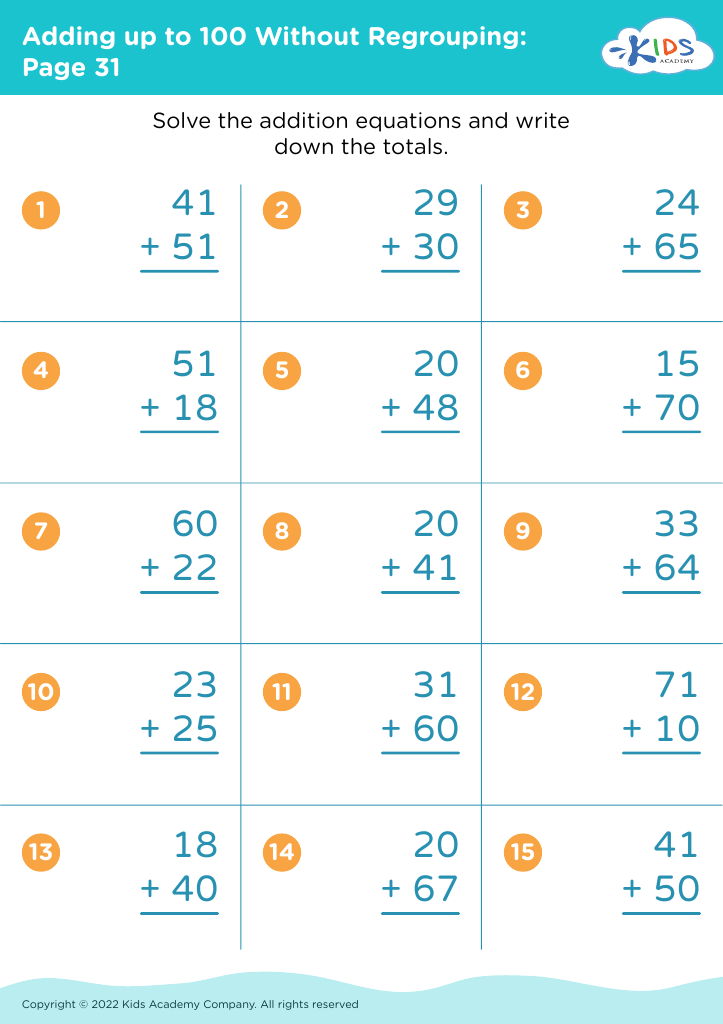
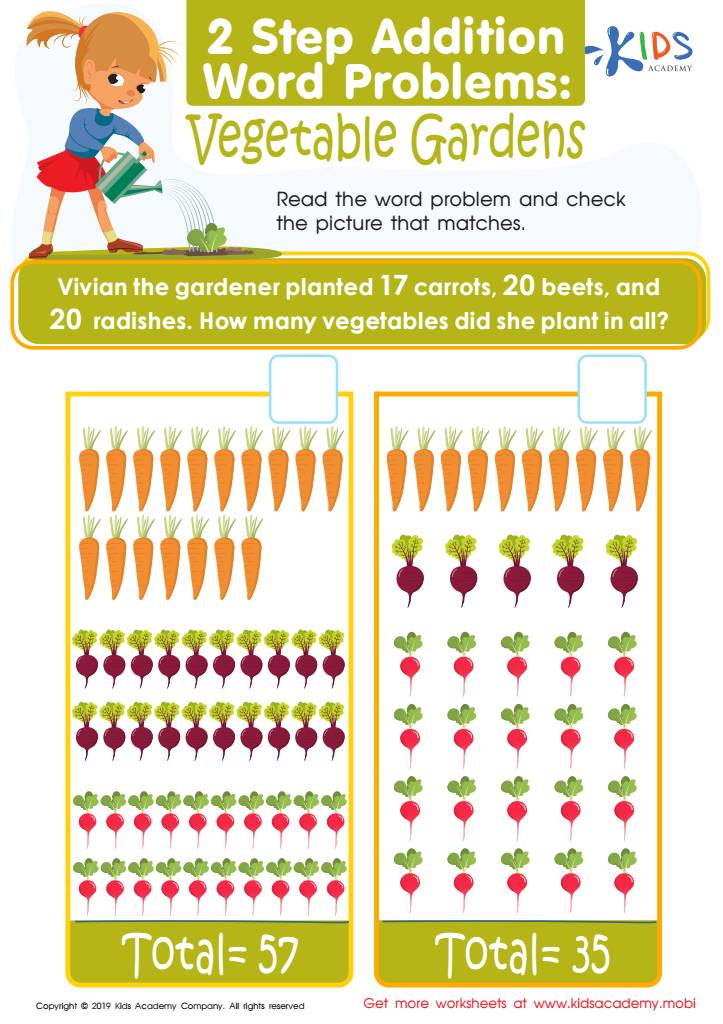
Vegetable Gardens Worksheet
Kids will have fun helping their buddy Vivian solve the addition word problems. Using one-to-one representation, they'll count the beets, carrots and radishes, then figure out the multi-step word problems. After, they'll check the picture that matches the answer, boosting their understanding of adding multiple numbers for one answer.
 Assign to My Students
Vegetable Gardens Worksheet
Worksheet
Join Kids Academy for Free
Who is primarily going to use this learning content?








Parents and teachers should prioritize ensuring that children aged 8-9 master addition and subtraction because these foundational skills are critical for their future academic success and everyday functioning. At this age, children transition from simple arithmetic to more complex mathematical concepts; a strong grasp of addition and subtraction serves as a cornerstone for learning multiplication, division, fractions, and problem-solving techniques. These skills foster logical thinking and reasoning, necessary for subjects beyond mathematics, including science, technology, and even language arts.
By mastering addition and subtraction, children gain confidence in their abilities, cultivating a positive attitude toward mathematics that can persist throughout their scholastic journey. This confidence is imperative, as attitudes towards subjects like math tend to form early and impact long-term educational choices and career options.
Moreover, proficiency in these basic mathematical operations aids in the development of critical life skills. It enables children to manage money, understand time, and solve real-life problems, contributing to their overall independence and efficiency.
Active parental and teacher involvement ensures that children receive the support, practice, and reinforcement needed to become proficient in these key skills. This involvement can cater to diverse learning styles, address individual difficulties, and tailor learning experiences, making mathematical concepts more accessible and engaging.








