
Vocabulary expansion Addition & Subtraction Worksheets for Ages 8-9
13 filtered results
Difficulty Level
Grade
Age
-
From - To
Subject
Activity
Standards
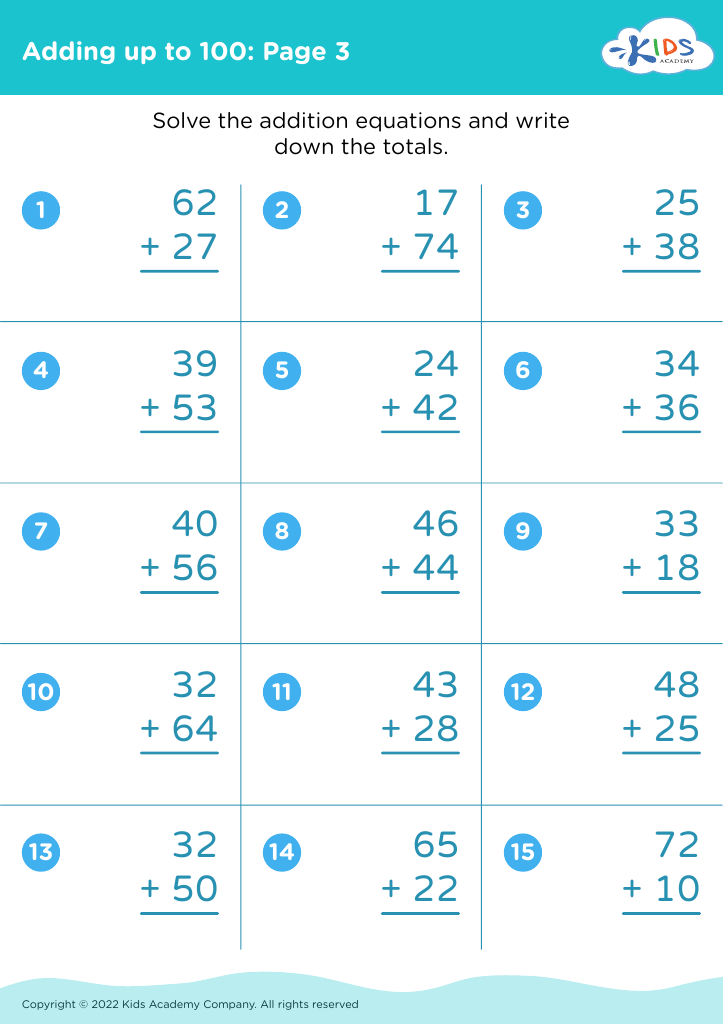
Enhance your child's vocabulary while mastering addition and subtraction with our engaging worksheets designed for ages 8-9. Our vocabulary expansion worksheets focus on mathematical terms and phrases, helping students build a strong foundation in math language while solving arithmetic problems. Each worksheet is tailored to reinforce critical thinking and problem-solving skills, making learning enjoyable and effective. By integrating vocabulary development with math practice, your child will gain confidence and proficiency in both subjects. Perfect for classroom or home use, these worksheets make it easy to promote a comprehensive understanding of math concepts and improve literacy skills simultaneously. Let the learning begin!
Favorites
With answer key
Interactive
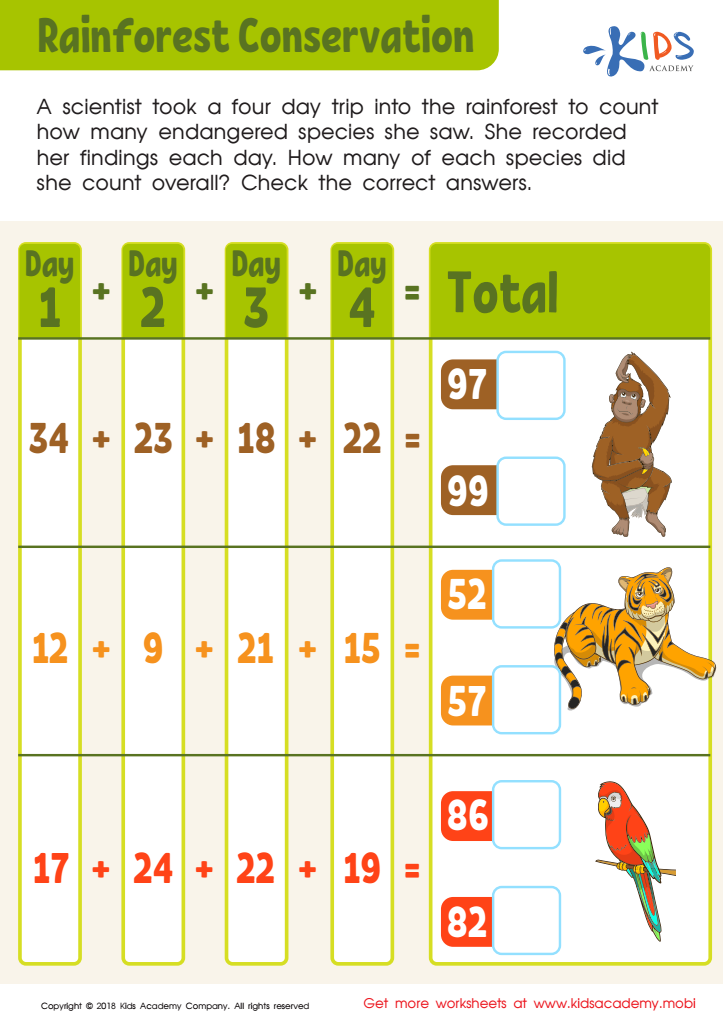
Rainforest Conservation Worksheet
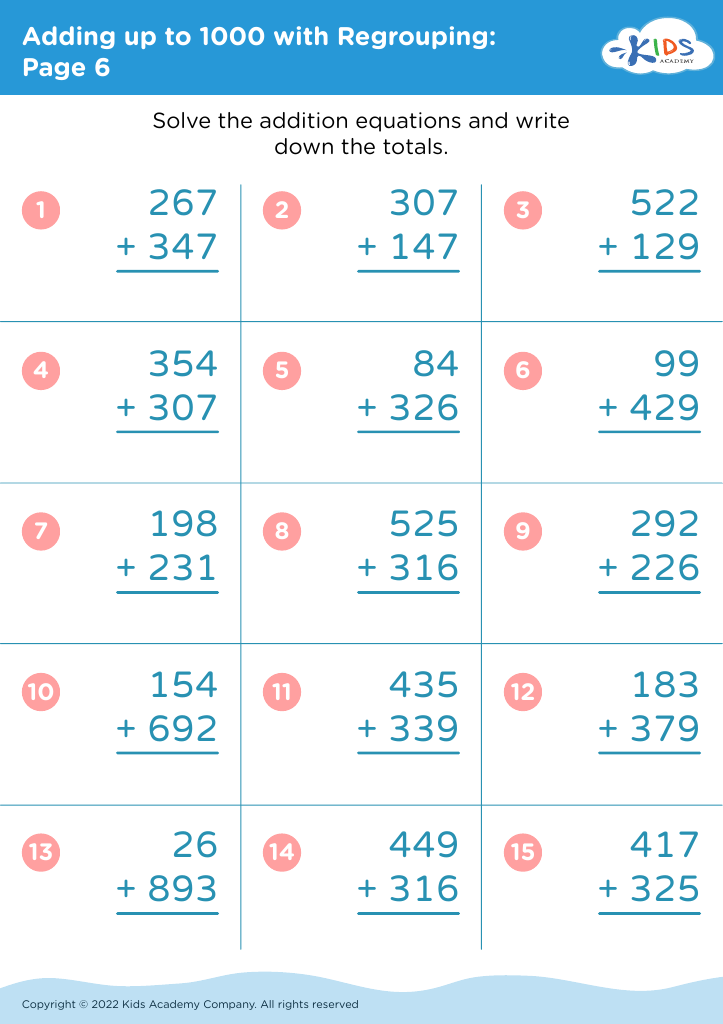
Explain to your child what a rainforest is and why it's important. A scientist took a four-day trip to count endangered species. Let your child count how many of each species were seen in total. Check the answers and help them understand.
 Assign to My Students
Rainforest Conservation Worksheet
Worksheet
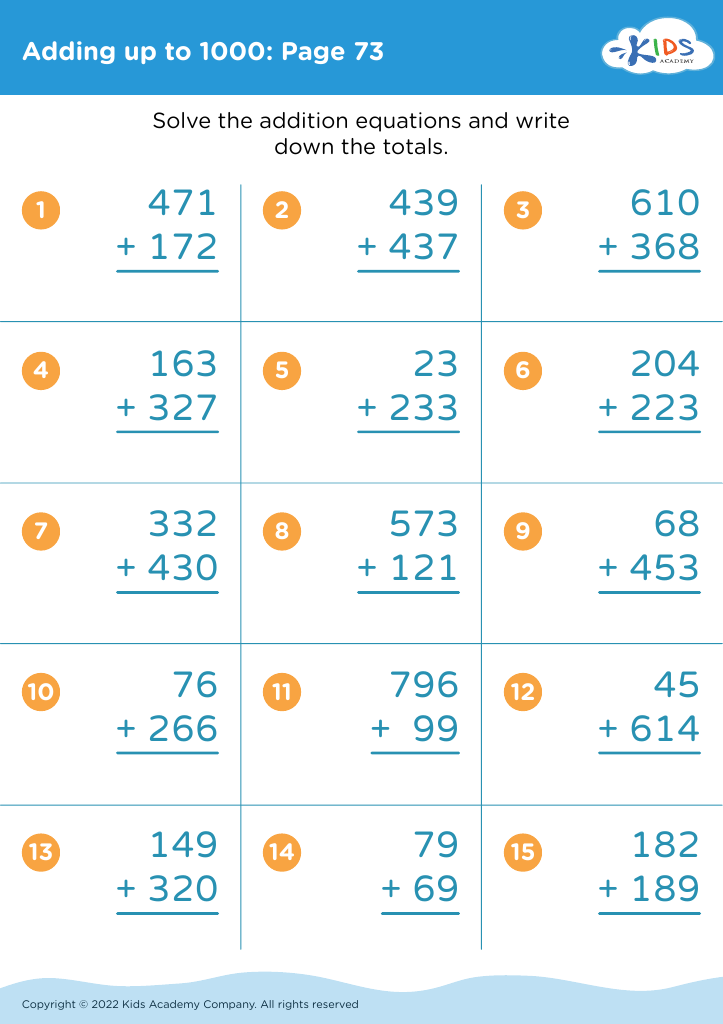
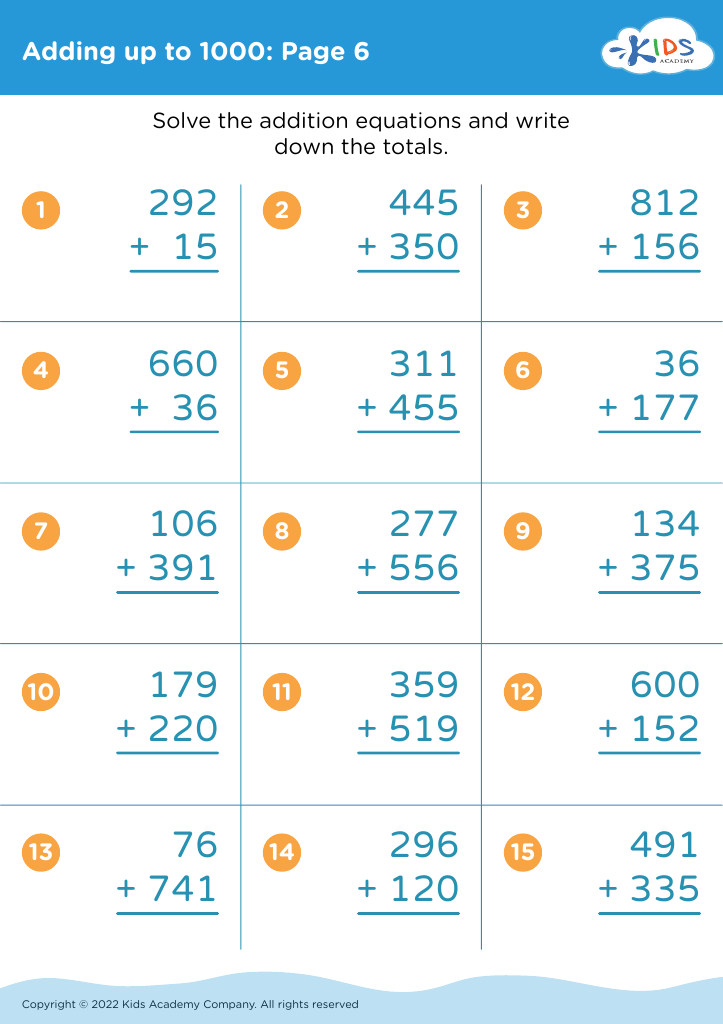
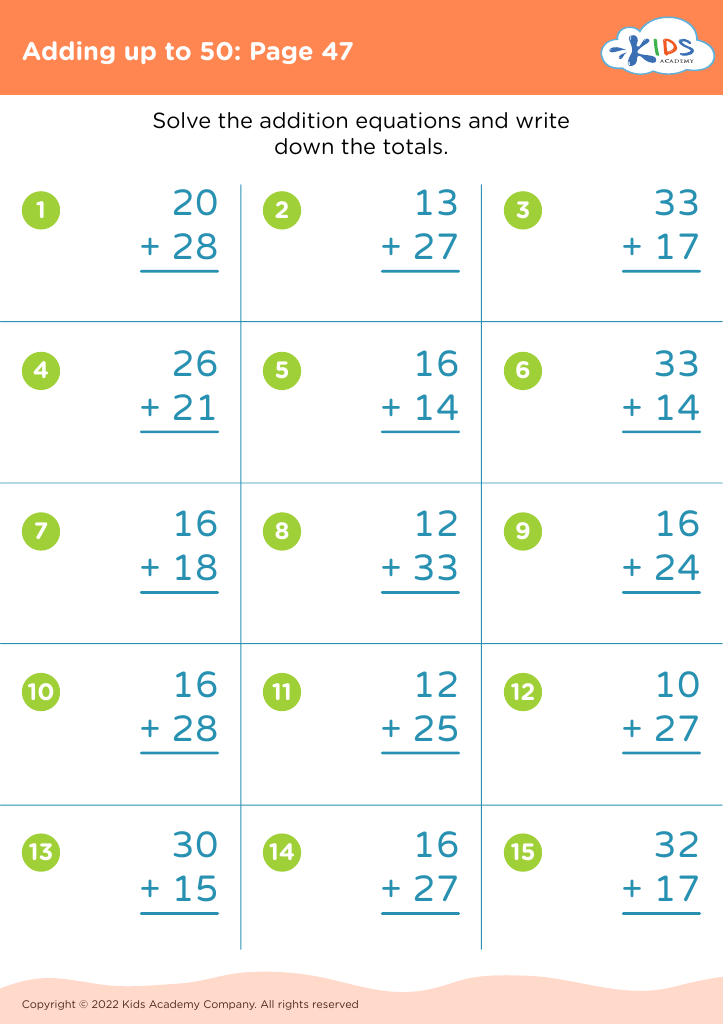
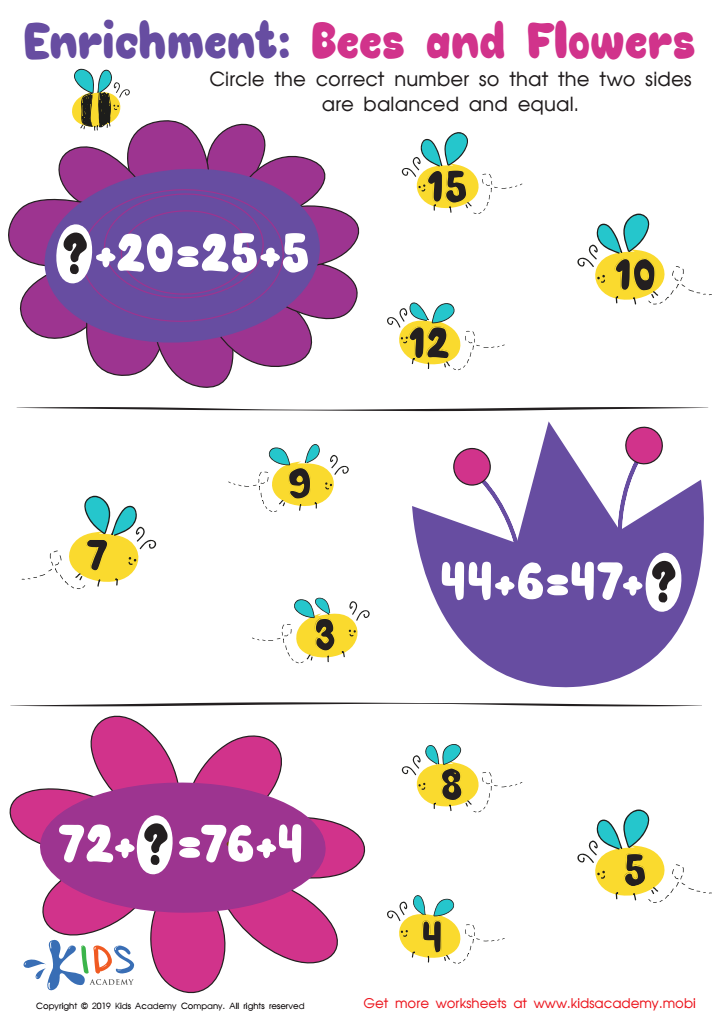
Enrichment: Bees and Flowers Worksheet
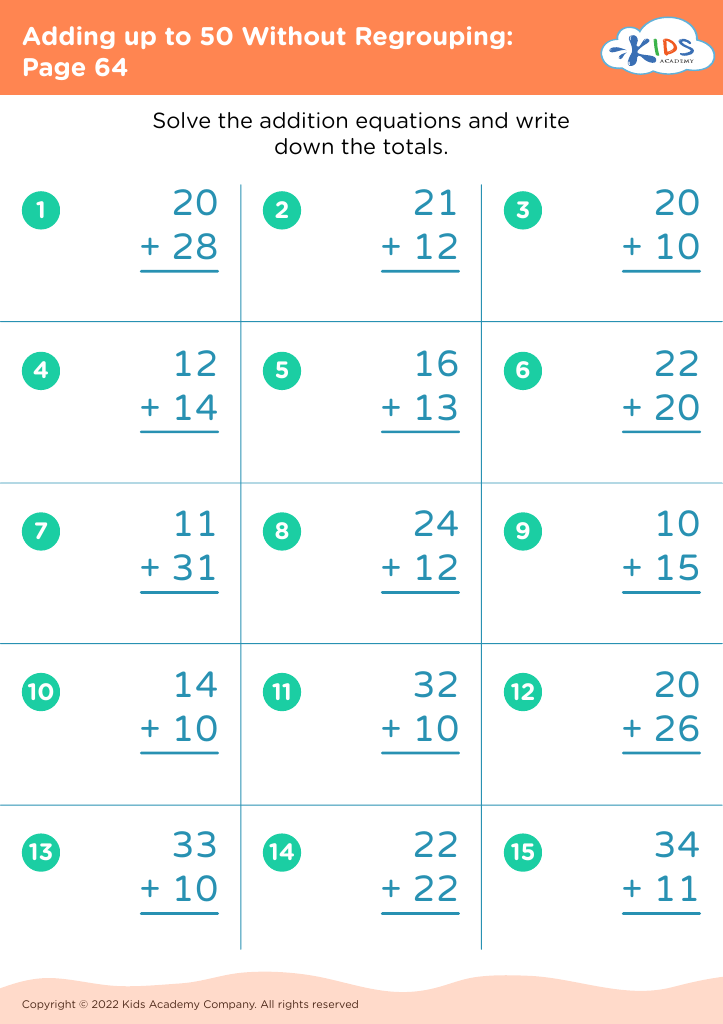
Help your kids become better at identifying bees and math with this worksheet! It features pictures of bees for your child to point out, as well as numbers to add up and circle to make the two sides equal. Let them having fun learning and watching bees flit around the flowers.
Enrichment: Bees and Flowers Worksheet
Worksheet
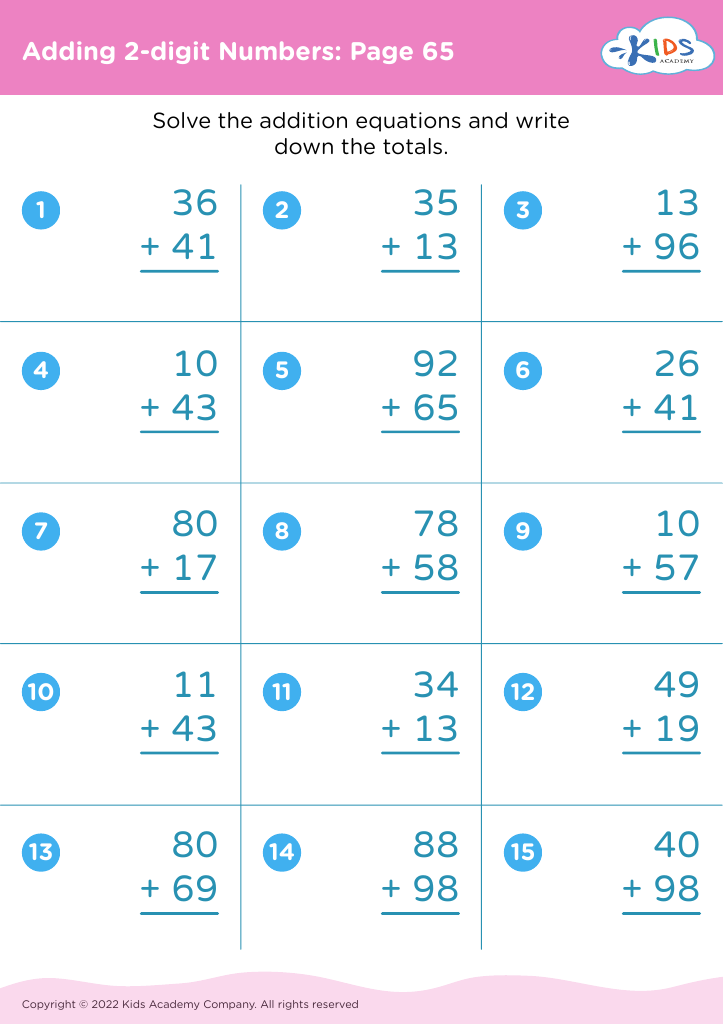
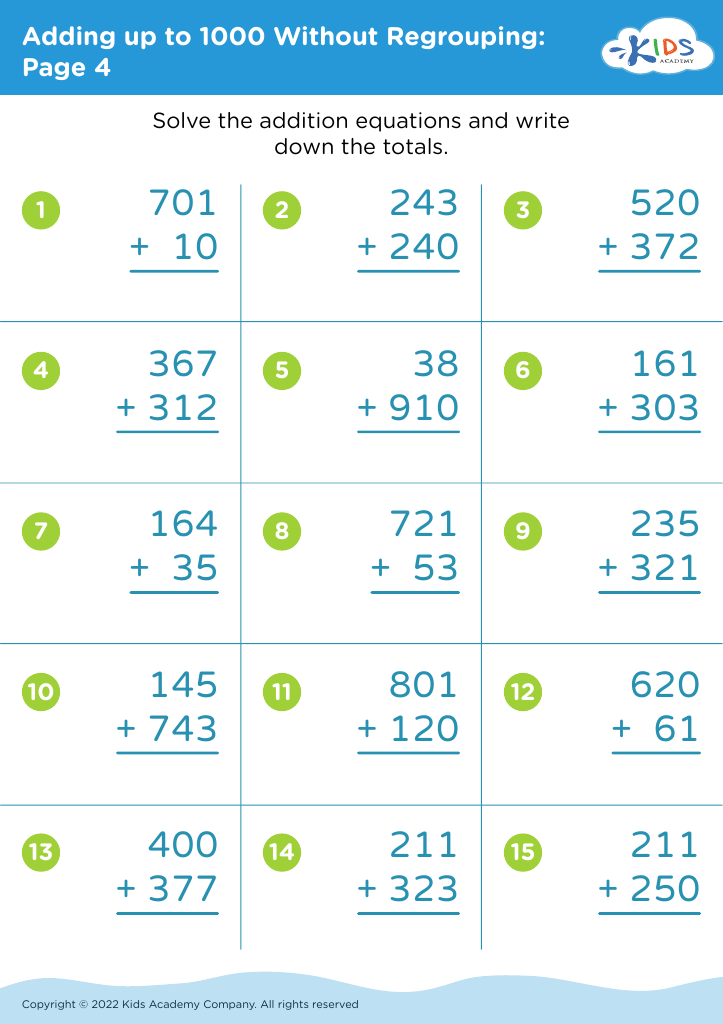
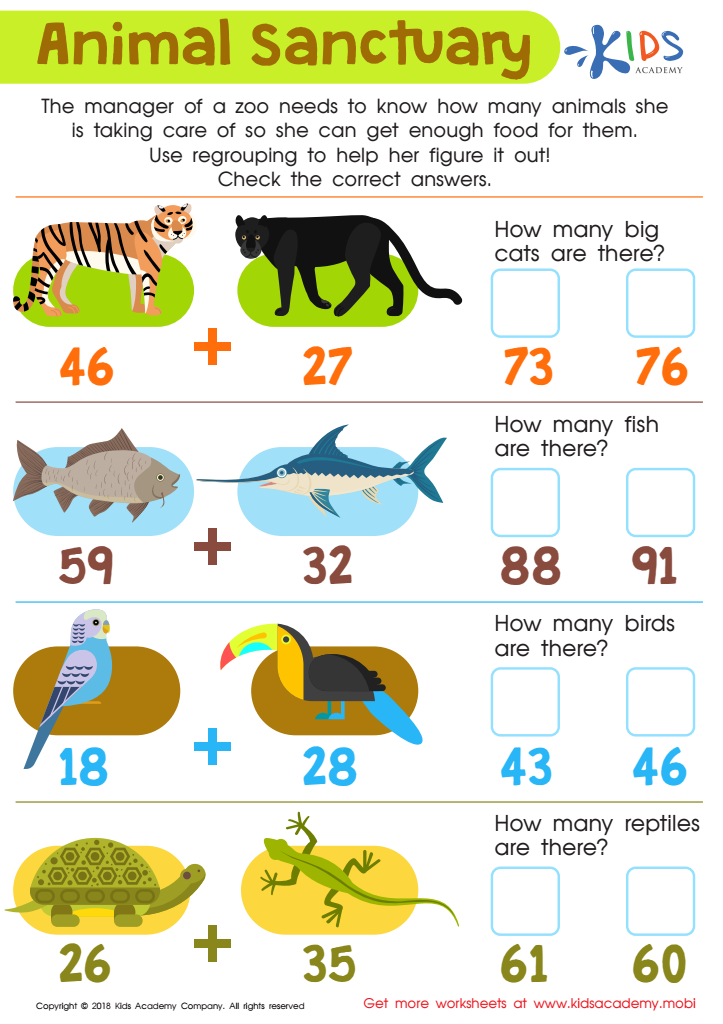
Animal Sanctuary Worksheet
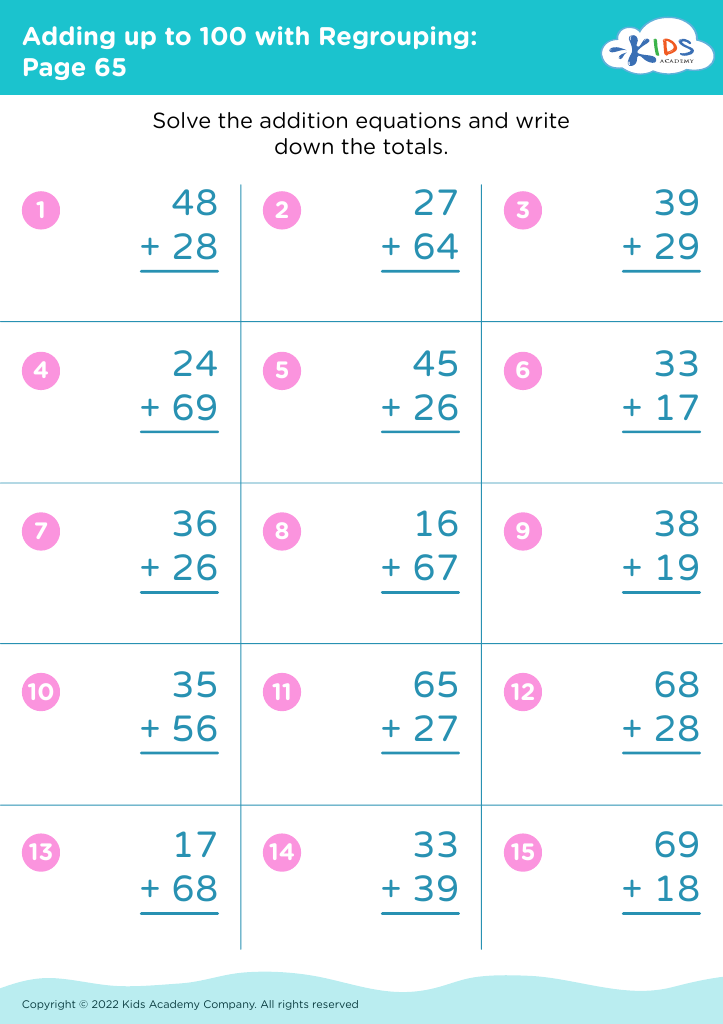
Do your kids love visiting the zoo? Ask which animals they remember & which ones they liked the most. The manager needs help to get enough food for all the animals. Help your child use regrouping to figure out how many animals there are. And ask them to check the answers.
Animal Sanctuary Worksheet
Worksheet
Join Kids Academy for Free
Who is primarily going to use this learning content?








Vocabulary expansion in the context of addition and subtraction for children aged 8-9 is crucial for several reasons. Firstly, this age group is often transitioning from concrete operations to more abstract thinking, making it essential for them to comprehend mathematical language. Understanding terms like “sum,” “difference,” “addend,” and “balance” can enhance their ability to grasp mathematical concepts and solve problems effectively.
Moreover, a rich vocabulary in mathematics promotes better communication skills. Children who can articulate their thought processes are more likely to engage in discussions, ask questions, and collaborate with peers, fostering a deeper understanding of the material.
In addition, expanding vocabulary helps children connect math to real-life situations, making learning more relatable and enjoyable. When children can describe their mathematical thoughts in more sophisticated language, they gain confidence and are more likely to tackle complex problems.
Finally, strong vocabulary skills correlate with overall academic success. Parents and teachers who emphasize vocabulary in math ensure that children are not just calculating numbers, but also developing critical thinking and reasoning skills that are vital across all subject areas. Supporting vocabulary development is integral to nurturing well-rounded, confident, and competent learners.








