Drawing skills Addition Worksheets for Ages 8-9
6 filtered results
-
From - To
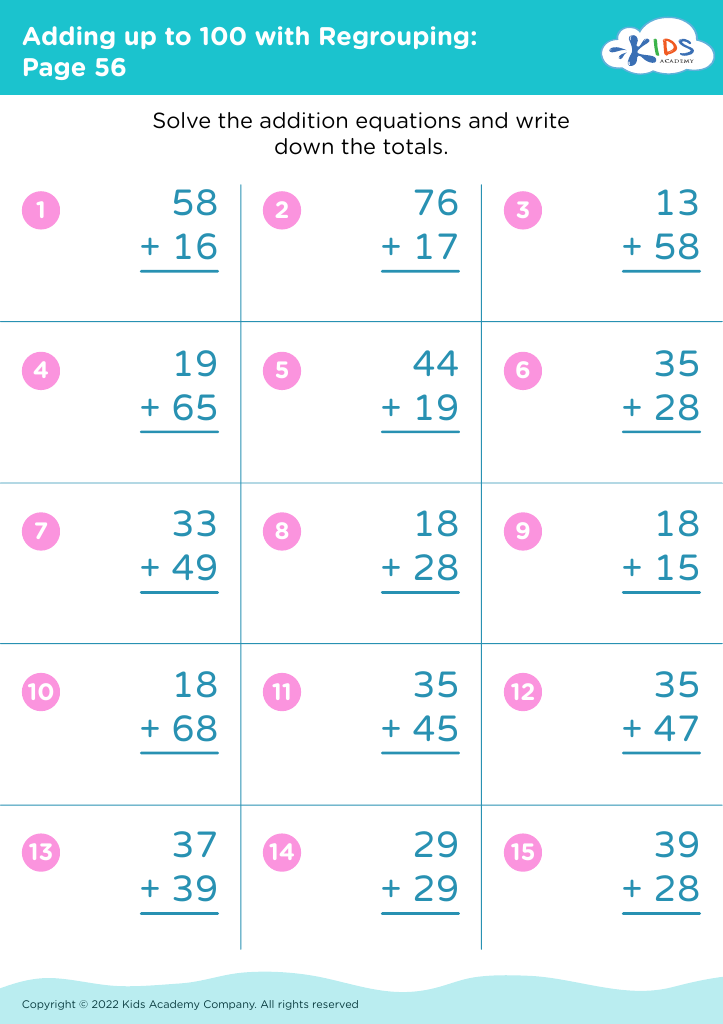
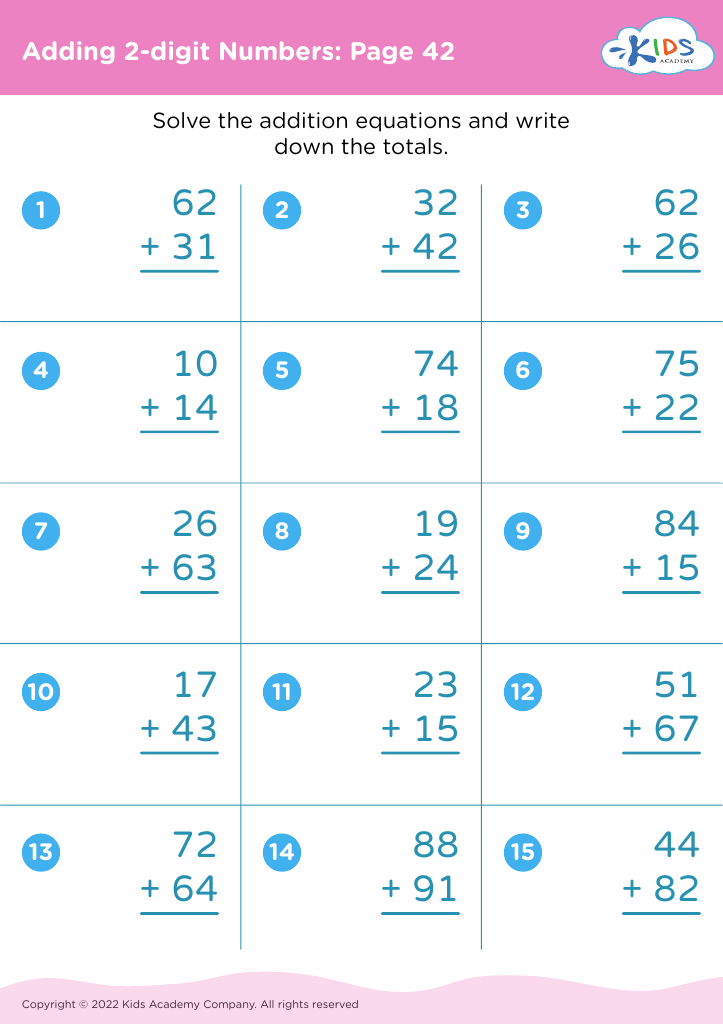
Enhance your child's addition and drawing skills with our specially designed Addition Worksheets for ages 8-9. These engaging worksheets combine fun, creativity, and learning, encouraging children to solve math problems while expressing their artistic abilities. Each activity integrates addition exercises with drawing prompts, helping to develop both mathematical and fine motor skills. Perfect for home or classroom use, our worksheets make learning enjoyable and effective for young learners. Visit Kids Academy to download content-rich, expertly crafted worksheets that inspire confidence and academic growth in your child. Let their imagination and math prowess flourish together!
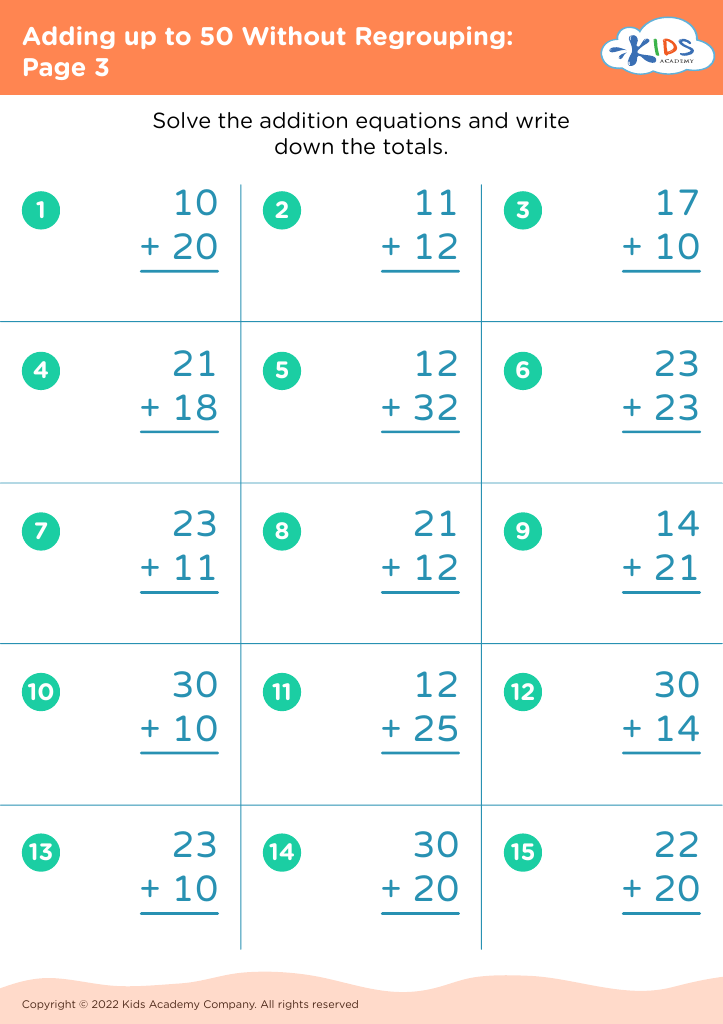
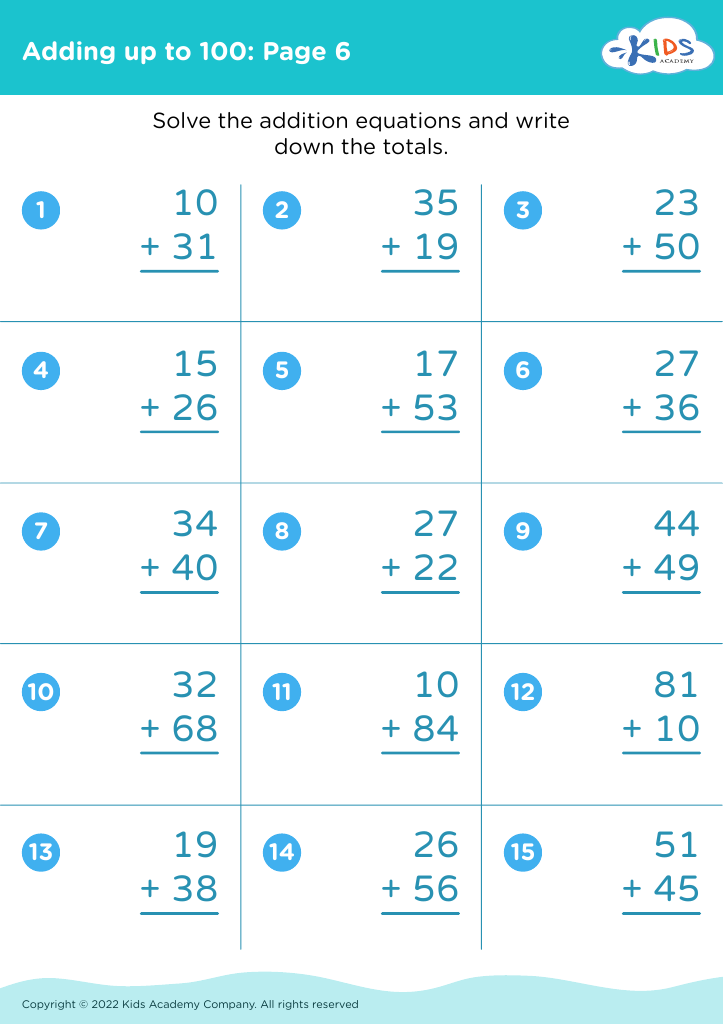
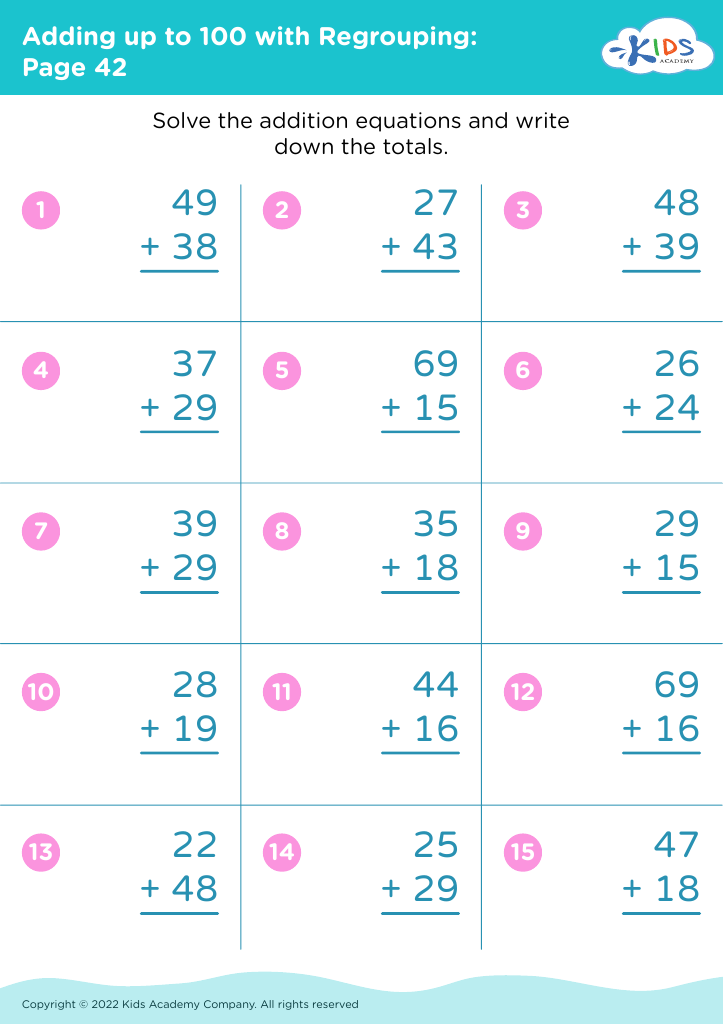
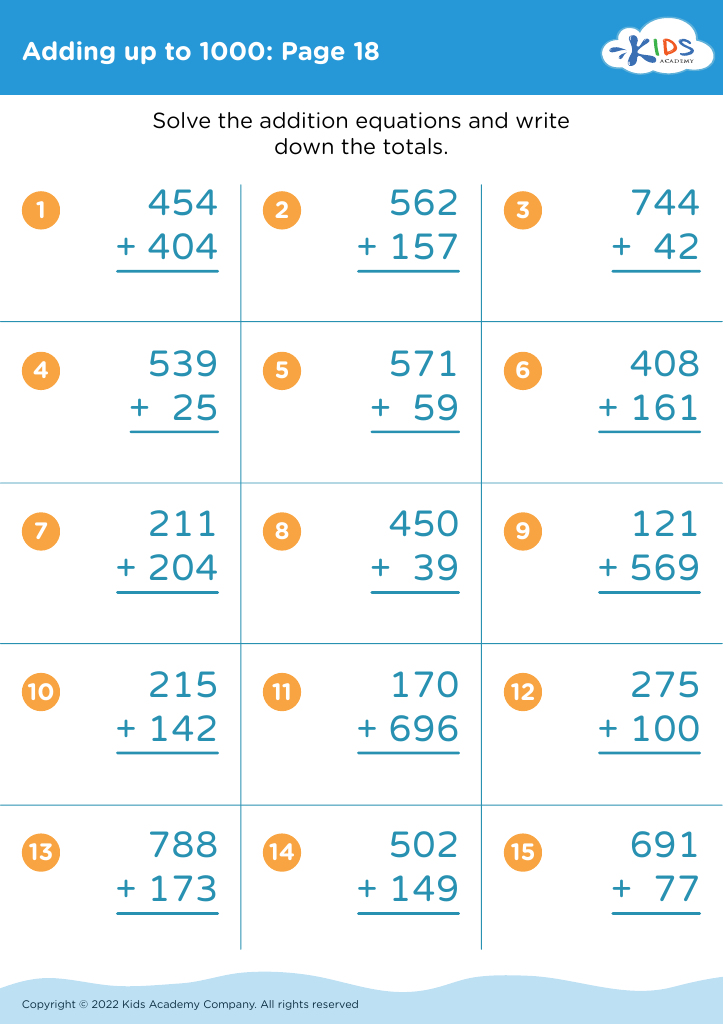








At ages 8-9, children are at a vital stage of cognitive, emotional, and motor skill development. Enhancing drawing skills at this stage not only fosters creativity but also plays a key role in their overall growth. Firstly, drawing sharpens fine motor skills, crucial for writing and managing daily tasks. Engaging in drawing activities strengthens hand-eye coordination and dexterity, laying a strong foundation for other academic and athletic pursuits.
Secondly, drawing acts as a unique communication tool, especially for children who feel more comfortable expressing themselves through images rather than words. It allows them to convey emotions, ideas, and experiences that they may struggle to articulate verbally, nurturing their emotional intelligence and helping educators and parents understand their inner world better.
Additionally, drawing helps improve concentration and patience. As children plan and execute their drawings, they learn to focus on tasks and develop a sense of accomplishment upon completion. This accomplishment boosts their self-esteem and nurtures a positive attitude towards learning.
Cognitively, drawing stimulates the brain, enhancing imagination and problem-solving abilities. It encourages children to observe, remember, and visualize spatial relationships, which are essential skills in subjects such as math and science. Overall, emphasizing drawing skills enriches a child’s developmental journey, making it a worthy addition to their education.








