Handwriting improvement Addition Worksheets for Ages 8-9
4 filtered results
-
From - To
Enhance your child's handwriting skills while mastering addition with our engaging Handwriting Improvement Addition Worksheets for Ages 8-9. Designed for young learners, these printable worksheets combine fun with fundamental math practice, promoting better writing techniques in tandem with arithmetic skills. Each sheet features clear instructions and engaging designs that captivate children’s interest, ensuring they stay motivated while improving their precision and penmanship. Ideal for homework, classroom activities, or at-home learning, these worksheets foster confidence and competence in both math and handwriting. Support your child's academic growth today as they learn to express numbers neatly and accurately!
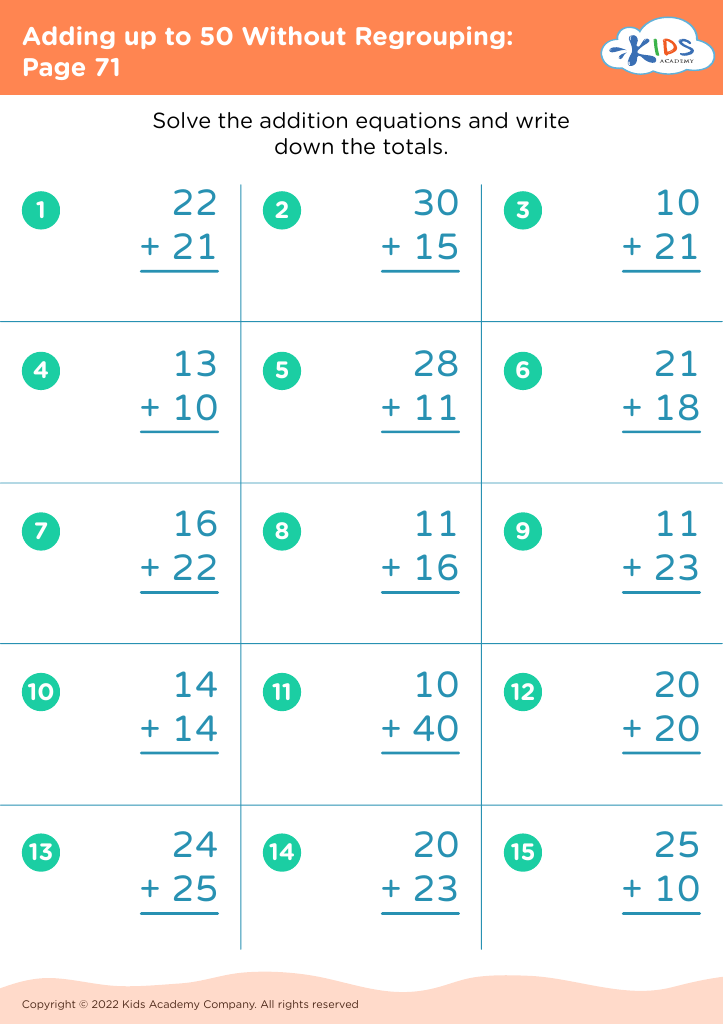
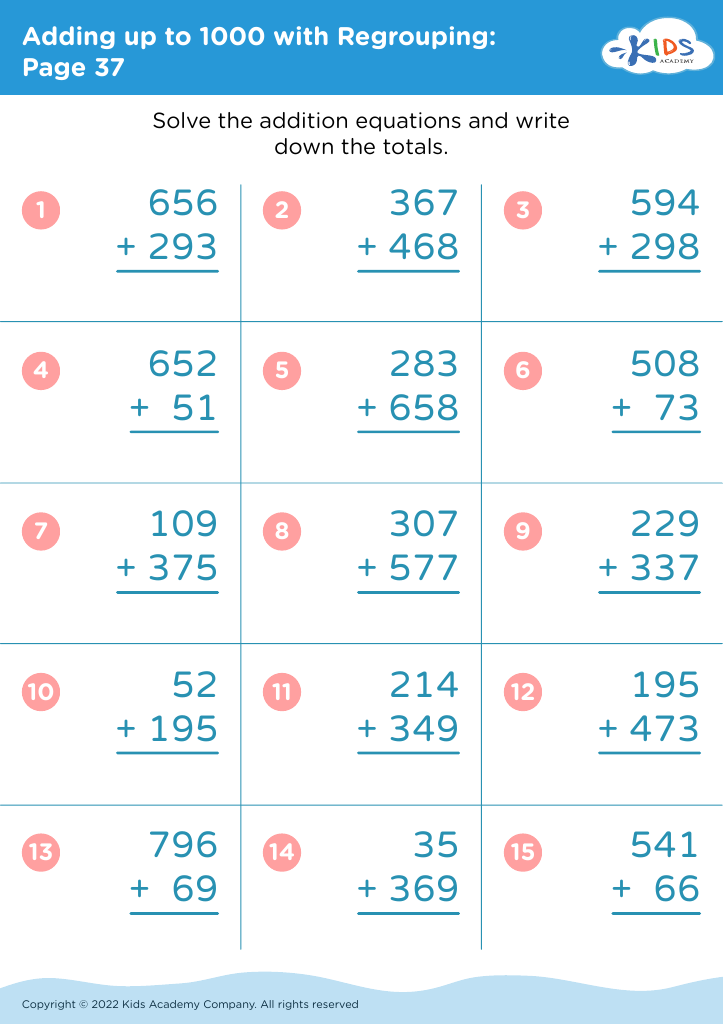
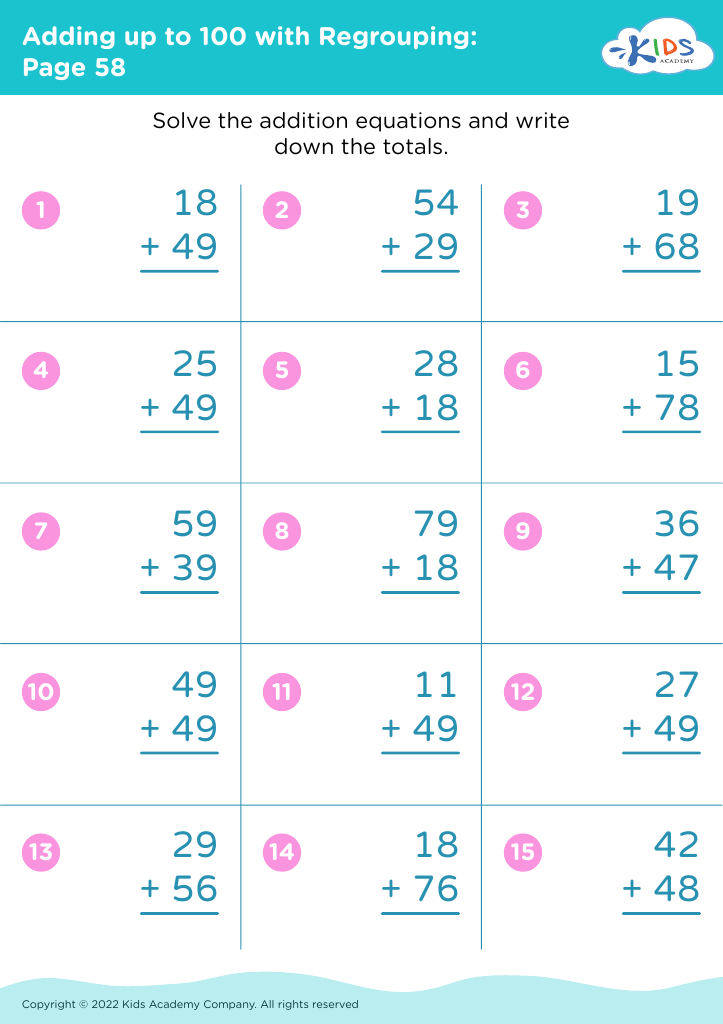
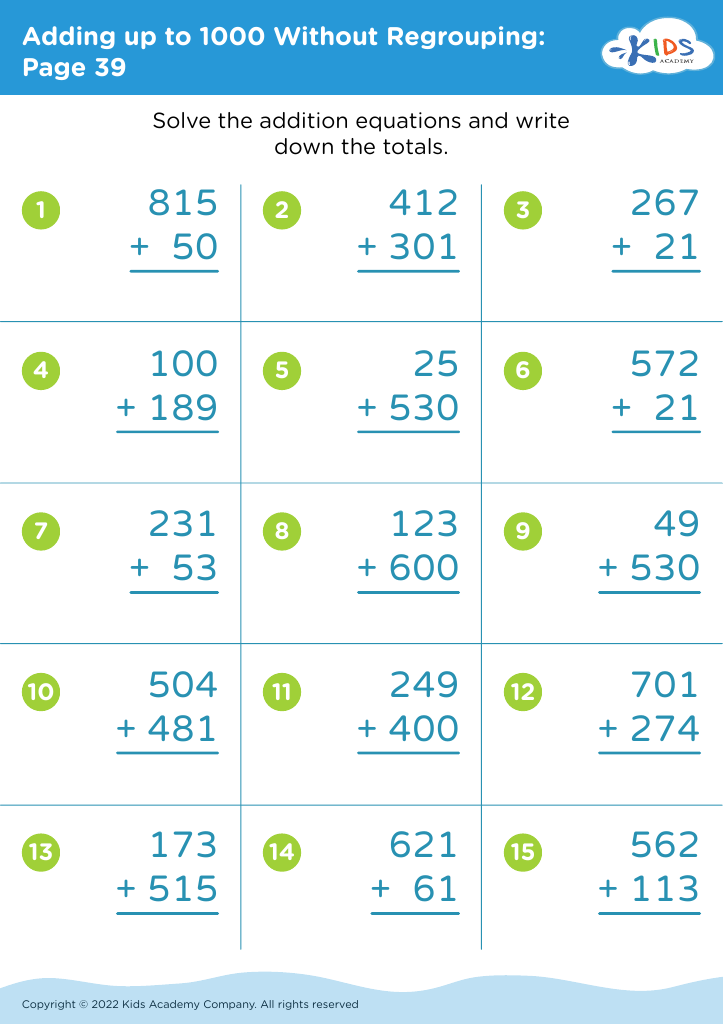








Handwriting development is a crucial skill for children aged 8-9, and both parents and teachers should prioritize its improvement for several reasons. First, legible handwriting enhances a child's ability to communicate effectively. As they progress academically, clear writing becomes essential for expressing ideas in assignments, tests, and creative work.
Additionally, good handwriting promotes confidence. Children who can easily and neatly express their thoughts on paper often feel more capable and self-assured. If handwriting struggles persist, it can lead to frustration and reluctance to participate in writing-intensive tasks.
Another important factor is the cognitive connection between handwriting and learning. Research shows that writing by hand can reinforce memory and understanding, as it requires active engagement with the material. Overall motor skills, coordination, and focus also benefit from regular handwriting practice.
Moreover, in an increasingly digital age, the value of handwriting shouldn’t be underestimated. Proficiency ensures that children can navigate both traditional and contemporary forms of communication. Lastly, cultivating good handwriting habits early can set the foundation for future academic success and lifelong skills. Thus, parents and teachers play a vital role in supporting and nurturing children's handwritten expression at this developmental stage.








