
Multiplication practice Addition Worksheets for Ages 8-9
3 filtered results
Difficulty Level
Grade
Age
-
From - To
Subject
Activity
Standards
Elevate your child’s math skills with our "Multiplication Practice Addition Worksheets" tailored for ages 8-9. These carefully designed worksheets seamlessly blend multiplication and addition, fostering essential learning skills in a fun, engaging way. Each worksheet offers a variety of exercises that challenge young minds, reinforce foundational math concepts, and improve problem-solving abilities. Perfect for both classroom use and homeschool settings, our high-quality, printable worksheets help students build confidence and proficiency in math. Boost your child’s math performance and turn learning into an exciting adventure with Kids Academy!
Favorites
With answer key
Interactive
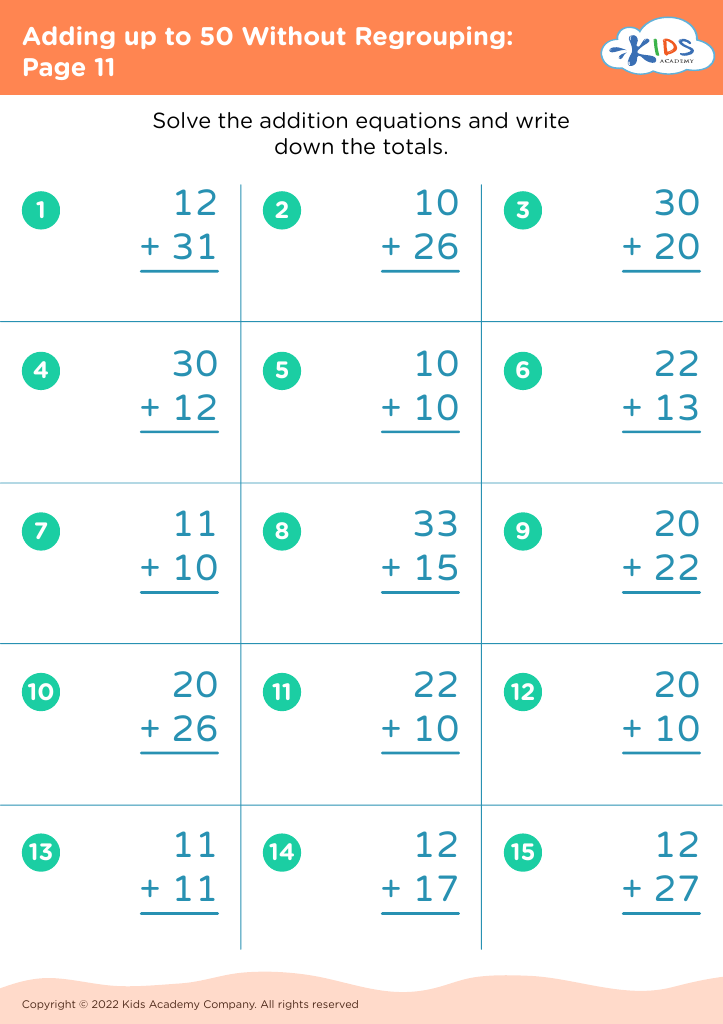
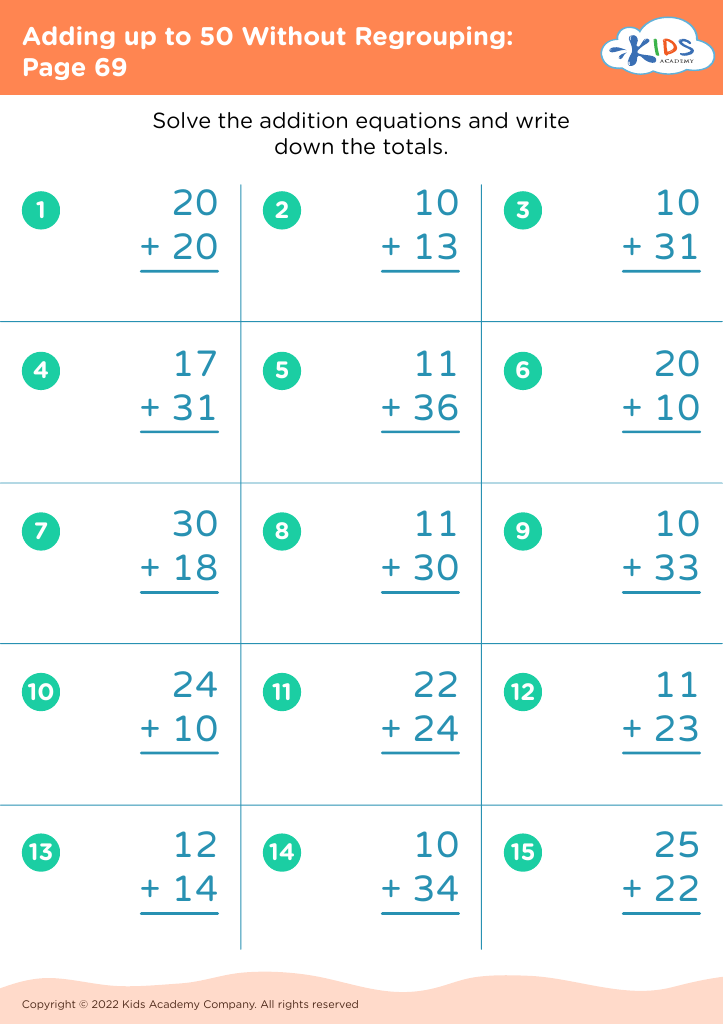
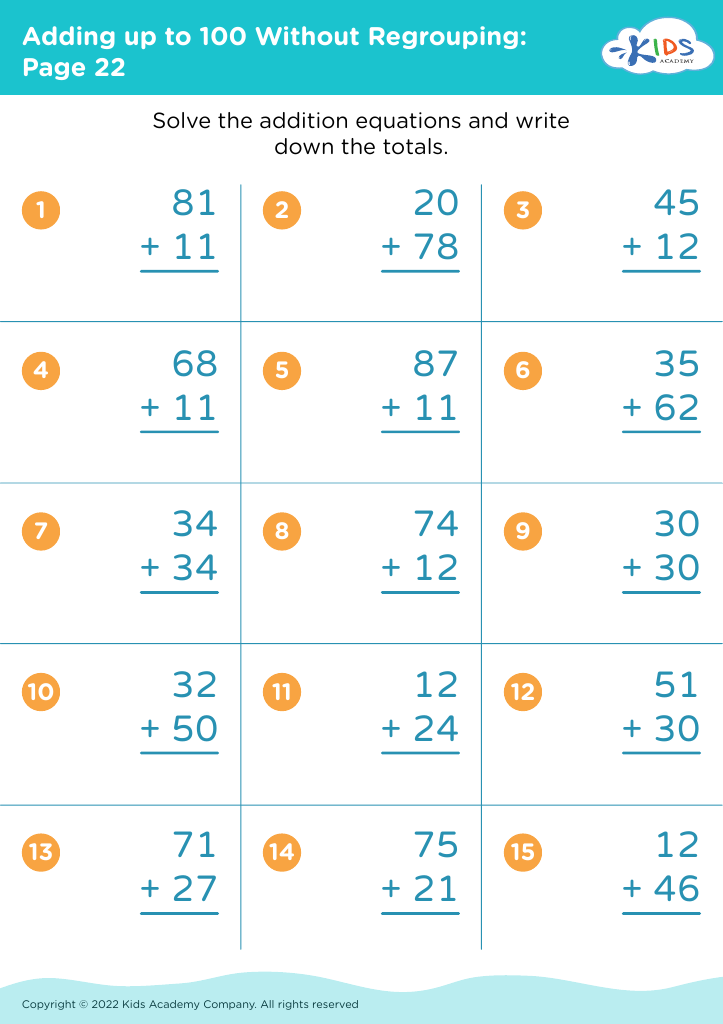
Join Kids Academy for Free
Who is primarily going to use this learning content?








Multiplication and addition are foundational mathematical operations that lay the groundwork for more advanced math concepts. For children aged 8-9, mastering these skills is crucial as they enter key stages of cognitive development. Effective multiplication and addition practice helps enhance computational fluency, which is the ability to solve arithmetic problems quickly and accurately.
Parents and teachers should prioritize multiplication and addition practice for several reasons. Firstly, fluency in these operations builds confidence and reduces math anxiety in children. A strong math foundation fosters a positive attitude towards learning, which can lead to better overall academic performance.
Secondly, proficiency in these basic mathematical concepts is essential for understanding more complex subjects such as fractions, division, and algebra. For example, multiplication is not just repetitive addition; it underpins various aspects of math like scaling and area calculation. Therefore, when children are comfortable with these basics, they can tackle more challenging problems with ease.
Moreover, real-world applications of math are everywhere. Skills like budgeting, cooking, and even playing certain games require a good understanding of basic arithmetic. By ensuring students get enough practice, parents and teachers are preparing them for these practical, everyday situations.
In summary, regular multiplication and addition practice for ages 8-9 helps to build a solid mathematical foundation, boosts confidence, and prepares children for both academic challenges and real-life applications.








