
Number comprehension Addition Worksheets for Ages 8-9
5 filtered results
Difficulty Level
Grade
Age
-
From - To
Subject
Activity
Standards
Explore our engaging Number Comprehension Addition Worksheets designed for children ages 8-9. These worksheets enhance fundamental math skills through fun activities that foster a deep understanding of number concepts and addition strategies. Challenge your students with exercises that promote critical thinking and problem-solving abilities while reinforcing their knowledge in a dynamic way. Ideal for classroom use or homeschooling, these resources are tailored to meet the developmental needs of young learners. Each worksheet is crafted to inspire confidence in math skills and encourage a love for learning. Download our worksheets today and prepare your students for mathematical success!
Favorites
With answer key
Interactive
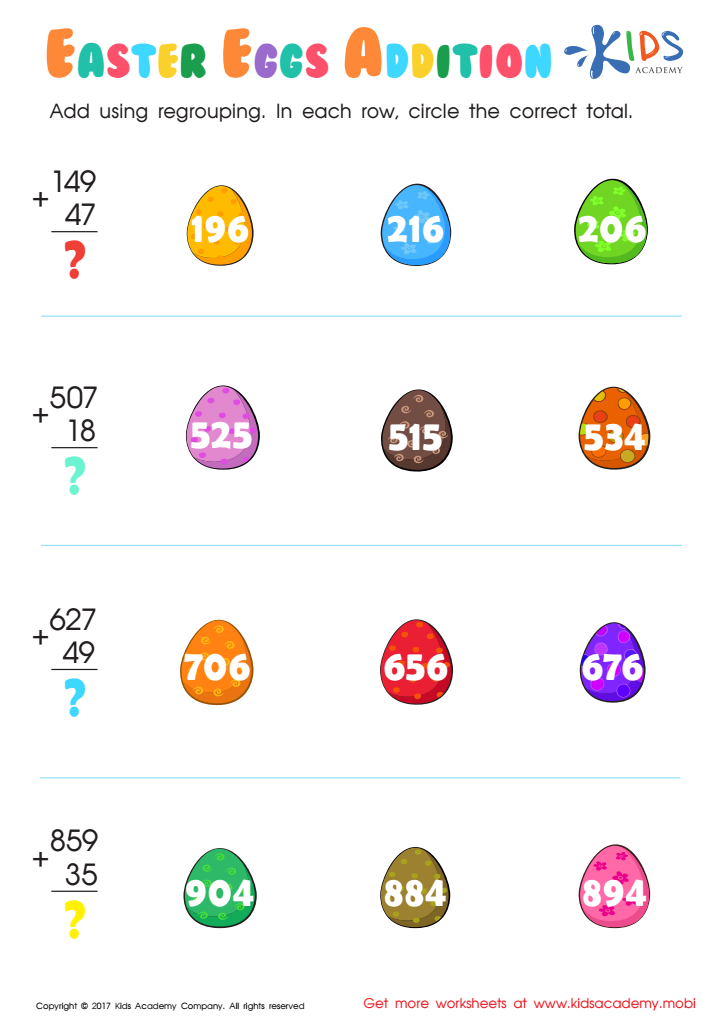
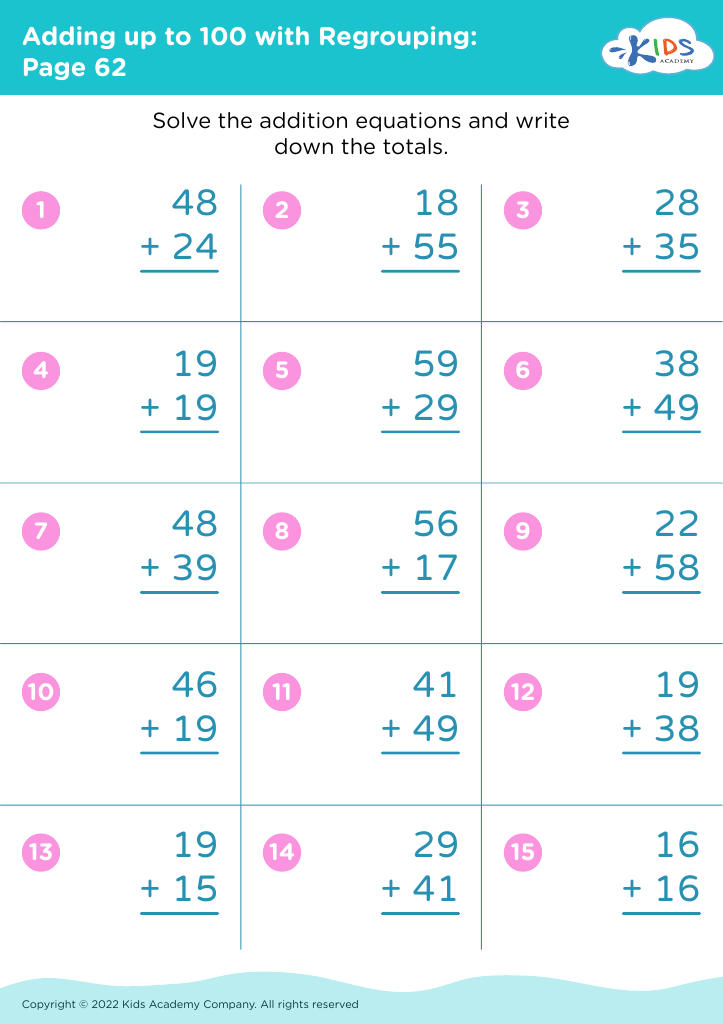
Addition with Regrouping Worksheet
Try this fun holiday-themed addition with regrouping worksheet! Kids can practice adding while regrouping using bright, colorful holiday images. It's a great way to make math exciting, and keep their interest piqued!
 Assign to My Students
Addition with Regrouping Worksheet
Worksheet
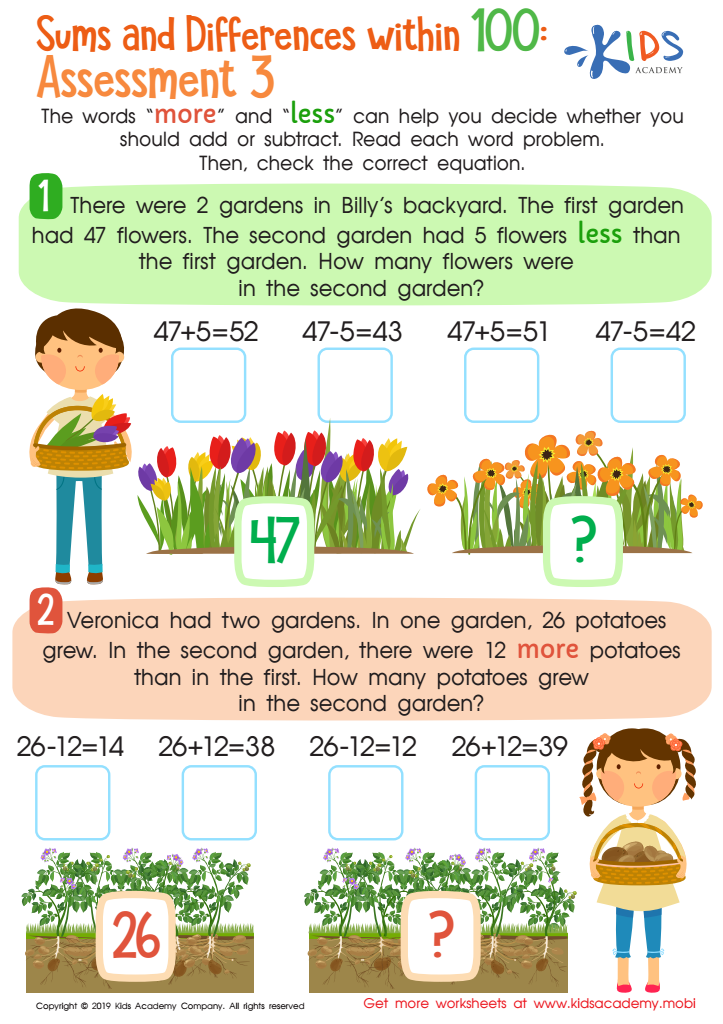
Sums and Differences Within 1 - Assessment 1 Worksheet
Help your child understand school topics better with your assistance. For math, go over their worksheet together and discuss the instructions and text. Solve the questions and check the right equation. This will take their learning to the next level.
Sums and Differences Within 1 - Assessment 1 Worksheet
Worksheet
Join Kids Academy for Free
Who is primarily going to use this learning content?




.jpg)



Parents and teachers should prioritize number comprehension and addition for children aged 8-9 because this foundational skill is vital for academic success and everyday problem-solving. At this age, children transition from simple arithmetic to more complex mathematical concepts, and a solid grasp of addition provides the groundwork for understanding larger numbers, fractions, and multiplication.
Mastering addition helps children develop critical thinking and reasoning skills, enhancing their confidence and motivation in mathematics. It aids them in recognizing patterns and relationships within numbers, fostering a deeper mathematical understanding that extends beyond rote memorization. Furthermore, children often encounter addition in real-life situations, such as budgeting, shopping, or cooking, highlighting its practical importance.
Additionally, strong number comprehension at this age promotes literacy in math, enabling students to follow instructions and engage in mathematical discussions. It also plays a crucial role in preventing future math anxiety and discouragement that can arise from struggling with fundamental concepts.
By supporting children in building their number comprehension and addition skills, parents and teachers empower them to navigate academic challenges, improve their problem-solving abilities, and prepare for more advanced math topics as they progress in their education. This support ultimately contributes to their overall cognitive development and lifelong learning.








