Numeracy skills Addition Worksheets for Ages 8-9
8 filtered results
-
From - To
Explore our engaging "Numeracy Skills Addition Worksheets" designed specifically for children aged 8-9! These worksheets aim to enhance addition skills through fun and interactive exercises, fostering a solid mathematical foundation. With a range of activities, including word problems, equations, and visual aids, kids will not only practice addition but also develop critical thinking skills. Ideal for both classroom settings and home learning, these printable resources encourage independent learning and boost confidence in problem-solving. Help your child master addition with our easy-to-follow worksheets, perfectly tailored to support their educational journey. Start building essential numeracy skills today!
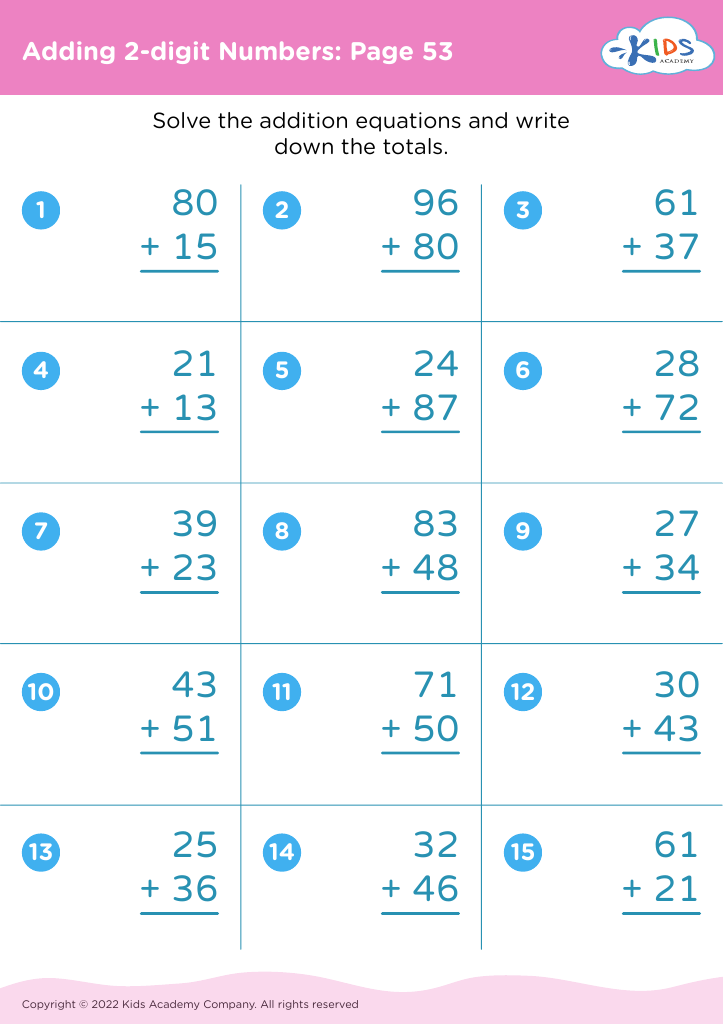
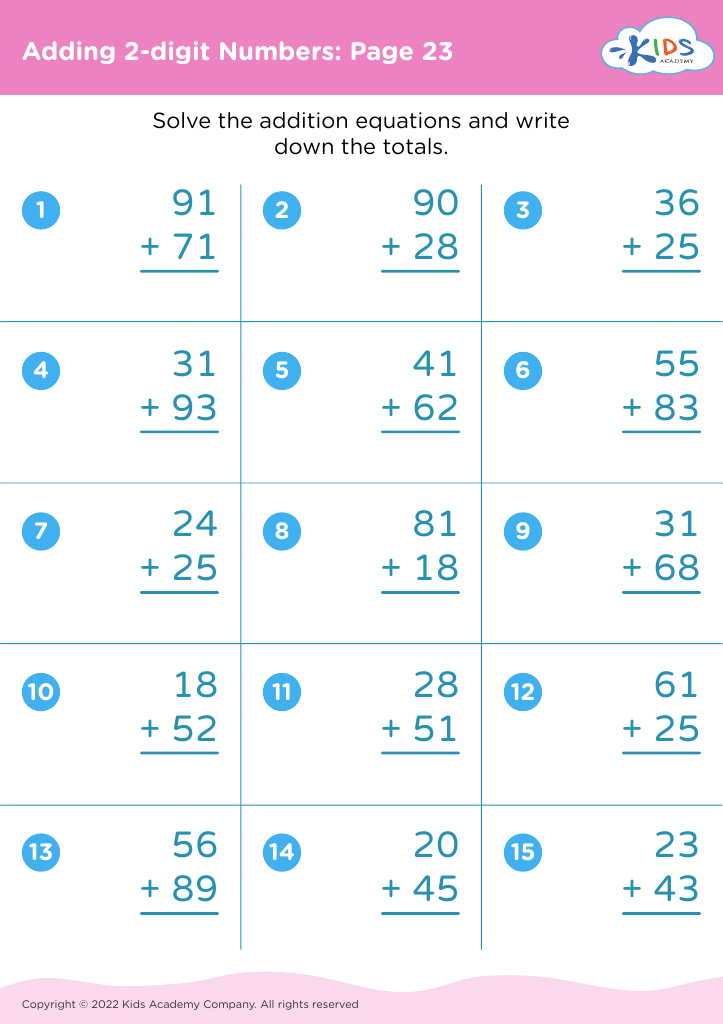
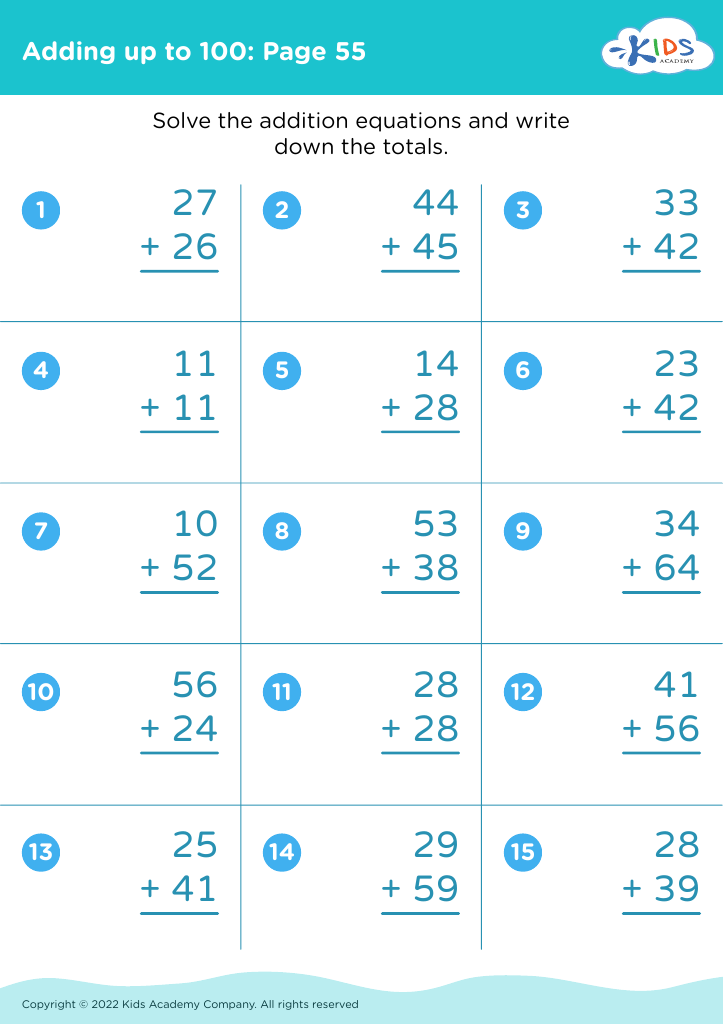
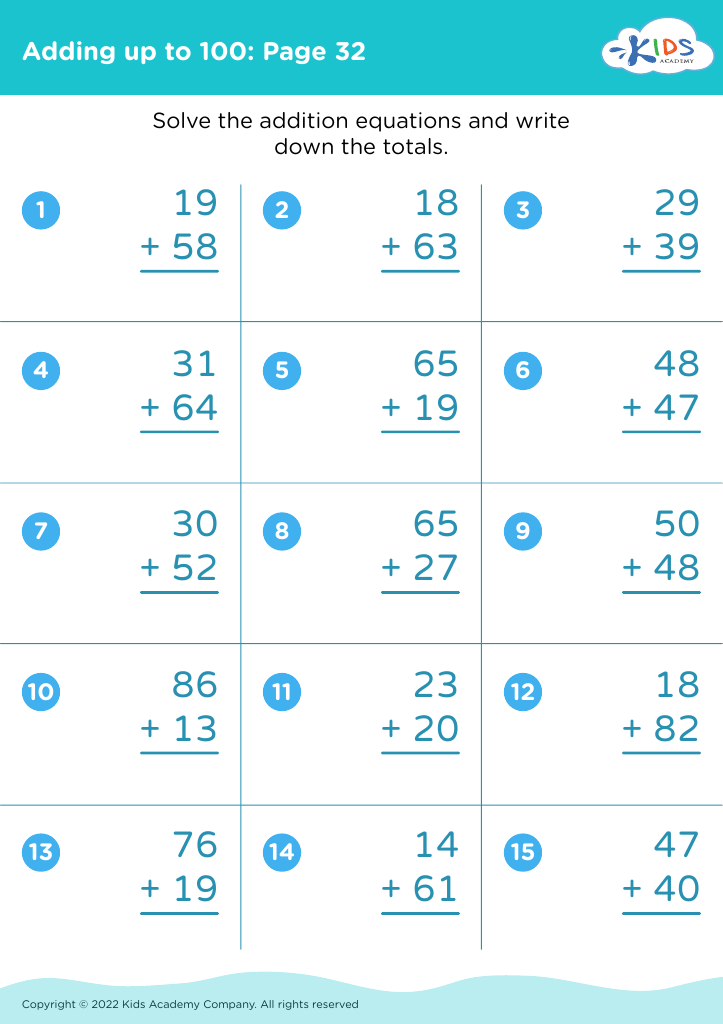
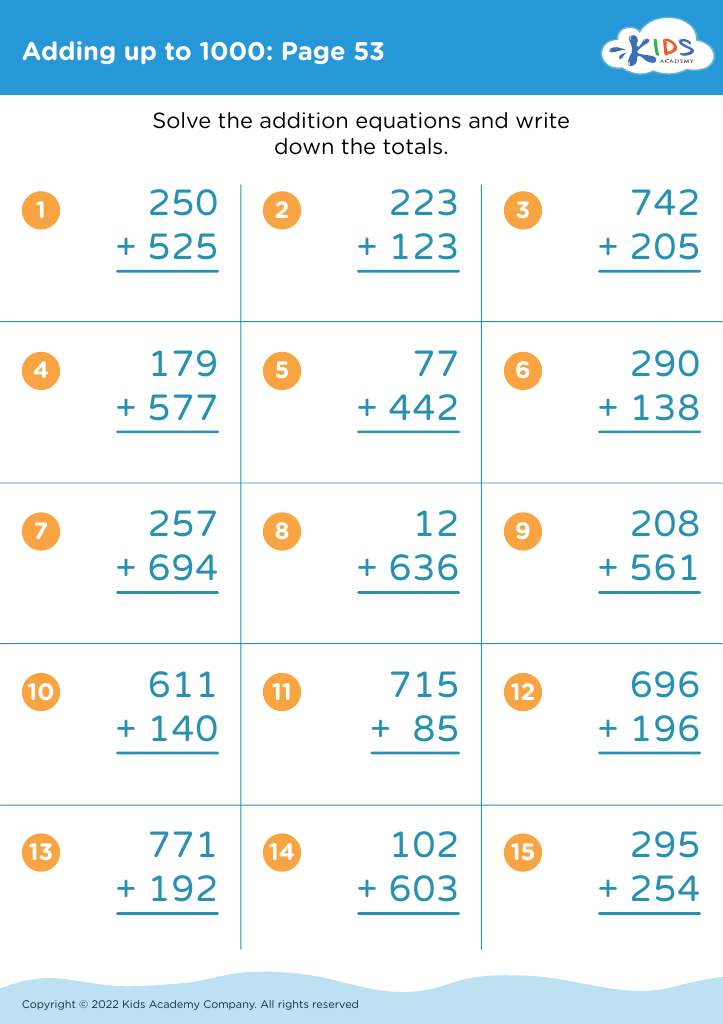
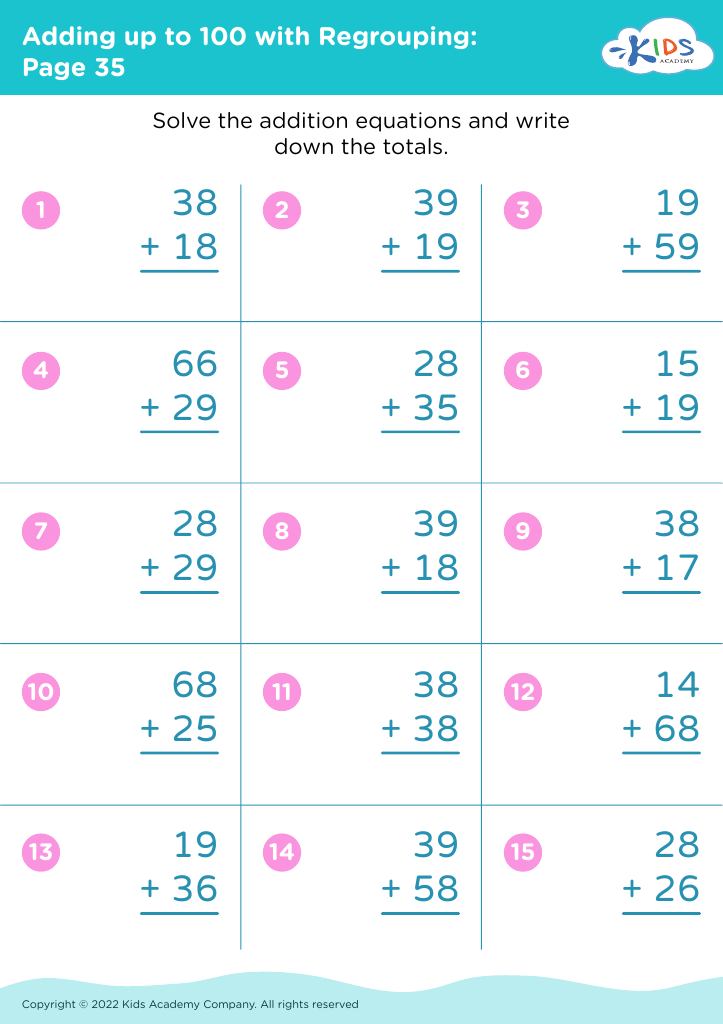
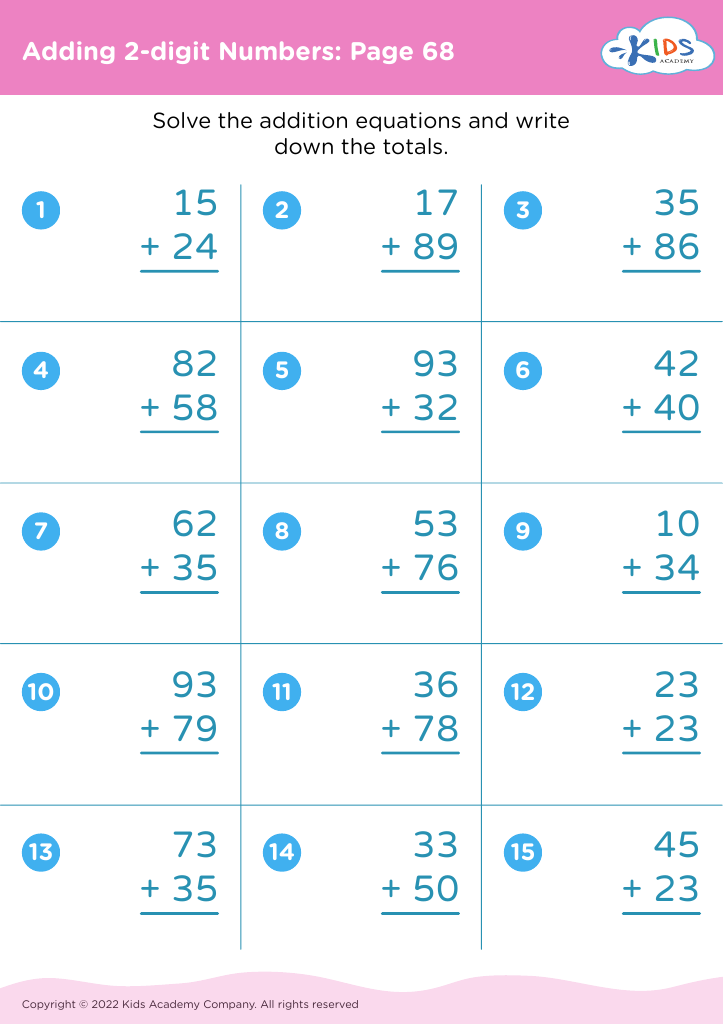
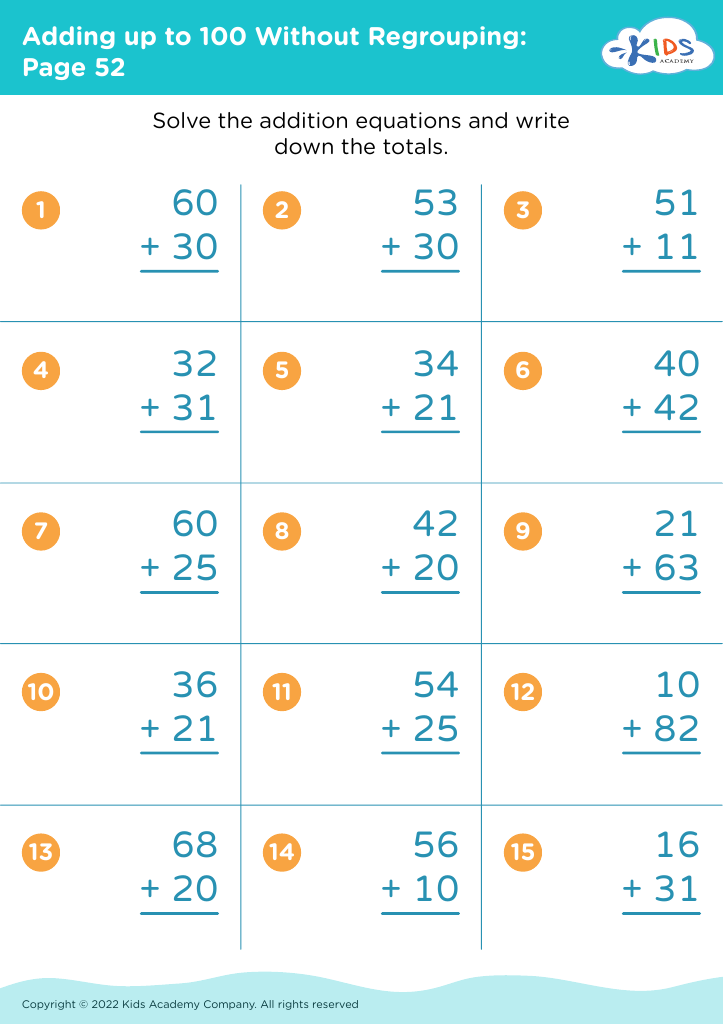








Numeracy skills, particularly in addition, are fundamental for children aged 8-9 as they lay the groundwork for future math concepts and real-life problem-solving. At this age, children transition from basic addition to more complex operations, including multi-digit addition and basic problem-solving strategies.
Understanding addition helps children develop critical thinking skills, enhances their confidence in math, and encourages a positive attitude towards learning. Proficiency in addition is crucial not only for mathematics but is also intertwined with subjects like science and economics, where data analysis and numerical reasoning are essential.
Moreover, by recognizing the importance of addition, parents and teachers can identify any learning gaps early on. This early intervention can foster a strong foundation, ensuring that children are well-prepared for more advanced topics in later grades. Engaging with children through structured activities—such as games, real-world application, and collaborative learning—makes the process enjoyable and effective.
Overall, when parents and teachers prioritize addition skills, they support cognitive development and empower children with necessary tools to navigate an increasingly number-driven world, ultimately aiding their success in both academic and daily scenarios.








