Pattern recognition Addition Worksheets for Ages 8-9
5 filtered results
-
From - To
Discover our engaging Pattern Recognition Addition Worksheets designed for children aged 8-9! These printable resources help students develop critical math skills by identifying patterns in addition problems. With a variety of exercises, kids will enhance their ability to recognize numerical sequences and relationships, making addition more intuitive and enjoyable. Our worksheets not only reinforce math proficiency but also encourage logical thinking and problem-solving abilities. Perfect for classroom activities, tutoring sessions, or at-home practice, these worksheets are a fantastic tool for fostering a love of math in young learners. Explore our collection today to support your child's learning journey!
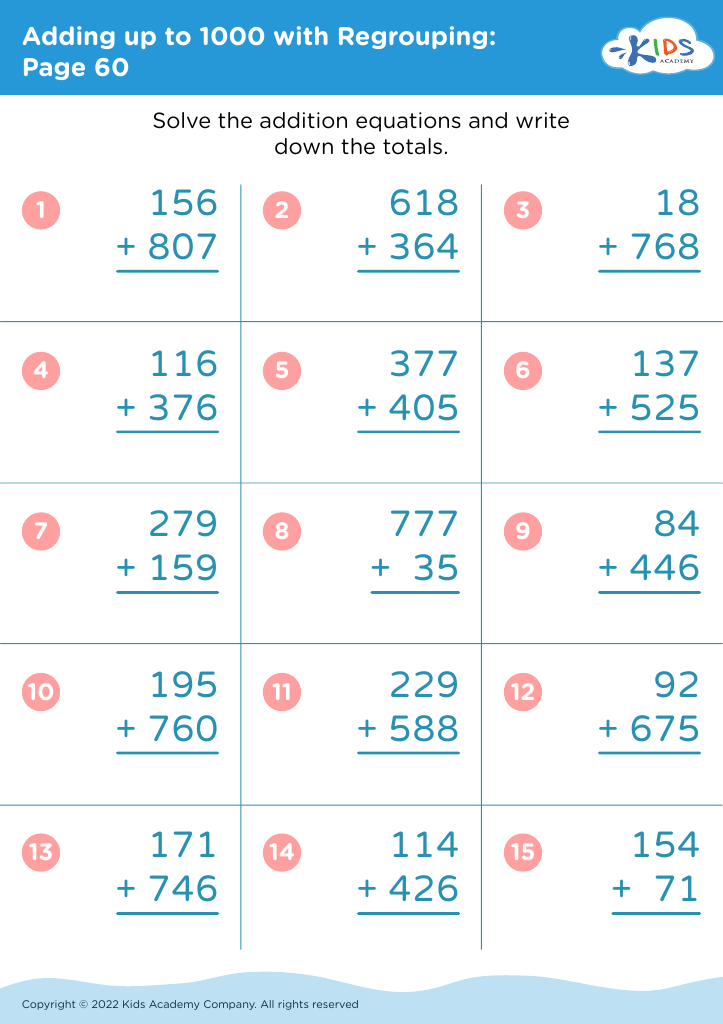
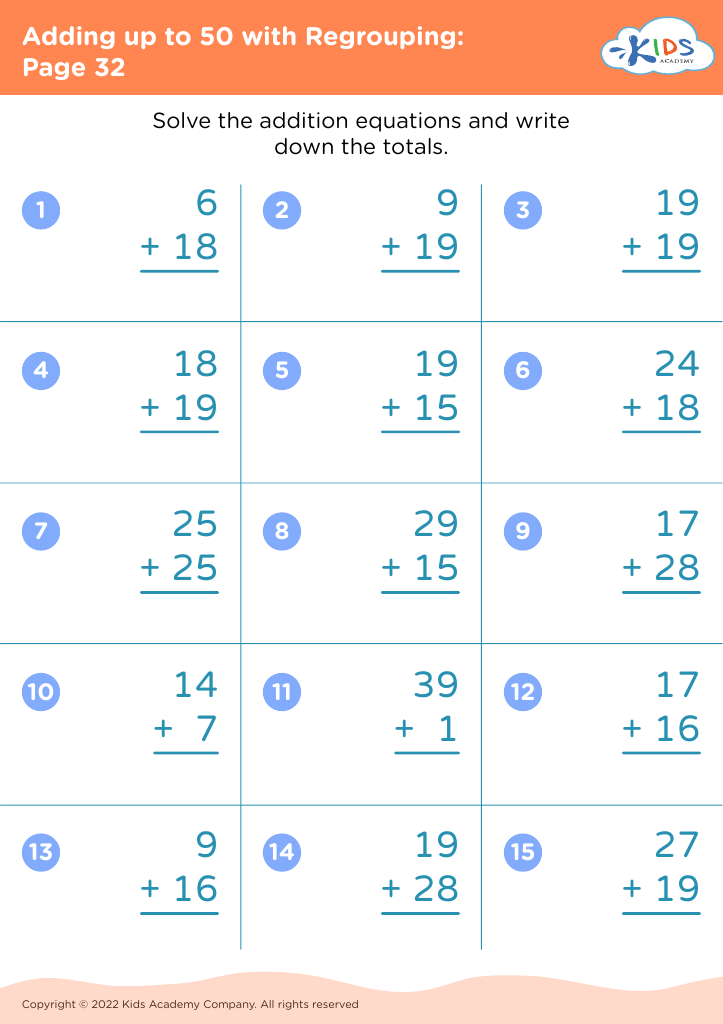
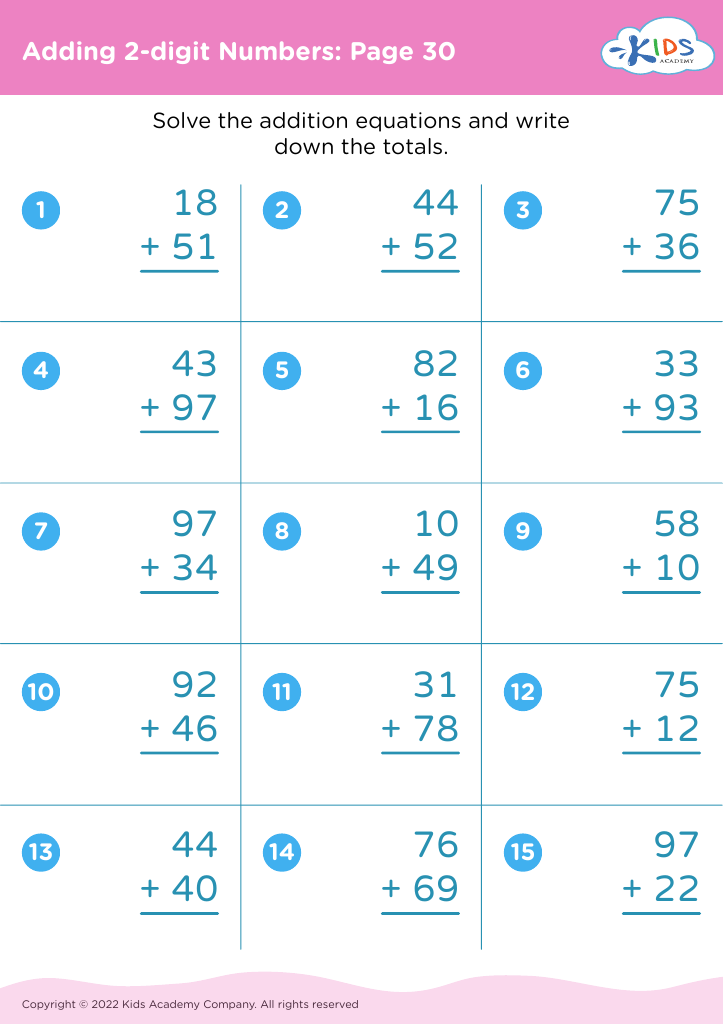
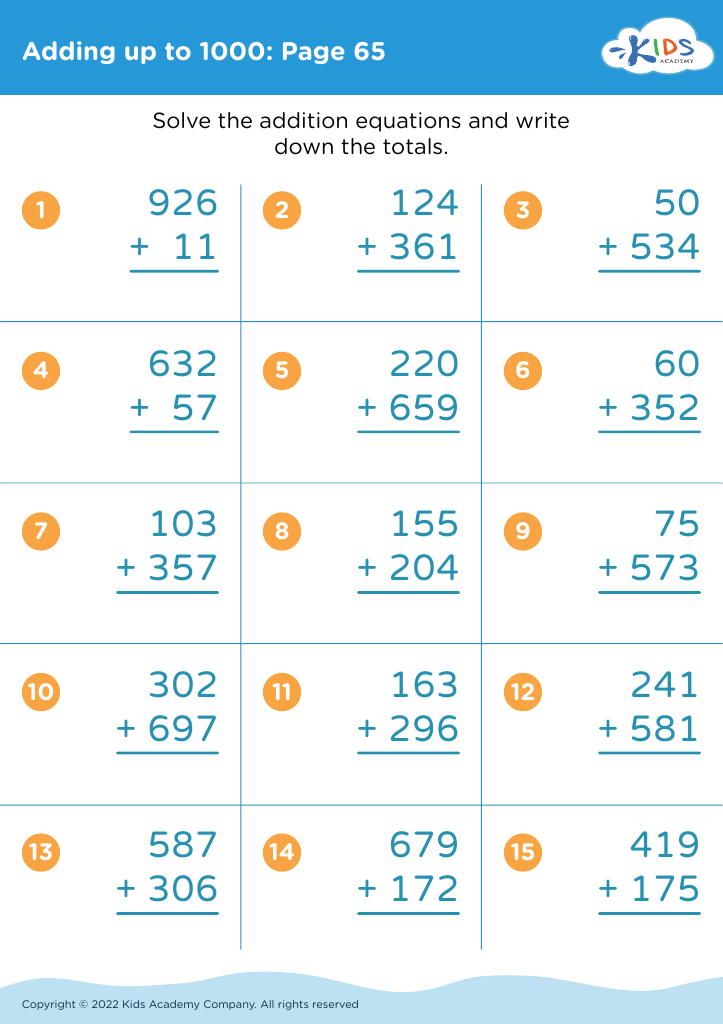
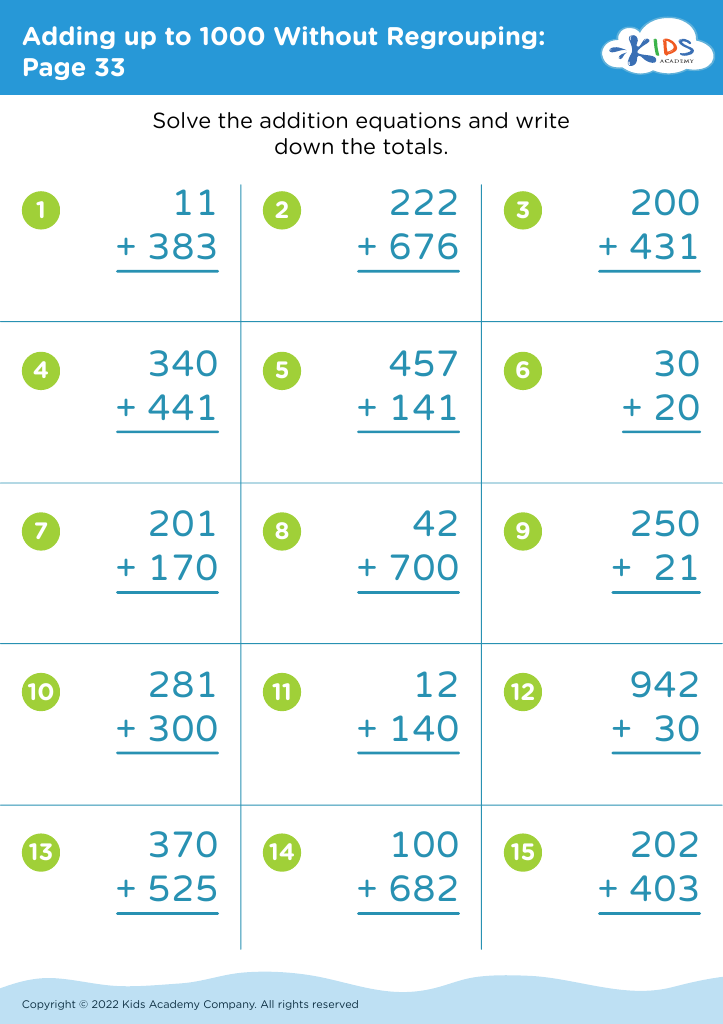








Pattern recognition in addition is a crucial skill for children aged 8-9, and both parents and teachers should prioritize its development. At this stage, children re poised to build a solid foundation in mathematics that will support their future learning. By understanding and recognizing patterns, children can simplify complex problems and make connections between mathematical concepts.
Patterns in addition, such as the use of number sequences, can help students solve problems more efficiently and develop mental math skills. Recognizing patterns also enhances critical thinking and problem-solving abilities, which are essential for academic success across all subjects. When children see numbers in a structured way, they learn to predict outcomes and identify relationships, fostering a deeper understanding of mathematics.
Moreover, pattern recognition can build a child's confidence in math. When they grasp these concepts, they are more likely to engage with math-related tasks and enjoy the learning process. Parents and teachers can support this development through interactive activities, games, and discussions, making learning fun and engaging.
In conclusion, focusing on pattern recognition in addition is not only fundamental for mastering arithmetic but also lays the groundwork for future mathematical proficiency and overall cognitive development.








