Practice addition Addition Worksheets for Ages 8-9
5 filtered results
-
From - To
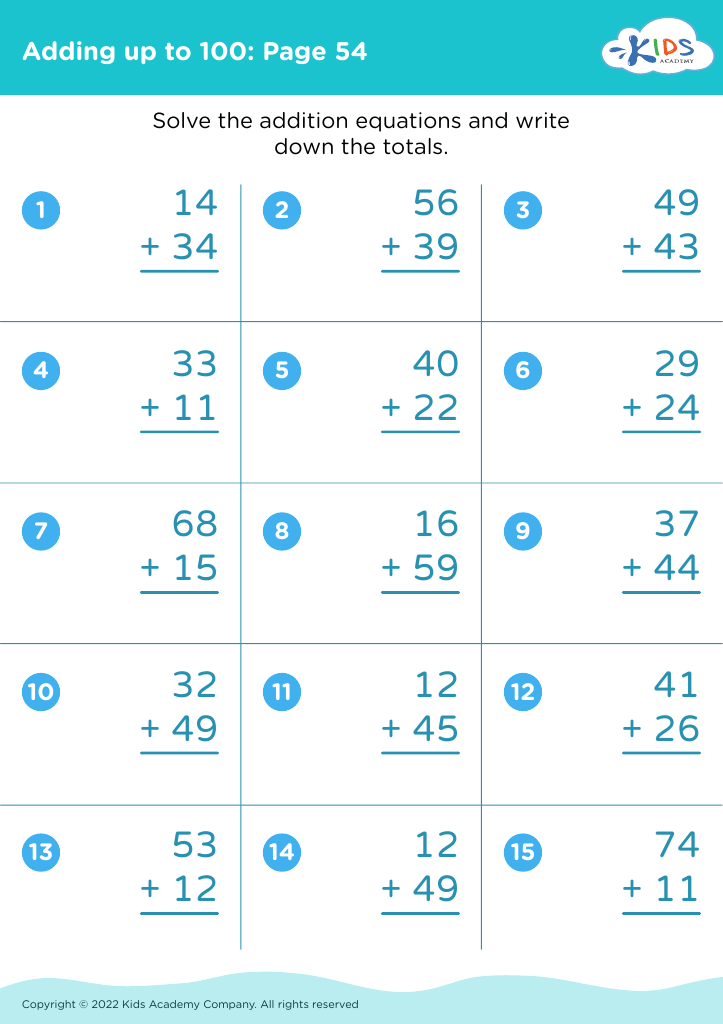
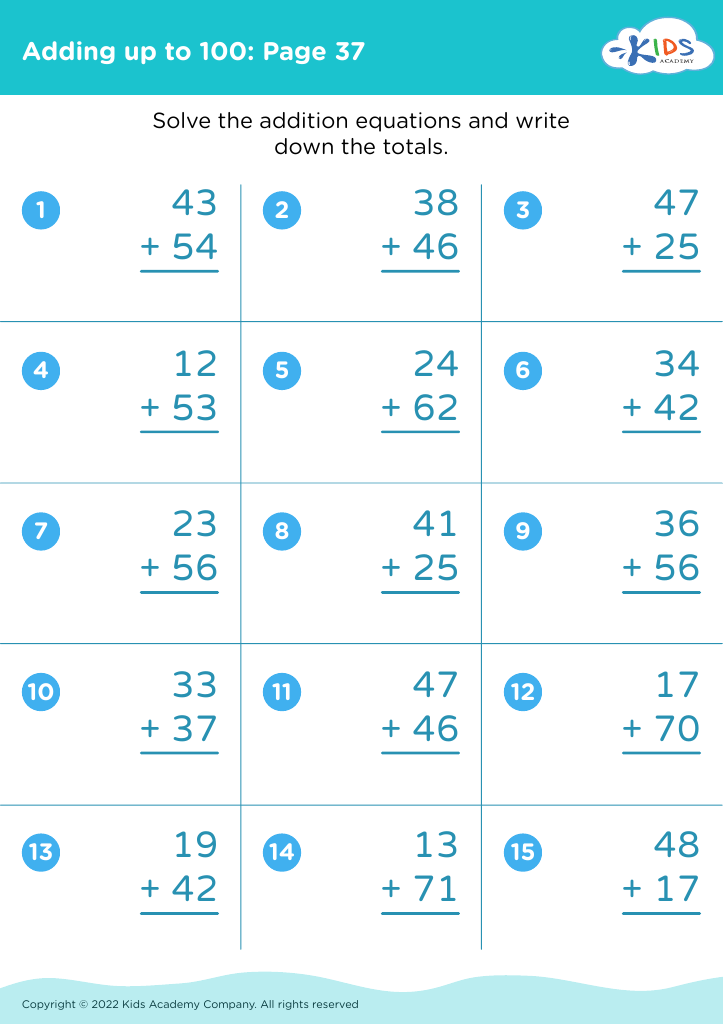
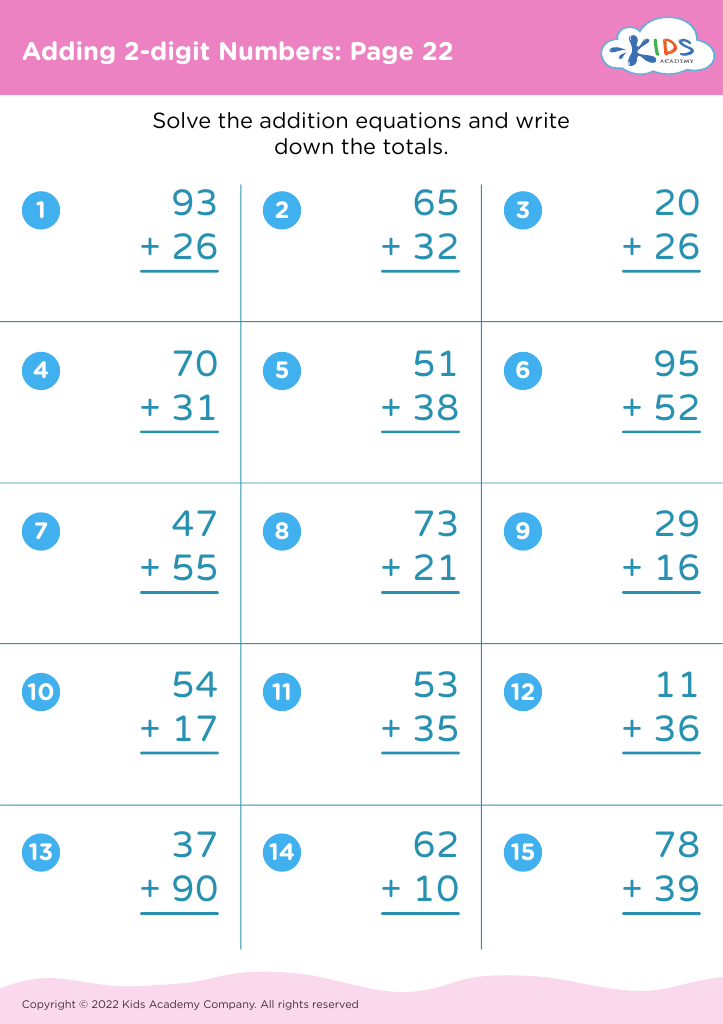
Our "Practice Addition Worksheets for Ages 8-9" provide engaging and effective activities to help children master addition. Designed specifically for 3rd graders, these worksheets reinforce essential math skills through a mix of fun, varied exercises. Each worksheet aims to develop fluency and confidence in solving addition problems, including both single and multi-digit addition. Perfect for classroom use or at-home practice, these printable worksheets are an excellent tool for parents and educators striving to boost their student's arithmetic skills. Promote a love for math and watch your child's abilities flourish with our top-tier practice sheets!
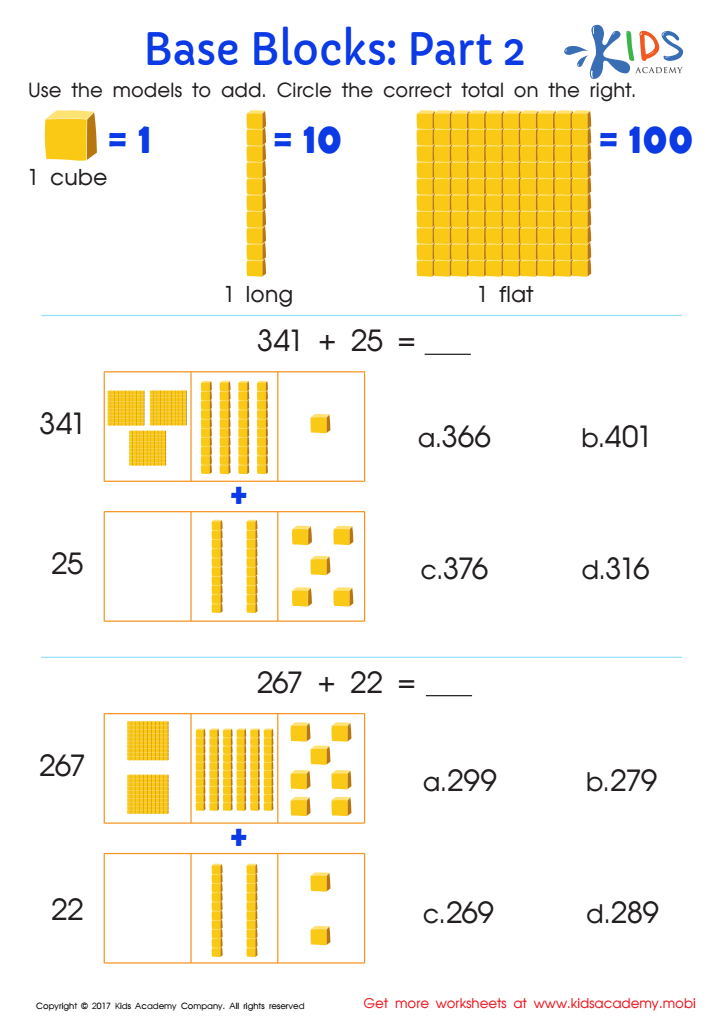
Base Ten Blocks Worksheet: Part 2
 Assign to My Students
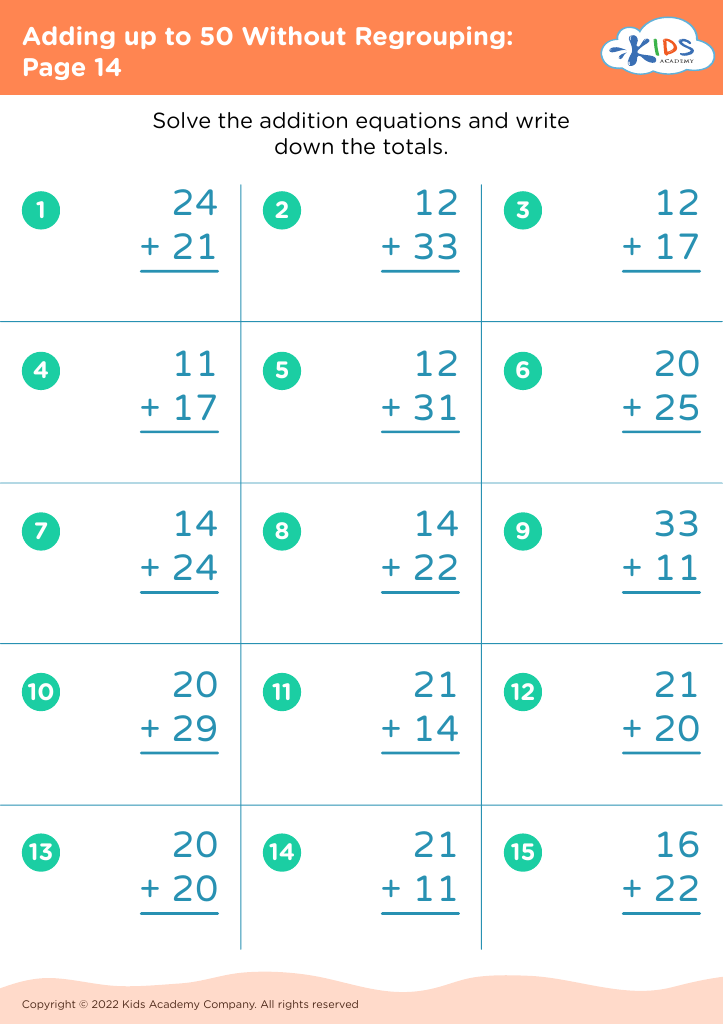








Practicing addition at ages 8-9 is crucial for several reasons. At this developmental stage, children's brains are highly receptive to learning foundational mathematical concepts, which will be building blocks for future academic success. Mastery in basic addition fosters confidence and encourages a positive attitude towards math, essential for tackling more complex arithmetic operations like subtraction, multiplication, and division in later years.
For parents and teachers, emphasizing addition practice ensures that children develop mental agility and problem-solving skills. This is not just about doing math; it's about nurturing cognitive skills like concentration, memory, and logical thinking. When children encounter addition problems regularly, they begin to notice patterns and relationships between numbers—a critical aspect of developing mathematical intuition.
Furthermore, proficiency in addition is integral for real-life tasks, such as handling money, measuring ingredients in recipes, or dealing with time. Early competency in these areas helps children become more independent and confident in everyday situations. As children achieve small successes in math, their self-esteem strengthens, which paves the way for a more positive and proactive learning attitude overall.
In conclusion, whether you're a parent or teacher, investing time and energy in practicing addition with children ages 8-9 has long-lasting benefits that reach far beyond the classroom, setting them up for a lifetime of mathematical appreciation and success.








