Practice inference skills Addition Worksheets for Ages 8-9
3 filtered results
-
From - To
Enhance your child's mathematical comprehension with our "Practice Inference Skills Addition Worksheets" designed for ages 8-9. These engaging worksheets encourage children to develop critical thinking and problem-solving skills while mastering addition. By incorporating real-world scenarios and contexts, students will learn to make inferences and draw logical conclusions from the information presented. These structured activities not only build foundational math skills but also promote cognitive development and reasoning abilities. Perfect for classroom use or at-home practice, our worksheets make learning interactive and enjoyable. Start fostering your child's mathematical confidence today with our thoughtfully crafted materials!
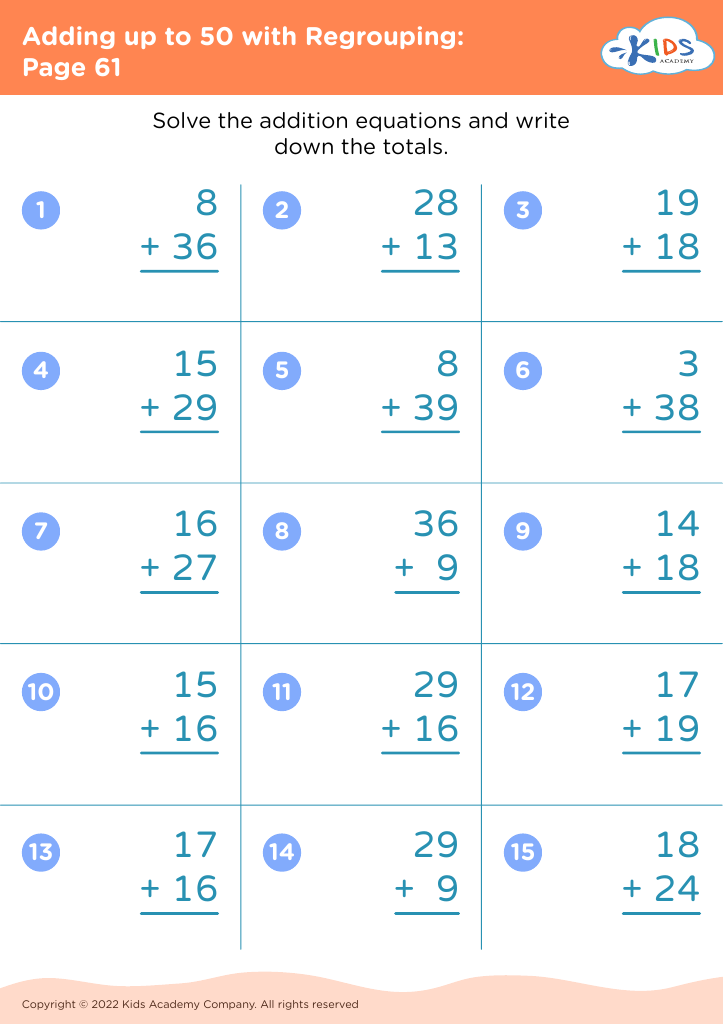
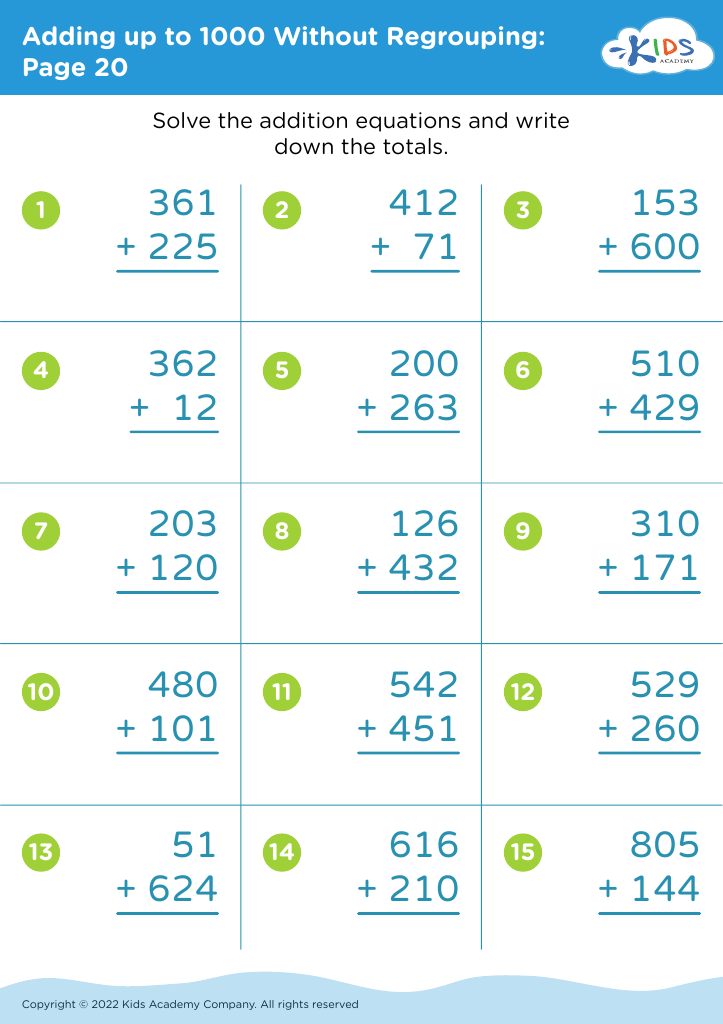
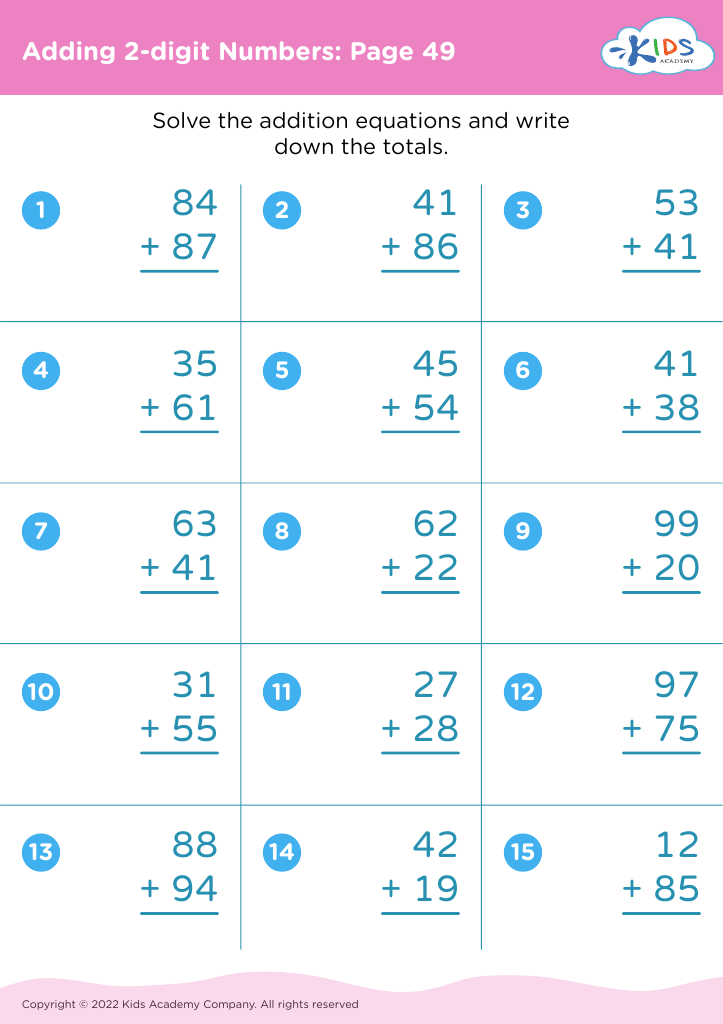








Practice inference skills in addition is crucial for children aged 8-9 as it enhances their mathematical understanding and problem-solving abilities. At this age, children are transitioning from concrete arithmetic to more abstract thinking, making it essential to develop skills that allow them to deduce information and make connections within mathematical contexts.
By improving their inference skills, children learn to interpret word problems, recognize patterns, and make predictions based on numerical information. This not only helps them with addition but also prepares them for more complex mathematical concepts they will encounter in the future, such as multiplication, division, and even basic algebra.
Moreover, fostering robust inference skills supports critical thinking, enabling children to approach real-life situations with confidence and logical reasoning. Parents and teachers play a crucial role in achieving this by providing engaging activities and discussions that encourage children to explain their thought processes and explore different problem-solving strategies.
Ultimately, developing inference skills can significantly enhance a child's overall numeracy, leading to improved academic performance and a stronger foundation for lifelong learning. Taking the time to prioritize and address these skills will benefit children's mathematical journeys far beyond elementary school.








